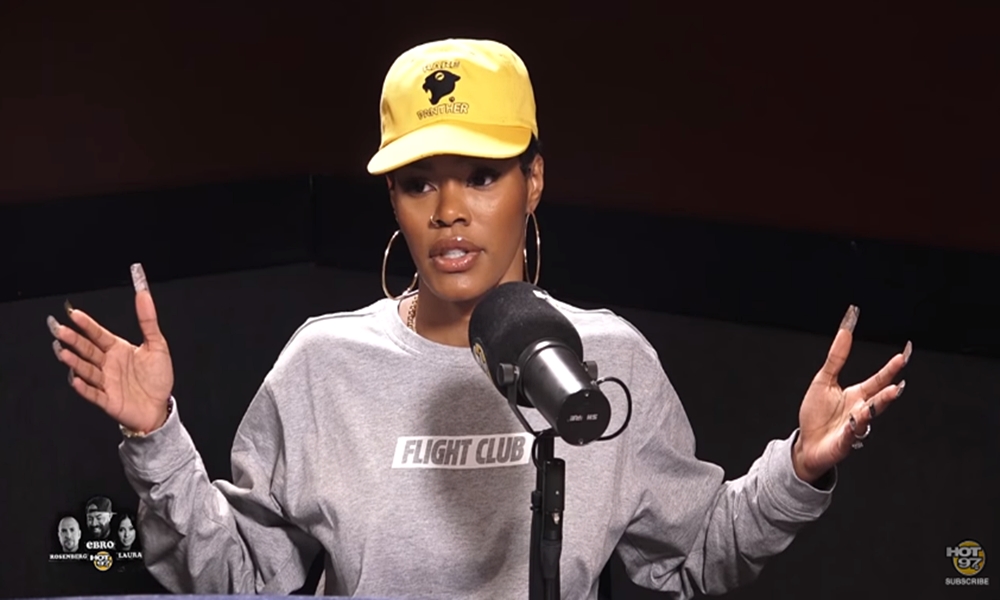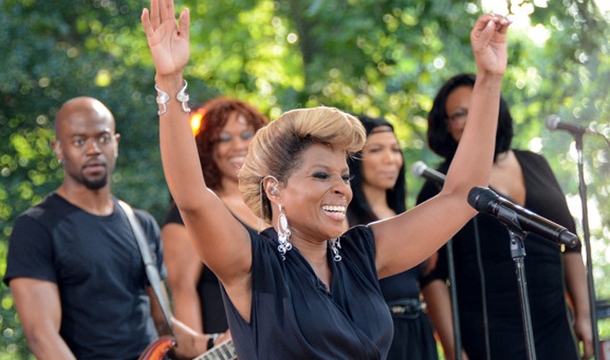
Mary J. has kept silent on the Burger King commercial controversy that had people up in arms about the singer singing about the fast food chain’s chicken wraps, claiming it perpetuated negative African-American stereotypes. But Blige confided to Angie Martinez on Hot 97 about how the backlash truly affected her.
The singer explains that she was unhappy with the final edit, saying she wanted to “crawl under the bed” when she found the commercial while surfing the internet for her remix to Fat Joe’s “Another Round.” “I was told to that I would be shot in an iconic way…It hurt my feelings. It crushed me for like two days,” explains the “Mr. Wrong” singer.
Despite the final cut of which she didn’t approve, she understands where the backlash came from and offered an apology. “I want to apologize to everyone that was offended or thought that I would do something so disrespectful to our culture,” she said. “I would never do anything like that purposely. I thought I was doing something right, so forgive me…it was something I always wanted to do and dreamed about and that’s way I did it,” she confessed.
Full interview below:
Mary J. Blige has been a celebrated artist for decades, but her recent involvement in a Burger King commercial stirred up some controversy. The advertisement featured Blige singing about the fast food chain’s chicken wrap, and many people felt that it trivialized an iconic singer who is known for work highlighting social issues. In a recent interview, Mary J. Blige opened up about why she took part in the commercial and how it made her feel when criticism started pouring in from all sides. She had this to say: “It hurt my feelings.”
This article will explore Mary J. Blige’s take on the controversial Burger King commercial and what motivated her to be involved in the project despite potential backlash from fans. We’ll also look into how other artists have responded to similar types of controversies over their artistry being used to promote products or services they don’t necessarily agree with. Finally, we’ll discuss ways that brands can avoid such situations going forward by taking more care when selecting musical acts to represent them on-screen.
By delving deeper into Mary J. Blige’s experience with the Burger King ad, as well as exploring other related incidents involving music industry figures, readers can gain valuable insight into how celebrity endorsements can sometimes backfire if due diligence isn’t done beforehand. So let’s dive right into it – get ready to hear directly from Mary J. Blige herself and learn more about this polarizing situation!
Mary J. Blige’s Response
Mary J. Blige recently came under fire for appearing in a Burger King commercial which many found to be insensitive and tone-deaf. In response, the singer released a statement expressing her disappointment at how things had unfolded. She spoke directly about how hurt she felt by the controversy surrounding the ad.
Blige said that when she agreed to work with Burger King, it was based on her appreciation of their commitment to hiring from within the community and providing job opportunities. She explained that she wanted to use the platform as an opportunity to bring more attention to those issues and give back in some way. However, upon seeing the final cut of the advertisement, Blige realized it had been taken out of context and didn’t represent what she’d intended.
The Grammy Award winning artist clarified that while she takes full responsibility for participating in the project, it wasn’t done maliciously or without consideration for its potential effect on viewers. Rather, it was meant as a sincere effort to make a positive impact but unfortunately failed due to poor execution.
Public Reception
Unfortunately, many people took offense to the commercial and felt that it was a poor attempt at appropriation. People from all over the world expressed their disappointment with Blige’s involvement in the advertisement, leading her to issue an apology for any hurt she might have caused. The sentiment online quickly changed from criticism to compassion as others defended Blige against those who had judged her harshly without knowing the full story behind the ad’s conception.
The response to Burger King’s campaign has been overwhelmingly negative, with some calling on other companies not to follow suit when it comes to cultural appropriation in advertising. Many believe that Mary J. Blige should be commended rather than criticized for trying to use her platform to support black communities and bring attention to important issues such as job opportunities.
Ultimately, this situation serves as a reminder of how easy it is for well-intentioned efforts can go awry if not properly handled – something both Blige and Burger King have learned firsthand.
Conclusion
In conclusion, Mary J. Blige’s response to the controversy surrounding her Brooklyn-based commercial made it clear that she was not only hurt by it but also disappointed in how it had been received. She expressed feeling like a target for criticism and felt as if people were attacking her rather than simply offering constructive feedback. Despite this, she maintained an admirable level of positivity and resilience throughout, showing that even when faced with difficult situations we can still remain strong.
It is important to remember that all celebrities, no matter their fame or popularity, are human too and deserve respect just like anyone else. We may have our own opinions on any given situation but at the end of the day we should keep those opinions respectful and considerate of other’s feelings. With this in mind, let us strive to be more understanding towards one another – both online and off – so that everyone can feel safe from unwarranted attacks or judgmental comments.