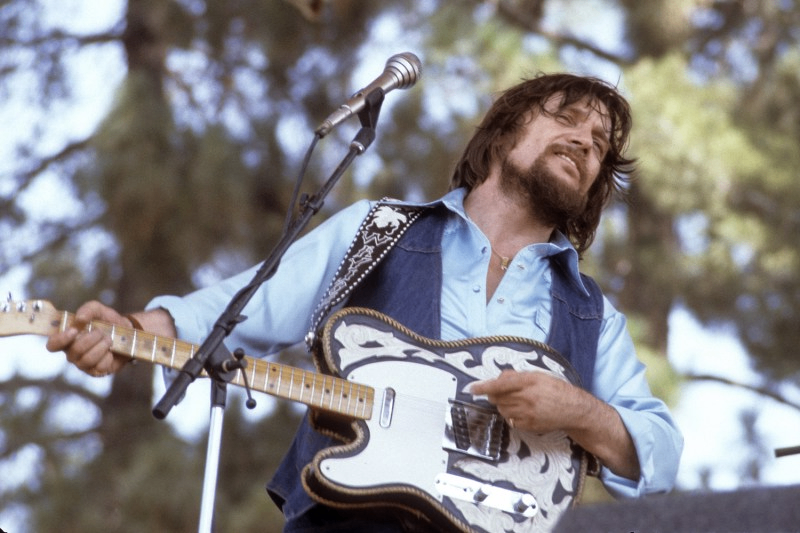
Waylon Jennings brought a rebellious spirit to country music that changed the genre forever. With his deep rugged voice, fearless attitude, and unmistakable outlaw style, Jennings broke away from the polished Nashville sound and created music that felt raw, honest, and fiercely independent. His songs blended country, rock, blues, and folk influences into a sound that was tough yet deeply emotional, giving voice to drifters, dreamers, rebels, and everyday people searching for freedom. Whether delivering hard driving outlaw anthems or heartbreak filled ballads, Waylon possessed a rare authenticity that made every lyric feel lived in and real. Across decades of unforgettable recordings, he became one of the defining figures of outlaw country and one of the most respected storytellers in American music history. This collection celebrates the timeless songs that shaped his legendary career and cemented Waylon Jennings as a true country music icon.
1. Luckenbach, Texas
“Luckenbach, Texas” is one of Waylon Jennings’ most beloved recordings because it captures the outlaw country dream in a form that feels easygoing, wise, and deeply human. The song is not about chasing fame, luxury, or polished success. It is about stripping life back to something real, where love, music, friendship, and freedom matter more than status. Waylon’s vocal performance is relaxed but full of authority, carrying the lyric with the weathered confidence of someone who has seen the machinery of Nashville and knows there is another way to live. The magic of the song lies in its simplicity. The melody feels warm and conversational, while the arrangement gives enough room for every word to land with plainspoken charm. Willie Nelson’s presence adds extra cultural weight, turning the track into a meeting of two outlaw country giants who helped reshape the genre. “Luckenbach, Texas” became so popular because it gave listeners more than a catchy chorus. It gave them an ideal. It imagined a place where music could return to honesty, where lovers could stop pretending, and where country music could find its soul again. Decades later, it still feels like an invitation to step away from noise and return to the basics of love.
2. Mammas Don’t Let Your Babies Grow Up To Be Cowboys
“Mammas Don’t Let Your Babies Grow Up To Be Cowboys” is one of the great outlaw country anthems, pairing Waylon Jennings with Willie Nelson in a performance that feels both humorous and strangely heartbreaking. The song plays with the mythology of the cowboy, but it does not simply romanticize him. Instead, it paints the cowboy life as lonely, stubborn, restless, and difficult to love. Waylon’s voice brings grit and gravity to the lyric, while Willie’s phrasing adds a lighter, more conversational edge. Together, they create a portrait that is affectionate without being sentimental. The song became iconic because it understands the cost of freedom. Cowboys may seem heroic from a distance, but the lyric reminds listeners that independence can come with emotional distance, broken relationships, and a life spent moving from place to place. The arrangement is smooth, memorable, and perfectly suited to both singers, giving the track a singalong quality that helped it become one of the most recognizable country songs of its era. Its popularity also comes from the way it blends comedy and truth. It makes listeners smile, but beneath that smile is a serious understanding of outlaw identity. Waylon Jennings helped turn that identity into country music history.
3. Good Hearted Woman
“Good Hearted Woman” stands as one of Waylon Jennings’ defining songs, a compassionate and rugged tribute to the kind of woman who loves a difficult man without losing her dignity. The song became even more legendary through its association with Willie Nelson and the outlaw country movement, but its emotional core belongs firmly to Waylon’s world. He sings with a mixture of admiration, guilt, and plainspoken honesty, describing a woman who keeps loving someone whose lifestyle is far from easy. What makes the song so powerful is that it never turns her into a simple background figure. She is the moral center of the story, the person whose patience and strength reveal the flaws of the man she loves. The arrangement has a rolling country groove, strong enough to feel confident but loose enough to sound lived in. Waylon’s voice gives the lyric its weight, making every line feel like it comes from experience rather than performance. “Good Hearted Woman” became one of his most popular songs because it speaks to a familiar country theme with unusual tenderness. It honors loyalty without pretending that love is painless. In the outlaw country canon, it remains a classic because it balances swagger with humility and toughness with emotional truth.
4. Are You Sure Hank Done It This Way
“Are You Sure Hank Done It This Way” is one of Waylon Jennings’ most important artistic statements, a sharp and unforgettable challenge to the polished Nashville establishment of the 1970s. The song’s title invokes Hank Williams not as a nostalgic decoration, but as a standard of authenticity. Waylon looks around at sequined suits, industry formulas, and commercial expectations, then asks whether the old masters would recognize what country music had become. His vocal is loaded with frustration, humor, and defiance. He does not sound like an outsider begging for acceptance. He sounds like a man kicking open the door and refusing to apologize. The groove is lean, tough, and instantly recognizable, creating a perfect vehicle for his critique of country music’s machinery. The song became popular because it gave voice to a movement that was already forming around artists who wanted creative control and a rougher, more personal sound. It is both a hit record and a manifesto. Waylon Jennings was not merely complaining about style. He was questioning the soul of the business. “Are You Sure Hank Done It This Way” remains essential because it captures outlaw country at the moment it turned rebellion into a lasting artistic philosophy.
5. Theme From The Dukes Of Hazzard
“Theme From The Dukes Of Hazzard” brought Waylon Jennings into millions of living rooms and became one of the most recognizable television themes in American popular culture. Better known to many listeners as “Good Ol’ Boys,” the song perfectly matches Waylon’s outlaw image with a playful, storytelling spirit. His voice serves as both singer and narrator, giving the track a friendly wink while still carrying the authority of a seasoned country legend. The lyric celebrates mischief, loyalty, and rural independence, themes that fit naturally within Waylon’s larger artistic identity. The song works because it sounds effortless. It never feels like a novelty assignment, even though it was tied to a television show. Instead, Waylon makes it feel like a compact country character sketch, full of personality and charm. The arrangement is simple, catchy, and instantly memorable, with a groove that captures the easy roll of back roads and small town trouble. Its popularity grew far beyond the screen because the song had its own life as a country hit. Waylon’s performance gives it warmth, humor, and authenticity. “Theme From The Dukes Of Hazzard” remains beloved because it captures a version of outlaw country that is rowdy, approachable, and full of character.
6. I’ve Always Been Crazy
“I’ve Always Been Crazy” is one of Waylon Jennings’ most revealing songs, a self portrait that turns recklessness into reflection rather than empty bragging. The title may sound like pure outlaw swagger, but the performance carries more emotional complexity than that. Waylon sings as a man looking back on choices, habits, and contradictions that have shaped his life. There is pride in his voice, but also fatigue, humor, and a sense of consequence. That mixture is what makes the song so compelling. He does not ask to be excused, and he does not fully apologize. He simply tells the truth as he understands it. The arrangement moves with a steady, confident country rock feel, giving the lyric room to breathe while still reinforcing Waylon’s rugged musical identity. This song became popular because it gave fans a direct connection to the myth and the man behind it. Outlaw country often celebrated independence, but “I’ve Always Been Crazy” shows what independence can cost when lived day after day. Waylon Jennings had the rare ability to make personal confession sound universal. Listeners hear a famous rebel, but they also hear their own stubbornness, regrets, and survival instincts. That honesty keeps the song deeply powerful.
7. Amanda
“Amanda” reveals Waylon Jennings at his most tender, proving that his outlaw persona never prevented him from delivering a deeply emotional ballad. Written by Bob McDill, the song became one of Waylon’s most loved recordings because it speaks with plain, aching honesty. The lyric finds a man reflecting on age, regret, and the woman who has stood beside him, and Waylon’s performance gives every line a lived in quality. His voice is warm, weathered, and sincere, carrying the kind of emotional weight that cannot be manufactured. The beauty of “Amanda” is its restraint. The song does not need dramatic production or oversized gestures. It trusts melody, lyric, and voice. Waylon sings as if he is speaking directly to someone he knows he has not always deserved. That vulnerability makes the recording especially moving. It shows a softer side of the same artist who could challenge Nashville conventions and define outlaw toughness. “Amanda” became popular because it connects with anyone who understands the passage of time and the quiet ache of gratitude. It is a love song, but not a youthful fantasy. It is mature, reflective, and full of hard earned tenderness. In Waylon’s catalog, it remains one of his most graceful emotional performances.
8. Lonesome, On’ry And Mean
“Lonesome, On’ry And Mean” is one of the songs that helped define Waylon Jennings as the voice of outlaw country’s rougher, more restless edge. The title alone feels like a mission statement, but the recording goes deeper than attitude. Waylon sings with a hard won sense of identity, presenting loneliness and stubbornness not as decorations, but as conditions of survival. The arrangement is tough, spare, and road worn, perfectly matching the mood of a man who has lived outside easy comfort. There is nothing polished or soft about the emotional world of this song. It belongs to highways, smoky rooms, bad decisions, and the kind of independence that can feel both liberating and punishing. Waylon’s vocal performance is magnetic because he does not oversell the toughness. He simply inhabits it. Every phrase has grit, but also a shadow of weariness. The song became popular among fans because it captured the outlaw identity before it became a marketing label. It sounded authentic, dangerous, and personal. “Lonesome, On’ry And Mean” remains one of his essential tracks because it shows Waylon building a country sound that was leaner, darker, and more self determined than the Nashville mainstream surrounding him.
9. I’m A Ramblin’ Man
“I’m A Ramblin’ Man” is pure Waylon Jennings motion, a driving country hit that captures the restless spirit at the heart of his music. The song moves with a clean, propulsive rhythm that feels built for highways, barrooms, and long stretches of open country. Waylon’s vocal is confident, charismatic, and slightly dangerous, presenting the narrator as someone who cannot be easily held in place. The track’s appeal comes from its combination of swagger and inevitability. He is not trying to become a rambling man. He already is one, and everyone around him has to decide whether they can live with that truth. The arrangement is sharp and uncluttered, letting the groove and vocal attitude do the heavy lifting. It has the kind of directness that made Waylon so important to country music’s evolution. He did not need excessive ornamentation to sound powerful. His voice, phrasing, and rhythmic instinct carried the personality of the song. “I’m A Ramblin’ Man” became popular because it fits perfectly into the mythology of country independence, yet it never feels like a cartoon. It has real momentum and real character. For Waylon fans, it remains one of the clearest expressions of his road hardened outlaw charm.
10. Only Daddy That’ll Walk The Line
“Only Daddy That’ll Walk The Line” is one of Waylon Jennings’ breakthrough classics, a song that helped reveal the toughness, humor, and vocal bite that would later make him an outlaw country icon. Released before his full 1970s creative rebellion reached its peak, the track already contains the ingredients that made him so distinctive. The rhythm has snap, the lyric has attitude, and Waylon’s delivery carries a rebellious edge that separates him from smoother Nashville voices of the time. He sounds like a man who knows exactly where his limits are and is tired of having them tested. The song’s narrator is caught in romantic frustration, but Waylon turns that frustration into something bold and memorable. His phrasing is clipped, forceful, and full of personality, giving the track a sense of controlled impatience. The arrangement reflects the late 1960s country sound while hinting at the harder, more independent direction he would soon pursue. “Only Daddy That’ll Walk The Line” became popular because it gave listeners a strong dose of Waylon’s identity before the outlaw label fully defined him. It remains a vital recording because it shows the early formation of his style, tough, rhythmic, plainspoken, and unmistakably his own.

Samuel Moore is a frequent contributor to Singers Room. Since 2005, Singersroom has been the voice of R&B around the world. Connect with us via social media below.