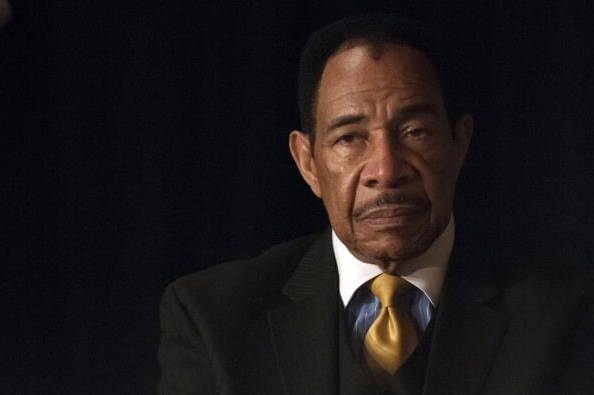
Smooth, sophisticated, and overflowing with timeless soul, Gene Chandler carved out a legendary place in rhythm and blues history with a voice that could glide effortlessly from romantic ballads to dancefloor classics. Emerging from the golden era of Chicago soul, Chandler brought elegance and charisma to every performance, earning the nickname “The Duke of Earl” after his breakthrough smash became one of the defining songs of the early 1960s. Over the years, his catalog expanded far beyond that iconic hit, showcasing a performer who could adapt to changing musical trends while never losing his smooth vocal identity. From silky slow jams to energetic Northern soul favorites and funk-infused grooves, Gene Chandler consistently delivered records packed with style, emotion, and undeniable charm. His music remains a cornerstone of classic soul, influencing generations of singers and continuing to light up oldies stations and dance halls around the world.
1. Duke of Earl
“Duke of Earl” is the immortal Gene Chandler song, the one record that turned Eugene Dixon from a talented Chicago vocalist into a crowned figure of early soul and doo wop history. The magic begins with that hypnotic vocal chant, a phrase so simple yet so commanding that it feels almost ceremonial. Chandler does not merely sing the song. He steps into a character, wearing the title like velvet and delivering every line with regal cool. The performance is theatrical, romantic, and instantly memorable, which explains why the record became such a landmark of the early 1960s.
What makes “Duke of Earl” so powerful is the way it fuses street corner harmony with pop grandeur. The backing vocals create a stately rhythm, while Chandler’s lead voice rises above them with confidence and charm. There is a fantasy quality to the lyric, as if love itself has given the singer a royal identity. Yet the record never feels distant or overly polished. It still has the pulse of Chicago vocal groups, the warmth of young singers building something unforgettable from harmony, repetition, and attitude.
The song’s popularity rests on more than nostalgia. “Duke of Earl” is one of those rare singles where the hook, persona, and vocal delivery become inseparable. Chandler’s voice gives the title dignity, mystery, and swagger, making it a defining classic in his catalog and one of the most recognizable soul records of its era.
2. Groovy Situation
“Groovy Situation” captures Gene Chandler in a completely different light from his early doo wop fame, proving that he could move gracefully with the changing sound of soul music. Released during the smoother, more rhythmically relaxed mood of the early 1970s, the song radiates charm from the first few seconds. The groove is easy, confident, and sunny, built around a rhythm that feels made for cruising through a warm afternoon. Chandler’s vocal is relaxed but never casual. He sounds fully in control, leaning into the melody with a smile in his tone.
The brilliance of “Groovy Situation” lies in its effortless sophistication. The arrangement gives Chandler room to float, with bright horns, a supple bass line, and a polished soul backdrop that never overwhelms the vocal. There is romance here, but it is romance with movement. Chandler is not pleading or aching. He is enjoying the moment, savoring attraction, possibility, and the smooth feeling of being exactly where he wants to be.
This song became one of Chandler’s most beloved recordings because it updated his image without losing his identity. The regal confidence of “Duke of Earl” is still present, but now it is dressed in 1970s soul elegance. “Groovy Situation” remains a favorite because it shows Gene Chandler as more than a vintage hitmaker. It shows him as a stylish soul craftsman who understood timing, mood, and the deep pleasure of a perfectly laid back groove.
3. Nothing Can Stop Me
“Nothing Can Stop Me” is one of Gene Chandler’s great Chicago soul statements, a record that blends heartbreak, pride, and forward motion with remarkable emotional balance. The song has a driving quality, but it is not frantic. It moves with purpose, as if the singer has already made up his mind and is simply letting the world know. Chandler’s voice carries that special mixture of elegance and grit that made his finest soul recordings so compelling. He can sound wounded without sounding weak, determined without sounding harsh.
The arrangement is classic mid 1960s soul craftsmanship. The rhythm section keeps the song moving, the background voices add emotional lift, and the melodic structure gives Chandler space to build drama line by line. What makes the performance so memorable is the sense of personal resolve. The lyric suggests pain and disappointment, but Chandler refuses to collapse under it. Instead, he transforms hurt into momentum. That emotional turn gives the record its lasting punch.
“Nothing Can Stop Me” also stands as an important example of Chandler’s ability to thrive beyond the shadow of his biggest hit. This is not novelty, not character singing, not royal pageantry. It is direct soul expression delivered by a vocalist who understood how to phrase pain with dignity. For fans of Chicago soul, the song remains essential because it captures the city’s signature blend of polished arrangement and heartfelt intensity. It is Gene Chandler at his most focused, resilient, and deeply human.
4. Rainbow 65
“Rainbow 65” is a magnificent showcase for Gene Chandler’s emotional range, especially his gift for turning a romantic ballad into something dramatic and deeply personal. The song glows with a classic soul atmosphere, full of sweeping feeling and graceful vocal movement. Chandler approaches the performance with tenderness, but he never lets it become fragile. His voice has strength beneath the sweetness, giving the song a sense of longing that feels both vulnerable and composed.
The beauty of “Rainbow 65” comes from the way it stretches out emotionally. It is not simply a pretty song. It feels like a memory being carried carefully through music. The melody gives Chandler room to linger on phrases, and he uses that space with the patience of a singer who knows exactly how to let emotion breathe. Every rise in his voice seems to add another shade of feeling, from hope to ache to quiet devotion.
This recording became especially treasured among soul collectors because it reveals a more expansive side of Chandler’s artistry. While many listeners know him first through the bold identity of “Duke of Earl,” “Rainbow 65” shows him as a romantic interpreter with depth and polish. The record has the kind of slow burning beauty that rewards repeated listening. Its popularity endures because it captures the golden mood of Chicago soul at its most elegant, where arrangement, voice, and feeling come together in a rich emotional glow.
5. Just Be True
“Just Be True” is one of Gene Chandler’s most admired soul sides, a record that captures the clean emotional force of trust, loyalty, and romantic sincerity. The title says everything with plainspoken directness, but Chandler gives those words a layered emotional life. He sings with warmth and insistence, asking for honesty not as a grand demand, but as the foundation of real love. His voice is smooth, yet there is a tremble of urgency beneath it, which makes the performance feel intimate and believable.
The arrangement reflects the beauty of early Chicago soul, where elegance and street level feeling often existed side by side. The rhythm has a gentle but steady push, the background vocals answer Chandler with grace, and the instrumental touches frame the song without stealing attention. Chandler’s phrasing is the center of the record. He knows when to lean into a note, when to pull back, and when to let the lyric speak plainly.
“Just Be True” remains popular because it feels timeless in theme and timeless in sound. It does not rely on gimmickry or dramatic excess. Instead, it succeeds through honesty, melody, and a vocal performance that carries emotional authority. Chandler had the rare ability to make smooth singing feel deeply sincere, and this song is a prime example. For listeners who appreciate soul music built on craft rather than spectacle, “Just Be True” stands as one of his most satisfying and enduring recordings.
6. The Girl Don’t Care
“The Girl Don’t Care” is a superb example of Gene Chandler’s ability to turn romantic frustration into polished soul drama. The song has a graceful sadness running through it, built around the painful realization that affection is not being returned. Chandler does not oversing the heartbreak. Instead, he delivers it with controlled emotion, allowing the listener to hear both the hurt and the pride in his voice. That restraint gives the record much of its power.
The production carries the unmistakable feel of sophisticated Chicago soul. The arrangement is refined, with tasteful orchestration and a rhythm that supports the emotional weight without dragging the song down. Chandler’s vocal sits beautifully inside the track, moving between conversational phrasing and melodic lift. He sounds like a man trying to preserve dignity while admitting that love has cut deeply. That emotional tension makes the song especially compelling.
“The Girl Don’t Care” also benefits from its sharp narrative clarity. It is not vague heartbreak. It is a specific kind of pain, the sting of giving feeling to someone who remains unmoved. Chandler makes that situation feel universal through his phrasing and tone. The song has long appealed to listeners who admire the more mature side of 1960s soul, where heartbreak could be delivered with elegance rather than melodrama. In Gene Chandler’s catalog, it stands as a beautifully crafted performance that proves how much emotional power can live inside a smooth, measured vocal.
7. A Song Called Soul
“A Song Called Soul” feels like a declaration of identity from Gene Chandler, a recording that places him firmly inside the evolving language of rhythm and blues as it moved toward the deeper emotional vocabulary of soul music. The title itself sounds almost like a mission statement. Chandler sings with confidence and style, giving the track a spirited quality that celebrates feeling, rhythm, and vocal personality. It is the kind of record that reminds listeners how naturally he belonged in the soul era.
The performance has a lively pulse, with Chandler bringing brightness and authority to every phrase. His voice carries charm, but also command. He is not simply riding the rhythm. He is shaping it, giving the song its personality through timing and inflection. The track works because Chandler understands soul as both sound and attitude. It is not only about big emotion. It is about presence, swing, and the ability to make a listener believe every word.
“A Song Called Soul” remains important because it highlights the bridge between Chandler’s doo wop beginnings and his later soul sophistication. The record has the freshness of a singer embracing a broader musical future while still carrying the vocal discipline of his earlier years. For fans exploring beyond the obvious hits, this song offers a rewarding glimpse of Chandler’s versatility. It is energetic, stylish, and filled with the sense that Gene Chandler knew exactly where popular Black music was heading.
8. Get Down
“Get Down” presents Gene Chandler as a disco era soul veteran who could still command the dance floor with confidence and flair. By the late 1970s, many singers from the early soul generation struggled to adapt to the changing musical landscape, but Chandler had the instincts of a survivor. He understood rhythm, mood, and presentation. “Get Down” proves that his charisma could translate into a funkier, more club ready setting without sounding forced.
The song is built for movement, with a thick groove, an inviting beat, and a vocal performance that encourages rather than begs. Chandler sounds relaxed, assured, and stylish. He does not chase the trend. He steps into it with the dignity of an artist who knows how to make the groove serve him. The record has sparkle, but it also has muscle. Its rhythm section gives it body, while Chandler’s phrasing gives it personality.
What makes “Get Down” so enjoyable is the way it expands the idea of who Gene Chandler was. He was not only the young duke of early 1960s pop and soul. He was also a seasoned performer capable of bringing mature showmanship to the disco age. The song’s popularity among funk, disco, and soul fans comes from that balance. It is danceable without being disposable, polished without being empty, and unmistakably powered by Chandler’s enduring sense of style.
9. When You’re #1
“When You’re #1” is a sleek late 1970s Gene Chandler recording that turns ambition, romance, and dance music sophistication into one polished package. The track reflects the era’s taste for extended grooves, glossy production, and confident vocal performances, yet Chandler keeps it grounded in soul tradition. His singing is smooth and conversational, but there is also a knowing quality in his delivery. He sounds like a man who has lived long enough to understand success, desire, and the attention that comes with both.
The groove is central to the song’s appeal. It moves with disco elegance, but it is not simply a beat with vocals placed on top. Chandler gives the record personality, guiding the listener through the rhythm with phrasing that feels relaxed and masterful. His presence gives the track class, turning what could have been a standard dance record into something more memorable and distinctly his own.
“When You’re #1” also works as a statement from an artist whose career had already crossed several musical eras. Chandler had seen doo wop, early soul, Chicago soul, and funk shaped dance music rise around him. On this song, he sounds comfortable inside yet another transformation. The result is a record that remains popular with disco soul collectors and longtime fans because it captures Gene Chandler’s adaptability. He could wear a crown in 1962 and still sound stylish under the mirror ball years later.
10. Does She Have a Friend
“Does She Have a Friend” is one of Gene Chandler’s most appealing later recordings, a smooth soul and dance flavored track that shows how naturally he could blend romance with groove. The song has a relaxed sophistication, built around a playful premise and carried by Chandler’s warm vocal presence. He sounds charming, confident, and completely at ease, delivering the lyric with the kind of grown charisma that younger singers often try to imitate but rarely master.
The arrangement has a silky late 1970s and early 1980s feel, with a rhythm designed for slow dancing as much as casual listening. The groove is polished, the mood is inviting, and Chandler’s voice gives the song its elegant center. He brings humor, flirtation, and refinement into the same performance, making the track feel light without ever becoming shallow. That balance is one reason the song continues to attract soul fans who appreciate his later catalog.
“Does She Have a Friend” also represents an important chapter in Chandler’s long artistic life. It proves that his appeal did not depend solely on early fame or nostalgia. He remained a compelling vocalist because he understood how to inhabit a song, how to communicate charm without overplaying it, and how to let rhythm support personality. The record is popular because it feels smooth, personable, and unmistakably Gene Chandler, a reminder that the Duke’s elegance never faded as the decades changed.

Samuel Moore is a frequent contributor to Singers Room. Since 2005, Singersroom has been the voice of R&B around the world. Connect with us via social media below.