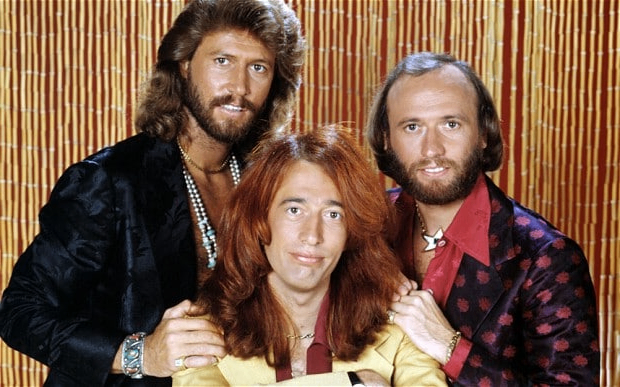
From sweeping ballads to glittering disco anthems, Bee Gees created one of the most remarkable catalogs in pop music history. Led by the unmistakable harmonies of brothers Barry, Robin, and Maurice Gibb, the group constantly reinvented itself across decades while maintaining a songwriting style filled with emotion, melody, and unforgettable hooks. Long before they dominated dance floors during the disco explosion of the 1970s, the Bee Gees were already crafting deeply emotional songs packed with orchestral beauty and heartfelt storytelling. As their sound evolved, they became masters of rhythm driven pop that defined an entire era of nightlife and radio. Yet beneath the polished grooves and famous falsettos was a group of extraordinary songwriters capable of capturing heartbreak, romance, loneliness, and joy with rare elegance. Their greatest songs continue to transcend generations, proving the Bee Gees were far more than a disco phenomenon. They were true architects of modern pop music.
1. Stayin’ Alive
“Stayin’ Alive” is the Bee Gees song that became larger than a hit single, larger than disco, and larger than the film culture that helped launch it into immortality. From the first pulse of the groove, the record sounds like confidence walking down a city street under neon lights. Barry Gibb’s falsetto slices through the rhythm with unmistakable swagger, while the beat moves with a strut that feels both glamorous and gritty. It is dance music with attitude, survival, and style built into every second.
The brilliance of “Stayin’ Alive” is that its surface sparkle hides a deeper toughness. The song is often remembered for its irresistible rhythm and iconic vocal hook, but the lyric carries the pressure of urban life, ambition, and the daily grind of pushing forward. That tension gives the record staying power. It is not simply about having a good time. It is about refusing to disappear.
The production remains one of the great achievements of 1970s pop. The bass line, clipped guitar, tight drums, and layered vocals all work with precision, creating a sound that feels sleek without losing human heat. “Stayin’ Alive” remains the Bee Gees’ most recognizable anthem because it captures the exact point where disco became a global language. It still sounds alive, urgent, stylish, and completely unstoppable.
2. How Deep Is Your Love
“How Deep Is Your Love” is one of the Bee Gees’ most beautiful ballads, a song that proves their genius was never limited to dance floor energy or disco brilliance. This recording moves with extraordinary tenderness, built on a melody so graceful that it seems to float rather than simply unfold. The brothers’ harmonies are at the center of the magic, blending with a softness and precision that only family voices often achieve. Every line feels intimate, polished, and emotionally sincere.
The song’s appeal comes from its mixture of vulnerability and elegance. Barry Gibb’s lead vocal carries a quiet longing, asking for reassurance without sounding desperate. The arrangement is warm and understated, with gentle keyboard textures, smooth rhythm, and harmonies that wrap around the melody like candlelight. Nothing feels excessive. The beauty lies in restraint, tone, and the careful shaping of emotion.
“How Deep Is Your Love” became one of the defining romantic songs of the 1970s because it speaks with simple emotional clarity. It does not need dramatic storytelling or grand imagery. It asks one timeless question and lets the melody carry the weight. The Bee Gees made love sound fragile, devoted, and deeply human. Decades later, the song still feels like a slow dance suspended in time, a perfect example of their unmatched gift for melody and harmony.
3. Night Fever
“Night Fever” is disco elegance at its most polished, one of the Bee Gees’ signature recordings and a perfect example of how they turned rhythm, melody, and atmosphere into pure pop gold. The song glides rather than charges, moving on a sleek groove that feels instantly tied to city lights, late nights, and the magnetic pull of the dance floor. Barry Gibb’s falsetto is smooth and commanding, while the harmonies add a glowing sophistication that makes the track feel luxurious from start to finish.
What makes “Night Fever” so enduring is its sense of motion. The rhythm has a silky propulsion, while the strings and guitar accents create a glamorous shimmer around the vocal. The song sounds like nightlife turned into music. It does not simply invite people to dance. It creates an entire mood, one filled with anticipation, confidence, and sensual excitement.
The Bee Gees understood that disco worked best when groove and songwriting were equally strong. “Night Fever” is not just a beat. It is a carefully crafted song with a memorable melody, a flawless chorus, and a vocal arrangement that shows the group at peak creative power. Its popularity remains enormous because it captures an era without becoming trapped in it. The track still feels stylish, energetic, and beautifully constructed, one of the great monuments of late 1970s pop culture.
4. To Love Somebody
“To Love Somebody” is one of the Bee Gees’ earliest masterpieces, a soul infused ballad that revealed the emotional depth of Barry, Robin, and Maurice Gibb long before their disco era made them global icons. The song is built around yearning, but it does not feel fragile. It has weight, gospel feeling, and a powerful sense of longing that gives the melody its timeless force. Barry Gibb’s vocal is filled with ache, delivering each line as if love has become both a gift and a burden.
The beauty of “To Love Somebody” lies in its directness. The lyric expresses the pain of loving someone who cannot fully understand the depth of that feeling. It is a song about devotion that feels almost spiritual. The arrangement gives the vocal room to breathe, while the harmonies add warmth and emotional lift. Even in its relatively simple structure, the song feels rich because the feeling is so concentrated.
“To Love Somebody” became one of the Bee Gees’ most covered songs for good reason. It has the bones of a classic standard, flexible enough to be sung by soul singers, rock artists, country performers, and pop vocalists. Yet the Bee Gees’ own version remains essential because it carries the sincerity of the original vision. It is passionate, beautifully written, and proof that the group’s songwriting greatness was already fully alive in the 1960s.
5. More Than a Woman
“More Than a Woman” is one of the Bee Gees’ most romantic disco era gems, a song that combines dance floor smoothness with a melody full of warmth and devotion. Unlike some of the group’s more urgent dance hits, this track has a floating quality, moving with elegance rather than force. The groove is steady and inviting, but the emotional center is tender. It is a love song dressed in disco silk, polished, glowing, and effortlessly memorable.
The vocal arrangement is one of the song’s greatest strengths. The Bee Gees harmonize with remarkable finesse, creating a sound that feels both intimate and celestial. Barry Gibb’s falsetto does not simply sit on top of the track. It becomes part of the atmosphere, giving the song its unmistakable shimmer. The rhythm section keeps everything moving, while the melody rises with a kind of romantic certainty that made the song a lasting favorite.
“More Than a Woman” remains popular because it captures the softer side of the Bee Gees’ disco brilliance. It works as a dance track, but it also works as a sincere declaration of love. That dual identity is part of its charm. The song belongs to nightlife, but it also belongs to slow memories, affectionate glances, and romantic nostalgia. It is one of those recordings where the Bee Gees make sophistication sound natural, proving that their dance music always had songwriting at its heart.
6. Tragedy
“Tragedy” is one of the Bee Gees’ most dramatic and explosive hits, a disco pop powerhouse that turns romantic devastation into high intensity theater. From its urgent rhythm to its soaring falsetto chorus, the song feels built for emotional overload. Barry Gibb delivers the vocal with piercing intensity, while the production surrounds him with pounding momentum, sharp accents, and a sense of crisis that never lets up. It is heartbreak transformed into spectacle.
The genius of “Tragedy” is how fully it commits to its emotional scale. The title is grand, and the music rises to meet it. The chorus is massive, the harmonies are stacked with precision, and the rhythm drives forward with almost cinematic force. Yet despite its grandeur, the song remains tightly written. Every hook lands. Every vocal lift adds urgency. The Bee Gees understood how to make drama sound catchy without reducing its emotional impact.
“Tragedy” became one of their most popular songs because it arrived at the peak of their late 1970s dominance and proved they could keep pushing their sound into even bigger territory. It is less smooth than “How Deep Is Your Love” and more intense than “Night Fever,” giving it a distinct place in their catalog. The song remains thrilling because it captures the Bee Gees at full power, turning heartbreak into a glittering storm of rhythm, harmony, and pure pop drama.
7. You Should Be Dancing
“You Should Be Dancing” is the Bee Gees’ great command to the dance floor, a record that helped mark their full transformation into rhythm driven pop masters. The song is lean, funky, and intensely physical, built around a groove that feels more muscular than many of their later disco classics. From the opening rhythm, it is clear that this track is not asking politely. It is moving the room. The Bee Gees sound energized, focused, and completely locked into the pulse.
Barry Gibb’s falsetto became a defining element of the group’s disco era, and “You Should Be Dancing” shows just how powerful that vocal approach could be. His voice cuts through the groove with a bright, commanding edge, while the instrumental track pushes forward with tight guitar, percussion, and bass. The result is a song that feels both polished and raw, sophisticated enough for the charts but sweaty enough for a real dance floor.
The song remains popular because it captures a pivotal moment in the Bee Gees’ evolution. They had always been gifted songwriters, but here they proved they could master funk influenced dance music with real authority. “You Should Be Dancing” is not just a disco hit. It is a statement of rhythm, confidence, and reinvention. It helped open the door to the group’s most famous era and still sounds like an invitation that no listener can easily refuse.
8. Jive Talkin’
“Jive Talkin’” is one of the Bee Gees’ most important reinvention records, a sleek and funky track that helped move the group from lush pop balladry into the groove centered sound that would soon define their biggest commercial period. The song has a rolling rhythm inspired by motion, and that sense of movement gives it an irresistible bounce. The guitar pattern, bass line, and vocal phrasing all work together with remarkable precision, creating a record that feels fresh, clever, and effortlessly cool.
The lyric plays with the idea of slippery talk and romantic deception, but the sound is what truly commands attention. The Bee Gees found a new rhythmic language here, one that allowed them to keep their melodic gifts while embracing a sharper, more danceable identity. Barry Gibb’s vocal is relaxed yet alert, and the harmonies add the familiar Gibb polish without softening the groove.
“Jive Talkin’” remains popular because it represents a turning point. It showed that the Bee Gees were not tied to one era, one sound, or one audience. They could absorb funk, rhythm and blues, and modern pop production while still sounding unmistakably like themselves. The song’s confidence is infectious. It does not announce reinvention with grand drama. It simply grooves so well that the transformation becomes undeniable. For many listeners, this was the moment the Bee Gees stepped into their next great chapter.
9. Massachusetts
“Massachusetts” is one of the Bee Gees’ most haunting early ballads, a song that captures homesickness, regret, and emotional distance with remarkable simplicity. Led by Robin Gibb’s distinctive vocal, the recording has a mournful beauty that sets it apart from the group’s later dance floor triumphs. The melody feels like a memory drifting back across an ocean, and Robin’s voice gives it a fragile, almost ghostly quality. It is one of the clearest examples of the Bee Gees’ early gift for melancholy pop.
The arrangement is restrained and elegant, allowing the song’s emotional atmosphere to remain at the center. The lyric is not crowded with detail, yet it suggests an entire story of leaving, longing, and the painful pull of a place left behind. The harmonies add depth without overwhelming Robin’s lead, creating a sound that is both intimate and expansive. The Bee Gees understood how to make sadness melodic, and “Massachusetts” is one of their finest examples.
The song became a major international hit because it connected through feeling rather than complexity. Its emotional message is direct, but its mood is unforgettable. Long before the Bee Gees became symbols of disco glamour, they were masters of wistful, orchestral pop, and “Massachusetts” remains a jewel from that period. It endures because it speaks to anyone who has ever looked back toward home and felt the ache of distance.
10. Words
“Words” is one of the Bee Gees’ most enduring ballads, a song that turns emotional communication into something tender, vulnerable, and beautifully melodic. Built around a simple but deeply affecting idea, the song reflects on how words can heal, wound, comfort, or fail depending on the heart behind them. Barry Gibb’s lead vocal is warm and intimate, carrying the lyric with sincerity rather than dramatic excess. It is a quiet song, but its emotional reach is enormous.
The arrangement is graceful and uncluttered, giving the melody space to shine. Piano, strings, and gentle harmonies create a soft frame around the vocal, but nothing distracts from the central feeling. The Bee Gees were masters of emotional economy, and “Words” is a perfect example. The song does not need elaborate storytelling to make its point. It relies on melody, tone, and the universal truth that language matters most when love is at stake.
“Words” remains popular because it has the timeless quality of a standard. It can be interpreted in many styles, yet the Bee Gees’ original version retains a special purity. The song belongs to the era of their early romantic pop, but it has never felt limited by time. It continues to resonate because it captures something basic and profound about human connection. In a catalog filled with dance anthems and grand ballads, “Words” stands as one of their most delicate and emotionally lasting creations.

Samuel Moore is a frequent contributor to Singers Room. Since 2005, Singersroom has been the voice of R&B around the world. Connect with us via social media below.