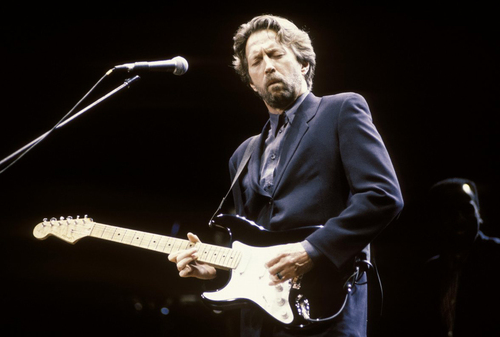
Few guitarists in rock history have achieved the legendary status of Eric Clapton, a musician whose career has stretched across decades while continuously shaping the sound of blues, rock, and modern songwriting. From fiery blues riffs and emotionally charged solos to tender acoustic ballads, Clapton built a catalog filled with unforgettable songs that resonate with generations of listeners. Whether performing with explosive intensity or quiet vulnerability, he possesses a rare ability to make every note feel deeply personal. His music has traveled through blues clubs, arena stages, and intimate unplugged sessions, always carrying the unmistakable touch of a master craftsman. Along the way, Clapton created songs that became cultural landmarks, blending technical brilliance with raw emotion and timeless melodies. The result is a body of work that continues to inspire guitarists, songwriters, and music fans around the world, proving why his name remains permanently woven into the fabric of rock history.
1. Layla
“Layla” is one of the most electrifying songs ever connected to Eric Clapton, a towering rock classic born from obsession, longing, and one of the most recognizable guitar figures in popular music. Originally recorded with Derek and the Dominos, the song captured Clapton at a point where blues feeling, rock intensity, and personal turmoil collided with extraordinary force. The famous guitar riff does not simply introduce the track. It announces it like a flare in the dark, sharp, urgent, and impossible to ignore. Few songs in rock history sound so instantly wounded and alive.
What makes “Layla” endure is the contrast between its fierce energy and its romantic desperation. Clapton’s vocal carries a raw ache, while the guitars circle and bite with a feverish sense of emotional unrest. The song feels like a confession shouted from the edge of control, yet it is also carefully constructed, full of melodic drama and instrumental fire. Even listeners who know the track by heart can still feel the force of that opening riff.
The later acoustic version introduced another layer of brilliance, slowing the song into something more reflective and intimate. That transformation proved the strength of the composition itself. Whether heard as a blazing rock anthem or a smoky unplugged performance, “Layla” remains one of Clapton’s most defining achievements, a song where passion, guitar mastery, and emotional exposure became permanently fused.
2. Tears in Heaven
“Tears in Heaven” stands as one of Eric Clapton’s most heartbreaking and universally recognized songs, a ballad shaped by grief, tenderness, and almost unbearable emotional restraint. Written after the tragic death of his young son, the song avoids dramatic excess and instead finds its power in quiet honesty. Clapton sings with a softness that feels deeply human, never forcing the sorrow, never turning pain into spectacle. The result is a recording that feels intimate enough to be whispered, yet strong enough to reach millions.
Musically, “Tears in Heaven” is built on a gentle acoustic foundation, with delicate chord changes that support the lyric’s fragile emotional weight. Clapton’s guitar work is subtle and graceful, proving that his greatness was never limited to fiery solos or blues rock intensity. Here, every note seems chosen for compassion. The melody moves with the careful pace of someone trying to make sense of loss while holding onto love.
The song became a major popular success because it speaks to grief in a way that is both personal and universal. Even without knowing the story behind it, listeners can feel the ache in Clapton’s voice and the spiritual questioning in the lyric. “Tears in Heaven” remains one of his most important recordings because it reveals a different kind of virtuosity. Not speed, not volume, not flash, but emotional courage rendered through melody, restraint, and devastating sincerity.
3. Wonderful Tonight
“Wonderful Tonight” is Eric Clapton at his most romantic, elegant, and quietly direct. The song has become one of the great slow dance standards in modern popular music, not because it is elaborate, but because it expresses affection with remarkable simplicity. Clapton does not dress the sentiment in complicated imagery. He observes a woman getting ready for an evening out, then turns that ordinary moment into something glowing and timeless. Its beauty lies in the way it makes love feel calm, present, and deeply appreciative.
The guitar line is instantly recognizable, carrying the melody with a tone that feels warm, patient, and unmistakably Clapton. It is not a display of technical fireworks. It is a lesson in touch. Every phrase breathes. Every note seems to arrive exactly where it should. His vocal mirrors that approach, understated and sincere, allowing the song’s emotional center to remain pure.
“Wonderful Tonight” became one of Clapton’s most popular songs because it works across generations and settings. It can be heard at weddings, quiet evenings, concerts, and nostalgic radio hours, always retaining its gentle charm. While some of Clapton’s greatest recordings are built from stormy blues and guitar heroics, this one shines through tenderness. It shows that his artistry could be just as powerful when he stepped back, let the melody speak, and turned a simple declaration of love into a classic.
4. Cocaine
“Cocaine” is one of Eric Clapton’s most famous groove driven rock recordings, a song that became inseparable from his late 1970s sound and his cool, controlled command of blues based rhythm. Written by J J Cale, the track suited Clapton perfectly because it gave him space to emphasize feel over flash. The riff is lean, memorable, and deceptively powerful, moving with a steady confidence that makes the song instantly recognizable. It is not a frantic rocker. It is a slow burning exercise in restraint, tone, and rhythmic authority.
Clapton’s performance works because he never overcrowds the track. His vocal is detached but knowing, while the guitar parts settle into the pocket with impressive discipline. The song’s popularity has often been tied to its bold title and memorable hook, but the recording itself is a masterclass in economy. Clapton understood that the power of the song came from repetition, attitude, and the way a simple riff could become hypnotic when played with the right touch.
Over time, “Cocaine” became a concert staple and one of the songs most associated with Clapton’s mature rock identity. It also reflected his deep respect for J J Cale’s relaxed, swampy songwriting style, which influenced Clapton’s approach to groove and arrangement. The track remains popular because it is instantly playable in the listener’s memory. A few guitar notes are enough to bring the whole mood back into focus.
5. I Shot the Sheriff
“I Shot the Sheriff” gave Eric Clapton one of his biggest solo breakthroughs and introduced many mainstream rock listeners to a song rooted in reggae’s political tension and rhythmic language. Originally written and recorded by Bob Marley, the song became a major hit for Clapton when he reinterpreted it with a smoother, blues touched feel. His version did not erase the reggae foundation, but it filtered it through his own guitar style and vocal personality. That balance helped the song travel across audiences while preserving its sharp narrative core.
Clapton’s version is notable for its relaxed but insistent groove. The rhythm has space, the guitar accents are clean, and the vocal carries a weary sense of self defense. He does not sing it as a dramatic outlaw fantasy. He sings it like a man explaining himself under pressure, which gives the performance a grounded quality. The chorus became instantly memorable, but the verses are just as important, filled with tension and storytelling detail.
The song remains one of Clapton’s most popular recordings because it marks a key moment in his evolution from blues rock virtuoso to global solo artist. It also demonstrates his gift for interpretation. Clapton often found ways to inhabit songs written by others, making them feel personal without overwhelming their origins. “I Shot the Sheriff” remains a vital part of his catalog because it brought reggae flavor, rock accessibility, and Clapton’s signature restraint into one unforgettable recording.
6. Change the World
“Change the World” is one of Eric Clapton’s most polished and widely loved songs of the 1990s, a graceful blend of pop, soul, blues, and adult contemporary warmth. The song’s appeal comes from its gentle optimism and its beautifully measured performance. Clapton sings with a conversational ease, making the romantic fantasy at the center of the lyric feel sincere rather than exaggerated. It is a song about wishing for impossible power, yet its emotional strength comes from humility.
The guitar work is elegant and restrained, full of Clapton’s signature touch without demanding attention at every moment. His playing supports the vocal like a second voice, adding warmth and melodic color. The production gives the track a smooth glow, with subtle rhythmic movement and a relaxed sophistication that made it a natural fit for radio. It is accessible, but not shallow. It has craftsmanship in every corner.
“Change the World” became a massive success because it arrived at a moment when Clapton had fully embraced a more reflective public image. After the emotional impact of his unplugged work and the tenderness of songs like “Tears in Heaven,” this track showed another side of his maturity. It is romantic, hopeful, and beautifully controlled. The song remains popular because it captures Clapton’s ability to communicate deep feeling without force, using understatement as a form of elegance.
7. Bell Bottom Blues
“Bell Bottom Blues” is one of Eric Clapton’s most emotionally exposed performances, a devastating song of longing that shows how powerfully he could transform personal pain into blues soaked rock poetry. Recorded during the Derek and the Dominos period, the song belongs to the same emotional universe as “Layla,” but it burns differently. Where “Layla” erupts with restless intensity, “Bell Bottom Blues” aches with resignation, pleading, and wounded tenderness. It is one of Clapton’s great vocal performances because it sounds so unguarded.
The melody carries a deep sadness, rising in ways that feel almost desperate. Clapton’s voice has a raw edge that suits the lyric perfectly, as if every phrase is being pulled from a place of private hurt. The guitar work is equally expressive, never merely decorative. It answers the vocal, expands the sorrow, and deepens the song’s atmosphere. The result is a recording where voice and instrument seem to grieve together.
“Bell Bottom Blues” remains popular among serious Clapton fans because it reveals the emotional depth behind his technical reputation. It is not only a song for guitar admirers. It is a song for anyone who understands the helplessness of wanting someone who feels out of reach. Clapton’s artistry here is not about perfection. It is about vulnerability, and that vulnerability gives the song its lasting force.
8. My Father’s Eyes
“My Father’s Eyes” is one of Eric Clapton’s most personal later songs, a reflective piece that connects memory, longing, fatherhood, and spiritual searching through a beautifully atmospheric arrangement. The song carries emotional weight because it draws from themes that shaped Clapton’s life in profound ways. His relationship with the idea of fatherhood, both as a son and as a father himself, gives the recording a layered sense of yearning. It is not a simple confession. It is a meditation on absence, identity, and the desire to understand where one comes from.
Musically, “My Father’s Eyes” blends Clapton’s blues sensibility with a more modern, rhythmically textured production. The groove is smooth and spacious, allowing the song to move with quiet strength. Clapton’s vocal is calm but searching, and his guitar adds emotional color without overwhelming the reflective mood. The track feels mature in the best sense, shaped by an artist who had lived through fame, loss, recovery, and renewal.
The song became one of Clapton’s most recognizable recordings from his later career because it offered depth without losing accessibility. Its melody is memorable, its rhythm is inviting, and its emotional center is unmistakable. “My Father’s Eyes” remains powerful because it shows Clapton looking inward with honesty. For an artist often celebrated for his guitar, this song proves how moving he could be as a storyteller of memory and longing.
9. Forever Man
“Forever Man” captures Eric Clapton in a bright, polished 1980s rock mode, bringing sharp guitar work and radio ready energy into a sleek production style. Written by Jerry Lynn Williams, the song gave Clapton a strong comeback moment during a decade when rock artists were adapting to new studio textures, bolder videos, and a more modern pop landscape. Clapton sounds energized here, leaning into the track’s punchy rhythm and confident hook with unmistakable authority. The result is one of his most memorable songs from the era.
The guitar playing is crisp and assertive, reminding listeners that even inside a glossy 1980s arrangement, Clapton’s touch remained instantly identifiable. He does not need to dominate every second. Instead, he places riffs and fills with precision, giving the song movement and bite. His vocal has a tougher edge than on his softer ballads, which suits the lyric’s declaration of desire and permanence.
“Forever Man” became popular because it successfully connected Clapton’s blues rock foundation to the sound of its time. The production has the sheen of mid 1980s rock, but the performance still belongs to a guitarist who understood feel at a deep level. It is stylish, catchy, and full of momentum. For fans exploring Clapton beyond the obvious 1970s staples and acoustic classics, “Forever Man” offers a rewarding glimpse of his ability to remain relevant without surrendering his musical identity.
10. Bad Love
“Bad Love” is a muscular Eric Clapton track that brought blues rock fire into the late 1980s with confidence, polish, and serious guitar authority. Released during the “Journeyman” period, the song found Clapton revitalized, sounding sharper and more focused after years of personal and musical transition. The track carries a driving rhythm, a bold chorus, and the kind of guitar work that reminded listeners why Clapton remained one of rock’s most respected players. It has the feel of an artist reclaiming his power.
The song’s arrangement is big and energetic, but Clapton’s performance keeps it grounded. His guitar tone cuts through with strength, and his phrasing has a blues rooted bite that gives the production real substance. The vocal is direct and forceful, matching the song’s theme of emotional frustration and romantic fatigue. There is nothing delicate about “Bad Love.” It moves with purpose, giving Clapton a platform for both expressive singing and commanding guitar.
“Bad Love” became one of his standout later hits because it merged classic Clapton ingredients with a contemporary rock sound. It appealed to longtime fans who wanted guitar intensity and newer listeners drawn to the polished power of late 1980s rock. The song remains popular because it captures Clapton in full command of his craft, proving that his blues instinct could still thrive inside a modern, hard hitting radio single.

Samuel Moore is a frequent contributor to Singers Room. Since 2005, Singersroom has been the voice of R&B around the world. Connect with us via social media below.