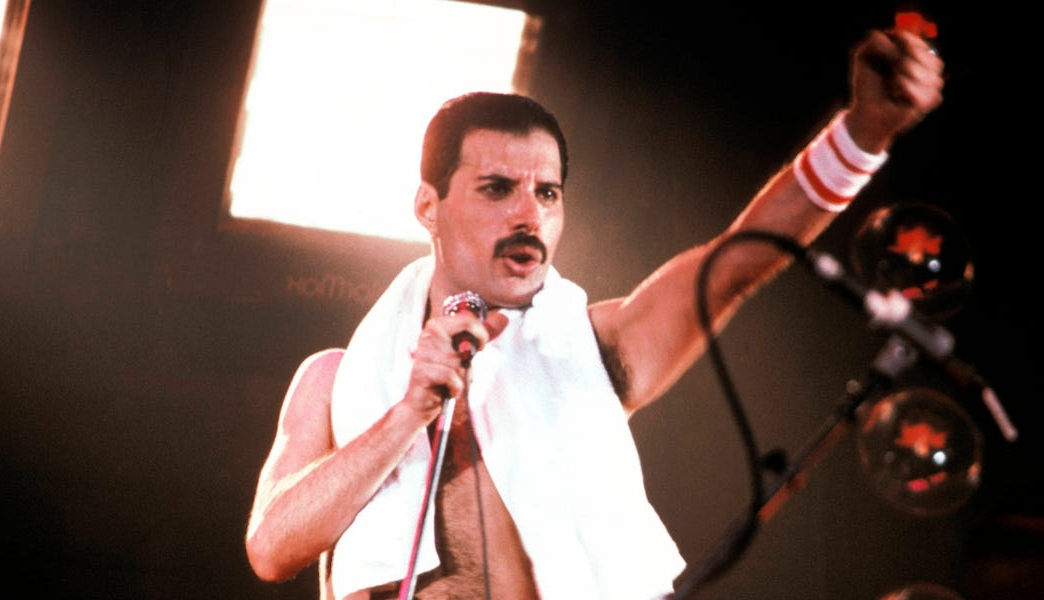
Few performers in music history possessed the sheer charisma, vocal power, and theatrical brilliance of Freddie Mercury. With a voice capable of soaring rock anthems, delicate ballads, and operatic grandeur, Mercury transformed every song into an unforgettable performance. As the legendary frontman of Queen, he helped create some of the most iconic tracks ever recorded, blending rock, pop, opera, glam, and pure showmanship into a style entirely his own. Whether delivering the emotional intensity of “Somebody to Love,” the explosive energy of “Bohemian Rhapsody,” or the triumphant spirit of “We Are the Champions,” Freddie sang with unmatched passion and personality. His music continues to inspire generations because it feels fearless, emotional, and larger than life. These timeless songs showcase the extraordinary artistry of a performer whose voice and presence remain absolutely unforgettable.
1. Bohemian Rhapsody
Bohemian Rhapsody is the towering Freddie Mercury masterpiece that changed the possibilities of rock music. Written by Mercury and performed by Queen, the song moves like a miniature opera, shifting from intimate piano ballad to grand choral drama, then into explosive hard rock before returning to a haunting final reflection. Its structure was wildly unconventional for popular radio, yet its emotional pull and sheer imagination made it one of the most beloved recordings in music history. Mercury’s voice is the heart of the entire journey. He begins with vulnerability, rises into theatrical intensity, and finally lands in a place of strange, beautiful resignation.
The genius of Bohemian Rhapsody lies in how fearless it feels. Mercury combines confession, fantasy, absurdity, guilt, comedy, and tragedy without explaining everything away. The lyrics remain mysterious, which only adds to the fascination. The layered vocals show Queen at their most ambitious, while Brian May’s guitar gives the rock section its blazing force. Freddie Mercury turned the recording studio into a stage for imagination itself. The song became more than a hit. It became a cultural landmark, a singalong ritual, and a permanent symbol of artistic daring. Few songs have ever balanced technical brilliance with emotional spectacle so completely, and even fewer have done it with such unforgettable personality.
2. Somebody to Love
Somebody to Love is one of Freddie Mercury’s greatest vocal triumphs, a song that turns loneliness into a gospel inspired rock cathedral. Written by Mercury, the track reveals his deep admiration for soul and gospel music while remaining unmistakably Queen. The song begins with a plea, almost like a private prayer, before expanding into massive harmonies that sound like an entire congregation. Mercury sings with astonishing range and control, moving from soft vulnerability to full voiced desperation with breathtaking ease. His performance captures the ache of someone searching for love, meaning, and emotional rescue.
What makes Somebody to Love so powerful is the way it transforms personal despair into communal release. The lyric is simple in its central need, yet Mercury fills it with spiritual urgency. He does not merely ask for love. He seems to wrestle with existence itself. The harmonies from Mercury, Brian May, and Roger Taylor create a choir like effect, giving the song its soaring identity. It is one of the finest examples of Queen turning emotional pain into grand musical architecture. The rhythm swings, the piano drives, and the vocals build until the song feels almost overwhelming in its intensity. Decades later, it remains a favorite because it is both spectacular and deeply human, a cry from the heart delivered with supreme theatrical power.
3. We Are the Champions
We Are the Champions is one of Freddie Mercury’s most iconic anthems, a song that has become inseparable from triumph, endurance, and collective celebration. Written by Mercury, it begins not with bombast, but with a surprisingly intimate piano figure and a vocal full of bruised pride. That opening is essential. Before the song becomes a stadium sized declaration, Mercury allows the listener to hear struggle, sacrifice, and defiance. His voice carries the weight of battles survived, which makes the eventual chorus feel earned rather than merely boastful.
The brilliance of We Are the Champions is its emotional progression. Mercury moves from personal testimony into universal victory, and Queen’s arrangement expands with him. Brian May’s guitar adds grandeur without overpowering the vocal, while the rhythm section supports the song with measured strength. Its popularity comes from the fact that it speaks to anyone who has fought through hardship and reached a moment of recognition. Though often heard at sporting events, the song is more than a victory chant. It is a declaration of resilience. Mercury’s performance gives it dignity, drama, and unmistakable authority. He sounds like someone who knows the cost of survival and still chooses to stand tall. That emotional truth is why We Are the Champions remains one of the most powerful singalong songs ever recorded.
4. Don’t Stop Me Now
Don’t Stop Me Now captures Freddie Mercury at his most joyous, flamboyant, and unstoppable. Written by Mercury, the song races forward with piano driven energy, bright harmonies, and a sense of reckless delight that feels impossible to resist. From the opening lines, Mercury sounds completely liberated, as though he has broken free from gravity and is inviting the listener into his orbit. The lyric is full of cosmic imagery, speed, heat, and pleasure, all delivered with a grin that can be heard in his voice. It is one of the purest expressions of musical exhilaration in Queen’s catalog.
The arrangement is deceptively sharp. The tempo is lively, the piano keeps everything moving, and the backing vocals add bursts of color that heighten the sense of celebration. Brian May’s guitar appears with perfect timing, adding rock muscle without slowing the momentum. Mercury’s vocal is the engine of the song, full of agility, wit, and theatrical confidence. He makes excess sound elegant and joy sound dangerous. Over time, Don’t Stop Me Now has grown into one of Queen’s most loved songs because it captures a feeling everyone wants to touch: the rare moment when life feels limitless. It is not just a party song. It is a portrait of freedom, delivered by a performer who understood how to turn personal electricity into a universal rush.
5. Killer Queen
Killer Queen is one of Freddie Mercury’s most dazzling early compositions, a song that introduced Queen’s wit, elegance, and theatrical cleverness to a wider audience. Written by Mercury, it presents a glamorous character study filled with luxury, danger, charm, and coded sophistication. The song’s melody is light on its feet, but the arrangement is packed with detail. Piano, guitar, harmonies, and rhythmic shifts all move with almost clockwork precision. Mercury sings with a playful sense of aristocratic mischief, turning every phrase into a stylish wink.
What makes Killer Queen so enduring is its balance of pop accessibility and musical complexity. The chorus is instantly memorable, yet the song is full of unusual turns that reveal Queen’s growing ambition. Brian May’s guitar work adds a polished sparkle, while the vocal harmonies show the band’s studio imagination beginning to bloom. Mercury’s performance is a masterclass in character singing. He does not simply deliver lyrics. He inhabits the scene, creating a figure who feels both alluring and untouchable. The song has the precision of cabaret, the gloss of glam rock, and the melodic charm of classic pop. It remains one of Freddie Mercury’s finest showcases because it proves that rock could be clever, theatrical, and sophisticated without losing its immediate appeal.
6. Love of My Life
Love of My Life is one of Freddie Mercury’s most tender and emotionally exposed songs, a ballad that reveals the intimate side of an artist often remembered for grandeur and spectacle. Written by Mercury, the song is built on delicate melody and heartfelt longing. In its studio form, it carries a chamber like grace, but its live performances became something even more extraordinary. Audiences around the world sang it back to Queen with deep affection, turning Mercury’s private sorrow into a shared moment of devotion. That transformation is part of the song’s magic.
Mercury’s vocal is beautifully restrained, full of ache but never excessive. He allows the lyric to breathe, giving every line a sense of emotional clarity. The song speaks of love lost, regret, and yearning, but it avoids melodrama through the purity of its melody. Its power comes from vulnerability, not volume. Brian May’s guitar arrangement in live versions adds an almost folk like intimacy, giving Mercury space to connect directly with the audience. Love of My Life remains beloved because it proves that Freddie did not need operatic scale to be overwhelming. He could break hearts with simplicity. The song stands as one of his most beautiful creations, a reminder that beneath the crown, the cape, and the stage lights was a songwriter capable of profound tenderness.
7. Crazy Little Thing Called Love
Crazy Little Thing Called Love shows Freddie Mercury’s gift for playful reinvention, taking inspiration from early rock and roll and transforming it into a compact Queen classic. Written by Mercury, the song has a breezy confidence that feels almost effortless. Unlike Queen’s most elaborate productions, this track thrives on simplicity. Its rhythm, guitar feel, and vocal style nod toward the spirit of Elvis Presley and rockabilly, but Mercury’s personality keeps it from sounding like mere imitation. He brings charm, humor, and a relaxed swagger to every line.
The recording works because the band understands restraint. The groove is light, the arrangement is clean, and the song never overstays its welcome. Mercury’s vocal is especially delightful because he shifts away from operatic intensity and leans into a cooler, more conversational style. He proves that theatrical brilliance can also mean knowing when to keep things simple. The lyric treats love as a baffling, exciting force that throws the singer off balance, and Mercury sells that idea with a smile. Crazy Little Thing Called Love became one of Queen’s most popular songs because it is instantly accessible, charming, and rhythmically infectious. It reveals another side of Freddie Mercury: the entertainer who could step into a vintage style, make it feel fresh, and still sound completely unmistakable.
8. Under Pressure
Under Pressure, Queen’s legendary collaboration with David Bowie, is one of the most emotionally urgent songs associated with Freddie Mercury. Built around one of the most recognizable bass lines in popular music, the track explores anxiety, compassion, social strain, and the human need for love under impossible conditions. Mercury’s presence is vital to the song’s power. His voice brings theatrical intensity and emotional lift, while Bowie adds cool gravity and searching reflection. Together, they create a vocal conversation that feels spontaneous, tense, and deeply alive.
The song’s structure mirrors the pressure it describes. It moves through fragments, rises, releases, and returns with a restless energy that keeps the listener unsettled. Mercury’s vocal improvisations add bursts of electricity, while the band creates a lean but dramatic musical frame. The emotional breakthrough arrives when the song turns from pressure toward love as a radical answer. That shift could have sounded naïve in lesser hands, but Mercury and Bowie give it urgency and moral force. Under Pressure remains one of Queen’s most important songs because it speaks to personal and collective stress with uncommon honesty. It is danceable, dramatic, compassionate, and musically unforgettable. Freddie Mercury’s contribution helps make it not just a famous collaboration, but a timeless statement about what people owe one another when the world feels unbearable.
9. Barcelona
Barcelona is one of Freddie Mercury’s most extraordinary solo achievements, a grand collaboration with Spanish opera legend Montserrat Caballé that fulfilled his lifelong love of operatic drama. The song is bold, majestic, and unlike anything else in mainstream rock or pop at the time. Mercury does not merely borrow from opera as a decorative influence. He steps directly into its world, meeting Caballé with reverence, ambition, and remarkable vocal courage. His performance is passionate and theatrical, yet also disciplined, showing how seriously he approached the collaboration.
The arrangement is sweeping and ceremonial, built to evoke the grandeur of the city and the scale of a major cultural celebration. Caballé’s voice brings classical authority and luminous power, while Mercury answers with his own distinctive blend of rock intensity and operatic aspiration. The result is not a novelty but a genuine meeting of musical worlds. Mercury sounds thrilled by the challenge, and that excitement gives the recording its emotional lift. Barcelona remains a fascinating part of his legacy because it shows the full breadth of his imagination. He was not content to remain inside one category. He wanted music to be theatrical, borderless, and larger than expectation. In this song, Freddie Mercury stands not only as a rock icon, but as an artist reaching toward the grandeur he had always dreamed of creating.
10. I Want to Break Free
I Want to Break Free became one of Queen’s most recognizable songs and one of Freddie Mercury’s most memorable performances, even though it was written by bassist John Deacon. Mercury’s interpretation gives the song its emotional and cultural force. On the surface, it is a sleek pop rock track built around a clean synthesizer line and a direct chorus. Beneath that surface, it carries a powerful sense of release, independence, and self assertion. Mercury sings the lyric with clarity and conviction, making the desire for freedom feel personal, universal, and unmistakably urgent.
The song’s famous video added another layer to its legacy, but the recording itself remains strong because of its melodic economy and Mercury’s commanding delivery. He does not over sing. He lets the directness of the message do much of the work, adding emotional color through phrasing and tone. His voice turns a simple declaration into an anthem of liberation. The production reflects Queen’s eighties sound, polished and spacious, yet still anchored by the band’s unmistakable identity. I Want to Break Free endures because its message can be heard in many ways: romantic, personal, social, or spiritual. Freddie Mercury gives the song dignity, drama, and sincerity, making it one of the most widely embraced expressions of freedom in Queen’s catalog.

Samuel Moore is a frequent contributor to Singers Room. Since 2005, Singersroom has been the voice of R&B around the world. Connect with us via social media below.