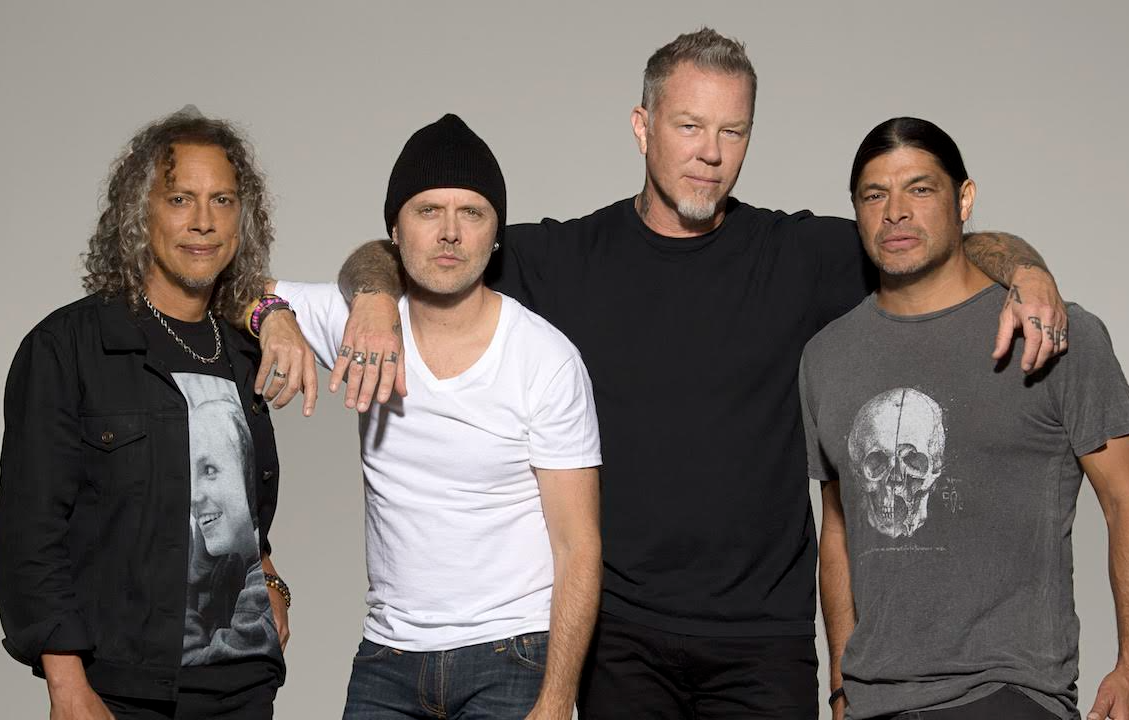
Few bands have forged a legacy as loud, relentless, and influential as Metallica. Rising from the underground thrash scene to global domination, they redefined what heavy music could be, blending raw aggression with intricate songwriting and unforgettable hooks. Their songs hit with thunderous riffs, blistering solos, and lyrics that dive into anger, isolation, and inner conflict with unflinching honesty. Yet beneath the power lies a sense of precision and purpose that elevates their music far beyond sheer volume. From anthems that ignite massive crowds to darker, introspective epics, Metallica’s catalog is packed with defining moments that continue to shape generations of listeners and musicians alike.
1. Enter Sandman
“Enter Sandman” is the Metallica song that turned heavy metal into a global nighttime ritual. From the first shadowy guitar figure, the track feels like a door opening into some vast dream world where childhood fear, stadium scale power, and razor sharp precision all collide. James Hetfield’s vocal is commanding without losing its sinister storytelling edge, guiding the listener through images of sleep, prayer, and nightmare with a voice that sounds both protective and threatening. The genius of the song lies in its patience. Metallica does not rush the attack. The riff creeps in, expands, tightens, and then detonates into one of the most recognizable grooves in rock history. Lars Ulrich’s drums hit with clean, martial force, while Kirk Hammett’s guitar adds a sense of danger and release. “Enter Sandman” became popular because it made heaviness feel massive, memorable, and strangely universal. It was dark enough for metal fans, catchy enough for radio, and dramatic enough to become an arena anthem. Even decades later, that central riff still feels like a warning siren from the subconscious. It is Metallica at their most accessible, but never soft, turning fear itself into a chantable, unforgettable force.
2. Master of Puppets
“Master of Puppets” is one of Metallica’s supreme achievements, a monumental thrash composition that balances speed, structure, aggression, and intelligence with astonishing control. The song attacks with a riff that feels both mechanical and alive, perfectly suited to its theme of control, addiction, and self destruction. James Hetfield’s vocal is fierce and theatrical, sounding like both victim and manipulator as the lyric twists through images of domination and decay. What makes “Master of Puppets” so extraordinary is its architecture. It is not simply fast or heavy. It moves through sections with the ambition of a classical piece, shifting from violent propulsion into a haunting melodic middle passage before returning with even greater force. Kirk Hammett’s soloing adds fire and tension, while Cliff Burton’s bass presence deepens the song’s muscular complexity. Lars Ulrich’s drumming keeps the entire machine charging forward, giving every turn a sense of purpose. The song’s popularity has only grown because it represents Metallica at the height of their early powers. It is brutal, clever, dramatic, and unforgettable. Few metal songs can claim this level of cultural reach while remaining so uncompromising in spirit. It is a masterpiece of controlled chaos.
3. Nothing Else Matters
“Nothing Else Matters” revealed a different side of Metallica, one built not on speed or fury, but on vulnerability, melody, and emotional openness. The song begins with a clean guitar pattern that feels intimate, almost private, as though the listener has stumbled into a confession never intended for the outside world. James Hetfield’s vocal performance is central to its lasting power. He does not hide behind aggression. He sings with a directness that makes the lyric feel personal without becoming fragile in a shallow way. The arrangement grows gradually, adding weight, orchestration, and electric force while preserving the sense of sincerity at the song’s core. “Nothing Else Matters” became one of Metallica’s most popular songs because it expanded what a metal band could express without abandoning identity. The heaviness is emotional rather than purely sonic. It carries loyalty, distance, trust, and the courage to speak plainly. Kirk Hammett’s solo brings a lyrical quality that suits the song’s reflective mood, while the rhythm section supports the performance with restraint. This track connected with listeners far beyond the metal audience because its feeling is universal. It is a love song, a road song, a statement of devotion, and a brave moment of stillness from a band known for thunder.
4. One
“One” is one of Metallica’s darkest and most cinematic works, a song that begins in bleak stillness and ends in a storm of almost unbearable intensity. Its power comes from the way it transforms horror into musical structure. The clean opening guitars create a sense of isolation, as if the listener is floating in a ruined memory. James Hetfield’s vocal is controlled and haunted, delivering the lyric with the numbness of someone trapped beyond ordinary language. As the song progresses, the emotional pressure increases, and the band gradually shifts from sorrow to panic to full mechanized fury. The final section is legendary for its machine gun rhythm, where guitars and drums mimic the violence and helplessness at the heart of the story. “One” became one of Metallica’s most popular songs because it proved that extreme music could be deeply narrative, emotionally devastating, and structurally sophisticated. The song does not simply describe suffering. It traps the listener inside a body and mind that cannot escape. Kirk Hammett’s soloing brings anguish and release, while the band’s dynamic control makes every transition feel earned. It remains a towering example of Metallica’s ability to combine technical force with serious emotional weight.
5. The Unforgiven
“The Unforgiven” is one of Metallica’s most brooding and emotionally complex songs, built around the struggle between individuality and imposed control. The track reverses expectations in a fascinating way, placing heavier force in the verses and opening into a more melodic, mournful chorus. That contrast gives the song a unique identity within the band’s catalog. James Hetfield sings with a weary intensity, capturing the voice of someone shaped, restricted, and hardened by forces outside his control. His delivery carries anger, resignation, and buried sadness, making the song feel like a personal reckoning rather than a simple anthem. The guitar work is equally powerful, with clean western flavored textures giving the track a cinematic loneliness before the heavier sections crash in with stern authority. “The Unforgiven” became popular because it speaks to listeners who understand the pain of being misunderstood, judged, or confined by expectations. It is not fast, but it is heavy in a deeper sense. Its weight comes from emotional history. Kirk Hammett’s solo adds a mournful grandeur, while the rhythm section gives the song a slow, deliberate force. Metallica created a song that feels like a scar speaking aloud, and that honesty continues to make it unforgettable.
6. Sad But True
“Sad But True” is Metallica at their heaviest in a slow, crushing, almost physical sense. Rather than relying on speed, the song uses space, weight, and groove to create one of the band’s most powerful riffs. The guitar tone is enormous, tuned and produced to feel like machinery grinding through concrete. James Hetfield’s vocal is confident, sinister, and deeply commanding, giving the lyric the feeling of an inner demon speaking directly into the listener’s ear. The song’s theme of dark dependence and hidden control is made even more effective by its simplicity. Every line lands with blunt force. Every riff feels like a footstep from something massive. “Sad But True” became a fan favorite because it shows how Metallica could slow down without losing menace. In fact, the slower tempo makes the song more intimidating. Lars Ulrich’s drums hit with huge authority, while the guitars lock into a groove that is both catchy and brutal. Kirk Hammett’s solo cuts through the heaviness with sharp, blues touched fire. This track is not about speed or complexity. It is about domination. It proves that Metallica’s power can come from restraint, from impact, and from the terrifying confidence of a riff that refuses to move until it has flattened everything in its path.
7. For Whom the Bell Tolls
“For Whom the Bell Tolls” is one of Metallica’s most imposing early classics, a song that turns battlefield dread into a slow, monumental march. The opening bell immediately sets a grave atmosphere, but it is the famous bass introduction from Cliff Burton that gives the track its mythic force. That sound feels almost otherworldly, blurring the line between bass and lead instrument before the full band enters with crushing purpose. James Hetfield’s vocal is stern and vivid, delivering images of combat, fear, and mortality with a voice that sounds carved from iron. Unlike some of Metallica’s faster thrash pieces, this song moves with deliberate weight, allowing every riff to land like a blow. “For Whom the Bell Tolls” became popular because it captures war not as glory, but as inevitability and terror. The groove is simple enough to be instantly memorable, yet the atmosphere is deep and oppressive. Lars Ulrich’s drumming gives the song a marching tension, while the guitars create a thick wall of fatalistic sound. It is one of Metallica’s great examples of mood as power. The song does not need speed to devastate. It advances slowly, solemnly, and with absolute certainty.
8. Fade to Black
“Fade to Black” is one of Metallica’s most emotionally significant songs, a track that showed early listeners the band could channel despair with as much force as rage. The opening guitar lines are melodic, mournful, and beautifully restrained, creating a sense of loneliness before the full heaviness arrives. James Hetfield’s vocal is unusually vulnerable, carrying the lyric with a plain spoken darkness that feels painfully direct. The song explores hopelessness and inner collapse with a seriousness that was rare in metal at the time, refusing to disguise emotional pain as fantasy or aggression. What makes “Fade to Black” so lasting is the way it grows. It begins in sorrow, expands into tension, and eventually erupts into a heavy instrumental release that feels like emotion breaking past all control. Kirk Hammett’s lead work is especially memorable, moving from lyrical sadness into fierce expression as the song intensifies. The rhythm section supports this transformation with patience and power. This song became popular because it gave listeners permission to hear vulnerability inside heaviness. It is not soft simply because it is melodic, and it is not less powerful because it admits pain. It remains one of Metallica’s most beloved tracks because it turns darkness into a profound musical journey.
9. Seek and Destroy
“Seek and Destroy” is one of Metallica’s great early anthems, a song that captures the young band’s raw hunger, street level aggression, and instinct for crowd command. From the opening riff, the track feels direct and combustible, built for sweat, volume, and communal release. James Hetfield’s vocal has a youthful snarl that perfectly fits the song’s predatory energy. He sounds less like a polished frontman and more like the leader of a gang kicking open the doors of heavy music. The guitar riffs are sharp and memorable, combining the influence of classic metal with the faster, rougher edge that Metallica would soon help define. “Seek and Destroy” became popular not only because it is catchy, but because it functions like a live ritual. The chorus invites participation, turning audiences into part of the attack. Kirk Hammett’s solos bring fire and flash, while Lars Ulrich’s drumming pushes the song with youthful urgency. There is a rawness here that later Metallica would refine, but never completely replace. The song remains essential because it captures the band before world domination, when everything sounded hungry, dangerous, and possible. It is simple, vicious, and thrilling in the most classic metal sense.
10. Battery
“Battery” is one of Metallica’s most ferocious album openers, a song that begins with unexpected beauty before launching into pure thrash devastation. The acoustic introduction is not decorative. It creates suspense, almost like a calm horizon before an explosion. When the full band enters, the impact is enormous, and the song becomes a celebration of speed, aggression, and collective force. James Hetfield’s vocal is raw and commanding, delivering the lyric with the spirit of a metal brotherhood united by intensity. The riffs are relentless, moving with sharp precision and violent momentum, while Lars Ulrich’s drumming drives the song forward with punishing energy. Kirk Hammett’s lead work adds chaos and electricity, cutting through the dense rhythm guitars with wild urgency. “Battery” is popular among devoted fans because it represents Metallica’s thrash identity at full strength. It is not designed for casual comfort. It demands surrender to its speed and impact. Yet beneath the aggression is impressive craft. The transitions are tight, the dynamics are dramatic, and the song’s structure gives its violence shape. As an opening statement, it is nearly perfect. It tells the listener that Metallica is not easing in. They are charging straight through the gates with discipline, fury, and total conviction.

Samuel Moore is a frequent contributor to Singers Room. Since 2005, Singersroom has been the voice of R&B around the world. Connect with us via social media below.