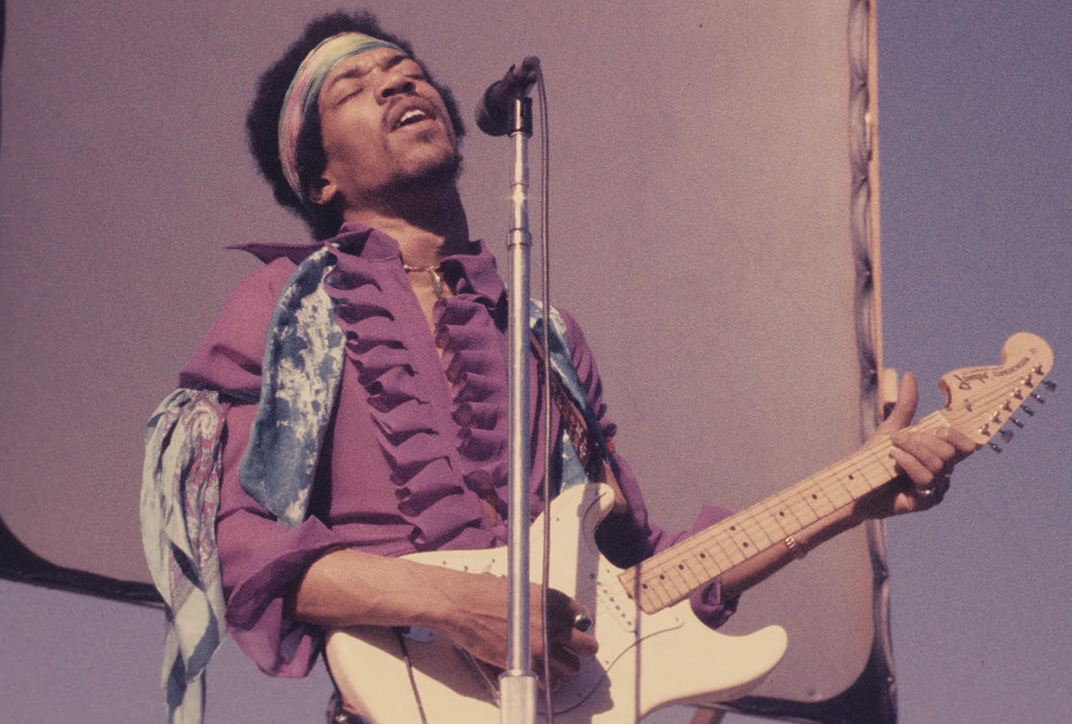
Few musicians changed the sound of rock music as dramatically as Jimi Hendrix. With a guitar in his hands, he turned distortion, feedback, and raw emotion into an entirely new musical language that still feels electrifying decades later. Hendrix blended blues, psychedelic rock, soul, and hard rock into songs that were both technically astonishing and emotionally explosive. His music could be wild and chaotic one moment, then deeply beautiful and haunting the next. From thunderous guitar solos to dreamy melodic passages, every performance carried an unpredictable sense of danger and creativity. Even with a career that lasted only a few short years, Hendrix created a catalog packed with legendary songs that continue to inspire generations of musicians and fans. His recordings remain more than classic rock staples because they are fearless artistic statements filled with passion, imagination, and unforgettable sound.
1. Purple Haze
Purple Haze is the song that seems to announce Jimi Hendrix as a force from another dimension. From the first jagged guitar phrase, the track feels electric, strange, dangerous, and completely alive. Hendrix did not simply play rock guitar here. He bent the instrument into a new language, using distortion, blues phrasing, and psychedelic imagination to create a sound that still feels revolutionary. The riff is compact but unforgettable, moving with a swagger that combines raw blues muscle with futuristic studio color. His vocal performance is just as important, loose and cool, yet filled with mystery. The lyrics float between romance, confusion, dream imagery, and altered perception, which helped make the song one of the defining records of the psychedelic era. What makes Purple Haze endure is the way every element feels slightly unstable in the best possible way. The guitar tone snarls, the rhythm section pushes forward, and Hendrix sounds as though he is discovering fire in real time. Purple Haze remains one of his most popular songs because it captures the thrill of innovation without losing the punch of a great rock single.
2. All Along The Watchtower
All Along The Watchtower is one of the rare cover versions that became so definitive it reshaped how listeners understood the original song. Written by Bob Dylan, the composition already had a cryptic, apocalyptic quality, but Jimi Hendrix turned it into a towering piece of electric drama. His version feels cinematic from the opening seconds, with acoustic strums, rolling percussion, and guitar lines that seem to flash like lightning across a dark sky. Hendrix’s vocal is focused and intense, delivering the lyrics with a sense of urgency that gives the song its prophetic atmosphere. The guitar work is astonishing not because it is merely flashy, but because every phrase adds color, tension, and narrative force. He uses solos like voices in a storm, pushing the song toward a feeling of fate and revelation. The rhythm section keeps the track moving with discipline, allowing the guitar to expand without losing structure. All Along The Watchtower remains one of Hendrix’s most beloved recordings because it shows his genius as an interpreter, arranger, guitarist, and sonic architect. He did not just perform the song. He entered it, transformed it, and left behind one of rock music’s most powerful recordings.
3. Voodoo Child Slight Return
Voodoo Child Slight Return is Jimi Hendrix at his most mythic, a volcanic blues rock statement that sounds less like a song than a supernatural event. The opening wah wah guitar sweep is instantly recognizable, a growling, voice like sound that seems to rise from the earth before exploding into one of the fiercest riffs in rock history. Hendrix builds the track from blues tradition, but he stretches that tradition into something massive, psychedelic, and almost cosmic. His vocal is commanding, playful, and dangerous, full of the larger than life confidence that made him such a magnetic performer. The lyrics present Hendrix as a figure of elemental power, someone who can stand beside mountains and chop them down with the edge of his hand. That imagery could feel exaggerated in another artist’s hands, but Hendrix makes it feel natural because his guitar truly sounds capable of impossible things. The Experience plays with incredible force, giving the track a heavy, rolling foundation while leaving space for Hendrix to unleash waves of tone and attack. Voodoo Child Slight Return remains one of his most popular songs because it captures the essence of his legend. It is blues, rock, theater, electricity, and pure imagination fused into one unforgettable performance.
4. Hey Joe
Hey Joe introduced many listeners to Jimi Hendrix’s extraordinary blend of blues feeling, rock power, and psychological intensity. Although the song had been recorded by other artists before him, Hendrix gave it a slow burning menace and emotional gravity that made his version iconic. The story is dark, built around betrayal, violence, and flight, yet Hendrix does not rush through it or turn it into simple shock value. He sings with a cool, almost conversational tone that makes the narrative feel even more chilling. His guitar fills are essential to the drama, answering the vocal lines with phrases that sound wounded, searching, and dangerous. The track moves with patience, allowing the tension to gather gradually rather than exploding all at once. That restraint shows Hendrix’s deep understanding of blues storytelling. He knew when to dazzle and when to let silence, space, and tone do the emotional work. The rhythm section supports him with steady purpose, giving the song a grounded, smoky atmosphere. Hey Joe remains one of Hendrix’s most popular songs because it reveals his ability to transform familiar material into something uniquely his own. It is not only a showcase for guitar brilliance, but a masterclass in mood, pacing, and haunted expression.
5. Little Wing
Little Wing is one of Jimi Hendrix’s most beautiful songs, a brief but deeply affecting piece that shows the tender, poetic side of his artistry. While Hendrix is often celebrated for explosive guitar work and psychedelic fire, this track reveals his gift for delicacy, color, and emotional suggestion. The opening guitar passage is one of the most admired in rock history, not because it overwhelms the listener, but because it glows with grace. Every chord embellishment feels carefully shaped, yet the performance remains fluid and spontaneous. Hendrix’s vocal is gentle and dreamlike, offering a portrait of a mysterious, angelic figure who brings comfort, imagination, and escape. The lyrics are simple but vivid, creating a feeling rather than a detailed story. What makes Little Wing so remarkable is how much it accomplishes in such a short span. The song feels complete, yet it also seems to disappear like a vision before the listener can fully hold it. The arrangement has a soft psychedelic shimmer, with guitar textures that feel almost painterly. Little Wing remains beloved because it proves Hendrix was not only a revolutionary technician. He was also a deeply sensitive songwriter capable of turning tenderness into sound.
6. Foxey Lady
Foxey Lady is one of Jimi Hendrix’s most electrifying early tracks, a song built on desire, swagger, and one of the most primal guitar riffs of the nineteen sixties. From the opening sustained note, the recording creates tension before dropping into a groove that feels both sensual and aggressive. Hendrix’s guitar tone is thick, dirty, and unmistakably alive, giving the song a physical presence that still jumps out of the speakers. His vocal performance matches the music perfectly. He sounds confident, playful, and completely in command, turning the lyric into a bold expression of attraction without losing his mischievous charm. The Experience drives the track with tight power, keeping the rhythm direct and forceful while Hendrix bends notes, colors phrases, and injects sparks of controlled chaos. Foxey Lady became one of his signature songs because it captures the excitement of his early sound in concentrated form. It is blues based, but it does not feel old fashioned. It is raw rock and roll pushed through Hendrix’s futuristic imagination. The song remains popular because it delivers everything listeners want from classic Hendrix: a killer riff, a magnetic vocal, explosive guitar personality, and an atmosphere of fearless, stylish rebellion.
7. The Wind Cries Mary
The Wind Cries Mary is one of Jimi Hendrix’s most graceful and emotionally nuanced songs, a recording that reveals how poetic his songwriting could be when he stepped away from pure sonic attack. The guitar playing is restrained but deeply expressive, filled with gentle bends, ringing chords, and blues influenced phrases that seem to sigh rather than shout. Hendrix’s vocal has a soft, reflective quality, carrying the sadness of a relationship in fragments rather than direct confession. The lyrics feel dreamlike, filled with images of broken scenes, quiet streets, and a name carried by the wind. This indirect style gives the song a lasting mystery. It does not explain heartbreak in plain terms. It lets the atmosphere do the work. The rhythm section plays with taste and subtlety, creating a relaxed groove that allows Hendrix’s guitar to speak with unusual elegance. The Wind Cries Mary remains one of his most popular songs because it expands the idea of what a Hendrix recording can be. It is not built around spectacle, speed, or distortion. Instead, it is a masterwork of tone, mood, and emotional suggestion. The result is a blues ballad touched by psychedelia, loneliness, and quiet beauty.
8. Fire
Fire is one of Jimi Hendrix’s most energetic and immediate songs, a compact burst of rhythm, attitude, and guitar driven heat. The track moves fast, powered by Mitch Mitchell’s restless drumming and Noel Redding’s punchy bass, giving Hendrix the perfect platform for sharp riffs and fiery vocal delivery. Unlike some of his more expansive psychedelic pieces, Fire is direct and lean, proving that Hendrix could create maximum impact within a tight song structure. His guitar playing is explosive without becoming excessive, using bursts of rhythm and lead work to keep the track constantly moving. The vocal is playful and charged with confidence, mixing humor, flirtation, and rock and roll bravado. The song’s popularity comes from its sheer physical excitement. It sounds like a live wire, fast enough to thrill but controlled enough to remain catchy and memorable. The Experience performs as a true power trio here, each musician pushing the others with remarkable chemistry. Fire also highlights Hendrix’s deep connection to rhythm and blues, even as he transforms those roots through psychedelic amplification and rock intensity. It remains a fan favorite because it is impossible to hear without feeling its momentum, heat, and restless joy.
9. Crosstown Traffic
Crosstown Traffic is one of Jimi Hendrix’s sharpest and most infectious songs, a punchy track that mixes rock, soul, funk, and psychedelic studio imagination into a compact burst of urban energy. The song moves with the frustration and humor suggested by its title, using traffic as a metaphor for a relationship that feels blocked, crowded, and impossible to navigate smoothly. Hendrix’s vocal is bright, sly, and rhythmically alive, delivering the lyric with a sense of impatience and wit. The guitar riff is tight and memorable, but the arrangement has more layers than its quick running time might suggest. The kazoo like textures and backing vocals add a playful edge, showing Hendrix’s willingness to experiment with sound while still keeping the song accessible. The rhythm section snaps forward with lively force, giving the track a bounce that separates it from his heavier blues rock pieces. Crosstown Traffic remains popular because it captures Hendrix’s ability to be inventive without losing immediacy. It is clever, catchy, and full of personality, a reminder that his genius was not limited to long solos or cosmic atmospheres. He could write concise songs with hooks, humor, groove, and studio flair, all while sounding unmistakably like himself.
10. Castles Made Of Sand
Castles Made Of Sand is one of Jimi Hendrix’s most poetic and emotionally layered songs, a meditation on fragility, disappointment, and the way life can dissolve even our most carefully built hopes. The guitar work is delicate and imaginative, with backward textures and liquid phrasing that give the recording a dreamlike quality. Rather than relying on the overwhelming force that defines some of his most famous performances, Hendrix uses subtle studio craft to create an atmosphere of reflection and sadness. The lyrics unfold through small human stories, each one showing how plans, pride, or innocence can be washed away by time and circumstance. That narrative approach gives the song a literary depth rarely associated with mainstream rock of its era. Hendrix’s vocal is understated and compassionate, allowing the images to resonate without melodrama. The arrangement feels almost weightless, yet the emotional impact is profound. Castles Made Of Sand remains beloved because it reveals Hendrix as a storyteller with tremendous sensitivity. It is psychedelic, but not merely for color or spectacle. The dreaminess serves the meaning of the song, making the listener feel how unstable memory, ambition, and happiness can be. It stands as one of his most haunting and beautifully crafted recordings.

Edward Tomlin is a frequent contributor to Singers Room. Since 2005, Singersroom has been the voice of R&B around the world. Connect with us via social media below.