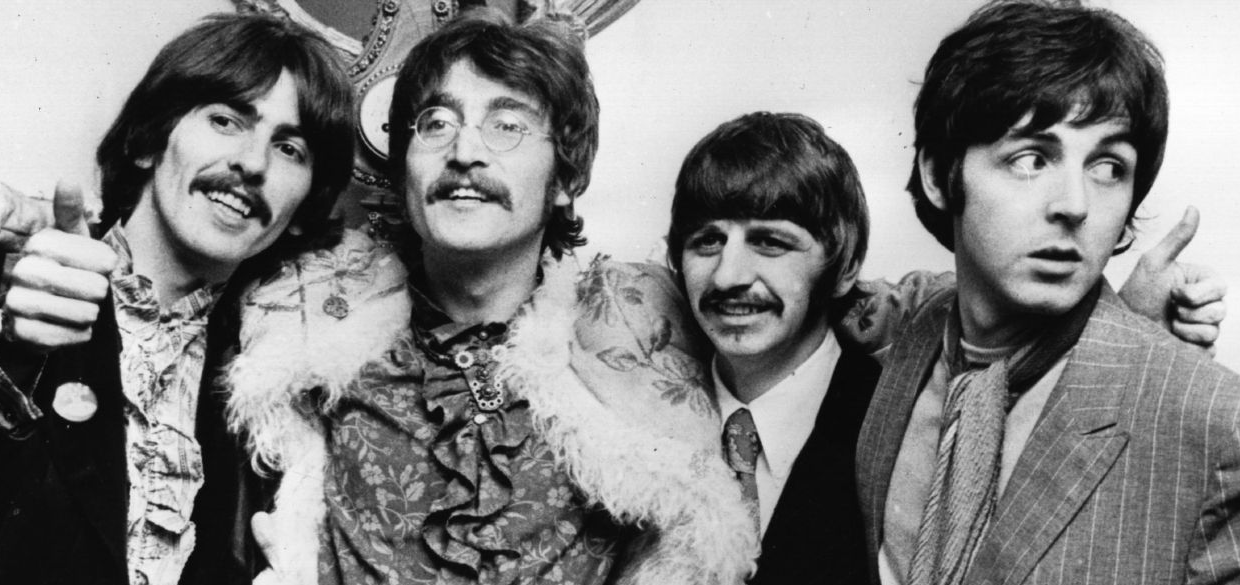
From the explosive rush of early rock and roll to the groundbreaking studio experiments that changed modern music forever, The Beatles created a catalog packed with unforgettable melodies, emotional storytelling, and cultural revolution. Few artists have shaped popular music with the same creativity, charm, and fearless innovation. Whether delivering heart racing love songs, psychedelic masterpieces, or deeply personal ballads, John Lennon, Paul McCartney, George Harrison, and Ringo Starr consistently pushed the boundaries of what a song could be. Their music crossed generations, genres, and continents, turning simple pop tunes into timeless global anthems. Even decades after their final recording sessions, Beatles songs continue to inspire musicians and captivate listeners everywhere. The magic of their songwriting lies not only in catchy hooks, but in the emotion, imagination, and humanity woven into every note.
1. Hey Jude
Hey Jude stands as one of The Beatles’ most beloved achievements, a sweeping anthem that turns private comfort into a universal act of emotional release. Written primarily by Paul McCartney, the song began as a gesture of encouragement for Julian Lennon during the difficult period surrounding his parents’ separation. Yet what makes Hey Jude so powerful is how naturally that personal origin expands into something vast, communal, and almost spiritual. The opening piano chords feel intimate, as if McCartney is sitting beside the listener rather than performing to a crowd. His vocal begins with tenderness and patience, carrying the simple wisdom of someone urging another person to keep moving through pain. As the arrangement grows, the song slowly transforms from ballad into celebration. John Lennon, George Harrison, and Ringo Starr help build an atmosphere that is warm, human, and deeply resonant. The famous closing chant is more than a catchy refrain. It becomes a shared ritual, inviting listeners to participate in the healing. Few popular songs have balanced simplicity and grandeur so beautifully. Hey Jude remains timeless because it understands sadness without surrendering to it, offering hope through melody, repetition, and the unmistakable generosity of The Beatles at their most emotionally open.
2. Let It Be
Let It Be is one of The Beatles’ most enduring songs because it speaks with the calm authority of a hymn while remaining unmistakably human. Written by Paul McCartney, the song was inspired by a dream involving his mother Mary, whose presence offered comfort during a period of tension and uncertainty. That background gives the song a quiet emotional gravity. It does not sound like a sermon or a grand philosophical statement. Instead, it feels like advice passed from one heart to another in the middle of confusion. McCartney’s vocal is gentle but firm, carrying both vulnerability and acceptance. The piano gives the song its sacred foundation, while the organ, bass, drums, and guitar solo deepen the arrangement without overwhelming its simplicity. George Harrison’s guitar adds a dignified glow, providing just enough fire to balance the song’s reflective spirit. Let It Be has often been heard as a farewell, partly because of its place in the band’s final chapter, but its message reaches far beyond Beatles history. It is a song about surrender without defeat, patience without passivity, and peace found in the act of releasing control. That emotional clarity keeps it among the group’s most cherished recordings.
3. Yesterday
Yesterday is one of the most famous ballads in popular music, a song whose elegance lies in its remarkable restraint. Written and sung by Paul McCartney, it marked a striking departure from the energetic group sound that had first made The Beatles international stars. Built around acoustic guitar and a string quartet, the recording feels almost weightless, yet its emotional impact is enormous. The melody has the shape of something that seems to have always existed, graceful and inevitable, as if McCartney discovered it rather than composed it. The lyric captures regret with devastating simplicity. There is no elaborate story, no dramatic explanation, only the ache of someone looking back at love after it has slipped away. That restraint is what gives the song its lasting force. McCartney sings with a soft clarity that avoids theatrical sorrow, allowing the melody to carry the grief naturally. The strings add classical refinement without turning the song into ornament. They support the mood like a shadow moving behind the vocal. Yesterday helped prove that The Beatles could reach beyond rock and roll excitement into mature emotional songwriting. Its popularity endures because nearly anyone can recognize the feeling at its center, the painful distance between what life was and what it has become.
4. Here Comes The Sun
Here Comes The Sun is one of George Harrison’s brightest and most beloved contributions to The Beatles’ catalog, a song that radiates warmth without ever feeling shallow. Written during a period when Harrison was seeking relief from business pressures and personal strain, the song carries the sensation of stepping outside after a long, cold season. Its acoustic guitar pattern is instantly recognizable, delicate yet full of motion, suggesting light breaking through clouds in small golden flashes. Harrison’s vocal is calm, sincere, and quietly joyful, never forcing the optimism but letting it bloom naturally. The arrangement is a marvel of subtle craft. The harmonies glow, the rhythm shifts add playful sophistication, and the overall texture feels both pastoral and precise. Unlike some celebratory songs that rely on spectacle, Here Comes The Sun finds power in renewal. It recognizes that hope can arrive gently, almost shyly, and still change everything. The song has become a favorite across generations because it offers comfort without denying hardship. Its beauty lies in that sense of emergence, of life returning after emotional winter. Among The Beatles’ most popular songs, it remains a perfect example of Harrison’s gift for spiritual warmth, melodic grace, and understated emotional truth.
5. Come Together
Come Together shows The Beatles at their coolest, strangest, and most rhythmically magnetic. Opening with a slinky bass line and a hushed vocal from John Lennon, the song immediately creates an atmosphere of mystery. It does not announce itself with bright pop sweetness or obvious sentiment. Instead, it creeps forward with swagger, humor, and surreal imagery. Lennon’s lyrics are famously cryptic, filled with odd character sketches and slippery phrases that seem meaningful and nonsensical at the same time. That ambiguity is part of the attraction. The listener is pulled into a world where language becomes rhythm, attitude, and texture. Paul McCartney’s bass work is essential, giving the track its deep groove and unmistakable identity. Ringo Starr’s drumming is spacious and inventive, leaving room for the song to breathe while still keeping it locked in motion. George Harrison’s guitar lines add bite and shadow, completing the track’s smoky personality. Come Together became one of The Beatles’ most popular songs because it feels unlike anything else in their catalog while still sounding completely natural for them. It is bluesy, funky, surreal, and effortlessly confident, a late period masterpiece that captures the band’s ability to reinvent their sound without losing their magnetic center.
6. Something
Something is often regarded as George Harrison’s finest love song, and with good reason. It possesses a rare emotional balance, romantic without being sentimental, elegant without becoming distant, and deeply felt without needing excessive explanation. Featured on Abbey Road, the song confirmed Harrison’s emergence as a songwriter equal to the towering Lennon and McCartney partnership. The opening guitar phrase is unforgettable, graceful and intimate, setting a tone of quiet devotion. Harrison’s vocal has a soft sincerity that gives the song its emotional center. He does not oversell the feeling. He lets uncertainty and admiration coexist, which makes the lyric feel more honest. Love in Something is not presented as simple certainty. It is mysterious, magnetic, and slightly beyond language. Paul McCartney’s bass line is unusually melodic, almost a second voice moving around the lead vocal, while Ringo Starr’s drumming is tasteful and sensitive. The orchestration adds richness without overwhelming the song’s natural beauty. Something became one of The Beatles’ most celebrated songs because it captures the awe of being drawn to someone in a way that cannot be fully explained. Its craftsmanship is exquisite, but its real power lies in the quiet wonder at its heart.
7. Help!
Help! is one of The Beatles’ most thrilling early classics, but beneath its bright tempo and infectious harmonies lies one of John Lennon’s most revealing lyrics. At first listen, the song feels like a burst of pop energy, driven by urgent rhythm, crisp guitars, and a chorus that is impossible to forget. Yet Lennon later described the song as a genuine cry from a period when fame, pressure, and inner turmoil were weighing heavily on him. That tension gives Help! lasting depth. The performance moves quickly, almost breathlessly, as if the narrator is trying to outrun his own vulnerability. Lennon’s lead vocal carries urgency and honesty, while McCartney and Harrison’s harmonies add polish and lift. The contrast between the cheerful musical surface and the emotional distress in the lyric is a classic Beatles move, showing how the group could turn personal unease into irresistible pop form. Ringo Starr’s drumming keeps the track lively without cluttering it, allowing the vocal interplay to shine. Help! remains popular because it works on multiple levels. It is a brilliant singalong, a sharp piece of songwriting, and a glimpse of Lennon’s growing willingness to put real psychological need into mainstream music.
8. A Day In The Life
A Day In The Life is one of The Beatles’ most extraordinary recordings, a song that turns fragments of daily news, dreamlike observation, and studio imagination into a monumental work of art. Closing Sgt. Pepper’s Lonely Hearts Club Band, it feels less like a conventional pop song and more like a portal into modern consciousness. John Lennon’s sections are haunting and detached, sung with a ghostly calm that makes ordinary events feel surreal and tragic. His voice floats above the arrangement, giving the song an eerie documentary quality. Paul McCartney’s middle section introduces a brisk scene of routine life, waking up, rushing out, and slipping into a dream. The contrast between Lennon’s drifting melancholy and McCartney’s everyday urgency is brilliant, capturing the strange collision of public events and private habits. The orchestral crescendos are among the most famous studio moments in rock history, rising like chaos itself before collapsing into the final piano chord. That last sound seems to hang in the air forever. A Day In The Life remains popular not because it is simple, but because it is unforgettable. It shows The Beatles using the studio as an instrument and transforming pop music into something cinematic, philosophical, and deeply unsettling.
9. Strawberry Fields Forever
Strawberry Fields Forever is one of John Lennon’s most personal and imaginative songs, a psychedelic masterpiece rooted in memory, confusion, and emotional retreat. Inspired by a place from Lennon’s childhood in Liverpool, the song does not simply describe nostalgia. It questions memory itself, turning the past into a dreamscape where comfort and uncertainty blur together. Lennon’s vocal is beautifully weary, carrying a sense of distance from the world and from his own identity. The famous opening Mellotron figure immediately establishes the song’s otherworldly mood, sounding both childlike and uncanny. As the arrangement unfolds, layers of drums, brass, strings, and studio effects create a dense sonic environment unlike anything in earlier Beatles pop. The recording’s complex construction reflects the band’s growing mastery of the studio as a creative laboratory. Yet the song never becomes merely experimental. At its center is a deeply human feeling, the desire to withdraw into a private mental landscape where nothing feels entirely real. Strawberry Fields Forever remains one of The Beatles’ most popular and admired songs because it combines emotional vulnerability with radical production. It is strange, beautiful, melancholy, and endlessly fascinating, a recording that still feels ahead of its time.
10. Twist And Shout
Twist And Shout captures The Beatles as a raw, explosive live force before studio experimentation transformed their artistic identity. Although the song was not written by the band, their version became one of the definitive performances of their early years, largely because of John Lennon’s electrifying vocal. Recorded near the end of a long studio session, Lennon’s voice sounds torn, raspy, and utterly committed. That strain is exactly what makes the performance unforgettable. He does not merely sing the song. He attacks it with the feverish energy of a club performer determined to shake the walls. Paul McCartney and George Harrison’s backing vocals add excitement and call and response momentum, while Ringo Starr’s drumming gives the track its pounding physical drive. The arrangement is simple, but its impact is enormous. Every element serves the feeling of release. Twist And Shout became a favorite because it preserves the wild spirit of The Beatles before they became symbols of artistic sophistication and cultural change. It reminds listeners that beneath the later masterpieces was a band forged through performance, sweat, rhythm, and instinct. The recording still sounds alive because it captures the thrill of rock and roll in its most direct form.

Edward Tomlin is a frequent contributor to Singers Room. Since 2005, Singersroom has been the voice of R&B around the world. Connect with us via social media below.