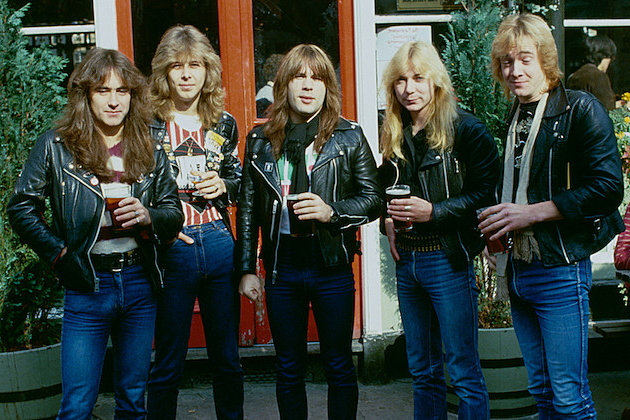
Few bands have forged a legacy as thunderous and enduring as Iron Maiden, pioneers who turned heavy metal into a world of epic storytelling, galloping rhythms, and larger than life imagery. With soaring vocals, intricate guitar work, and lyrics that draw from history, mythology, and literature, their music goes far beyond raw power. It becomes an experience, a journey through time, battlefields, and imagination. From arena shaking anthems to sprawling epics, their catalog is filled with songs that have defined generations of fans. This collection of their most popular tracks captures the intensity, ambition, and unmistakable spirit that made Iron Maiden one of the most influential forces in metal history.
1. The Trooper
The Trooper is one of Iron Maiden’s most instantly recognizable songs, a galloping heavy metal charge that captures the terror, glory, and chaos of nineteenth century battlefield imagery with astonishing force. Built around Steve Harris’s famous racing bass pulse and one of the most iconic guitar harmonies in metal, the song feels like cavalry in motion from the first seconds. It does not merely describe battle. It places the listener inside the smoke, steel, and panic, where every riff seems to flash like a saber and every drum strike lands like cannon fire.
Bruce Dickinson’s vocal performance gives the track its theatrical authority. He sings with the urgency of a soldier facing impossible odds, turning historical inspiration into something immediate and physical. The song’s compact structure is part of its genius. Unlike some of Maiden’s longer epics, The Trooper wastes no movement. It strikes fast, drives hard, and leaves a permanent mark. The dual guitar work of Dave Murray and Adrian Smith gives the piece its heroic melodic sweep, while Clive Burr’s successor Nicko McBrain brings relentless momentum. The Trooper remains one of Maiden’s most popular songs because it captures the band’s essential identity in pure form: history, speed, melody, drama, and a sense of metal as storytelling on a battlefield scale.
2. Run To The Hills
Run To The Hills is one of Iron Maiden’s defining anthems, a song that helped launch the Bruce Dickinson era with a voice powerful enough to match the band’s growing ambition. The track is driven by a thunderous rhythm and a chorus that feels designed for massive crowds, but beneath the energy is one of Steve Harris’s sharpest historical narratives. The lyrics confront violence, conquest, and cultural destruction with a directness that gives the song far more depth than a simple metal singalong. It is fast, vivid, and unforgettable.
Dickinson’s arrival transformed Maiden’s possibilities, and this recording shows why. His voice cuts through the gallop with operatic strength, carrying both fury and alarm. The guitars move with bright melodic force, while the bass and drums create that unmistakable Maiden momentum, a rolling surge that became one of heavy metal’s signature rhythmic languages. Run To The Hills remains popular because it balances accessibility with intelligence. Its chorus is immediate, but the song’s subject matter carries moral weight. Its pace is thrilling, but its message is grim. That contrast is central to Maiden’s greatness. They could make history feel alive, not as dusty lesson material, but as a living nightmare powered by electric guitars and a singer who sounded like he was warning the world from a mountaintop.
3. The Number Of The Beast
The Number Of The Beast is the song that turned Iron Maiden into heavy metal legend, a dramatic nightmare set to riffs, screams, and theatrical dread. From its spoken introduction to Bruce Dickinson’s legendary opening scream, the track is built like a horror scene unfolding in real time. It is dark, intense, and brilliantly staged, but its power comes from musicianship as much as imagery. Maiden understood that atmosphere means little without momentum, and this song moves with a fierce, almost ritualistic confidence.
Dickinson’s vocal performance is one of the great entrances in metal history. He sounds possessed by the narrative rather than merely describing it, giving the song a sense of danger that still feels electric. The guitars slash and circle with sinister purpose, while Steve Harris’s bass keeps the composition tense and driving. Clive Burr’s drumming adds nervous energy, pushing the song forward without losing its shadowy mood. The Number Of The Beast became controversial, but controversy alone never explains its endurance. The song remains popular because it is expertly constructed, melodically memorable, and theatrically irresistible. It captures the moment when Iron Maiden fully mastered heavy metal drama, turning fear, fantasy, and musicianship into a track that still sounds like a gate opening to some forbidden world.
4. Hallowed Be Thy Name
Hallowed Be Thy Name is often regarded as one of Iron Maiden’s greatest achievements, a towering epic that turns the final moments of a condemned prisoner into a meditation on fear, faith, mortality, and revelation. The song begins with solemn restraint, almost like a death chamber prayer, before slowly gathering force. That gradual build is crucial. Maiden allows the emotional weight to settle before unleashing the full power of the band. The result is not only a metal classic, but a dramatic composition with the sweep of theater and the intensity of confession.
Bruce Dickinson delivers one of his most powerful performances, moving from dread to disbelief to defiant transcendence. His phrasing gives the narrator psychological depth, making the listener feel the shifting thoughts of someone standing at the edge of death. The guitars build in layers, from mournful lines to surging harmonies, while Steve Harris’s bass provides the song’s pounding pulse of fate. Every section feels necessary, and every transition increases the emotional stakes. Hallowed Be Thy Name endures because it captures Iron Maiden’s ability to make heavy metal intellectually and emotionally vast. It is a song about execution, but also about consciousness under pressure. Few bands could take such a theme and turn it into something this majestic, terrifying, and strangely uplifting.
5. Fear Of The Dark
Fear Of The Dark is one of Iron Maiden’s most beloved songs because it transforms a simple childhood terror into a massive communal experience. The studio version is atmospheric and brooding, but the song’s true reputation has been forged in concert, where crowds turn its haunting melodic lines into a chant that seems to rise from the floor of the arena. The subject is primal: walking alone, sensing something unseen, feeling imagination twist shadows into threats. Maiden takes that common fear and enlarges it until it becomes mythic.
The song’s structure is masterful. It begins quietly, almost cautiously, then builds into a storm of galloping rhythms and sweeping guitar melodies. Bruce Dickinson sings with dramatic tension, capturing the mind’s movement from nervous suspicion to full panic. The guitars create a sense of pursuit, while the rhythm section drives the piece forward with escalating intensity. Fear Of The Dark remains popular because it gives listeners a role inside the song. Its melodies are not just heard. They are sung back, shouted, and shared. The track shows Maiden’s rare gift for turning darkness into participation. It is eerie, powerful, and strangely celebratory, proving that heavy metal can make fear feel less isolating by transforming it into a collective roar.
6. Aces High
Aces High is Iron Maiden at full aerial velocity, a World War Two inspired metal assault that sounds like fighter planes diving through clouds with engines burning. The song opens with urgency and never truly lets up, driven by one of the band’s most thrilling rhythms and a guitar attack that feels sharp, fast, and brilliantly coordinated. Maiden had always been masters of historical drama, but Aces High captures motion with unusual vividness. It is not simply about combat in the sky. It feels airborne.
Bruce Dickinson’s vocal performance is pure command. He sings as though issuing orders from a cockpit, combining adrenaline with precision. The chorus lifts with heroic force, while the verses hurtle forward with breathless speed. Dave Murray and Adrian Smith weave guitar lines that suggest both danger and exhilaration, and Steve Harris’s bass locks the entire machine into that unmistakable gallop. Nicko McBrain’s drumming adds a fierce sense of lift, giving the song its propulsive snap. Aces High remains one of Maiden’s most popular tracks because it distills the band’s love of history, speed, melody, and spectacle into a compact blast of metal brilliance. It is cinematic without losing aggression, technical without losing excitement, and heroic without becoming sentimental. Few songs better capture the feeling of battle as a rush of fear and adrenaline.
7. 2 Minutes To Midnight
2 Minutes To Midnight is one of Iron Maiden’s sharpest political statements, a song that uses the image of the Doomsday Clock to explore war, power, corruption, and humanity’s appetite for destruction. Musically, it is one of the band’s most accessible anthems, built around a muscular riff and a chorus that hits with immediate force. Yet the words are dark, filled with images of conflict and moral decay. Maiden makes the apocalypse catchy without making it comfortable, which is part of the song’s lasting power.
Adrian Smith and Bruce Dickinson shaped a track that feels both direct and layered. The guitar work has a hard, classic metal punch, while the rhythm section gives the song a heavy forward march. Dickinson’s vocal is commanding, filled with anger and clarity rather than fantasy theater. He sounds like a witness calling out hypocrisy from the edge of catastrophe. The song’s popularity comes from this balance of force and intelligence. It can ignite a crowd, but it also rewards close listening. 2 Minutes To Midnight remains essential because it shows Iron Maiden engaging with real world horror as effectively as mythological or historical subjects. The monster here is not a demon or battlefield legend. It is humanity itself, armed, arrogant, and dangerously close to midnight.
8. Wasted Years
Wasted Years is one of Iron Maiden’s most emotionally resonant songs, a rare moment where the band turns its epic energy inward and finds something deeply human. Instead of history, horror, or war, the song reflects on distance, regret, touring life, and the strange ache of looking backward while life keeps moving forward. Adrian Smith’s opening guitar figure is instantly recognizable, bright and ringing with a futuristic shimmer that perfectly suits the atmosphere of Somewhere In Time. It is melodic, elegant, and unmistakably Maiden.
Bruce Dickinson sings with a different kind of intensity here. The performance is not about battle cries or supernatural dread. It is about reflection, endurance, and the need to stop mourning what has already passed. The chorus carries one of Maiden’s most uplifting messages, urging the listener to recognize the value of the present rather than live trapped in regret. The guitars are polished and soaring, the rhythm section steady and purposeful, and the overall sound has a sleek momentum that helped the band move into a new sonic era. Wasted Years remains popular because it speaks beyond metal mythology. It is a song about time, memory, and survival, delivered with the grandeur of heavy metal but rooted in emotional truth. For many fans, it is one of Maiden’s most personal and life affirming tracks.
9. Can I Play With Madness
Can I Play With Madness is one of Iron Maiden’s most concise and infectious singles, a burst of melodic heavy metal that shows the band’s ability to be immediate without sounding ordinary. Taken from the visionary world of Seventh Son Of A Seventh Son, the song deals with prophecy, visions, confusion, and the dangerous desire to know the future. Yet instead of unfolding as a long progressive suite, it strikes quickly, with a chorus that lodges in the mind almost instantly. That combination of mystical subject matter and radio friendly punch gives the song its special appeal.
Bruce Dickinson delivers the vocal with bright theatrical energy, sounding restless, defiant, and slightly unhinged in the best possible way. The guitars are sharp and melodic, building tension without overcomplicating the structure. Steve Harris’s bass gives the song its familiar Maiden drive, while Nicko McBrain keeps the rhythm lively and direct. Can I Play With Madness remains popular because it captures the band in a rare compact mode. It is imaginative, catchy, and full of personality, with enough narrative color to satisfy longtime fans and enough immediacy to draw in casual listeners. The song proves that Iron Maiden did not always need vast length to create a world. Sometimes three and a half minutes was enough to open the door to prophecy and chaos.
10. Flight Of Icarus
Flight Of Icarus is one of Iron Maiden’s most dramatic mid tempo classics, a song that turns Greek myth into a warning about ambition, betrayal, and the terrible beauty of reaching too high. Rather than racing at the breakneck pace of many Maiden favorites, the track moves with a heavy, deliberate stride. That slower weight gives the story room to breathe. The myth of Icarus becomes not only a tale of flight and fall, but a symbolic drama about trust, youth, and the fatal pull of glory.
Bruce Dickinson’s vocal performance is majestic, especially in the soaring chorus, where his voice seems to enact the very ascent described in the lyric. The guitars are powerful and dignified, choosing grandeur over speed, while Steve Harris’s bass and Nicko McBrain’s drums provide a firm foundation. The song’s atmosphere is both heroic and tragic, which makes it one of Maiden’s most distinctive early singles. Flight Of Icarus remains popular because it proves the band could create intensity without constant acceleration. Its power comes from tension, melody, and mythic scale. The track feels like a bronze statue coming alive, with wings spreading against a darkening sky. In a catalog full of battles and monsters, this song stands apart as one of Iron Maiden’s most elegant meditations on destiny and downfall.

Edward Tomlin is a frequent contributor to Singers Room. Since 2005, Singersroom has been the voice of R&B around the world. Connect with us via social media below.