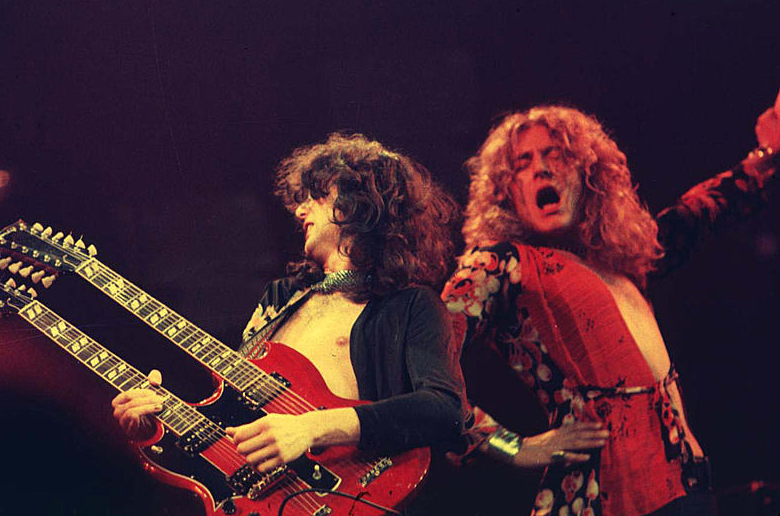
Few bands in rock history have cast a shadow as massive as Led Zeppelin. Exploding onto the late-1960s music scene with thunderous riffs, mystical lyrics, and a fearless blend of blues, hard rock, folk, and psychedelia, the group transformed popular music forever. From the electrifying guitar work of Jimmy Page to the soul-shaking vocals of Robert Plant, every song carried a larger-than-life energy that still feels timeless decades later. Their music could be delicate and haunting one moment, then roar with unmatched intensity the next. Whether blasting through arena speakers or playing softly through headphones late at night, Led Zeppelin songs continue to inspire generations of rock fans and musicians alike. These are the tracks that defined their legend, shaped the sound of classic rock, and secured their place among the greatest bands of all time.
1. Stairway to Heaven
Stairway to Heaven remains Led Zeppelin’s most mythic achievement, a song that feels less like a standard rock recording and more like a gradual ascent into legend. Its opening acoustic guitar figure is instantly recognizable, delicate enough to feel ancient, yet mysterious enough to invite endless interpretation. Robert Plant’s vocal enters with a storyteller’s calm, carrying lyrics filled with spiritual searching, symbolic imagery, and poetic ambiguity. What makes the song so powerful is its sense of motion. It begins in near silence, then slowly gathers force as John Paul Jones adds recorder and keyboard textures, John Bonham waits with dramatic patience, and Jimmy Page builds toward one of the most celebrated guitar solos in rock history. By the time the full band erupts, Stairway to Heaven has transformed from a folk meditation into a towering hard rock climax. Its popularity comes from that journey, the feeling that every minute matters and every section opens another door. Few songs have inspired so much devotion, debate, and awe. It is not simply one of Led Zeppelin’s most popular songs. It is one of the defining monuments of classic rock.
2. Whole Lotta Love
Whole Lotta Love is the sound of Led Zeppelin announcing that hard rock had entered a new, more dangerous age. From the first seconds, Jimmy Page’s riff hits with a thick, grinding authority that feels primal and futuristic at once. It is blues based, but the band stretches that foundation into something much heavier, louder, and more physical than most rock music of its time. Robert Plant delivers the vocal with swagger, sensuality, and theatrical force, turning every phrase into a charged performance. John Paul Jones anchors the groove with bass lines that lock tightly to Page’s guitar, while John Bonham’s drumming gives the track its enormous muscle. The middle section remains one of the boldest passages in mainstream rock, with echo, moans, percussion, and studio effects creating a psychedelic storm before the riff comes crashing back. Whole Lotta Love became a signature song because it captures Led Zeppelin’s central magic: blues tradition, sonic experimentation, and raw power all colliding in one explosive recording. It is heavy without losing groove, wild without losing control, and unforgettable from the first riff to the final blast.
3. Kashmir
Kashmir stands as one of Led Zeppelin’s grandest creations, a song built on scale, atmosphere, and hypnotic force rather than simple rock hooks. Jimmy Page’s guitar riff moves with a strange, majestic weight, while John Bonham’s drumming gives the track a ceremonial pulse that feels enormous without rushing. Robert Plant’s vocal performance is one of his most dramatic, filled with images of travel, desert visions, and mystical longing. The song does not behave like a normal radio single. It unfolds like a procession, using repetition to create tension and power. John Paul Jones adds orchestral colors that make the arrangement feel cinematic, almost imperial, yet the band never loses its physical drive. Kashmir became one of Led Zeppelin’s most popular songs because it shows the group operating beyond the usual boundaries of rock music. It is heavy, but not in a simple riff rock sense. It is exotic, but not decorative. It feels like a world being built in sound, with every drum hit and chord change adding to the sense of vast movement. For many fans, this is Led Zeppelin at their most ambitious, mysterious, and commanding.
4. Immigrant Song
Immigrant Song is pure Led Zeppelin adrenaline, a brief but thunderous burst of Viking imagery, galloping rhythm, and electric aggression. Robert Plant’s opening cry is one of the most famous vocal entrances in rock history, a piercing call that immediately gives the track its mythic identity. The song charges forward with remarkable economy. Jimmy Page’s guitar locks into a sharp, driving riff, John Paul Jones reinforces the attack with bass that keeps the engine roaring, and John Bonham powers everything with relentless precision. Unlike some of Led Zeppelin’s longer epics, Immigrant Song wastes no time. It arrives fully armed, delivers its impact, and leaves a trail of smoke behind it. The lyrics helped expand the band’s fascination with legend and ancient imagery, giving the song a warrior like character that has made it a favorite in films, sports arenas, and rock playlists. Its popularity comes from its directness. There is no long buildup, no wandering middle passage, no soft landing. It is Led Zeppelin distilled into motion and force. The result is one of the band’s most instantly exciting songs, a track that still sounds ready to storm the gates every time it begins.
5. Black Dog
Black Dog is a masterclass in tension, rhythm, and rock attitude. The song opens with Robert Plant’s unaccompanied vocal line, immediately answered by one of Jimmy Page’s most memorable guitar riffs. That call and response design gives the track a teasing, unpredictable energy, as though the band is constantly pulling the listener forward and then snapping back with tremendous force. The rhythm is famously tricky, moving in a way that feels loose and swaggering while actually requiring remarkable precision. John Bonham drives the performance with thunderous confidence, and John Paul Jones plays a crucial role in shaping the riff’s unusual structure. Plant’s vocal is full of bluesy heat, but the band’s treatment turns the material into something larger and more explosive than standard blues rock. Black Dog became one of Led Zeppelin’s most popular songs because it captures the group’s ability to make complexity feel natural. Casual listeners hear a huge riff and a commanding vocal, while musicians hear a maze of rhythmic intelligence beneath the surface. It is playful, heavy, sensual, and fierce, all at once. Few opening tracks have ever made a stronger statement, and few Led Zeppelin songs better represent their power as a band.
6. Rock and Roll
Rock and Roll is Led Zeppelin’s roaring tribute to the early spirit of the genre, but it is delivered with the volume, muscle, and confidence of the seventies at full blast. John Bonham’s opening drum pattern is instantly energizing, launching the band into a performance that feels both nostalgic and freshly dangerous. Jimmy Page’s guitar work crackles with vintage excitement, drawing from old rhythm and blues energy while pushing it through a heavier, arena ready sound. Robert Plant sings with wild joy, sounding like a frontman fully aware that the band has tapped into something elemental. John Paul Jones keeps the track moving with piano and bass support that deepen the groove without crowding the arrangement. Rock and Roll became a staple because it is so immediate. There is no mystery to decode and no extended journey to follow. It is a celebration of the music’s heartbeat, a reminder that Led Zeppelin could be sophisticated and experimental, yet still deliver a direct blast of pure rock pleasure. The song’s enduring popularity comes from that unstoppable lift. It sounds like the moment the lights come up, the amps roar, and an entire crowd rises at once.
7. Ramble On
Ramble On reveals Led Zeppelin’s gift for blending delicacy and force inside a single unforgettable song. The verses are light, almost wandering, with Jimmy Page’s guitar chiming gently while Robert Plant sings with a restless traveler’s tone. John Paul Jones gives the track melodic warmth through his bass playing, and John Bonham uses remarkable restraint before the song opens into its heavier chorus. That contrast is the heart of the recording. The music moves between pastoral reflection and surging rock power, making the listener feel both the loneliness of the road and the thrill of movement. Plant’s lyrics combine romantic longing with fantasy imagery, giving the song a distinctive character that links personal desire with mythic adventure. Ramble On became one of Led Zeppelin’s most beloved tracks because it shows how versatile the band could be without losing identity. It is not as crushing as Whole Lotta Love or as monumental as Kashmir, but its emotional pull is just as strong. The song feels open, searching, and beautifully balanced. Every time the chorus blooms, it proves that Led Zeppelin’s softer textures could carry as much magic as their loudest thunder.
8. Good Times Bad Times
Good Times Bad Times introduced Led Zeppelin to the world with astonishing confidence. As the opening track from their debut album, it immediately showed that this was not just another blues rock group finding its footing. Jimmy Page’s guitar tone is sharp and commanding, Robert Plant’s vocal already has the authority of a star, and John Paul Jones brings a tight, muscular bass presence that gives the song real punch. Yet the performance is often remembered most for John Bonham’s drumming. His kick drum work, fills, and sense of momentum announce a new level of rhythmic power in rock music. The song is compact compared with many later Zeppelin classics, but it contains the essential ingredients of their sound: blues influence, hard rock force, technical brilliance, and a fearless sense of style. Good Times Bad Times remains popular because it feels like a beginning that already knows its destination. The band sounds fully formed, hungry, and impossible to ignore. It is a first impression that still hits hard decades later. In just a few minutes, Led Zeppelin made it clear that rock music was about to grow heavier, bolder, and far more ambitious.
9. When the Levee Breaks
When the Levee Breaks is one of Led Zeppelin’s most powerful reinterpretations of blues tradition, turning an older song into a massive, echo drenched force of nature. The recording is famous for John Bonham’s colossal drum sound, captured with such depth and space that every beat feels like it is rolling through a cavern. Jimmy Page layers guitar and production textures with remarkable taste, creating an atmosphere that is heavy, humid, and ominous. Robert Plant’s harmonica and vocal performance carry the sorrow and warning at the center of the song, while John Paul Jones provides the low end weight that keeps the whole structure moving. When the Levee Breaks is popular not because it behaves like a conventional hit, but because it creates an unforgettable mood. The groove is slow, immense, and almost unstoppable, matching the lyric’s sense of rising disaster. It sounds like weather, history, and human fear being transformed into rock music. Led Zeppelin often drew from blues roots, but here they did more than borrow a form. They rebuilt it with studio imagination, emotional gravity, and physical power, producing one of the most atmospheric tracks in their catalog.
10. Dazed and Confused
Dazed and Confused is one of the clearest early examples of Led Zeppelin’s ability to turn blues based material into something darker, stranger, and more theatrical. The song moves with a heavy, stalking presence, built around a descending bass figure that gives the entire recording a feeling of menace. Robert Plant’s vocal performance is dramatic and haunted, shifting from controlled tension to explosive cries. Jimmy Page’s guitar work is central to the song’s identity, especially in the way he uses tone, space, and attack to create a sense of danger. John Bonham’s drumming adds weight without overwhelming the song’s eerie atmosphere, while John Paul Jones keeps the low end hypnotic and unsettling. Dazed and Confused became one of Led Zeppelin’s most popular deep classics because it opened the door to the band’s improvisational identity. Onstage, it could stretch into a vast journey, but even the studio version feels huge in imagination. It is not merely heavy rock. It is psychological, shadowy, and full of tension. The song helped define Led Zeppelin as a band that could make darkness sound thrilling, turning raw blues DNA into something monumental and mysterious.

Edward Tomlin is a frequent contributor to Singers Room. Since 2005, Singersroom has been the voice of R&B around the world. Connect with us via social media below.