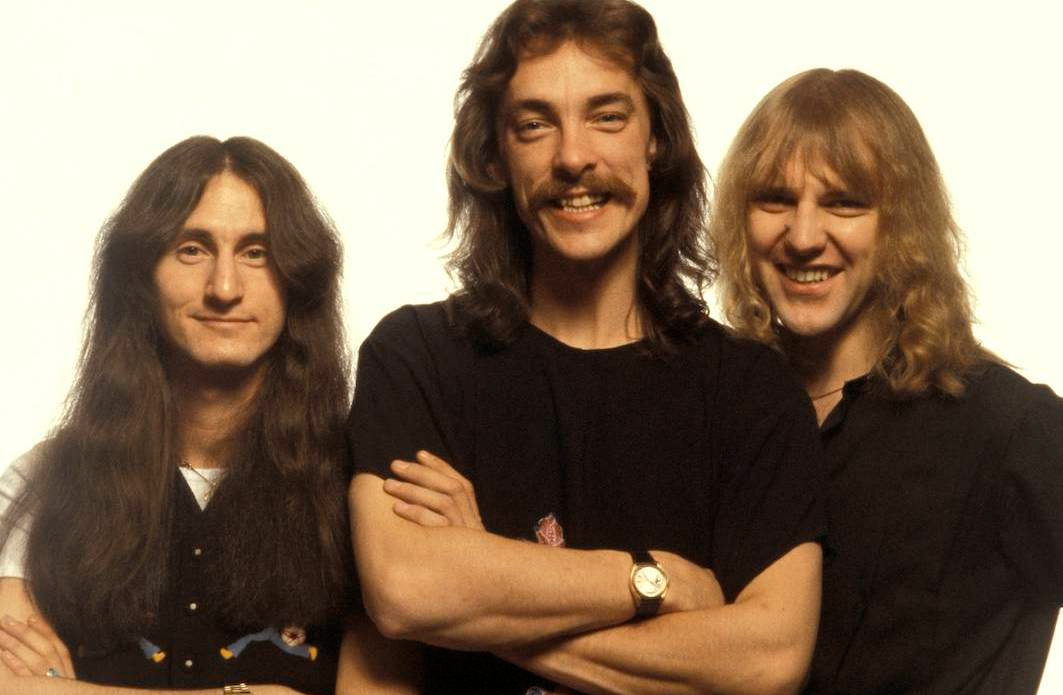
Rush built one of the most remarkable careers in rock history by combining fearless musicianship, imaginative songwriting, and a relentless desire to push beyond traditional boundaries. With Geddy Lee’s soaring vocals and thunderous bass lines, Alex Lifeson’s inventive guitar work, and Neil Peart’s legendary drumming and lyrical brilliance, the Canadian trio created a sound that was both intellectually ambitious and explosively powerful. Their music moved effortlessly between hard rock intensity, progressive experimentation, science fiction storytelling, and deeply personal reflection, earning them a devoted global following that only grew stronger with time. From sprawling epics filled with complex arrangements to radio favorites packed with unforgettable hooks, Rush consistently proved that technical mastery and emotional depth could exist side by side. This collection celebrates the songs that defined their extraordinary legacy and transformed Rush into one of the most respected, influential, and beloved bands in rock music history.
1. Tom Sawyer
“Tom Sawyer” is the Rush song that even casual rock listeners instantly recognize, and for good reason. It captures the band at the perfect intersection of progressive complexity, hard rock force, and radio accessibility. From the opening synthesizer growl to Neil Peart’s thunderous drum fills, the track sounds like a machine built by geniuses and powered by raw electricity. Geddy Lee’s vocal performance is sharp, dramatic, and unmistakable, giving life to a character who feels independent, skeptical, and impossible to control. Alex Lifeson’s guitar work adds tension and color without crowding the song, proving how carefully Rush could balance three highly distinctive musicians inside one arrangement. “Tom Sawyer” became a defining anthem because it made technical musicianship feel exciting rather than academic. The shifting rhythm patterns, bold keyboard textures, and explosive instrumental breaks all serve the personality of the song. It is not complexity for its own sake. It is attitude, precision, and imagination fused into one unforgettable recording. As the opening track from Moving Pictures, it helped introduce Rush to a wider audience while still satisfying the devoted fans who loved the band’s adventurous spirit. Decades later, “Tom Sawyer” remains the ultimate gateway into Rush’s world.
2. Limelight
“Limelight” is one of Rush’s most emotionally revealing songs, a brilliant reflection on fame, privacy, and the strange distance that can grow between artist and audience. Written with Neil Peart’s personal discomfort with celebrity in mind, the lyrics examine public attention not as glamour, but as pressure. That perspective gives the song unusual depth, especially because the music itself is so bright, melodic, and powerful. Alex Lifeson’s guitar tone sparkles with clarity, building a sense of open space around Geddy Lee’s expressive vocal. The rhythm section is precise but never stiff, with Peart shaping the song through elegant accents and dramatic momentum. The beauty of “Limelight” lies in its emotional contradiction. It is a radio classic about the loneliness of being watched. It is an arena rock favorite about wanting distance from the arena. The chorus is instantly memorable, yet the meaning behind it remains thoughtful and bittersweet. Rush had always been admired for intelligence and instrumental mastery, but “Limelight” showed how deeply human their music could be. Its popularity endures because it speaks not only to musicians, but to anyone who has felt misunderstood while performing a version of themselves for the world.
3. The Spirit Of Radio
“The Spirit Of Radio” is one of Rush’s most joyous and dynamic songs, a tribute to the magic of broadcasting that also questions what happens when art becomes controlled by commerce. The track opens with one of Alex Lifeson’s most dazzling guitar figures, a bright rush of notes that feels like a signal bursting through the airwaves. From there, the band moves through sections of rock power, progressive intricacy, reggae flavored rhythm, and melodic lift with astonishing ease. Geddy Lee sounds energized and agile, delivering the lyrics with a mixture of celebration and warning. This song captures Rush’s rare ability to be both idealistic and skeptical at the same time. It loves radio as a place of discovery, imagination, and shared feeling, yet it also recognizes the pressures that can flatten creativity into formula. Neil Peart’s drumming is spectacular throughout, not merely keeping time but shaping the architecture of the piece. Every transition feels alive. Every instrumental turn adds another layer to the song’s meaning. “The Spirit Of Radio” remains popular because it feels generous, exciting, and intellectually alive. It is a love letter to music itself, performed by a band operating at full creative confidence.
4. Closer To The Heart
“Closer To The Heart” is one of Rush’s most beloved songs because it distills the band’s philosophical spirit into a compact, melodic, and deeply uplifting form. Unlike some of their longer progressive works, this track makes its point with remarkable economy. The acoustic opening has a gentle brightness, almost like an invitation, before the full band enters with confidence and lift. Geddy Lee’s vocal is passionate without becoming overblown, and Alex Lifeson’s guitar work moves gracefully between delicacy and power. Neil Peart’s lyrics imagine a world shaped by creativity, responsibility, and moral imagination, suggesting that every person has a role in building something better. That message gives the song its lasting emotional glow. It is idealistic, but not naive. It asks listeners to think about leadership, art, labor, and conscience in a way that feels accessible and inspiring. “Closer To The Heart” became a concert favorite partly because its chorus feels communal. Fans could sing it together as both melody and affirmation. The song’s popularity comes from its balance of beauty and conviction. Rush often explored enormous concepts, but here they made wisdom feel intimate. It remains one of their most graceful and enduring statements.
5. Subdivisions
“Subdivisions” is one of Rush’s most powerful explorations of alienation, conformity, and the emotional geography of suburban life. The song captures the feeling of growing up in carefully planned spaces that promise comfort while quietly enforcing sameness. Geddy Lee’s synthesizers create a cool, spacious atmosphere that perfectly matches the lyrical world, while Alex Lifeson’s guitar adds emotional bite and contrast. Neil Peart’s drumming is precise, dramatic, and deeply expressive, turning the track into a study of tension and release. What makes “Subdivisions” so enduring is how clearly it understands the pain of not fitting in. The lyrics speak to teenagers, outsiders, dreamers, and anyone who has felt judged by invisible social rules. The repeated title phrase lands like a verdict, suggesting both physical neighborhoods and the divisions people create among themselves. Rush had already proven they could write fantasy epics and philosophical anthems, but this song showed their gift for social observation. It is progressive rock with a human ache at its center. “Subdivisions” remains popular because its message has not aged. The pressure to belong, the fear of exclusion, and the search for individual identity still feel painfully familiar.
6. Freewill
“Freewill” is Rush at their most intellectually fierce, a song that turns philosophical argument into a thrilling rock performance. Built around Neil Peart’s lyrics about choice, responsibility, and belief, the track challenges listeners to consider whether people shape their own lives or surrender control to fate. That could have become heavy handed in lesser hands, but Rush makes it exhilarating. The music is fast, sharp, and full of shifting energy, with Geddy Lee delivering one of his most intense vocal performances. His voice rises with urgency, matching the song’s restless demand for self determination. Alex Lifeson’s guitar solo is wild, expressive, and almost chaotic, breaking open the track with a burst of searching energy. That instrumental section feels like the sound of thought becoming action. Neil Peart’s drumming is equally commanding, packed with accents and turns that keep the song moving forward with relentless purpose. “Freewill” remains one of Rush’s most popular songs because it captures the band’s unique identity so clearly. It is brainy without being cold, technical without losing emotion, and philosophical without forgetting to rock. For many fans, it stands as one of the clearest declarations of the band’s independent spirit.
7. Working Man
“Working Man” is the song that first gave Rush a major identity outside their local scene, and it remains one of the most important tracks in their history. Released before Neil Peart joined the band, the song features John Rutsey on drums and presents Rush in a heavier, more direct hard rock mode. Even without the later progressive complexity that would define their classic era, the track has enormous power. The riff is massive, the groove is steady, and Geddy Lee’s voice cuts through with youthful force. The lyric speaks plainly about the daily grind, capturing the routine of labor, exhaustion, and small comforts without romanticizing it. That directness helped the song connect with listeners who heard their own lives inside its heavy rhythm. Alex Lifeson’s guitar work is especially important, stretching into extended solo passages that reveal the band’s appetite for instrumental exploration even at this early stage. “Working Man” became popular in part because it sounded authentic. It was not polished fantasy or fashionable posturing. It was a loud, muscular rock song about ordinary life, played by musicians who sounded hungry. Its legacy remains huge because it marks the first major step in Rush’s journey from local powerhouse to global rock institution.
8. Fly By Night
“Fly By Night” represents a crucial turning point in Rush’s evolution, capturing the arrival of Neil Peart as both drummer and lyricist while still holding onto the band’s early hard rock energy. The song is bright, concise, and full of movement, built around a feeling of escape and personal reinvention. Geddy Lee’s vocal has a youthful urgency that suits the theme perfectly, while Alex Lifeson’s guitar provides ringing power and melodic lift. Peart’s drumming immediately brings a new sophistication to the band’s sound, not by overwhelming the track, but by adding precision, drive, and a sense of musical architecture. The song’s appeal comes from its restless optimism. It is about leaving behind the familiar, taking risks, and stepping into uncertainty with courage. That message resonated with fans who were discovering Rush as a band in motion, a group refusing to stay fixed in one style. “Fly By Night” is more straightforward than the epics that would follow, but it carries the seeds of everything Rush would become: thoughtful lyrics, dynamic musicianship, and a belief that rock music could express adventure as well as attitude. Its popularity endures because it feels like the sound of a band discovering its wings.
9. YYZ
“YYZ” is one of the most celebrated instrumental rock pieces ever recorded, and it stands as a dazzling showcase of Rush’s technical brilliance. Named after the airport code for Toronto, the band’s home city, the track turns rhythmic code into musical architecture, beginning with a pattern inspired by the Morse code rhythm of those three letters. From that clever foundation, Rush builds a piece that is intricate, powerful, and surprisingly playful. Geddy Lee’s bass is astonishing throughout, moving with lead instrument confidence while still locking into the groove. Alex Lifeson’s guitar provides texture, bite, and melodic force, while Neil Peart’s drumming is a masterclass in precision and imagination. What makes “YYZ” so beloved is that it never feels like a sterile display of skill. The musicianship is extraordinary, but the track also has personality, momentum, and excitement. It swings, charges, shifts, and explodes with the kind of chemistry only a deeply connected trio could produce. “YYZ” became a fan favorite because it allowed each member of Rush to shine without turning the music into a contest. It is a conversation among virtuosos, filled with humor, discipline, and raw power. For many listeners, it is the perfect instrumental expression of Rush’s genius.
10. Time Stand Still
“Time Stand Still” is one of Rush’s most emotionally mature songs, a reflective meditation on memory, aging, friendship, and the desire to hold onto fleeting moments. Released during the band’s late 1980s period, the track embraces a polished sound with prominent keyboards, clean guitar textures, and a spacious arrangement that supports the lyric’s sense of reflection. Geddy Lee sings with unusual warmth and restraint, allowing the emotional meaning to rise gently rather than dramatically. Aimee Mann’s guest vocal adds a haunting counterpoint, giving the chorus a sense of distance and tenderness. The song’s power comes from its honesty. Instead of chasing fantasy or grand abstraction, it looks directly at the passage of time and the human wish to slow it down. Neil Peart’s lyrics are especially poignant because they recognize how ambition, travel, and routine can cause life to rush past before anyone fully understands it. Alex Lifeson’s guitar work adds atmosphere rather than domination, showing the band’s ability to serve a mood with remarkable taste. “Time Stand Still” remains popular because it speaks to listeners differently as they grow older. What may once sound like reflection eventually becomes recognition, making it one of Rush’s most quietly devastating classics.

Samuel Moore is a frequent contributor to Singers Room. Since 2005, Singersroom has been the voice of R&B around the world. Connect with us via social media below.