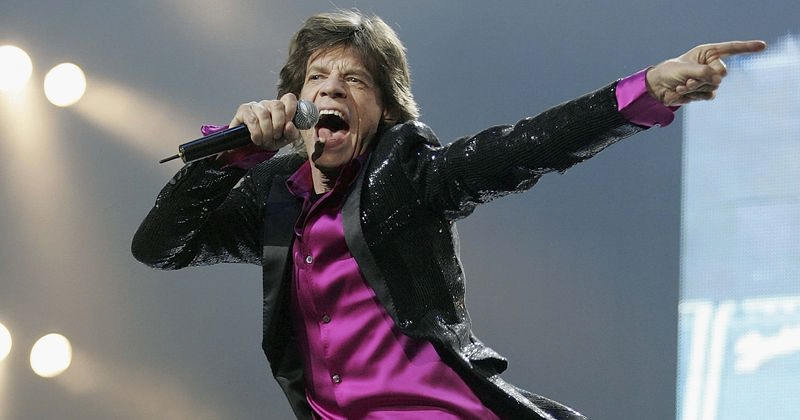
Few frontmen in rock history have embodied swagger, charisma, and raw musical energy quite like Mick Jagger. As the unmistakable voice of The Rolling Stones and a magnetic solo performer, Jagger built a career filled with songs that blended blues, rock, soul, funk, and pop into something instantly recognizable. His performances carried a rare mix of attitude and theatrical flair, turning every lyric into a moment of personality and every stage appearance into pure rock and roll spectacle. Whether delivering gritty rock anthems, emotionally charged ballads, or dance influenced hits packed with rhythm and confidence, Jagger always sounded fearless and completely in command. Across decades of changing musical trends, his songs continued to capture rebellion, desire, wit, and larger than life energy. The greatest Mick Jagger tracks remain timeless because they combine unforgettable hooks with the unmistakable voice and presence of one of rock’s ultimate icons.
1. Just Another Night
Just Another Night stands as one of Mick Jagger’s most recognizable solo hits, a sleek and energetic statement that announced his individual voice outside the Rolling Stones with unmistakable confidence. The song pulses with mid 1980s rock polish, but at its center is pure Jagger charisma. His vocal delivery is sharp, restless, and theatrical, full of the sly urgency that made him one of rock’s most magnetic performers. Rather than simply recreating the Stones sound, Jagger leans into dance rock textures, glossy production, and a driving groove that reflects the era while still preserving his unmistakable swagger.
What makes Just Another Night so effective is the way it turns romantic tension into a restless nighttime anthem. The rhythm moves with urban energy, the guitars bite without overwhelming the track, and the chorus has the kind of immediate lift that made it a natural radio favorite. Jagger sounds like a man caught between desire and escape, singing with the dramatic flair of someone who understands that performance itself can be a form of storytelling. The song helped define his solo debut as something bold and modern rather than merely a side project. It remains one of his most popular solo recordings because it captures him in full motion: stylish, hungry, rhythm driven, and completely alive in the spotlight.
2. Dancing in the Street
Dancing in the Street, performed by Mick Jagger and David Bowie, became one of the most famous superstar collaborations of the 1980s. Originally a Motown classic, the song was transformed into a bright, energetic pop rock event powered by two of music’s most theatrical frontmen. Jagger brings his unmistakable strut to the performance, singing with loose confidence and playful intensity. His chemistry with Bowie gives the track much of its charm, as both artists lean into the song’s celebratory spirit with big gestures, bold vocals, and a sense of pure pop spectacle.
The appeal of Dancing in the Street comes from its larger than life personality. This is not a subtle recording, and it was never meant to be. It is colorful, exuberant, and proudly excessive, capturing a moment when charity singles, music videos, and global pop culture collided in unforgettable fashion. Jagger’s presence is essential because he turns the song into movement. His vocal phrasing, physical energy, and natural rhythmic feel make the performance feel spontaneous even within its polished production. The track became a major hit because it understood the power of recognition: a beloved song, two iconic voices, and a video filled with joyful theatricality. As a Mick Jagger performance, it shows his gift for commanding attention in any setting, whether fronting a band, sharing the stage, or turning a cover into a cultural moment.
3. God Gave Me Everything
God Gave Me Everything is one of Mick Jagger’s strongest later solo recordings, a hard driving rock song fueled by urgency, gratitude, and raw electric force. Created with Lenny Kravitz, the track combines Jagger’s veteran swagger with a muscular modern rock sound. The guitars are thick, the beat is aggressive, and the vocal has the kind of sharp edged vitality that proves Jagger’s energy was never confined to one decade. He attacks the song with confidence, turning the title phrase into both a declaration and a challenge.
God Gave Me Everything works because it does not try to soften Jagger into elder statesman territory. Instead, it lets him sound lean, hungry, and charged up. Kravitz’s influence can be heard in the crisp production and guitar heavy punch, but Jagger remains the center of gravity. His voice carries grit, humor, and defiance, giving the track a lived in authority. The song feels like a celebration of appetite itself: life, desire, rhythm, pleasure, and survival. It is also one of the clearest examples of how Jagger could adapt to contemporary rock without losing his identity. The hook is direct, the groove is forceful, and the whole recording moves with the confidence of an artist who still knows how to ignite a song from the inside. It remains a standout solo favorite because it sounds bold, physical, and unmistakably alive.
4. Sweet Thing
Sweet Thing is one of Mick Jagger’s most seductive solo tracks, a groove heavy recording that places his voice in a world of funk, soul, and polished rock rhythm. Coming from the acclaimed Wandering Spirit era, the song shows Jagger moving with remarkable ease outside the Rolling Stones framework. His vocal is relaxed but alert, teasing the rhythm with the kind of phrasing that has always been central to his genius. He does not simply sing over the beat. He plays with it, bends around it, and turns every line into a small act of performance.
The strength of Sweet Thing lies in its atmosphere. The song has a smooth surface, but beneath it is a deep rhythmic confidence. The bass line gives it sensual motion, the production has warmth and clarity, and Jagger’s delivery carries both charm and mischief. Rick Rubin’s involvement helped bring a more grounded and organic feel to Jagger’s solo work, and this track benefits from that balance between polish and grit. It is catchy without being obvious, stylish without being hollow, and mature without losing danger. Jagger sounds completely comfortable in the pocket, proving that his gifts extend far beyond rock swagger alone. Sweet Thing remains one of his most popular solo songs because it captures his ability to turn rhythm, flirtation, and vocal attitude into something effortlessly compelling.
5. Old Habits Die Hard
Old Habits Die Hard is one of Mick Jagger’s most emotionally resonant solo recordings, a reflective song that pairs his weathered rock and roll character with graceful melodic writing. Created for the film Alfie and performed with Dave Stewart, the song carries the feeling of someone looking back at patterns, mistakes, and desires that refuse to fade. Jagger’s vocal is especially compelling because it trades some of his usual swagger for something more rueful and intimate. He still sounds unmistakably like himself, but the performance reveals a reflective edge that gives the song real depth.
Old Habits Die Hard succeeds because it feels honest without becoming sentimental. The arrangement is polished and cinematic, yet the emotional center remains human and direct. The melody gives Jagger space to explore regret, persistence, and self recognition, themes that fit beautifully with his long career as a performer who has often embodied temptation, motion, and survival. The phrase at the heart of the song is simple, but it lands with force because it speaks to something universal. People change, but not always easily. Desire fades, but not always completely. Jagger delivers that truth with a seasoned elegance that younger singers could not easily imitate. The song became one of his most respected solo moments because it shows a different side of his artistry: thoughtful, mature, melodic, and still touched by the restless spirit that made him famous.
6. Memo from Turner
Memo from Turner is one of Mick Jagger’s strangest and most fascinating recordings, a dark, bluesy, cinematic track connected to his role in the film Performance. The song does not behave like a conventional rock single. It slinks, mutters, and prowls, creating an atmosphere of menace and psychological unease. Jagger’s vocal is brilliant because it sounds both detached and dangerous, like a character speaking from inside a world of disguise, corruption, and fractured identity. The song captures his theatrical instincts in a form that feels closer to underground cinema than mainstream rock.
The power of Memo from Turner lies in its mood. The guitar work, famously associated with Ry Cooder’s sharp slide style, gives the track a greasy blues edge, while the rhythm has a loose, unsettling quality. Jagger does not sing it as a simple melody. He inhabits it like a role, using phrasing, accent, and attitude to build a character who feels slippery and unpredictable. This is one of the clearest early examples of his ability to merge rock performance with acting. The song has become a cult favorite because it reveals a more experimental side of Jagger, one willing to step away from stadium sized hooks and enter something murkier. Memo from Turner remains essential because it sounds dangerous in a way that cannot be manufactured. It is strange, stylish, and hypnotically unsettling.
7. Hard Woman
Hard Woman is one of Mick Jagger’s most polished and emotionally direct ballads, showing a softer side of his solo catalog without stripping away his distinctive personality. The song moves with 1980s studio elegance, built around a sweeping arrangement that gives Jagger room to lean into longing, frustration, and wounded affection. His voice has a slightly rough edge that keeps the song from becoming too smooth. That contrast is important. Jagger has never been a singer known for pristine perfection, and in a ballad like this, his imperfections become expressive tools.
Hard Woman stands out because it frames vulnerability through character. Jagger sounds like someone trying to understand a relationship that has become emotionally difficult, perhaps even impossible, yet he delivers the feeling with pride still intact. The production reflects its time, with broad textures and a dramatic sense of scale, but the central performance remains compelling because Jagger knows how to make emotional conflict feel theatrical without losing believability. The melody gives him space to stretch his voice, while the chorus carries a memorable sense of ache. This is not the wild, strutting Jagger of his most famous rock performances. It is a more reflective figure, still charismatic, but more exposed. Hard Woman remains one of his notable solo songs because it proves he could step into ballad territory and bring with him the same intensity, timing, and emotional presence that defined his greatest performances.
8. Wired All Night
Wired All Night is Mick Jagger in high voltage rock mode, a roaring track that captures the restless, adrenaline charged side of his solo work. Coming from Wandering Spirit, the song benefits from a rawer and more guitar driven approach than some of his earlier solo material. Jagger sounds energized, pushing the vocal with bite and urgency. The track feels like late night motion turned into music, full of nervous energy, appetite, and the kind of reckless momentum that has always been part of his artistic DNA.
The appeal of Wired All Night is its physicality. The guitars hit hard, the rhythm section keeps the pressure up, and the whole recording feels built for movement. Jagger’s vocal phrasing is loose but commanding, proving again that his greatest strength is not just his voice, but his timing. He knows when to snarl, when to lean back, when to attack a phrase, and when to let the groove carry him. The song also shows how well he responded to a more stripped down rock environment. Rather than burying him in glossy production, the track lets his personality cut through with force. Wired All Night remains a standout because it sounds like Jagger reconnecting with the raw nerve of rock and roll while still pushing his own solo identity forward. It is loud, sharp, restless, and full of swagger.
9. Lucky in Love
Lucky in Love is one of Mick Jagger’s most upbeat solo singles, a song that blends rock, pop, and danceable rhythm into a bright expression of romantic risk. The track reflects the polished sound of the 1980s, but Jagger’s personality gives it a distinctive spark. He sings with playful confidence, treating love like a game of chance where charm, danger, and desire all matter. The title itself suits him perfectly, since so much of his public persona has revolved around charisma, luck, and the thrill of living close to the edge.
Lucky in Love works because it captures Jagger’s ability to make a sleek pop rock track feel animated and personal. The production is crisp, with a rhythmic bounce that keeps the song moving, while the vocal carries enough bite to prevent it from becoming too smooth. Jagger sounds amused, energized, and fully engaged, turning romantic uncertainty into performance. The song may not have the dark weight of some of his more intense recordings, but its charm lies in its lightness. It shows his comfort with mainstream solo pop while still retaining the sly edge that made him famous. The chorus has a catchy lift, and the overall feel is stylishly optimistic. Lucky in Love remains a popular part of his solo catalog because it captures a specific side of Jagger: flirtatious, mobile, rhythmic, and always ready to turn risk into entertainment.
10. Don’t Tear Me Up
Don’t Tear Me Up is one of Mick Jagger’s strongest solo ballads, a song that blends emotional rawness with the rootsy confidence of his Wandering Spirit period. Unlike some of the more polished productions from his earlier solo years, this track feels more organic, allowing the feeling in the performance to come forward naturally. Jagger sings with a wounded intensity that makes the title plea feel sincere rather than melodramatic. His voice carries age, experience, and pride, all of which deepen the emotional impact.
The strength of Don’t Tear Me Up lies in its balance between vulnerability and toughness. The arrangement supports the song with a warm rock and soul foundation, giving Jagger space to explore heartbreak without softening his persona too much. He sounds like someone who has been through romantic damage before but still feels the sting. That combination of resilience and hurt gives the track its character. The song also highlights how effective Jagger can be when he is not trying to dominate through sheer swagger. Here, he lets the cracks show, and the result is one of his more affecting solo performances. Don’t Tear Me Up remains a favorite among listeners who appreciate his deeper solo cuts because it reveals emotional depth behind the showman. It is heartfelt, gritty, and beautifully delivered, proving that Jagger’s power as a vocalist extends well beyond attitude and spectacle.

Samuel Moore is a frequent contributor to Singers Room. Since 2005, Singersroom has been the voice of R&B around the world. Connect with us via social media below.