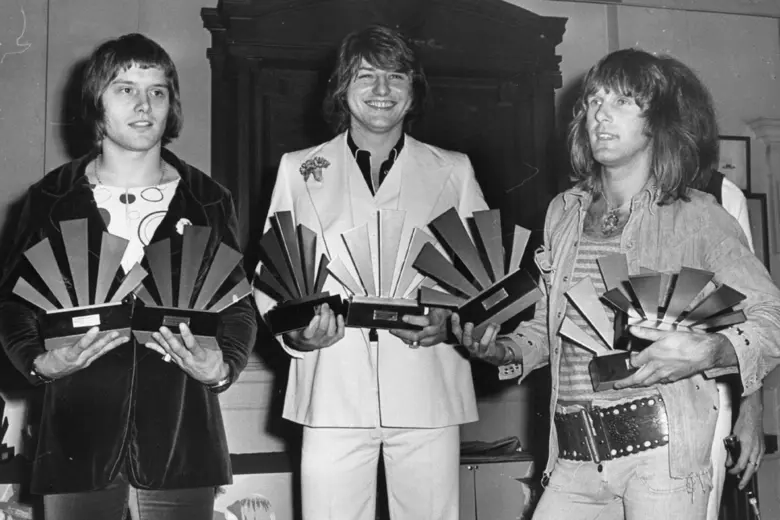
Few bands in rock history dared to push musical boundaries as boldly as Emerson, Lake & Palmer. Blending the power of progressive rock with classical influences, jazz improvisation, and theatrical stagecraft, the legendary trio created songs that felt larger than life. Keith Emerson’s explosive keyboard work, Greg Lake’s emotional vocals and songwriting, and Carl Palmer’s thunderous drumming combined to produce some of the most ambitious music of the 1970s. Whether delivering sprawling epics, haunting ballads, or electrifying adaptations of classical masterpieces, Emerson, Lake & Palmer built a catalog that continues to inspire musicians and captivate fans decades later. Their music was never content to stay predictable, and that fearless creativity is exactly why so many of their songs remain timeless progressive rock landmarks today.
1. Lucky Man
“Lucky Man” remains one of Emerson, Lake & Palmer’s most beloved songs because it captures the group at the exact meeting point between folk intimacy and progressive rock grandeur. Written by Greg Lake when he was still very young, the song carries a simplicity that feels almost ancient, like a ballad passed through generations before finally landing inside a modern rock studio. Lake’s acoustic guitar and warm vocal delivery give the track its emotional center, while the lyrics unfold like a miniature tragedy about privilege, fate, and the cruel uncertainty of war. What makes the song so fascinating is how direct it feels compared with the band’s more elaborate compositions. There are no sprawling suites or dizzying time changes at first, just a memorable melody and a story that lingers.
Then Keith Emerson enters with that legendary Moog synthesizer solo, and the song becomes something entirely different. The ending feels like a portal opening, transforming a reflective folk piece into a landmark of early synthesizer rock. Carl Palmer’s drumming remains tasteful and restrained, giving the track shape without overpowering its storytelling. “Lucky Man” became an essential Emerson, Lake & Palmer song because it proved that progressive rock could be emotional, accessible, and experimental all at once. Its power lies in that balance, making it a perfect gateway into the band’s world.
2. From The Beginning
“From The Beginning” is one of Greg Lake’s finest moments as a songwriter, singer, and acoustic guitarist. The track has a quiet sophistication that separates it from many rock ballads of its era. It does not rely on dramatic excess or sentimental overstatement. Instead, it moves with an elegant calm, built around Lake’s beautifully fingerpicked guitar figure and a vocal performance that sounds both intimate and philosophical. The words suggest regret, acceptance, and emotional maturity, as if the narrator has come to understand that love and loss are often tangled together from the start. That reflective mood gives the song its timeless quality.
Musically, the arrangement is a masterclass in restraint. Keith Emerson adds color without crowding the song, letting the acoustic texture breathe before the synthesizer appears with a fluid, almost conversational solo. Carl Palmer’s percussion work is subtle, precise, and supportive, showing that his brilliance was not only about speed or power. “From The Beginning” became one of Emerson, Lake & Palmer’s most popular songs because it reveals the softer side of a band often associated with enormous instrumental ambition. It shows how much emotional depth lived inside their catalog. For listeners who know ELP mainly through their epic works, this song offers a different kind of virtuosity, one built on taste, tone, and melodic grace.
3. Karn Evil 9 First Impression Part 2
“Karn Evil 9 First Impression Part 2” is the Emerson, Lake & Palmer song that gave the world one of progressive rock’s most famous openings: “Welcome back my friends to the show that never ends.” That phrase became more than a lyric. It became a kind of mission statement for the band’s theatrical, boundary pushing identity. The song bursts forward with confidence, spectacle, and technical firepower, sounding like a futuristic carnival powered by Hammond organ, muscular bass, and Carl Palmer’s explosive drumming. It is one of those recordings that instantly announces itself as something larger than a conventional rock song.
The brilliance of the track lies in how tightly ELP compresses complexity into something thrilling and memorable. Keith Emerson’s keyboard work is dazzling, full of stabbing rhythms, bright organ tones, and classical shaped flourishes that still feel aggressive rather than academic. Greg Lake’s vocal gives the piece its ringmaster energy, guiding listeners through surreal images of entertainment, technology, and cultural overload. Palmer drives the song with athletic precision, turning each transition into a burst of momentum. “Karn Evil 9 First Impression Part 2” became one of the band’s defining songs because it captures the full ELP personality: clever, excessive, disciplined, outrageous, and completely unforgettable. It is progressive rock as spectacle, but with real compositional muscle beneath the lights.
4. Fanfare For The Common Man
“Fanfare For The Common Man” stands as one of Emerson, Lake & Palmer’s greatest transformations of classical material into rock language. Based on Aaron Copland’s monumental composition, ELP’s version does not simply reproduce the original theme. It expands it, electrifies it, and reshapes it into a towering progressive rock statement. Keith Emerson’s keyboard arrangement gives the piece a massive ceremonial quality, while Greg Lake’s bass adds a deep, muscular pulse that keeps the music grounded. Carl Palmer’s drumming gives the track its physical force, turning the familiar fanfare into something that moves with both dignity and swagger.
What makes this version so popular is its sense of scale. The track feels open, heroic, and almost architectural, as if the band is building a cathedral out of synthesizer tones, drums, and bass vibrations. Emerson’s improvisational middle section brings in a bluesy and futuristic flavor, making the piece feel less like a museum tribute and more like a living performance. “Fanfare For The Common Man” became one of ELP’s signature recordings because it showed their talent for honoring classical music while refusing to treat it as untouchable. They made Copland’s theme speak in the language of arena rock without losing its nobility. Few progressive rock adaptations have ever sounded so bold, spacious, and commanding.
5. Hoedown
“Hoedown” is one of Emerson, Lake & Palmer’s most exhilarating instrumental performances, a track that turns Aaron Copland’s American flavored source material into a blazing progressive rock workout. From the first rush of keyboard energy, the piece feels like motion itself. Keith Emerson takes the main theme and attacks it with astonishing speed, precision, and theatrical flair, making the keyboard sound like an entire orchestra caught in a storm. Greg Lake’s bass provides a thick, driving foundation, while Carl Palmer’s drumming adds the kind of rhythmic power that makes the track feel ready to leap out of the speakers.
The popularity of “Hoedown” comes from its immediate excitement. Even listeners who might find progressive rock intimidating can connect with its momentum, because the piece is direct, fiery, and full of life. Yet beneath that accessibility is a remarkable level of musicianship. Emerson’s phrasing is sharp and witty, Palmer’s accents are explosive without becoming messy, and Lake locks the performance together with a confident sense of groove. The track became a favorite concert opener because it introduced the band with maximum impact. It said everything essential about ELP in just a few minutes: classical intelligence, rock power, technical daring, and showmanship bright enough to light a stadium.
6. Still You Turn Me On
“Still You Turn Me On” is one of Emerson, Lake & Palmer’s most graceful romantic songs, and it highlights Greg Lake’s gift for writing melodies that feel both mysterious and instantly memorable. The track appears on Brain Salad Surgery, an album known for some of the band’s most ambitious and intense music, which makes this song feel even more striking. It arrives with a softer glow, built around acoustic guitar, elegant vocal phrasing, and lyrical imagery that mixes desire, illusion, and emotional uncertainty. Lake sings with a rich, controlled warmth, giving the song a seductive but slightly haunted atmosphere.
What keeps “Still You Turn Me On” from becoming a simple love song is its strange beauty. The arrangement has delicate touches that hint at the larger progressive world surrounding it, from subtle keyboard colors to carefully shaped dynamics. The lyric moves through images that feel dreamlike rather than plainly confessional, allowing the listener to sense longing without having everything explained. Carl Palmer supports the track with sensitivity, while Emerson adds texture rather than spectacle. This restraint is part of the magic. The song became a fan favorite because it shows ELP’s ability to be intimate without sounding ordinary. It is romantic, but not predictable. It is accessible, but still unmistakably shaped by the band’s adventurous imagination.
7. C’est La Vie
“C’est La Vie” is one of Greg Lake’s most emotionally resonant songs, a beautifully crafted ballad that brings melancholy, elegance, and theatrical feeling into Emerson, Lake & Palmer’s catalog. The title phrase suggests resignation, but the song itself feels much deeper than a casual acceptance of fate. Lake sings as though he is standing at the edge of memory, looking back on love, disappointment, and the strange patterns that shape a life. His voice carries the performance with remarkable control, never pushing too hard, yet filling every line with warmth and reflection.
The arrangement gives the song an almost European romantic quality. Acoustic guitar, tasteful keyboard coloring, and a broad melodic sweep make it feel cinematic without becoming overblown. Keith Emerson’s contribution is refined, supporting the atmosphere with carefully placed textures rather than dominating the piece. Carl Palmer’s presence is similarly measured, giving the song movement while preserving its emotional space. “C’est La Vie” became one of Emerson, Lake & Palmer’s most admired later songs because it shows the trio aging into a more polished and contemplative sound. It is less explosive than their early epics, but its craft is unmistakable. The song’s lasting appeal comes from its humanity. Beneath the progressive rock reputation, ELP could write music that spoke directly to heartbreak, memory, and the quiet dignity of letting go.
8. Jerusalem
“Jerusalem” is one of Emerson, Lake & Palmer’s boldest interpretations, transforming the famous English hymn into a majestic progressive rock statement. The song draws from words by William Blake and music by Hubert Parry, but ELP’s version carries the unmistakable stamp of the trio’s dramatic personality. Keith Emerson’s keyboards bring a grand, church like intensity to the arrangement, while Greg Lake’s vocal gives the piece a noble and commanding presence. Carl Palmer’s drums add weight and urgency, turning the hymn into something that feels both ancient and modern.
The track’s popularity among ELP fans comes from the way it fuses tradition with electric force. It respects the spiritual and patriotic feeling of the original while giving it the scale of a rock performance. Emerson does not merely decorate the melody. He frames it with power, making the organ and synthesizer tones feel like pillars in a vast hall. Lake sings with clarity and conviction, avoiding unnecessary ornamentation so the words can retain their grandeur. Palmer’s drumming provides a martial lift that makes the music stride forward. “Jerusalem” is important because it demonstrates one of ELP’s central artistic instincts: the desire to take established material and reimagine it through fearless musicianship. In their hands, a hymn becomes a progressive rock anthem, solemn yet electrifying.
9. Take A Pebble
“Take A Pebble” is one of Emerson, Lake & Palmer’s most atmospheric early masterpieces, a song that reveals the trio’s ability to stretch rock music into something spacious, poetic, and deeply immersive. Opening with Keith Emerson reaching inside the piano to create shimmering string effects, the track immediately signals that this band was thinking beyond ordinary rock arrangements. Greg Lake’s voice enters with a calm, almost mournful beauty, singing lyrics that evoke water, memory, and emotional distance. The song feels reflective and mysterious, as though it is unfolding in slow ripples rather than standard verses and choruses.
What makes “Take A Pebble” so compelling is its sense of journey. The piece moves through delicate ballad sections, piano explorations, and folk tinted passages with a patience that rewards close listening. Emerson’s piano work is both lyrical and adventurous, showing his classical background without sacrificing emotional warmth. Lake’s bass and vocal presence keep the song human, while Palmer’s drumming adds subtle shape and tension. The track became a favorite among serious ELP listeners because it captures the band before their most famous excesses, when their experimental instincts still carried a raw sense of discovery. It is not just a long song. It is a landscape, one where quiet beauty and instrumental ambition exist in perfect conversation.
10. The Barbarian
“The Barbarian” is a ferocious introduction to Emerson, Lake & Palmer’s early sound, a track that announces the trio’s arrival with power, aggression, and classical inspired intensity. Adapted from Béla Bartók’s piano piece Allegro Barbaro, the song shows Keith Emerson’s instinct for transforming modern classical ideas into rock performance. The opening is heavy and menacing, driven by Greg Lake’s distorted bass and Carl Palmer’s muscular drumming. Emerson’s keyboards slice through the arrangement with a dark, percussive force, giving the track a dramatic edge that still feels startling decades later.
The reason “The Barbarian” remains popular among Emerson, Lake & Palmer fans is that it captures the band’s original shock value. This was not blues rock, folk rock, or conventional psychedelia. It was something sharper and more imposing, built from European classical modernism, rock volume, and virtuosic attack. Emerson’s playing moves between brutality and elegance, while Palmer’s drums match every turn with precision and fire. Lake’s bass tone gives the piece a physical heaviness that anticipates later progressive and heavy rock approaches. As an opening statement, the song is almost confrontational. It tells the listener that ELP was not interested in background music or easy formulas. They wanted to challenge the shape of rock itself, and “The Barbarian” still sounds like the first gate being kicked open.

Edward Tomlin is a frequent contributor to Singers Room. Since 2005, Singersroom has been the voice of R&B around the world. Connect with us via social media below.