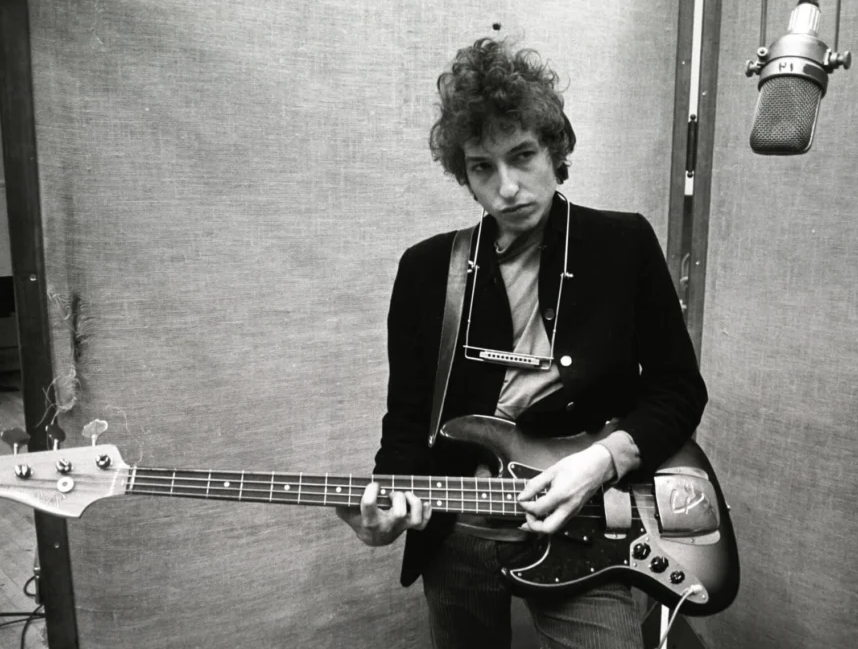
Few songwriters have shaped modern music and storytelling as profoundly as Bob Dylan. With a voice unlike anyone else and lyrics that blended poetry, protest, philosophy, romance, and surreal imagery, Dylan transformed folk and rock music into something far deeper than simple entertainment. Emerging during the turbulent sixties, he became the voice of social change for many listeners, yet constantly reinvented himself through electric rock, country influences, introspective ballads, and ambitious lyrical experimentation. Songs like “Like a Rolling Stone,” “Blowin’ in the Wind,” and “Knockin’ on Heaven’s Door” became cultural landmarks that reached far beyond music itself. Dylan’s work captured political unrest, personal heartbreak, spiritual searching, and the unpredictable chaos of modern life with unmatched intelligence and emotional depth. His songs continue to inspire generations because they feel timeless, mysterious, restless, and endlessly open to interpretation.
1. Like a Rolling Stone
“Like a Rolling Stone” is the Bob Dylan song that changed the possibilities of popular music, turning a six minute burst of bitterness, freedom, and poetic accusation into one of rock’s most important recordings. From the opening snare crack, the track sounds like a door being kicked open. Dylan’s voice is sharp, mocking, wounded, and strangely liberating as he addresses a fallen figure who has lost comfort, status, and certainty. The song does not offer easy sympathy. Instead, it asks what remains when identity collapses and the world no longer protects a person from its harshness.
What makes “Like a Rolling Stone” so enduring is its combination of lyrical brilliance and electric force. Dylan had already proven himself as a folk poet, but this song announced a new kind of rock songwriting, one that could be sprawling, literary, angry, and radio shaking at the same time. The organ part gives the recording a wild brightness, while the band pushes forward with raw momentum. The chorus is unforgettable because it turns humiliation into a strange kind of release. To be without direction, home, or illusion may be terrifying, but it may also be the beginning of truth. “Like a Rolling Stone” remains one of Dylan’s most popular songs because it still sounds dangerous, alive, and emotionally unpredictable.
2. Blowin’ in the Wind
“Blowin’ in the Wind” is one of Bob Dylan’s most famous songs, a folk anthem that became inseparable from the social conscience of the nineteen sixties while remaining timeless in its moral questions. The song is built with remarkable simplicity: acoustic guitar, voice, and a series of questions about freedom, peace, suffering, and human responsibility. Dylan does not answer those questions directly. Instead, he lets them hang in the air, giving the song its haunting and universal force. The famous refrain suggests that the answers are present, nearby, and yet somehow still ignored.
The enduring power of “Blowin’ in the Wind” comes from its open structure. It can be sung in movements for civil rights, in moments of personal reflection, or in any era where people wonder why injustice continues despite obvious human need. Dylan’s vocal is young and plain, but that plainness gives the song authority. He does not sound like a preacher standing above the crowd. He sounds like someone asking what everyone should already be asking. The melody has the quality of an old folk tune, which helps the song feel as if it belongs to collective memory rather than one moment alone. “Blowin’ in the Wind” remains popular because it is gentle in sound yet enormous in meaning, a song that turns questions into moral thunder.
3. The Times They Are A Changin’
“The Times They Are A Changin’” is Bob Dylan’s great anthem of social transformation, a song that sounds like both a warning and an invitation. Written in the voice of a modern folk prophet, it calls out to writers, critics, parents, politicians, and anyone clinging to old structures as history begins to move beneath their feet. The song’s power comes from its clarity. Dylan does not decorate the message with complicated imagery. He writes in direct, biblical cadences that give the words a sense of inevitability, as if change is not simply desired, but already underway.
What makes “The Times They Are A Changin’” so lasting is the way it captures the emotional pressure of an era without being trapped inside that era. Its meaning has shifted across decades because every generation faces moments when inherited assumptions begin to break apart. Dylan’s vocal is stern but not cold. He sounds urgent, aware that people can either recognize the movement of history or be swept aside by it. The acoustic arrangement keeps the focus on the lyric, giving the song the feel of a public message delivered from a street corner, a union hall, or a protest gathering. It remains one of Dylan’s most popular songs because it transforms cultural unrest into unforgettable folk poetry, speaking to the fear and promise of change with extraordinary force.
4. Knockin’ on Heaven’s Door
“Knockin’ on Heaven’s Door” is one of Bob Dylan’s most haunting and widely recognized songs, a spare meditation on death, weariness, and spiritual surrender. Written for the film Pat Garrett and Billy the Kid, the song achieves its power through simplicity. The chord progression is gentle, the lyric is brief, and the vocal carries a quiet resignation that feels deeper than explanation. Dylan sings from the edge of life, where worldly conflict begins to fade and the soul seems to stand before something final. Nothing in the song is overstated, which makes its emotional impact even stronger.
The beauty of “Knockin’ on Heaven’s Door” lies in its openness. Though it was born in a western film setting, the song reaches far beyond that context. It has been embraced by rock bands, country singers, folk artists, and listeners facing grief because its central image is so powerful. The idea of knocking at heaven’s door is direct enough for everyone to understand, yet mysterious enough to hold personal meaning. Dylan’s performance is restrained, almost weary, and that restraint gives the song dignity. It does not dramatize death as spectacle. It presents it as a quiet threshold. “Knockin’ on Heaven’s Door” remains one of Dylan’s most popular songs because it turns mortality into a melody that feels both fragile and eternal.
5. Mr. Tambourine Man
“Mr. Tambourine Man” is one of Bob Dylan’s most magical songs, a dreamlike invitation into imagination, escape, and poetic surrender. The lyric unfolds like a waking vision, filled with swirling images, suspended time, and the desire to follow music beyond ordinary consciousness. Dylan’s acoustic performance is delicate and hypnotic, letting the words drift with a strange internal rhythm. The figure of the tambourine man becomes more than a musician. He feels like a guide into art, memory, freedom, and the private territories of the mind.
What makes “Mr. Tambourine Man” so beloved is its mystery. Dylan does not explain the journey. He lets the listener feel it. The song seems to move through fatigue, wonder, and longing for release, as if the narrator is ready to leave behind the demands of the waking world and enter a place shaped by sound. The imagery is surreal but emotionally clear. It speaks to anyone who has ever wanted music to carry them away from heaviness, confusion, or boredom. The Byrds famously transformed the song into a folk rock classic, but Dylan’s original has its own spellbinding intimacy. It remains one of his most popular songs because it captures the power of music itself: the ability to open doors, blur boundaries, and lead the listener somewhere beyond language.
6. Tangled Up in Blue
“Tangled Up in Blue” is one of Bob Dylan’s greatest narrative songs, a restless masterpiece about memory, love, separation, and the way time rearranges emotional truth. Opening the album Blood on the Tracks, the song moves like a novel compressed into music. The narrator drifts through scenes of romance, work, travel, distance, and recollection, yet the story never settles into a simple sequence. That shifting quality is the point. Dylan captures how memory actually behaves, circling the past, changing perspective, and refusing to stay neatly in order.
The brilliance of “Tangled Up in Blue” lies in its mixture of movement and ache. The rhythm pushes forward with folk rock energy, while the lyric keeps looking backward. Dylan’s vocal is alert and emotionally charged, as if he is still trying to understand a relationship long after it ended. The song is filled with vivid details: places, rooms, jobs, books, and fleeting encounters that feel both specific and symbolic. It speaks to the way people carry old love through new lives, never entirely free from the stories that shaped them. “Tangled Up in Blue” remains one of Dylan’s most popular songs because it feels endlessly alive. Each listen reveals a different emotional angle, proving his genius for turning personal heartbreak into a literary and musical journey.
7. All Along the Watchtower
“All Along the Watchtower” is one of Bob Dylan’s most mysterious and compact masterpieces, a song that feels ancient, apocalyptic, and strangely modern all at once. The lyric presents a conversation between the joker and the thief, then shifts toward images of watchmen, riders, and approaching danger. Dylan gives very little explanation, which is exactly why the song has remained so fascinating. It feels like a fragment of scripture, a parable from a ruined kingdom, or a warning delivered just before a storm breaks. The atmosphere is tense, symbolic, and unforgettable.
What makes “All Along the Watchtower” so powerful is its economy. In only a few verses, Dylan creates a world full of anxiety, hierarchy, confusion, and impending change. The song was famously reimagined by Jimi Hendrix in a monumental electric version, yet Dylan’s own composition remains the source of its mythic force. His original recording is lean and eerie, giving the words room to echo. The characters sound trapped inside a system they understand too well, searching for a way out while something gathers in the distance. “All Along the Watchtower” remains one of Dylan’s most popular songs because it resists simple interpretation. It feels prophetic without naming a specific prophecy, political without naming a specific conflict, and spiritual without offering easy comfort.
8. Subterranean Homesick Blues
“Subterranean Homesick Blues” is Bob Dylan at his sharpest, fastest, and most mischievously modern, a verbal explosion that helped push folk music into electric, urban, and countercultural territory. The song rushes forward with a clipped rhythm and a torrent of images involving authority, youth culture, paranoia, protest, work, medicine, and survival. Dylan’s delivery is almost proto rap in its speed and bite, turning language into percussion as much as meaning. The result is a song that feels like overheard street talk, political satire, and nervous comedy all colliding at once.
The enduring appeal of “Subterranean Homesick Blues” comes from its restless energy. Dylan sounds as if he is reading the signs of a society changing too quickly for anyone to process. The famous film clip, with Dylan dropping cue cards as the words fly by, became one of the most iconic images in music history, but the recording itself is just as revolutionary. It has humor, tension, and a sense of rebellion that feels spontaneous even though the writing is tightly controlled. The song does not pause to explain itself, which makes it feel alive inside its own chaos. “Subterranean Homesick Blues” remains popular because it captures the speed of modern thought, where headlines, warnings, jokes, and anxieties tumble over one another in a rush of electric folk rock brilliance.
9. Lay Lady Lay
“Lay Lady Lay” revealed a softer, warmer, and more sensual side of Bob Dylan, becoming one of his most accessible and beloved songs. Recorded during his country influenced period, the track has a relaxed glow, with gentle pedal steel, a steady rhythm, and Dylan’s unusually smooth vocal tone. Instead of the sharp phrasing and nasal bite associated with much of his earlier work, he sings here with a low, intimate warmth that surprised many listeners. The song is direct in its romantic invitation, yet its atmosphere is graceful rather than forceful.
What makes “Lay Lady Lay” endure is its mood. It sounds unhurried, golden, and quietly seductive, like a room lit by late afternoon sun. Dylan’s lyric is simple by his standards, but that simplicity is part of the song’s charm. He does not build a maze of symbols or social commentary. He focuses on closeness, desire, and the hope of remaining in a tender moment before the world intrudes. The arrangement from the Nashville Skyline era gives the song a country soul elegance, proving Dylan could transform his sound without losing his identity. “Lay Lady Lay” remains one of his most popular songs because it captures intimacy with unusual restraint. It is romantic, melodic, and deeply atmospheric, showing that Dylan’s genius could be just as powerful in softness as in protest or surreal poetry.
10. Just Like a Woman
“Just Like a Woman” is one of Bob Dylan’s most delicate and debated songs, a ballad that blends tenderness, disillusionment, vulnerability, and emotional complexity. The melody is graceful and aching, while Dylan’s vocal carries a mixture of affection and hurt. The lyric portrays a woman who seems elegant and fragile, powerful and wounded, admired and misunderstood. Like many of Dylan’s best songs, it does not offer a clean emotional answer. It captures the messy aftermath of intimacy, where love, disappointment, projection, and memory become impossible to separate.
The lasting force of “Just Like a Woman” comes from its emotional ambiguity. Some listeners hear compassion, others hear criticism, and many hear both at once. That tension is central to the song’s fascination. Dylan writes from inside a relationship where the narrator is not necessarily innocent, and the sadness of the song comes partly from that uncertainty. The arrangement is gentle, allowing the melody to carry the ache of recognition and farewell. His phrasing gives small lines enormous weight, especially when the song turns inward and the narrator admits his own need to leave. “Just Like a Woman” remains one of Dylan’s most popular songs because it shows his gift for writing emotional portraits that are beautiful, uncomfortable, and resistant to simple judgment. It lingers because it feels human in all the complicated ways love often does.

Samuel Moore is a frequent contributor to Singers Room. Since 2005, Singersroom has been the voice of R&B around the world. Connect with us via social media below.