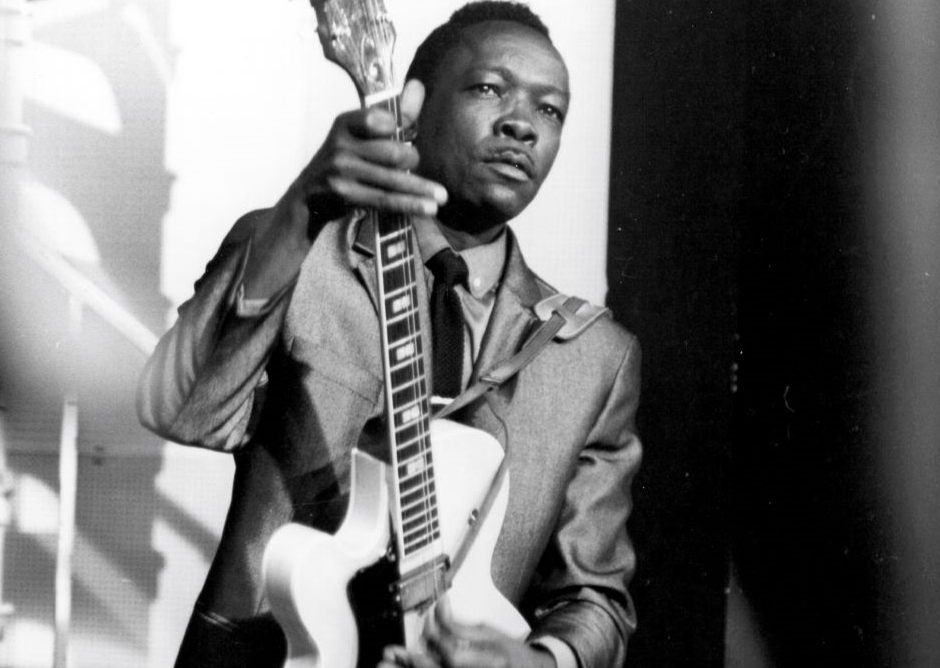
Few artists in blues history sounded as instantly recognizable as John Lee Hooker. With his deep hypnotic voice, raw guitar grooves, and foot stomping rhythms, Hooker created a style that felt primal, haunting, and completely original. He did not rely on flashy solos or polished arrangements. Instead, he built songs around mood, repetition, and emotion, pulling listeners into smoky late night worlds filled with desire, loneliness, swagger, and hard lived experience. His influence stretched far beyond traditional blues, shaping rock music, boogie rhythms, and generations of guitar players who admired his hypnotic approach to rhythm and storytelling. From gritty juke joint classics to crossover hits that introduced him to wider audiences, these unforgettable recordings showcase the power and timeless cool that made John Lee Hooker one of the greatest blues musicians of all time.
1. Boom Boom
“Boom Boom” is the John Lee Hooker recording that turned his hypnotic blues language into one of the most recognizable grooves in popular music. The song is built on a compact riff, a steady pulse, and a vocal delivery that sounds equal parts flirtation, threat, and street corner confidence. Hooker never needed elaborate arrangements to create drama. He could make a few guitar figures feel like an entire room was moving, and “Boom Boom” proves that gift with stunning clarity. The rhythm snaps into place with a tough, physical energy, while his voice rides above it with effortless authority.
What makes “Boom Boom” so enduring is its combination of simplicity and personality. The lyric is direct, but Hooker’s phrasing turns every repetition into a new moment. He stretches words, bites into them, and lets the beat answer back. The song became a bridge between blues and rock because its structure was lean enough for bands to grab, yet its feel was impossible to truly duplicate. Hooker’s performance carries the lived in rhythm of Detroit blues, Southern memory, and juke joint electricity. It remains one of his most popular songs because it is instantly memorable, deeply grooving, and completely unmistakable. Few blues records sound this cool while using so little. That was Hooker’s magic.
2. Boogie Chillen
“Boogie Chillen” is one of the great origin points in John Lee Hooker’s recorded legacy, a song that announced his sound with raw force and unforgettable individuality. The track does not behave like ordinary band blues. It moves according to Hooker’s internal rhythm, driven by his guitar, his foot, his voice, and his instinctive sense of time. That loose structure is part of its power. It feels less like a performance arranged on paper and more like a blues memory coming alive in real time. The beat is hypnotic, the vocal is conversational, and the atmosphere is electric in the most elemental sense.
The song’s story of nightlife, movement, and musical awakening gives it an autobiographical flavor. Hooker sounds like a man discovering where he belongs, pulled toward the music and the energy of the city. “Boogie Chillen” became a major blues landmark because it captured something primal and modern at once. The guitar pattern has a country blues root, but the amplification gives it urban bite. The vocal has the intimacy of folk storytelling, but the rhythm points toward rock and roll. Hooker’s genius was that he did not smooth out his rough edges for commercial polish. He trusted the groove. He trusted the mood. “Boogie Chillen” remains one of his most important and popular songs because it is the sound of a singular artist creating a complete world from voice, strings, and stomp.
3. One Bourbon, One Scotch, One Beer
“One Bourbon, One Scotch, One Beer” is one of John Lee Hooker’s finest examples of blues storytelling, a song where humor and hardship sit at the same bar. The narrative is plain enough to follow immediately: money trouble, domestic trouble, rent trouble, and the familiar temptation to seek relief at the bottom of a glass. Yet Hooker makes the story feel larger than its details. He delivers it with a relaxed, conversational authority, allowing the listener to feel as though they are hearing the tale directly from the man who lived it. His timing is everything. He pauses, repeats, leans into a phrase, then lets the groove carry him forward.
The brilliance of “One Bourbon, One Scotch, One Beer” lies in its balance. It is funny, but not lightweight. It is sad, but not hopeless. Hooker understands the absurdity of life when everything goes wrong at once, and he sings it with the weary charm of someone who has seen trouble before. The rhythm keeps the song from becoming a complaint. It walks, sways, and settles into a barroom blues pocket that feels timeless. The recording became one of Hooker’s most popular songs because it is so easy to picture and so easy to feel. It captures a scene, a character, and an entire philosophy of survival through one unforgettable refrain.
4. Dimples
“Dimples” shows John Lee Hooker at his most playful and seductive, turning a small physical detail into a full blues groove. The song has a bright, rolling feel that sets it apart from some of his darker and heavier material, yet it remains unmistakably Hooker. His guitar cuts with a clean rhythmic edge, while his vocal delivery carries a grin you can almost hear. He sings with admiration and mischief, making the lyric feel less like formal romance and more like a spontaneous reaction to someone who has completely caught his attention.
What gives “Dimples” its lasting appeal is the way Hooker combines charm with grit. The song is light on the surface, but the groove has muscle. His phrasing is relaxed, yet every line lands exactly where it needs to. The rhythm invites movement without becoming overly polished, which keeps the recording grounded in real blues feeling. Many artists have recognized the song’s appeal because it has the kind of riff and mood that can travel easily across styles. Still, Hooker’s version remains definitive because of his voice and timing. He makes desire sound casual, humorous, and deeply rhythmic. “Dimples” is one of his most popular recordings because it captures the social side of the blues: the glance, the smile, the dance, the playful pursuit. It is blues as flirtation, delivered by a master of understatement.
5. Crawling King Snake
“Crawling King Snake” is one of John Lee Hooker’s most atmospheric performances, a slow burning blues that moves with quiet authority and dark sensual force. The song has roots in older blues tradition, but Hooker shapes it into something that feels uniquely his own. His guitar does not rush. It creeps, coils, and answers the vocal with spare, moody phrases. The rhythm feels almost suspended, as though the entire recording is moving through heat, shadow, and instinct. Hooker’s voice is deep and commanding, filled with coded desire and blues wisdom.
The power of “Crawling King Snake” comes from restraint. Hooker understands that menace does not need speed. He lets the song unfold slowly, giving every phrase room to settle. The repeated images create a hypnotic feeling, drawing the listener deeper into the mood with each pass. His timing is loose in a way that only he could make convincing. Rather than following a rigid frame, the music follows breath, feeling, and tension. That is why the song has fascinated blues and rock musicians for decades. It feels ancient and modern, earthy and mysterious. “Crawling King Snake” remains one of Hooker’s most popular songs because it captures his command of space. He could make silence, repetition, and a few guitar notes feel heavier than an entire orchestra.
6. I’m In The Mood
“I’m In The Mood” is one of John Lee Hooker’s great early recordings, a song that turns desire into a deep blues trance. The performance is intimate, direct, and almost hypnotic in its simplicity. Hooker does not decorate the song with unnecessary flourishes. He repeats the central idea with subtle changes in tone, letting the feeling grow stronger through insistence. His voice sounds close and rough, full of hunger, confidence, and shadow. The result is not polished romance. It is raw emotion shaped by rhythm.
The arrangement supports the mood with remarkable economy. The guitar provides a steady frame, leaving plenty of space for Hooker’s vocal to dominate. That space is vital. It makes the listener aware of every breath, every shift of emphasis, every small change in attack. “I’m In The Mood” became one of his most successful songs because it captured the emotional directness that made his blues so powerful. It is sensual without being glossy, repetitive without becoming dull, and simple without feeling slight. Hooker’s gift was his ability to make a phrase feel larger each time he returned to it. In this song, the mood is not merely described. It is created, sustained, and deepened until the entire recording seems to pulse with it. That is why it remains essential in his catalog.
7. Hobo Blues
“Hobo Blues” is one of John Lee Hooker’s most evocative songs, a recording that captures wandering, loneliness, and restlessness with almost documentary force. The song has a spare arrangement, but it feels emotionally vast. Hooker’s guitar creates a steady, mournful motion, while his voice carries the weight of someone who knows what it means to move from place to place without comfort or certainty. He does not sentimentalize the hobo figure. Instead, he presents travel as both freedom and hardship, a condition shaped by necessity as much as choice.
The emotional strength of “Hobo Blues” comes from Hooker’s vocal authority. He sounds as though he is not inventing a character but remembering a world. Every line feels worn by experience. His phrasing bends around the beat in that unmistakable Hooker style, making the song feel personal and unpredictable. The track belongs to a long blues tradition of road songs, train songs, and exile songs, yet Hooker gives it a distinct modern loneliness. It is not only about geography. It is about displacement of the spirit. “Hobo Blues” remains popular because it reveals the depth beneath Hooker’s famous boogie records. He was not simply a groove maker. He was a storyteller of mood, hardship, and survival. In this song, the road becomes a state of mind, and Hooker makes that state unforgettable.
8. House Rent Boogie
“House Rent Boogie” is John Lee Hooker turning ordinary financial pressure into a raw and irresistible blues groove. The song begins from a situation many people understand immediately: the rent is due, money is short, and anxiety is gathering at the door. Hooker does not treat that subject with grand tragedy. Instead, he gives it movement, humor, and rhythmic heat. His guitar and foot driven pulse create the feeling of a man trying to keep going because stopping would mean facing everything at once. That survival energy is central to the song’s appeal.
The performance is classic Hooker in its looseness and force. He lets the story unfold with conversational timing, bending the structure around his own instincts. The music sounds rough, but it is never weak. It has the tough internal logic of a groove that comes from lived experience rather than formal arrangement. “House Rent Boogie” remains popular because it shows how blues can turn pressure into release. The subject may be struggle, but the rhythm gives the listener somewhere to move. Hooker’s voice carries impatience, humor, and stubborn endurance, making the narrator feel real rather than symbolic. The song also captures his one man power. Even without a large band, he creates a complete rhythmic engine. It is blues as rent notice, dance floor, confession, and survival tactic all at once.
9. It Serves Me Right To Suffer
“It Serves Me Right To Suffer” is one of John Lee Hooker’s most haunting blues performances, a song that faces regret without disguise. The title itself sounds like a judgment spoken from inside the wound. Hooker sings with a grave, intimate tone, giving the impression of a man who has stopped running from the consequences of his own life. The tempo is slow, the atmosphere heavy, and the guitar lines leave wide spaces where the pain can settle. This is not blues as entertainment alone. It is blues as confession.
What makes “It Serves Me Right To Suffer” so powerful is Hooker’s refusal to overdramatize. He does not need to shout to communicate sorrow. He lets the weight of the words do their work, supported by sparse guitar and deep feeling. His sense of timing gives the song an almost meditative quality, as if each phrase has been considered many times before being sung. The performance captures one of the central truths of blues music: suffering is often tied to memory, desire, weakness, and recognition. Hooker makes that truth sound personal but also universal. Many listeners return to this song because it offers no easy comfort, only honesty. It stands among his most popular and respected recordings because it reveals the emotional philosopher within the boogie master, a singer who could make regret feel ancient and immediate at once.
10. No Shoes
“No Shoes” is a gripping John Lee Hooker recording that turns a plain image of poverty into a full blues statement. The phrase is simple, but Hooker gives it weight, rhythm, and personality. His guitar tone is dry and cutting, while the groove moves with that familiar Hooker insistence, a pulse that seems to come from the floorboards as much as from the instrument. The song does not waste time on elaborate explanation. It presents hardship directly, then lets the rhythm reveal the emotional depth beneath the words.
The strength of “No Shoes” lies in its combination of social reality and musical cool. Hooker does not ask for pity. He stands inside the song with authority, making deprivation sound stark but never helpless. His vocal phrasing turns each line into a small act of presence. There is toughness in the performance, but also vulnerability. That balance gives the track lasting emotional force. Like many of his greatest recordings, “No Shoes” relies on repetition, groove, and tone more than complex structure. Hooker understood how to make a small musical idea feel enormous by committing fully to its mood. The song remains popular because it captures the essence of his blues: lived experience, hypnotic rhythm, raw voice, and a guitar style that feels both ancient and electrified. It is a compact masterpiece of grit and feeling.

Samuel Moore is a frequent contributor to Singers Room. Since 2005, Singersroom has been the voice of R&B around the world. Connect with us via social media below.