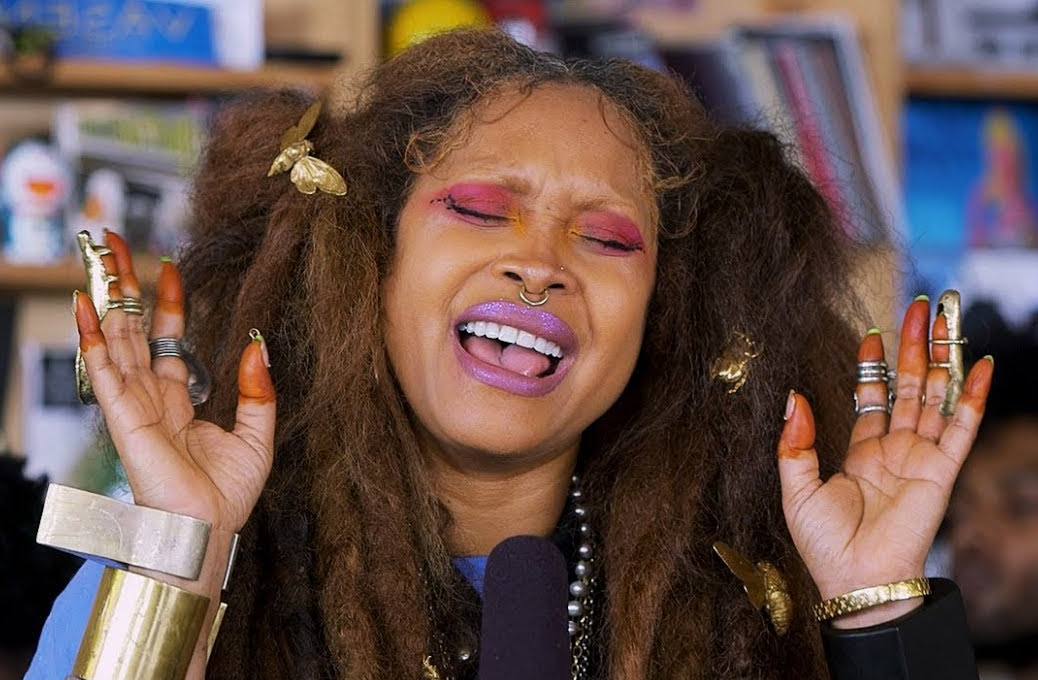
Smooth, soulful, unpredictable, and endlessly original, Erykah Badu helped redefine modern soul music with a sound that blended jazz, hip hop, funk, and spiritual reflection into something completely her own. Emerging in the late 1990s as a leading voice of the neo soul movement, Badu quickly stood apart thanks to her hypnotic vocals, fearless creativity, and deeply personal songwriting. Her music could feel intimate and meditative one moment, then playful, sharp, and politically aware the next. Whether delivering laid back grooves, emotionally raw ballads, or genre bending experiments, she consistently created songs that resonated far beyond the charts. These unforgettable tracks showcase the artistry, individuality, and timeless musical vision that turned Erykah Badu into one of the most influential and respected voices in contemporary R&B and soul music history.
1. On & On
“On & On” is the song that introduced Erykah Badu to the world as a fully formed artistic presence, not merely a new singer with a beautiful voice. From the opening groove, the track feels calm, wise, and quietly radical. Its rhythm is relaxed, but there is nothing casual about the musical design. The bass line sits deep in the pocket, the drums move with patient swing, and Badu’s voice floats above the arrangement with a tone that feels ancient and modern at the same time. She sings as if she is delivering street philosophy from a front porch, a jazz club, and a cosmic classroom all at once.
The lyric is filled with spiritual references, everyday observations, and cryptic phrases that invite listeners to keep returning. That mystery became a major part of Badu’s appeal. She did not arrive with the glossy simplicity expected from much mainstream R&B of the period. Instead, she brought something earthier, more intellectual, and more self possessed. “On & On” became a defining anthem of modern soul because it sounded like a new movement taking shape in real time. The song’s popularity comes from its hypnotic balance of groove and message. It is soothing without being empty, catchy without being obvious, and stylish without ever feeling manufactured. As a signature recording, it remains the perfect entry point into Badu’s universe.
2. Bag Lady
“Bag Lady” is one of Erykah Badu’s most beloved songs because it turns emotional baggage into a vivid, compassionate metaphor. The groove is gentle but firm, built around a warm soul texture that gives the song a sense of movement without rushing its message. Badu’s vocal performance is conversational, tender, and knowing. She sounds like a friend offering hard earned wisdom rather than a performer reaching for drama. That intimacy is exactly why the song connected so deeply with listeners. It speaks to people who carry heartbreak, fear, disappointment, family pain, or past mistakes into every new room they enter.
The genius of “Bag Lady” is that it never scolds. Badu’s message is direct, but her delivery is full of empathy. She understands the burden because she sings as if she has carried it herself. The melody is simple enough to feel instantly familiar, yet the emotional weight underneath gives it lasting power. The song became one of her biggest commercial successes, but it never sounds like a calculated hit. It feels organic, healing, and beautifully human. The production gives her voice space to breathe, letting every phrase settle into the listener. “Bag Lady” remains popular because it offers liberation without pretending that letting go is easy. It is both a groove and a gentle intervention, wrapped in the unmistakable warmth of Badu’s artistry.
3. Tyrone
“Tyrone” is one of Erykah Badu’s most iconic performances, a live recording that became a cultural catchphrase and a master class in musical personality. The song’s brilliance begins with its setup. It feels spontaneous, intimate, and humorous, as if Badu is speaking directly to someone in the room and letting the band follow her emotional temperature. Her vocal phrasing is razor sharp. She stretches lines, pauses for effect, and lands punchlines with the timing of a gifted storyteller. The result is a breakup song that feels theatrical, soulful, funny, and brutally honest.
What makes “Tyrone” so enduring is the way it transforms a specific situation into a universal moment of self respect. Badu’s narrator has reached the limit of patience. The song is not fueled by melodrama, but by clarity. She does not beg, collapse, or over explain. She simply decides that enough is enough. The audience response on the recording adds to the magic, turning the performance into a shared release. Musically, it sits in a stripped down soul pocket, allowing Badu’s words and phrasing to dominate. Few live songs become signature hits, but “Tyrone” did because it captured something no studio polish could improve: personality in real time. It remains one of Badu’s most popular songs because it is memorable, quotable, musically rich, and emotionally satisfying.
4. Didn’t Cha Know
“Didn’t Cha Know” is one of Erykah Badu’s most elegant and searching recordings, a song that moves like a quiet journey through uncertainty. The production has a soft, drifting quality, with a groove that feels suspended between soul, jazz, and hip hop. Badu’s voice enters with calm vulnerability, carrying the feeling of someone reflecting on mistakes, direction, and self discovery. There is a beautiful humility in the performance. She does not present herself as someone who has all the answers. Instead, she lets the listener hear the process of wandering, learning, and slowly finding alignment.
The song’s power is rooted in atmosphere. Every element feels carefully placed but never overworked. The rhythm breathes, the harmonic bed glows, and Badu’s phrasing turns simple lines into meditative reflections. “Didn’t Cha Know” became a favorite because it captures the spiritual and emotional depth that made her work so distinctive. It is not a loud anthem. It is a soft revelation. The lyric speaks to the human experience of losing the path and realizing that confusion can still lead somewhere meaningful. Badu’s performance feels wise precisely because it allows doubt to remain present. As one of her most popular songs, it stands as a reminder that soul music can be contemplative without losing sensuality, and philosophical without losing groove. It is a graceful, luminous piece of modern R&B.
5. Next Lifetime
“Next Lifetime” is one of Erykah Badu’s finest love songs because it treats desire with maturity, restraint, and emotional complexity. The track explores the ache of meeting someone who stirs deep feeling while already being committed elsewhere. Instead of turning that situation into simple temptation, Badu frames it as a spiritual dilemma. Her vocal is soft, thoughtful, and full of longing, but it never loses its sense of moral awareness. She sings from the space between attraction and responsibility, which gives the song an emotional richness that many romantic ballads never reach.
The music supports that tension beautifully. The groove is slow and warm, with a bass line and keyboard texture that create a dreamy, late night atmosphere. Badu’s phrasing is unhurried, allowing the lyric to unfold like an intimate confession. “Next Lifetime” is popular because it gives voice to complicated feelings without cheapening them. It understands that love is not always about possession, timing, or immediate satisfaction. Sometimes it is about recognition, restraint, and the painful beauty of what cannot happen now. The song also helped establish Badu as a writer who could bring adult emotional intelligence into contemporary soul music. Its lasting appeal comes from its honesty. It is romantic, but not naive. It is sensual, but not careless. It is one of her most graceful statements on timing, connection, and the mysteries of the heart.
6. Other Side Of The Game
“Other Side Of The Game” is one of Erykah Badu’s most cinematic songs, a slow burning portrait of love, survival, and moral tension. The groove is deep and smoky, moving with the patience of classic soul while carrying the understated weight of hip hop era storytelling. Badu’s vocal performance is remarkably controlled. She does not oversing the drama. Instead, she lets the emotional conflict simmer beneath the surface, which makes the song feel even more powerful. Her voice becomes the sound of someone trying to balance devotion with fear, tenderness with reality, and love with consequences.
The lyric centers on a woman connected to a man whose life exists in dangerous circumstances. Badu does not flatten the story into judgment or glamour. She explores the emotional cost of living close to risk, especially for someone who must think about home, children, money, loyalty, and the future. “Other Side Of The Game” stands out because it has the depth of a short film. Every phrase suggests a larger world beyond the frame. The arrangement’s warmth adds complexity, making the situation feel human rather than abstract. As one of Badu’s most popular songs from her debut era, it showed that she could write about love in ways that were political, domestic, sensual, and socially aware all at once. It remains a masterful example of narrative soul.
7. Love Of My Life
“Love Of My Life” is one of Erykah Badu’s most joyful and culturally resonant songs, a tribute to hip hop that feels like both a romance and a remembrance. Featuring Common, the track frames hip hop as a beloved figure, someone who shaped identity, language, style, and emotional memory. That concept could have become overly clever in less capable hands, but Badu makes it feel natural and affectionate. Her vocal is playful, bright, and full of warmth, carrying the feeling of someone looking back on a first love that still defines part of who she is.
The groove has a celebratory ease, blending soul melody with hip hop rhythm in a way that feels true to Badu’s artistic personality. Common’s presence deepens the song’s connection to conscious rap and shared cultural history. “Love Of My Life” became one of Badu’s biggest hits because it was accessible without losing intelligence. It worked as a catchy radio single, but it also spoke directly to listeners who understood hip hop as more than entertainment. The song honors the culture’s emotional importance, its memory, and its influence on Black creativity. Badu’s performance gives the track its glow. She sounds relaxed, proud, and completely at home. It remains popular because it captures love as culture, culture as memory, and memory as music.
8. Window Seat
“Window Seat” is one of Erykah Badu’s most fascinating later songs, a smooth and introspective piece that explores the need for freedom, privacy, and personal space. The groove is lush and understated, moving with a soft pulse that feels ideal for drifting thoughts. Badu’s vocal is intimate and slightly weary, as if she is speaking from the middle of fame, responsibility, expectation, and emotional fatigue. The title image is perfect. A window seat suggests escape, observation, and temporary distance from the noise of the world. It is a small request that carries a much larger emotional meaning.
The song’s popularity was amplified by its bold visual presentation, but the recording itself remains strong even without that context. “Window Seat” works because it captures a feeling many people understand: the desire to leave, breathe, think, and belong to oneself for a while. Badu’s writing is direct but layered, turning a personal need into a broader meditation on identity and judgment. The production is elegant, with enough space around the instruments to let her voice remain the center. As a popular Badu song, it shows her ability to keep evolving while staying rooted in soul, funk, and inward reflection. It is calm on the surface, but underneath it carries a powerful hunger for liberation.
9. Honey
“Honey” is one of Erykah Badu’s sweetest and most playful songs, a bright burst of soul that shows her lighter touch without sacrificing musical sophistication. The groove feels warm, buoyant, and slightly retro, with a production style that nods to vintage funk and soul while still carrying Badu’s unmistakable personality. Her vocal is flirtatious and relaxed, moving through the melody with a teasing ease. She sounds like she is having fun, and that sense of pleasure gives the song its charm. It is colorful, inviting, and full of movement.
What makes “Honey” stand out is the way it balances sweetness with intelligence. The song is romantic and catchy, but it is not disposable. Badu brings subtle phrasing, rhythmic confidence, and expressive detail to every line. The famous video added another layer of affection for music history, placing her inside a world of imagined record covers and visual references that matched the song’s crate digging spirit. Still, the track itself is strong enough to shine on its own. It captures Badu as an artist who could be whimsical without becoming lightweight. Among her most popular songs, “Honey” remains a reminder of her range. She can be mystical, political, wounded, philosophical, or humorous, and here she chooses joy with style. The result is one of her most delightful recordings.
10. Appletree
“Appletree” is one of Erykah Badu’s most defining early songs, a statement of independence wrapped in a smooth, jazzy groove. The track captures the confidence of an artist who knows her value and refuses to shrink herself to fit someone else’s expectations. Badu’s vocal delivery is cool and assured, but there is also a playful quality in the way she phrases the lines. She sounds relaxed because the message comes from a place of inner certainty. The song is not aggressive in the usual sense. Its power lies in calm self possession.
The music has a breezy, organic feel that helped make Baduizm such an important album. The bass moves with quiet authority, the rhythm has a gentle swing, and the overall atmosphere feels like a meeting point between jazz club intimacy and hip hop era soul. “Appletree” became a fan favorite because it presents Badu’s worldview with clarity. She values authenticity, discernment, and spiritual alignment. The central metaphor suggests that not everyone is entitled to the fruit of one’s energy, creativity, or presence. That idea remains powerful, especially in a culture that often demands constant availability. As one of her most popular early recordings, “Appletree” shows why Badu became more than a vocalist. She became a guide for listeners seeking style, wisdom, and self respect in the same groove.

Samuel Moore is a frequent contributor to Singers Room. Since 2005, Singersroom has been the voice of R&B around the world. Connect with us via social media below.