Indie music has never been just a genre. It is a mindset, a refusal to follow the expected path, a commitment to sound and identity over commercial formula. The greatest indie bands did not simply operate outside the mainstream. They reshaped it, proving that raw creativity, emotional honesty, and sonic experimentation could resonate just as deeply as polished chart hits. From hazy bedroom recordings to anthems that filled festival fields, these artists built worlds that felt personal yet universal. Their songs capture late night thoughts, restless youth, quiet rebellion, and the strange beauty of imperfection. Across decades, indie bands have blurred the line between underground and global influence, leaving fingerprints on rock, pop, electronic, and beyond. The fifteen bands that follow are not just representatives of indie music. They are its architects, its risk takers, and its most unforgettable voices.
Indie music has always belonged to the restless listener, the one searching for songs that feel discovered rather than delivered. Its greatest bands built entire worlds from distortion, poetry, awkward charm, bedroom melancholy, art school nerve, and glorious imperfection. Some began on tiny labels and became festival giants. Others stayed cult heroes whose influence traveled farther than their sales. What unites them is a devotion to identity. These bands made music that sounded like private thoughts shouted into public space, turning outsider feeling into shared language. Their finest songs still feel alive because they were never built only for trends. They were built from mood, risk, instinct, and conviction. From jangling guitars to strange studio experiments, from romantic gloom to ecstatic noise, the best indie bands of all time changed what alternative music could become.
1. Radiohead
Radiohead began as a guitar band from Oxford and became one of the most studied, revered, and unpredictable groups in modern music. Their early breakthrough, Creep, remains a defining anthem of alienation, built on quiet shame, explosive guitar impact, and Thom Yorke’s wounded vocal delivery. Yet reducing Radiohead to that single would miss the extraordinary transformation that followed. Few bands have moved so convincingly from alternative rock success into electronic experimentation, art rock abstraction, and deeply atmospheric songcraft.
Their essential songs form a map of artistic evolution. Fake Plastic Trees shows their gift for emotional devastation inside a deceptively simple ballad. Paranoid Android is a restless multi part epic that bends progressive rock into anxious modern form. Karma Police turns unease into a singable piano hymn, while Everything in Its Right Place opened a new era of digital texture and fractured identity. Idioteque remains one of their most chilling achievements, pulsing with panic, rhythm, and apocalyptic beauty.
Radiohead’s greatness lies in their refusal to repeat themselves. Jonny Greenwood’s arrangements, Colin Greenwood’s bass work, Ed O’Brien’s textures, Philip Selway’s precise drumming, and Yorke’s unmistakable voice created a body of work where discomfort becomes art. Their top songs are not just indie classics. They are landmarks in the history of adventurous popular music.
2. The Smiths
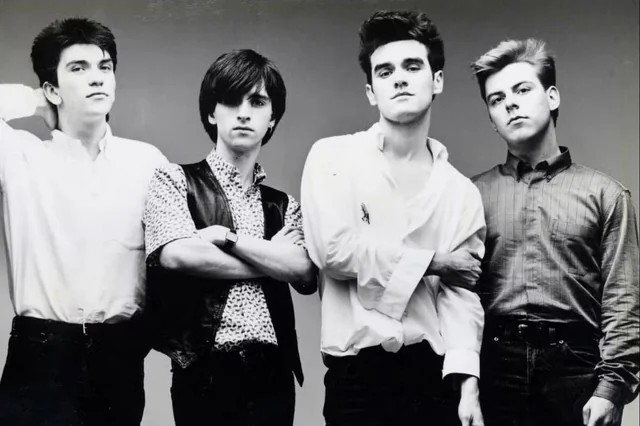
The Smiths remain one of the most influential indie bands ever formed, a Manchester group whose brief career produced an astonishing number of songs that still sound emotionally specific and culturally enormous. Morrissey’s lyrics mixed wit, self pity, romantic doom, and social observation, while Johnny Marr’s guitar playing supplied a luminous counterweight. Marr rarely relied on blunt power. His riffs shimmered, chimed, and danced, creating a musical world far more graceful than the misery often described in the words.
There Is a Light That Never Goes Out is their most beloved song, and it captures the strange magic of the band perfectly. It is dramatic, funny, morbid, tender, and unforgettable. This Charming Man is all nervous elegance and jangling momentum, a perfect example of Marr’s melodic brilliance. How Soon Is Now turns loneliness into a cavernous guitar ritual, while Bigmouth Strikes Again showcases the group’s biting humor and speed. Please Please Please Let Me Get What I Want is barely more than a sigh, yet it has become one of the great miniature laments in indie music.
The Smiths mattered because they made outsider sensitivity feel stylish and sharp. Their songs were literate without being distant, melodramatic without being empty. For generations of listeners, they transformed private awkwardness into an identity worth defending.
3. The Strokes
The Strokes arrived at the start of the twenty first century with the kind of swagger that can either collapse instantly or change the weather. In their case, it changed the weather. Formed in New York, the band took garage rock directness, downtown cool, and tightly wound guitar interplay and made it feel newly essential. Last Nite remains their signature song, a lean burst of rhythm, attitude, and melodic economy that helped reset the sound of rock radio after years of heavier alternative trends.
Their debut album Is This It is packed with songs that quickly became indie canon. Someday has a bittersweet warmth beneath its casual surface. Hard to Explain captures the nervous compression of city life with clipped drums and interlocking guitars. The Modern Age sounds like a mission statement delivered through a cracked amplifier. Later tracks such as Reptilia and You Only Live Once proved that the band could sharpen its attack without losing its melodic charm.
Julian Casablancas’s voice, half drawl and half confession, became central to their appeal, but The Strokes were always a true band. Nick Valensi and Albert Hammond Jr. created guitar lines that locked together like machinery, while Nikolai Fraiture and Fabrizio Moretti kept everything stylishly taut. Their best songs made simplicity feel dangerous again.
4. Arcade Fire
Arcade Fire turned indie rock into something communal, theatrical, and almost ritualistic. Emerging from Montreal, the band sounded enormous even when the songs were filled with grief, childhood memory, and private fear. Their breakthrough album Funeral became one of the defining indie records of its generation because it treated emotion not as decoration, but as architecture. Wake Up is their signature anthem, a vast choral surge that feels made for rooms full of strangers suddenly singing like they have known each other forever.
The group’s finest songs are dramatic without being hollow. Rebellion transforms insomnia and resistance into a pounding communal chant. Neighborhood Number One Tunnels begins like a secret and grows into a world. Keep the Car Running borrows a folk pulse and fills it with escape anxiety. Ready to Start brings a sleeker urgency, while Sprawl II, led by Régine Chassagne, turns suburban dread into glowing synth pop release.
Arcade Fire’s power comes from scale and sincerity. With Win Butler, Régine Chassagne, and a rotating collective of multi instrumental energy, the band created songs that felt handmade yet monumental. Their top songs are not merely catchy. They are emotional gatherings, built from drums, strings, voices, and the feeling that modern loneliness can still be answered by sound.
5. Pixies
Pixies are one of the great underground engines of alternative music, a band whose influence far exceeded their initial commercial scale. Formed in Boston, they developed a sound built on violent contrasts, surreal lyrics, surf guitar flashes, punk pressure, and melodic sweetness that seemed to appear out of nowhere. Where Is My Mind is their most widely recognized song, a dreamy and dislocated masterpiece that feels suspended between sleep, memory, and nervous collapse.
Their greatest songs include Debaser, Here Comes Your Man, Monkey Gone to Heaven, Gouge Away, and Gigantic. Debaser is pure manic art punk, inspired by surreal cinema and driven by Black Francis’s wild vocal presence. Here Comes Your Man shows the band’s gift for bright melodic hooks, while Monkey Gone to Heaven folds environmental dread, religion, and strange numerology into a startlingly accessible song. Kim Deal’s voice and bass playing gave the group warmth and cool balance, especially on Gigantic.
Pixies changed rock grammar through the quiet loud dynamic that later became central to alternative music. But their best songs are more than historical influence. They still sound strange, funny, tense, and alive. The band made weirdness feel aerodynamic, proving that jagged ideas could fly straight into the listener’s nervous system.
6. R E M
R E M helped define American indie and alternative rock long before the mainstream fully understood what those terms could mean. Formed in Athens, Georgia, the band built its early identity around Peter Buck’s ringing guitar, Mike Mills’s melodic bass and harmonies, Bill Berry’s grounded drumming, and Michael Stipe’s enigmatic voice. Their songs felt mysterious without being empty, rooted in folk rock tradition yet pointed toward an entirely new college radio universe.
Losing My Religion is their most famous song, and its mandolin figure remains instantly recognizable. The track became a global hit despite its unusual texture and emotionally ambiguous lyric, proving that a band with underground roots could reach massive audiences without sounding compromised. Other essential songs include Radio Free Europe, So Central Rain, Driver 8, The One I Love, Man on the Moon, and Everybody Hurts. Each reveals a different side of the band, from cryptic jangle to stadium compassion.
What makes R E M so important is the balance of integrity and accessibility. They inspired countless independent musicians by showing that regional identity, poetic obscurity, and serious craft could build a lasting career. Their top songs still carry a beautiful tension between clarity and mystery. You can sing along immediately, yet the deeper meaning keeps moving just out of reach.
7. Arctic Monkeys
Arctic Monkeys began as sharp tongued observers of British nightlife and grew into one of the most stylistically restless bands of their era. Emerging from Sheffield, they first gained attention through fast, witty guitar songs that captured youth culture with almost documentary precision. Alex Turner’s lyrics on early tracks were packed with detail, humor, and rhythmic bite, while the band played with the urgency of a group racing ahead of its own hype.
Do I Wanna Know became their global signature, built on a slow, heavy riff and a vocal mood full of desire, suspicion, and late night obsession. Yet their catalog has many essential peaks. I Bet You Look Good on the Dancefloor is a thrilling debut blast, all adrenaline and crowded room electricity. Fluorescent Adolescent adds melodic brightness and bittersweet reflection. 505 became a fan favorite through its slow build and aching atmosphere. R U Mine delivers muscular rock swagger, while later songs such as Four Out of Five show Turner’s move toward lounge surrealism and cinematic character writing.
Arctic Monkeys matter because they never stayed frozen in their first identity. Their best songs trace a path from street level realism to stylized nocturnal drama. They remain indie icons because reinvention has become part of their language.
8. The White Stripes
The White Stripes proved that limitation can be a source of explosive imagination. Jack White and Meg White built a two person band that sounded raw, haunted, playful, and enormous. Their music drew from blues, garage rock, punk, folk, and old weird America, yet the presentation was stark and instantly identifiable. Red, white, black, guitar, drums, voice. That was enough to create one of the most distinctive rock identities of the modern era.
Seven Nation Army is their immortal song, driven by a riff so simple and powerful that it escaped rock culture and became a global sports chant. But their catalog offers far more than that single seismic hook. Fell in Love with a Girl is a frantic garage pop jewel. Dead Leaves and the Dirty Ground mixes blues grit with wounded romance. Hotel Yorba reveals their country folk charm, while Ball and Biscuit stretches into a roaring electric blues showcase. We’re Going to Be Friends shows Jack White’s gentler songwriting side with childlike warmth.
The White Stripes’ brilliance lies in tension. Meg’s drumming was simple but deeply characterful, giving Jack room to slash, howl, and testify. Their best songs feel handmade, immediate, and mythic, as if ancient blues ghosts wandered into a garage and found electricity waiting.
9. Sonic Youth
Sonic Youth brought noise, art theory, downtown New York experimentation, and underground rock attitude into a form that could be both abrasive and strangely beautiful. The band’s guitar language was revolutionary. Thurston Moore and Lee Ranaldo used alternate tunings, feedback, dissonance, and texture not as chaos for its own sake, but as composition. Kim Gordon supplied cool vocal authority, bass presence, and conceptual edge, while Steve Shelley gave the music a vital rhythmic center.
Teen Age Riot is often considered their most accessible masterpiece, a long, glowing anthem that begins in haze and opens into one of indie rock’s great guitar surges. Other essential songs include Kool Thing, Schizophrenia, Dirty Boots, Silver Rocket, and Sunday. Kool Thing remains a sharp, stylish collision of politics, gender, and groove, while Schizophrenia shows how melodic fragments can bloom inside distortion. Dirty Boots is almost romantic by Sonic Youth standards, yet still full of grit and friction.
Sonic Youth’s importance cannot be separated from their role as cultural connectors. They helped bring underground ideas closer to wider rock audiences without abandoning experimentation. Their best songs make guitar noise feel intelligent, sensual, and alive. For listeners willing to enter their frequencies, Sonic Youth remain one of indie music’s great laboratories.
10. Pavement
Pavement became the patron saints of slanted charm, turning looseness, irony, and melodic instinct into one of the most beloved indie rock catalogs of the nineteen nineties. Led by Stephen Malkmus, the band sounded casual on the surface, sometimes almost tossed off, but that apparent carelessness hid sharp writing and an unmistakable ear for hooks. Their music felt like a secret handshake for listeners who loved rock songs but distrusted grand rock gestures.
Cut Your Hair is their best known song, a sly and catchy commentary on image, industry, and selling out that somehow became their closest thing to a hit. But Pavement’s finest work stretches across many moods. Summer Babe established their scrappy magic. Gold Soundz is one of the great wistful indie songs, glowing with memory and melodic ease. Range Life drifts with country tinged nonchalance, while Here shows the band’s tender, bruised side. Shady Lane later refined their sound into something cleaner but still unmistakably sideways.
Pavement’s greatness lies in personality. The guitars could wobble, the lyrics could dodge direct meaning, and the performances could sound beautifully unbothered. Yet the songs endure because beneath the shrug is a deep feeling for melody, humor, and the odd poetry of ordinary dislocation.
11. Neutral Milk Hotel
Neutral Milk Hotel created one of indie music’s most mythic bodies of work with only a small catalog. Led by Jeff Mangum, the band became legendary through songs that sound fragile, feverish, surreal, and spiritually exposed. Their masterpiece, In the Aeroplane Over the Sea, is unlike almost anything else in indie rock. The title song is simple in structure, but its emotional force is enormous, blending acoustic strumming, singing saw atmosphere, and lyrics that feel like love, grief, history, and dream logic collapsing into one vision.
Other essential songs include Holland 1945, Two Headed Boy, King of Carrot Flowers Part One, and Oh Comely. Holland 1945 is a burst of ecstatic sorrow, with brass and distortion pushing the song toward wild transcendence. Two Headed Boy is intimate and strange, a solo performance that feels almost too vulnerable to overhear. Oh Comely stretches into a long, haunting meditation that reveals Mangum’s singular lyrical universe.
Neutral Milk Hotel’s power comes from imperfection turned sacred. The voice cracks, the arrangements creak, the imagery resists easy explanation, and somehow the songs feel deeply true. Their best music has become a rite of passage for listeners drawn to art that is messy, mysterious, and emotionally fearless.
12. Modest Mouse
Modest Mouse built a singular indie rock universe from restless guitars, philosophical anxiety, rural strangeness, and Isaac Brock’s unmistakable vocal intensity. The band’s early work captured the feeling of highways, bad thoughts, cheap rooms, and existential drift with a rawness few peers could match. Brock could sound sarcastic, desperate, funny, and wounded in the same line, which gave the songs an unstable human charge.
Float On became their crossover anthem, a rare optimistic turn that still carries the band’s crooked charm. Its bright guitar figure and resilient chorus introduced Modest Mouse to a huge audience, but their deeper catalog is filled with essential songs. Dramamine is hypnotic and spacious, one of the great road trance tracks in indie rock. Trailer Trash captures heartbreak with devastating plainness. 3rd Planet blends cosmic reflection with everyday disappointment. Dashboard adds horns and a nautical swagger, while Ocean Breathes Salty turns mortality into a strangely uplifting singalong.
Modest Mouse’s best songs succeed because they stare at uncomfortable truths without becoming lifeless. They are full of motion, argument, and jagged humor. The band made indie rock feel expansive and unsettled, as if every road led to a question that could not quite be answered.
13. Vampire Weekend
Vampire Weekend entered indie music with a sound so crisp and self aware that listeners instantly argued over it, which is often a sign that a band has touched something new. Formed in New York, the group blended bright guitar pop, chamber pop detail, African influenced guitar patterns, literary references, and collegiate wit into songs that felt clean on the surface but deeply crafted underneath. A Punk is their breakthrough classic, a brisk, compact rush of melody and rhythm that remains one of the most instantly recognizable indie singles of its era.
Their strongest songs include Oxford Comma, Cape Cod Kwassa Kwassa, Holiday, Horchata, Diane Young, and Harmony Hall. Oxford Comma shows Ezra Koenig’s gift for conversational lyric writing and sly social detail. Diane Young twists vocal effects and rock and roll energy into something frantic and playful. Harmony Hall later expanded the band’s sound with warmth, maturity, and a graceful piano guitar interplay.
Vampire Weekend’s greatness is in precision. Their songs are meticulously arranged, but they rarely feel heavy. Chris Baio’s bass lines, Chris Tomson’s drumming, Rostam Batmanglij’s early production imagination, and Koenig’s melodic instincts created a band that made intelligence feel buoyant. Their top songs sparkle because every detail has been placed with care.
14. Belle and Sebastian
https://www.youtube.com/watch?v=U23_21F8UFE
Belle and Sebastian are masters of delicate storytelling, melodic grace, and the kind of indie pop that turns quiet lives into literature. Formed in Glasgow, the band built a devoted following through songs that felt intimate, bookish, funny, and deeply compassionate. Stuart Murdoch’s writing often focuses on misfits, dreamers, shy romantics, and people trying to survive the ordinary ache of being themselves. Their music can sound gentle, but beneath the softness is remarkable emotional precision.
The Boy with the Arab Strap is one of their most recognizable songs, a buoyant and conversational track that captures the group’s communal charm. Other essential songs include Get Me Away from Here I’m Dying, Like Dylan in the Movies, Another Sunny Day, Funny Little Frog, and Judy and the Dream of Horses. Get Me Away from Here I’m Dying is a perfect statement of their early genius, filled with longing, wit, and melodic sweetness. Like Dylan in the Movies adds cinematic melancholy, while Funny Little Frog shows their ability to write a bright pop single without losing character.
Belle and Sebastian’s best songs are small in scale but enormous in feeling. They do not shout for attention. They invite close listening, rewarding anyone who loves character, melody, and emotional nuance.
15. The National
The National turned adult melancholy into a grand indie language of drums, baritone confession, and slow burning tension. Formed by musicians with Cincinnati roots and later associated strongly with Brooklyn’s indie scene, the band built its reputation through songs that examine anxiety, relationships, drinking, memory, and middle age with unusual elegance. Matt Berninger’s deep voice is central to the spell, delivering lines that can sound plain at first and devastating moments later.
Bloodbuzz Ohio is one of their defining songs, a stately surge of drums, piano, and emotional dislocation. It captures the band’s gift for making personal unease feel anthemic. Other essential songs include Fake Empire, Mr November, About Today, I Need My Girl, and Terrible Love. Fake Empire is particularly important, with its elegant piano pattern and political emotional fog. Mr November reveals the band’s live intensity, while About Today is almost unbearably restrained, a breakup song that hurts because it barely raises its voice.
The National’s finest work depends on accumulation. Bryan Devendorf’s drumming adds nervous momentum, while Aaron and Bryce Dessner build arrangements full of subtle architecture. Their songs often begin in shadow and slowly gather force. At their best, The National make sadness feel intelligent, communal, and strangely comforting.

Edward Tomlin is a frequent contributor to Singers Room. Since 2005, Singersroom has been the voice of R&B around the world. Connect with us via social media below.