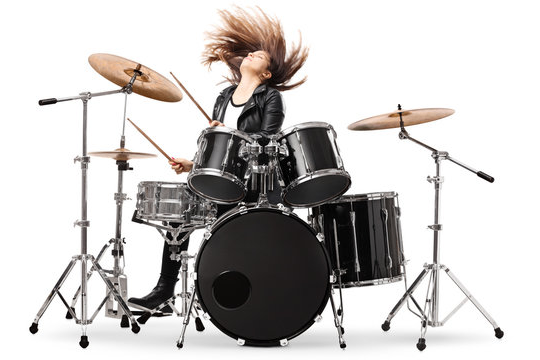
From thunderous rock fills and explosive solos to subtle jazz grooves and irresistible funk rhythms, the greatest drummers of all time proved that percussion is the heartbeat of music. Behind every unforgettable song is a drummer shaping the energy, momentum, emotion, and feel that drives listeners forward. Some became legends through technical brilliance and lightning fast precision, while others earned immortality with groove, creativity, and unmistakable style. Across rock, jazz, metal, funk, pop, and soul, iconic drummers transformed the drum kit into a powerful instrument of expression rather than simple timekeeping. Their rhythms inspired generations of musicians and changed the sound of modern music, proving that a great drummer can completely define the identity and spirit of a song.
1. John Bonham
John Bonham remains one of the most popular drummers of all time because his playing with Led Zeppelin changed the physical meaning of rock rhythm. Born in England, Bonham brought together blues swing, thunderous power, jazz awareness, and a massive sense of groove that made his drum parts feel like central characters in the music. His most famous work can be heard on When the Levee Breaks, Good Times Bad Times, Immigrant Song, Whole Lotta Love, Black Dog, Rock and Roll, and Kashmir. When the Levee Breaks is one of the most legendary drum recordings ever made, with its huge echoing beat sounding like a giant machine rolling through a storm. Bonham did not simply hit hard. He played with feel, weight, timing, and an instinctive sense of space. His bass drum work was explosive, his fills were muscular, and his pocket had a deep blues rooted swing that kept Led Zeppelin from ever sounding stiff. What makes Bonham so enduring is the way his drumming feels both primitive and sophisticated. Every snare crack, cymbal wash, and kick drum pattern seems to lift the entire band higher. His influence can be heard in rock, metal, alternative music, and any drummer who wants power to feel musical rather than merely loud.
2. Neil Peart
Neil Peart became one of the most admired drummers in rock history through his work with Rush, where his precision, imagination, and compositional thinking elevated the drum kit into a lead instrument. Born in Canada, Peart joined Rush in the 1970s and helped shape the band’s identity not only as a drummer but also as its principal lyricist. His best known performances include Tom Sawyer, YYZ, Limelight, Subdivisions, The Spirit of Radio, Freewill, and La Villa Strangiato. Tom Sawyer remains one of his defining tracks, built around crisp electronic textures, shifting accents, and drum fills that became iconic among generations of players. Peart’s drumming was known for accuracy, complexity, and architectural design. He often treated drum parts like carefully arranged compositions, using toms, cymbals, bells, and rhythmic patterns to create motion and drama. Yet his greatness was not only technical. He understood how to serve a song while still giving it extraordinary rhythmic identity. His drum solos became events, full of orchestration, endurance, and musical storytelling. Peart inspired countless musicians to study time signatures, sticking patterns, and dynamic control with serious devotion. His popularity endures because his playing combined discipline with wonder, proving that rock drumming could be intellectual, emotional, and thrilling all at once.
3. Keith Moon
Keith Moon was one of the wildest and most original drummers in rock, a musician whose work with The Who turned the drum kit into a source of chaos, color, and explosive personality. Born in England, Moon did not play drums in the traditional supportive sense. He attacked songs with rolling fills, crashing cymbals, sudden accents, and an almost orchestral sense of mayhem. His most famous performances include Baba O’Riley, Won’t Get Fooled Again, My Generation, Pinball Wizard, I Can See for Miles, The Real Me, and Who Are You. Baba O’Riley showcases the way Moon could enter a song and instantly make it feel larger, more dramatic, and more alive. His style was full of motion, often seeming to comment on the vocal and guitar rather than simply keep time. Moon’s drumming matched the explosive energy of Pete Townshend’s guitar and Roger Daltrey’s vocals, giving The Who a sense of danger that few bands could equal. He was not known for restraint, but restraint was never the point. His gift was propulsion, theater, and instinct. Moon made rock drumming feel like a storm breaking across the stage. His popularity endures because no one else sounded quite so reckless, joyful, unpredictable, and unmistakably human.
4. Ginger Baker
Ginger Baker earned his place among the most popular drummers of all time through a style that fused blues rock power, jazz phrasing, and African rhythmic influence. Best known as the drummer for Cream, Baker helped establish the idea of the rock drummer as a major instrumental force rather than a background timekeeper. His greatest performances include Sunshine of Your Love, White Room, Crossroads, Strange Brew, Spoonful, and the famous drum feature Toad. Sunshine of Your Love is one of Cream’s most recognizable songs, and Baker’s tom heavy groove gives it a hypnotic weight that perfectly matches Eric Clapton’s riff and Jack Bruce’s vocal. Baker’s playing was forceful, but it was also deeply informed by jazz drummers and global percussion traditions. He used the drum kit as a melodic and polyrhythmic instrument, creating patterns that could feel unstable, driving, and deeply physical. His personality was famously difficult, but his musical impact is impossible to deny. Baker helped open the door for extended drum solos in rock and influenced generations of heavy, progressive, and improvisational drummers. His playing had bite, tension, and restless intelligence. He made rhythm feel dangerous, not because it was careless, but because it always seemed ready to push beyond the expected shape of the song.
5. Ringo Starr
Ringo Starr is one of the most popular drummers in music history because his work with The Beatles proved that unforgettable drumming is not always about speed or flash. Born Richard Starkey in Liverpool, Ringo brought feel, taste, humor, and remarkable song sense to the most influential band of the twentieth century. His most famous drum performances include Come Together, Ticket to Ride, Rain, A Day in the Life, Something, She Said She Said, and Tomorrow Never Knows. Come Together is one of his most iconic grooves, instantly recognizable from its loose hi hat pulse, tom accents, and swampy pocket. Ringo had a rare ability to create drum parts that sounded simple on the surface but perfectly defined the song. His fills were melodic, his time was steady, and his choices left room for the vocals, guitars, and arrangements to breathe. Many musicians have praised him because he always seemed to know what a song needed. He could be playful, subtle, heavy, or experimental without drawing attention away from the composition. Ringo’s popularity endures because millions of listeners know his drum parts even if they do not realize it. His greatness lives in musical memory, in grooves that feel inevitable, warm, and perfectly placed.
6. Dave Grohl
Dave Grohl became one of the most famous drummers of the modern rock era through his explosive work with Nirvana before becoming a celebrated singer and guitarist with Foo Fighters. Born in Ohio and raised in Virginia, Grohl brought punk energy, hard rock power, and a massive sense of momentum to the drum kit. His most famous drumming performances include Smells Like Teen Spirit, In Bloom, Lithium, Come as You Are, Drain You, Breed, and Heart Shaped Box. Smells Like Teen Spirit is the defining example of his power, with a drum entrance that helped announce grunge to the world. Grohl’s playing was direct, muscular, and deeply effective. He did not crowd Nirvana’s songs with unnecessary complexity. Instead, he made them hit with enormous force. His snare sound, kick drum weight, and crash driven choruses gave Kurt Cobain’s songs a scale that turned underground angst into global rock anthems. Grohl’s drumming has a physical quality that feels almost athletic, but it is also shaped by strong musical instinct. After Nirvana, his success with Foo Fighters only expanded his reputation as a complete musician. As a drummer, Grohl remains popular because his parts are instantly exciting, emotionally charged, and perfectly built for songs that need to detonate.
7. Buddy Rich
Buddy Rich is one of the most famous drummers who ever lived, a virtuoso whose speed, control, showmanship, and swing made him a legend far beyond the jazz world. Born in Brooklyn, Rich was performing as a child and developed into one of the most technically astonishing drummers of the twentieth century. His most celebrated performances include West Side Story Medley, Channel One Suite, Norwegian Wood, Love for Sale, and countless big band drum features that became required listening for serious players. West Side Story Medley is a thrilling showcase of his command, blending dramatic arrangement, lightning fast hands, explosive accents, and big band power. Rich’s technique was almost unbelievable. His single stroke rolls, snare drum control, cymbal phrasing, and solo construction set standards that drummers still study. Yet his greatness was not only athletic. He swung with authority and could drive a big band with ferocious energy. Rich had a famously intense personality, but on stage that intensity became focus, momentum, and electricity. He helped make drum solos popular entertainment without sacrificing musicianship. His influence reaches jazz, rock, fusion, marching percussion, and drum education. Buddy Rich remains popular because he represents the drummer as virtuoso, bandleader, performer, and force of nature. Hearing him at full power still feels like watching controlled lightning.
8. Stewart Copeland
Stewart Copeland is one of rock’s most distinctive drummers, best known for giving The Police their sharp, restless, globally flavored rhythmic identity. Born in Virginia and raised in different parts of the world, Copeland brought a broad rhythmic sensibility to rock music, drawing from punk urgency, reggae accents, Middle Eastern textures, and crisp studio precision. His most famous performances include Roxanne, Message in a Bottle, Walking on the Moon, Every Breath You Take, Synchronicity II, Driven to Tears, and Spirits in the Material World. Roxanne introduced many listeners to The Police’s unusual rhythmic chemistry, where Copeland’s bright cymbal work, snare accents, and offbeat energy helped create tension beneath Sting’s vocal. His drumming often feels like sparks flying around the groove. He is known for precise hi hat patterns, splashing accents, and rhythmic details that make songs feel nervous, alive, and unpredictable. Copeland rarely plays the obvious part. He brings color and momentum while still supporting the song’s structure. His influence can be heard in alternative rock, new wave, post punk, and any drummer who values texture as much as power. Stewart Copeland remains popular because his playing is instantly identifiable. He made the drum kit sound sharp, intelligent, energetic, and full of global imagination.
9. Phil Collins
Phil Collins is one of the most popular drummers and singers in modern music, known both for his work with Genesis and for a hugely successful solo career. Before becoming a pop superstar, Collins was recognized as a highly skilled progressive rock drummer with strong jazz fusion instincts, intricate coordination, and a deep sense of dynamics. His major drum performances include Genesis songs such as Watcher of the Skies, Firth of Fifth, Los Endos, Dance on a Volcano, and later hits such as In the Air Tonight, Abacab, and Tonight Tonight Tonight. In the Air Tonight contains one of the most famous drum moments in pop history, with its dramatic gated drum entrance becoming instantly recognizable across generations. Collins helped popularize that huge 1980s drum sound, but his musicianship goes far beyond one effect. He could play complex odd meter passages, delicate cymbal textures, and powerful rock grooves with equal confidence. His drumming often serves atmosphere and emotional drama, making the arrival of a fill feel like a turning point in the song. Collins’ popularity comes from his rare ability to move between technical progressive music and mainstream pop without losing rhythmic identity. As a drummer, he made sound, space, and timing feel cinematic.
10. Charlie Watts
Charlie Watts was the quiet rhythmic foundation of The Rolling Stones, a drummer whose elegance, restraint, and swing gave one of rock’s greatest bands its unmistakable feel. Born in London and originally drawn to jazz, Watts brought a different sensibility to rock drumming. He did not chase flash or volume. He created pocket, balance, and understated authority. His most famous performances include Paint It Black, Honky Tonk Women, Gimme Shelter, Brown Sugar, Sympathy for the Devil, Start Me Up, and Tumbling Dice. Paint It Black shows his ability to drive a song with urgency while keeping the beat controlled and hypnotic. Watts had a distinctive way of playing slightly behind the front edge of the rhythm, giving The Rolling Stones their loose, swaggering feel. His jazz background shaped his touch, especially his cymbal work and sense of dynamics. He was never trying to dominate the band, yet without him the Stones would have sounded completely different. His partnership with bassist Bill Wyman and later Darryl Jones anchored Keith Richards’ riffs and Mick Jagger’s vocals with effortless cool. Watts remains popular because he represents a form of drumming based on taste, discipline, and deep groove. He proved that restraint can be powerful and that the right beat can define a band for decades.
11. Clyde Stubblefield
Clyde Stubblefield is one of the most important funk drummers of all time, best known for his work with James Brown and for creating rhythms that became central to hip hop, funk, soul, and modern popular music. Born in Tennessee, Stubblefield developed a crisp, syncopated style that placed the drum kit at the center of the groove. His most famous performances include Funky Drummer, Cold Sweat, Mother Popcorn, There Was a Time, and other essential James Brown recordings. Funky Drummer contains one of the most sampled drum breaks in music history, a short but endlessly influential pattern that became a building block for hip hop producers and breakbeat culture. Stubblefield’s genius lies in the details. His ghost notes, snare placement, hi hat openings, and bass drum accents create a groove that feels loose and tight at the same time. He did not need huge fills or long solos to prove his importance. The pocket itself was the statement. In James Brown’s band, every instrument had to serve rhythm, and Stubblefield understood that discipline perfectly. His popularity among musicians and producers is immense because his drumming changed how people think about groove. Clyde Stubblefield made rhythm feel like architecture, language, and body movement all at once.
12. Max Roach
Max Roach is one of the most influential drummers in jazz history, a musician who helped transform the drum kit from a timekeeping tool into a fully expressive solo and conversational instrument. Born in North Carolina and raised in Brooklyn, Roach became a central figure in bebop alongside Charlie Parker, Dizzy Gillespie, Bud Powell, and Thelonious Monk. His major works include Drum Conversation, Freedom Day, Garvey’s Ghost, Parisian Thoroughfare, Joy Spring, and many historic recordings with Clifford Brown. Drum Conversation is an excellent example of his ability to turn the drum kit into speech, with phrases that feel organized, witty, and deeply musical. Roach helped shift jazz drumming away from heavy bass drum marking toward ride cymbal flow, snare conversation, and interactive accents. His playing was precise, melodic, and intellectually powerful, but it never lost swing. He was also an artist of conscience, using music to address civil rights, African heritage, and political struggle. His album work with vocalist Abbey Lincoln remains especially important in that regard. Roach’s influence reaches every modern jazz drummer who thinks beyond simple accompaniment. His popularity among musicians is enormous because he showed that drums could argue, sing, protest, and compose in real time. Max Roach made rhythm an art of intelligence and freedom.
13. Elvin Jones
Elvin Jones is one of the most powerful and spiritually intense drummers in jazz, best known for his historic work with the John Coltrane Quartet. Born in Michigan into a musical family, Jones developed a rolling, polyrhythmic style that changed the way drummers approached swing, time, and interaction. His greatest performances can be heard on Coltrane recordings such as My Favorite Things, A Love Supreme, Impressions, Afro Blue, Psalm, and Chasin’ the Trane. My Favorite Things is one of the quartet’s defining pieces, and Jones’ drumming helps give the performance its hypnotic momentum and spiritual lift. His style did not always mark time in a straight, obvious way. Instead, he created waves of rhythm, layering triplets, cymbal patterns, snare accents, and bass drum figures into a constantly moving field of energy. Jones made the drum kit feel like weather, ocean, and heartbeat all at once. He could be thunderous, but his power was deeply musical. His interaction with Coltrane, McCoy Tyner, and Jimmy Garrison became one of the great examples of group improvisation. Elvin Jones remains popular because his drumming feels elemental. He expanded jazz rhythm into something wider, deeper, and more spiritually charged than ordinary timekeeping.
14. Travis Barker
Travis Barker became one of the most famous drummers of the modern punk and alternative era through his work with Blink 182 and his later collaborations across hip hop, pop, rock, and electronic music. Born in California, Barker brought technical skill, marching drum precision, hip hop influenced groove, and explosive punk energy into mainstream rock. His best known songs include All the Small Things, What’s My Age Again, Dammit, First Date, The Rock Show, Feeling This, and I Miss You. All the Small Things became one of Blink 182’s biggest hits, and Barker’s drumming gives the song its bounce, speed, and youthful urgency. What separates Barker from many pop punk drummers is his precision and creativity. He often adds busy snare work, quick fills, and syncopated patterns without losing the song’s direct energy. His background in rudimental drumming gives his parts a crisp, athletic quality. Barker also helped make drummers visible to a younger generation, turning the kit into a visual and cultural symbol as well as a musical one. His collaborations with rap and pop artists expanded his reach far beyond punk. Travis Barker remains popular because his drumming is energetic, stylish, adaptable, and instantly exciting, proving that punk based playing can be both raw and technically sharp.
15. Questlove
Questlove, born Ahmir Thompson, is one of the most respected drummers in modern soul, hip hop, and R&B, best known as the drummer and musical director of The Roots. Raised in Philadelphia in a deeply musical family, Questlove developed a style rooted in funk, jazz, classic soul, hip hop sampling culture, and deep historical knowledge. His most important performances include The Roots tracks such as You Got Me, The Seed 2.0, Proceed, What They Do, Act Too, and Here I Come. You Got Me remains one of the group’s most beloved songs, blending live hip hop instrumentation, soulful atmosphere, and a groove that feels both human and sample like. Questlove’s drumming is famous for its pocket. He can play with the precision of a drum machine while keeping the warmth and subtle imperfections of a live musician. His hi hat work, snare placement, and dynamic control reveal a drummer who understands history and restraint. He does not need to dominate a track to define it. Beyond performing, Questlove is a producer, author, filmmaker, historian, and cultural curator. His popularity comes from his ability to connect eras, showing how funk breaks, soul records, jazz touch, and hip hop rhythm all speak to one another. Questlove made modern drumming feel scholarly, grooving, and deeply alive.

Samuel Moore is a frequent contributor to Singers Room. Since 2005, Singersroom has been the voice of R&B around the world. Connect with us via social media below.