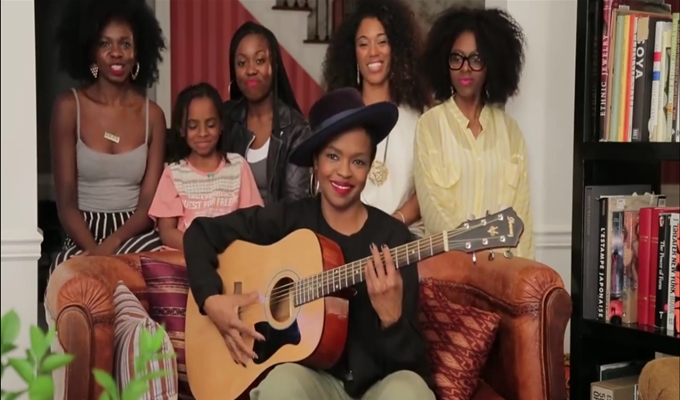
A recent moment in live music brought renewed global attention to Lauryn Hill, as she addressed Nigerian fans during a performance that quickly circulated online. The occasion centered on her rendition of Doo Wop (That Thing), a defining track from her influential solo catalog, delivered in a way that blended musical nostalgia with a gesture of reconciliation toward her audience in Nigeria.
The performance gained attention not only for the music itself but also for the emotional context surrounding it. According to widely shared clips, Hill took a moment during the show to acknowledge her Nigerian fans directly. She expressed appreciation for their patience and support, framing her remarks as an apology for previous disappointments related to scheduling and performance expectations. While the exact wording varied across reports, the sentiment was clear, focusing on gratitude and reconnection.
Lauryn Hill’s relationship with live performance has long been a topic of discussion among fans and critics. Known for her groundbreaking work with The Fugees and her solo masterpiece The Miseducation of Lauryn Hill, she has maintained a reputation as an artist whose live shows can be both deeply moving and unpredictable in structure. This complexity has often led to divided opinions, but it has also contributed to her mythic status in contemporary music.
In this instance, however, the focus shifted away from controversy and toward reconciliation. The performance of Doo Wop (That Thing) served as a reminder of Hill’s lasting influence on R and B and hip hop. The song, originally released in the late 1990s, remains one of her most recognizable works, celebrated for its blend of social commentary, sharp lyricism, and melodic accessibility. Its message about self respect and personal integrity continues to resonate with audiences across generations.
The Nigerian audience response, as seen in circulating video footage, appeared enthusiastic and supportive. Fans sang along, creating a shared atmosphere that emphasized connection over criticism. This interaction highlighted the global reach of Hill’s music, particularly in regions where her work has maintained strong cultural relevance long after its initial release.
Nigeria itself has become an increasingly important hub for global music exchange, especially in the realms of Afrobeats and contemporary R and B fusion. International artists frequently perform in the country, and audiences are known for their energetic engagement and deep appreciation of live music. Within this context, Hill’s acknowledgment of her Nigerian fans carried additional significance, reinforcing the idea that her music continues to transcend geographical boundaries.
The performance also sparked broader conversations online about accountability and artistry. Some commentators viewed Hill’s apology as a meaningful gesture that reflected respect for her audience, while others discussed the broader expectations placed on veteran artists who balance legacy status with ongoing performance demands. These discussions reflect a wider cultural shift in how fans engage with artists, particularly in the age of social media where moments from live shows can be instantly shared and analyzed.
Despite varying opinions, the emotional core of the event remained centered on the music. Doo Wop (That Thing) once again demonstrated its timeless appeal, with its rhythmic structure and lyrical message proving just as impactful decades after its release. Hill’s live delivery, marked by her distinctive vocal tone and phrasing, reinforced why the song continues to be considered a classic in modern music history.
For many fans, the performance represented more than a musical set. It was a moment of reconnection between an artist and an international audience that has followed her career for years. The combination of apology, performance, and audience participation created a layered experience that extended beyond entertainment.
In the end, Lauryn Hill’s appearance in Nigeria underscored the enduring power of music to bridge distance and time. Through a single performance, she managed to revisit one of her most iconic songs while also addressing her audience directly in a way that acknowledged both history and present connection. It was a reminder that even after decades in the spotlight, meaningful moments between artist and audience can still create lasting impact.