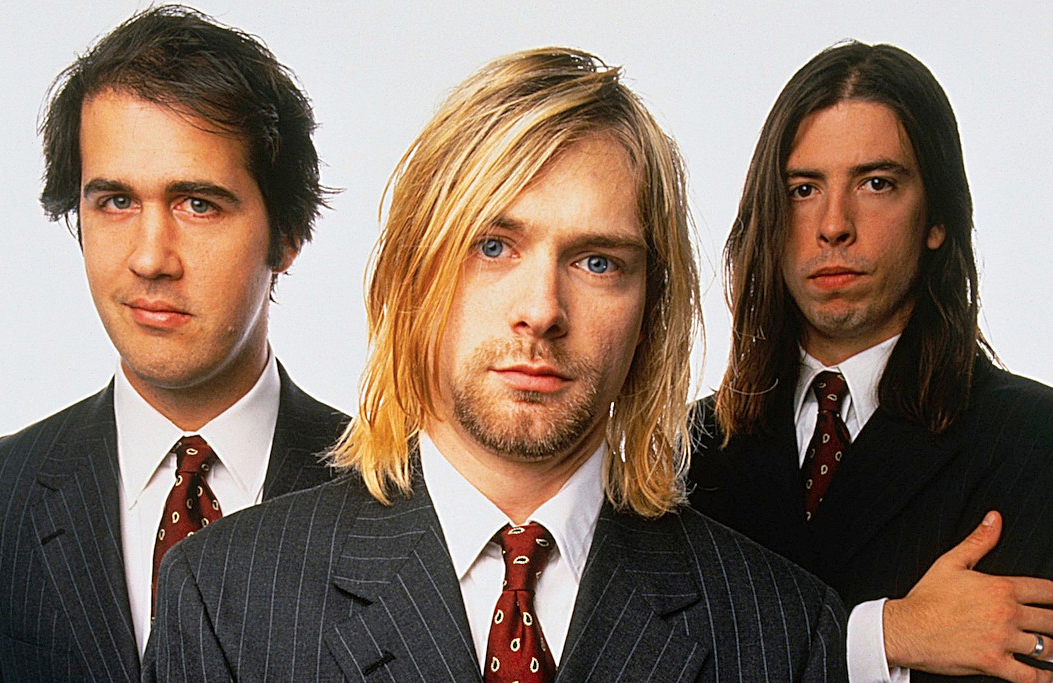
Raw emotion, explosive energy, and unforgettable melodies helped Nirvana change the direction of rock music forever. Emerging from the underground grunge scene of the Pacific Northwest, the band brought a powerful mixture of punk aggression, heavy guitar distortion, and deeply vulnerable songwriting into mainstream culture during the early nineteen nineties. Led by the haunting voice and songwriting brilliance of Kurt Cobain, Nirvana created songs that captured frustration, alienation, anxiety, and emotional honesty with a sound that felt both chaotic and strangely beautiful. Their music rejected polished rock excess and replaced it with authenticity, intensity, and a sense of emotional urgency that connected with millions of listeners around the world. From thunderous anthems filled with rage to fragile acoustic performances filled with pain and reflection, Nirvana built a catalog that remains deeply influential decades later. Their greatest songs continue to define the spirit of grunge while standing as timeless expressions of rebellion, vulnerability, and artistic truth.
1. Smells Like Teen Spirit
Smells Like Teen Spirit remains Nirvana’s defining explosion, the track that pulled alternative rock from basement clubs and college radio into the center of global pop consciousness. Released on Nevermind, the song is built around one of the most recognizable guitar riffs in rock history, a murky, churning progression that moves with the weight of a protest chant and the nervous energy of teenage boredom. Kurt Cobain’s vocal performance is essential to its mystique. He does not simply sing the song; he mutters, sneers, howls, and collapses into it, making every line feel like both a joke and a confession. Dave Grohl’s drums give the track its massive physical punch, while Krist Novoselic’s bass locks everything into a thick, surging groove. What makes the song endure is not just its volume, but its contradiction. It sounds angry, catchy, sarcastic, wounded, and liberating all at once. Smells Like Teen Spirit became an anthem for listeners who were tired of polished rock theatrics, yet its hooks were undeniable enough to conquer mainstream radio. It is chaotic, melodic, and culturally seismic.
2. Come As You Are
Come As You Are is one of Nirvana’s most hypnotic songs, a track that trades the blunt force of their loudest work for a cooler, shadowy kind of tension. The watery guitar riff immediately sets the mood, circling with a narcotic pull that feels calm on the surface but deeply uneasy underneath. Kurt Cobain’s vocal is restrained compared with his most explosive performances, yet that restraint gives the song its haunting character. He sounds inviting, suspicious, vulnerable, and distant in the same breath. The famous lyric about arriving as you are captures the strange ambiguity at the heart of Nirvana’s appeal. It feels welcoming, but it also carries a sense of emotional danger. Musically, the song proves how powerful the band could be without rushing or overwhelming the listener. Krist Novoselic’s bass adds a deep, liquid pulse, while Dave Grohl’s drumming gives the chorus the lift it needs without breaking the spell. Come As You Are became one of the group’s signature songs because it revealed another side of their genius. Beneath the distortion and noise was a band with a remarkable gift for atmosphere, melody, and emotional unease.
3. Lithium
Lithium is one of Nirvana’s finest examples of quiet and loud dynamics, a song that moves from fragile calm to cathartic release with almost frightening precision. The verses feel strangely peaceful, carried by Kurt Cobain’s dry vocal delivery and a guitar part that seems to drift rather than attack. Then the chorus erupts, not as simple aggression, but as a kind of emotional overflow. The song captures instability without turning it into melodrama. Its narrator feels suspended between belief, numbness, loneliness, and desperate self preservation, which gives the track its powerful psychological charge. Dave Grohl’s drumming is especially crucial, shifting from tight control to thunderous release with a sense of theatrical timing. Krist Novoselic’s bass keeps the song grounded, adding warmth to the arrangement even as the mood becomes increasingly volatile. Lithium also demonstrates Cobain’s unusual melodic instinct. Even when the lyrics feel fragmented and surreal, the tune is unforgettable, inviting listeners to sing along to something deeply unsettled. That tension is why the song remains so compelling. It is catchy without being simple, heavy without being obvious, and emotionally raw without ever explaining itself too neatly.
4. Heart Shaped Box
Heart Shaped Box stands as one of Nirvana’s darkest and most visually powerful songs, a piece that feels as if it crawled out of a dream filled with devotion, decay, obsession, and spiritual dread. Released on In Utero, it showed the band moving away from the smoother impact of Nevermind toward something more abrasive, surreal, and unsettling. The guitar tone is thick and corrosive, opening with a slow, almost sickly pull before the chorus detonates into a wall of sound. Kurt Cobain’s vocal performance is among his most chilling. He moves from weary intimacy to torn throat intensity, making the song feel both personal and mythic. The lyrics are filled with strange religious and bodily imagery, creating a world where love and pain seem impossible to separate. Dave Grohl’s drums hit with enormous force, especially when the chorus arrives, while Krist Novoselic’s bass adds a heavy undertow to the track’s crawling momentum. Heart Shaped Box remains popular because it is more than a hit song. It is a complete atmosphere, a disturbing and beautiful piece of rock art that still feels dangerous decades later.
5. In Bloom
In Bloom is one of Nirvana’s sharpest and most deceptively catchy songs, pairing a massive melodic chorus with lyrics that quietly mock listeners who consume music without understanding its spirit. The track opens with muscular guitar and a pounding rhythm section, immediately giving it the feel of a classic rock anthem, but Cobain twists that expectation into something more ironic and biting. The chorus is huge, almost arena ready, yet its message is loaded with sarcasm. That contrast is exactly what makes In Bloom so fascinating. It can be enjoyed as a roaring singalong, but beneath the hooks is a critique of empty fandom, macho posturing, and surface level appreciation. Dave Grohl’s harmonies add brightness and power to the chorus, helping make it one of the band’s most memorable vocal moments. His drumming also gives the song a heavy swing, while Krist Novoselic’s bass thickens the groove with understated force. In Bloom showcases Nirvana’s ability to smuggle subversion into songs that sounded instantly accessible. It is polished enough to feel anthemic, raw enough to feel authentic, and clever enough to keep revealing new layers long after the first listen.
6. All Apologies
All Apologies is one of Nirvana’s most beautiful and emotionally exposed songs, a track that carries the ache of surrender without losing its melodic grace. The studio version on In Utero has a hypnotic circular quality, while the famous acoustic performance from MTV Unplugged in New York brought out its fragile, almost hymn like sadness. Kurt Cobain’s vocal feels weary but luminous, as if each phrase is being pulled from a place of exhaustion and reluctant acceptance. The song’s simple repeating guitar figure gives it a meditative pulse, allowing the emotional weight to build gradually rather than through brute force. Lyrically, All Apologies feels both private and universal. It gestures toward guilt, identity, domestic longing, and emotional fatigue without spelling everything out, which is part of its enduring power. The chorus has a strange serenity, even as the mood remains heavy. Krist Novoselic and Dave Grohl support the song with restraint, proving that Nirvana could be devastating without volume alone. All Apologies remains one of the band’s most beloved songs because it sounds like a final sigh, a prayer, and a confession woven into one unforgettable melody.
7. The Man Who Sold The World
The Man Who Sold The World became one of Nirvana’s most famous performances even though it began as a David Bowie song. Nirvana’s version from MTV Unplugged in New York transformed the track into something ghostly, intimate, and deeply mysterious. Instead of treating it as a flashy cover, the band stripped it down and let its eerie melody breathe. Kurt Cobain’s voice gives the song a haunted quality, making the lyrics feel like a conversation with a stranger who might also be the self. His delivery is understated but unforgettable, full of distance, curiosity, and quiet dread. The guitar arrangement is delicate yet tense, and the performance has a candlelit atmosphere that separates it from the band’s louder studio landmarks. Krist Novoselic and Dave Grohl play with remarkable discipline, leaving enough space for the song’s unsettling mood to settle over the listener. For many fans, this performance introduced Bowie’s composition to a new generation, but it also revealed Nirvana’s interpretive intelligence. The Man Who Sold The World proved that Nirvana did not need distortion to sound powerful. They could create intensity through mood, restraint, and emotional presence.
8. Something In The Way
Something In The Way is one of Nirvana’s most chilling quiet songs, a piece built from near stillness, low murmurs, and an atmosphere of isolation so complete that it feels almost physical. Closing the main sequence of Nevermind, the track pulls away from the explosive energy of the album and enters a much colder emotional space. Kurt Cobain’s vocal is barely above a whisper, which makes every word feel heavy with fatigue and detachment. The simple guitar pattern is dark and repetitive, creating a sense of being trapped in a small room with no clear exit. The cello adds a mournful depth, giving the song an almost funereal beauty. Unlike many Nirvana tracks, Something In The Way does not rely on sudden eruptions. Its power comes from patience, restraint, and atmosphere. The lyrics suggest homelessness, alienation, and emotional numbness, though their meaning remains open enough to feel mythic rather than literal. The song’s later resurgence in popular culture only confirmed what devoted listeners already knew. It is one of Nirvana’s most haunting achievements, a quiet masterpiece that proves emptiness can be as overwhelming as noise.
9. About A Girl
About A Girl is one of the clearest early signs that Kurt Cobain was not only a punk inspired songwriter, but also a gifted pop melodist with a deep feel for classic songcraft. First appearing on Bleach, the song stood apart from much of Nirvana’s heavier early material because of its clean melodic shape and almost Beatles flavored charm. Yet it never sounds soft in a conventional sense. There is still tension in the guitar work, still dryness in Cobain’s voice, still that uneasy emotional edge that would become central to the band’s identity. The MTV Unplugged in New York performance later gave the song an even wider audience, revealing how strong it was when stripped of distortion and studio weight. Its lyrics are direct but not simplistic, capturing romantic frustration with a mixture of affection, resentment, and weariness. The chorus lands with effortless memorability, proving that Cobain could write hooks that felt natural rather than manufactured. About A Girl remains popular because it shows Nirvana before the earthquake of global fame, already carrying the melodic instincts that would change rock music. It is concise, heartfelt, rough edged, and quietly brilliant.
10. You Know You Are Right
You Know You Are Right holds a unique place in Nirvana’s legacy because it arrived publicly after the band’s story had already become legend. Recorded near the end of Kurt Cobain’s life, the song feels painfully intense, as if it gathers years of exhaustion, resentment, beauty, and unresolved emotion into one final blast. The verses are tense and brooding, with Cobain’s voice sounding drained yet focused, while the chorus opens into a scream that is almost unbearable in its rawness. The band sounds enormous. Dave Grohl’s drums hit with sharp, controlled force, Krist Novoselic’s bass gives the song a heavy spine, and the guitars move between grim restraint and explosive release. What makes You Know You Are Right so powerful is the sense of finality that surrounds it. Even without that historical context, the song would stand as one of Nirvana’s most gripping recordings, but knowing where it sits in the timeline gives it additional emotional weight. It is not sentimental, and it does not offer closure. Instead, it sounds unresolved, wounded, and fiercely alive. As a final major statement, it captures Nirvana’s essence with devastating clarity.

Edward Tomlin is a frequent contributor to Singers Room. Since 2005, Singersroom has been the voice of R&B around the world. Connect with us via social media below.