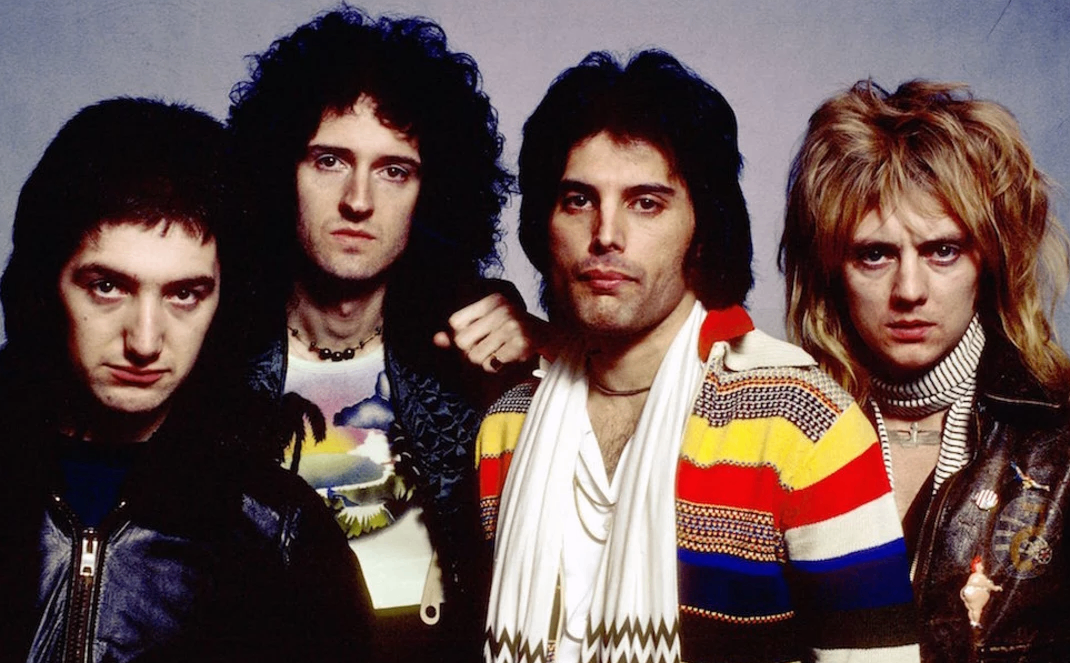
Few bands in rock history matched the theatrical brilliance, musical ambition, and timeless power of Queen. Led by the unforgettable voice and charisma of Freddie Mercury, Queen created a catalog filled with massive anthems, emotional ballads, hard rock classics, and genre bending masterpieces that continue to unite generations of music fans. Their songs combined explosive guitar work, towering vocal harmonies, operatic drama, and unforgettable hooks in ways no other band could fully replicate. From the larger than life spectacle of “Bohemian Rhapsody” to the triumphant energy of “We Will Rock You” and the emotional beauty of “Somebody to Love,” Queen consistently pushed rock music beyond conventional boundaries. Whether performing in stadiums or crafting intricate studio recordings, the band delivered music filled with confidence, emotion, creativity, and pure entertainment. Their legacy remains one of the most celebrated and influential in the entire history of popular music.
1. Bohemian Rhapsody
“Bohemian Rhapsody” is the Queen song that turned studio ambition into rock legend. Written by Freddie Mercury, it remains one of the most daring and recognizable recordings in popular music because it refuses to behave like a normal single. It begins as a piano confession, moves into a dramatic ballad, erupts into an operatic storm, charges into hard rock, and then returns to a quiet final reflection. That structure could have collapsed under its own weight, but Queen made every section feel inevitable. Mercury’s voice carries the emotional center, while Brian May’s guitar brings grandeur, Roger Taylor’s high harmonies add theatrical fire, and John Deacon’s bass keeps the whole creation anchored.
What makes “Bohemian Rhapsody” so powerful is not only its innovation, but the mystery at its heart. The lyrics suggest guilt, fate, fear, and release, yet they never settle into one clear interpretation. That openness has helped the song remain endlessly fascinating. It can feel tragic, funny, majestic, strange, and deeply moving in the same listen. The operatic section became one of rock’s most famous studio achievements, but the song’s emotional pull comes from the way Queen balances spectacle with vulnerability. “Bohemian Rhapsody” remains one of the most popular Queen songs of all time because it captures everything that made the band extraordinary: fearless imagination, technical brilliance, theatrical drama, and a belief that rock music could be limitless.
2. We Will Rock You
“We Will Rock You” is one of the simplest and most powerful anthems ever created, built almost entirely on stomp, clap, voice, and attitude. Written by Brian May, the song strips rock music down to its most communal elements, turning the listener into part of the performance. There is barely any traditional instrumentation for most of the track, yet its impact is enormous. The beat feels like a crowd gathering force, while Freddie Mercury’s vocal turns the lyric into a challenge, a chant, and a declaration of identity. It is less a song people merely hear and more a ritual they join.
The brilliance of “We Will Rock You” lies in its universality. Its rhythm can fill sports stadiums, concert halls, school gyms, and public celebrations because it needs no translation. The song is direct, physical, and instantly memorable. Brian May’s guitar solo at the end arrives like a burst of lightning after the crowd powered build, giving the track its final rock and roll stamp. Queen understood the power of audience participation better than almost any band, and this song is the clearest proof. It works because it gives people a role. They stomp, clap, shout, and become part of the music. “We Will Rock You” remains one of Queen’s most popular songs because it transforms confidence into sound and makes collective energy feel unstoppable.
3. We Are the Champions
“We Are the Champions” is one of Queen’s greatest triumph anthems, a song that turns victory into something dramatic, emotional, and almost spiritual. Written by Freddie Mercury, it has become a global soundtrack for celebration, yet its power comes from more than its association with winning. The lyric begins with struggle, payment, mistakes, and endurance before reaching the famous chorus. That journey matters. Mercury does not sing as someone who was simply handed glory. He sings as someone who has survived judgment, hardship, and pressure, then stands tall anyway. That sense of earned triumph gives the song its lasting emotional force.
Musically, “We Are the Champions” is a perfect example of Queen’s theatrical command. The verses are intimate and piano driven, allowing Mercury’s voice to carry both vulnerability and pride. Then the chorus rises into a massive communal statement, supported by rich harmonies and Brian May’s soaring guitar textures. The song feels grand without becoming hollow because its confidence is rooted in scars. It has been sung in arenas, at sporting events, and in countless personal moments of achievement, yet it still holds up as a finely crafted rock ballad. “We Are the Champions” remains popular because it understands that real victory is not just about applause. It is about persistence, belief, and the emotional release that comes after refusing to quit.
4. Another One Bites the Dust
“Another One Bites the Dust” is Queen at their sleekest and most groove driven, a song that proved the band could dominate the dance floor as easily as the rock stage. Written by John Deacon, the track is built around one of the most famous bass lines in popular music. It is lean, tense, and irresistibly funky, giving the song a cool menace that separates it from Queen’s more theatrical productions. Freddie Mercury sings with sharp confidence, leaning into the rhythm with a voice that sounds playful, dangerous, and completely in control.
The lasting appeal of “Another One Bites the Dust” comes from its restraint. Queen were known for grandeur, but this song succeeds by doing less. The drums are tight, the guitar accents are clipped, and the bass drives everything with hypnotic authority. The lyric suggests confrontation and defeat, but the groove makes it feel like a strut through chaos. It became one of Queen’s biggest hits because it crossed musical boundaries, appealing to rock fans, pop listeners, and dance audiences at the same time. John Deacon’s writing showed a different side of the band’s genius, proving that Queen’s identity was not limited to operatic drama or arena rock bombast. “Another One Bites the Dust” remains one of their most popular songs because it is cool, compact, unforgettable, and powered by a rhythm that still sounds fresh.
5. Somebody to Love
“Somebody to Love” is one of Queen’s most emotionally magnificent songs, a gospel inspired rock masterpiece that showcases Freddie Mercury’s voice, the band’s harmony skills, and their ability to turn loneliness into grandeur. The song is built around a universal plea: the desire to find love, connection, and meaning in a world that can feel exhausting and indifferent. Mercury sings with astonishing range and feeling, moving from weary confession to full throated desperation. His performance is theatrical, but never empty. Every vocal flourish seems tied to genuine longing.
What makes “Somebody to Love” so enduring is the way Queen creates the sound of a choir from only a few voices. Mercury, Brian May, and Roger Taylor layer their vocals into a rich, gospel influenced wall of harmony, giving the song a spiritual intensity that lifts it beyond ordinary rock ballad territory. The piano drives the arrangement with elegance, while the rhythm section adds force as the song builds. The lyric balances personal doubt with a search for transcendence, making it one of the band’s most human works. It is not simply about romance. It is about the ache of being alive and wanting someone, or something, to answer back. “Somebody to Love” remains a beloved Queen classic because it combines technical brilliance with emotional need in a way that feels overwhelming, honest, and unforgettable.
6. Don’t Stop Me Now
“Don’t Stop Me Now” is Queen at their most euphoric, a lightning fast celebration of pleasure, speed, confidence, and pure release. Written by Freddie Mercury, the song has become one of the band’s most beloved feel good anthems, largely because it sounds like momentum itself. The piano races forward, Mercury’s vocal sparkles with theatrical delight, and the band launches into the chorus with irresistible energy. The lyrics are full of cosmic images, reckless joy, and playful exaggeration, turning personal excitement into something larger than life.
The magic of “Don’t Stop Me Now” lies in its sense of unstoppable motion. It does not merely describe having a good time. It becomes the feeling of one. Mercury delivers the song with dazzling charisma, sounding completely free, as if every line gives him more fuel. Brian May’s guitar enters with sharp bursts of rock power, while Roger Taylor and John Deacon keep the track moving with crisp force. Over time, the song has grown into one of Queen’s most widely loved recordings because it captures a rare kind of joy that feels almost reckless but still beautifully crafted. It is theatrical without heaviness, joyful without being shallow, and energetic without losing musical precision. “Don’t Stop Me Now” remains popular because it gives listeners permission to feel invincible for a few glorious minutes.
7. Under Pressure
“Under Pressure” is one of Queen’s most powerful collaborations, pairing the band with David Bowie for a song that feels urgent, emotional, and deeply humane. The famous bass line, played by John Deacon, is instantly recognizable, but the record’s greatness goes far beyond that unforgettable groove. The song explores anxiety, social strain, compassion, fear, and the need for love in a world that can crush people under invisible weight. Freddie Mercury and David Bowie bring distinct vocal personalities to the track, yet their voices complement each other beautifully, creating tension, drama, and release.
What makes “Under Pressure” so enduring is its emotional honesty. The song sounds spontaneous and alive, as if its ideas are forming in real time under the force of feeling. Queen’s musicianship provides a flexible foundation, moving between sparse rhythmic sections and sweeping bursts of sound. Bowie brings cool intensity, while Mercury brings theatrical fire and vulnerability. Together they turn the song into a conversation about survival, empathy, and the human need to care for one another before pressure turns destructive. The final passages rise toward one of the most moving messages in Queen’s catalog: love as a radical answer to fear and division. “Under Pressure” remains popular because it is both musically iconic and emotionally relevant, a song that speaks to private stress and collective crisis with equal force.
8. Killer Queen
“Killer Queen” is one of Queen’s earliest masterpieces, a stylish and witty song that revealed the band’s flair for theatrical character writing and elegant studio craft. Written by Freddie Mercury, the track presents a glamorous, mysterious woman with aristocratic taste, dangerous charm, and irresistible sophistication. The music mirrors the character perfectly. It is refined, playful, and full of clever details, from the crisp piano touches to the layered harmonies and Brian May’s polished guitar lines. Rather than relying on raw power, Queen creates a miniature world of luxury, seduction, and sly humor.
The brilliance of “Killer Queen” lies in its precision. Every element feels placed with care, yet the song never sounds stiff. Mercury’s vocal performance is full of personality, switching between elegance and mischief with effortless control. The harmonies sparkle, the arrangement glides, and the melody has a lightness that makes the song immediately memorable. It helped establish Queen as a band that could be clever, theatrical, and commercially appealing all at once. The song’s popularity endures because it feels unlike anything else in classic rock. It is not a standard love song or a simple rocker. It is a character portrait dressed in velvet, wit, and melodic brilliance. “Killer Queen” remains essential because it shows the band’s genius for turning sophistication into pop pleasure.
9. Radio Ga Ga
“Radio Ga Ga” is one of Queen’s great eighties anthems, a song that reflects on the emotional power of radio while embracing the sleek production of a changing musical era. Written by Roger Taylor, the track combines synthesizer textures, a steady pulse, and a massive chorus that became unforgettable in live performance. At its heart, the song is about memory and media, celebrating the way radio once connected listeners to music, news, drama, and imagination. It carries nostalgia, but not in a sleepy way. Queen turns that nostalgia into a grand communal chant.
The lasting appeal of “Radio Ga Ga” comes from how effectively it bridges personal memory and public spectacle. The song’s rhythm is simple and strong, giving audiences a clear role through the famous hand clap pattern. Freddie Mercury’s live command, especially during Queen’s legendary stadium performances, elevated the song into a shared experience of astonishing scale. Yet the studio recording remains compelling because it captures a band adapting to new sounds without losing its identity. The lyrics question whether technology and visual culture might overshadow the magic of listening, a theme that still feels meaningful. “Radio Ga Ga” remains popular because it is both reflective and celebratory, honoring the emotional history of radio while proving that Queen could still create arena sized moments in a modern pop landscape.
10. Crazy Little Thing Called Love
“Crazy Little Thing Called Love” is Queen’s affectionate tribute to early rock and roll, a breezy and charismatic song that shows the band could master simplicity as convincingly as grandeur. Written by Freddie Mercury, the track draws inspiration from the spirit of Elvis Presley and the rockabilly era, trading operatic scale for a lean groove, crisp guitar, and playful vocal swagger. Mercury delivers the song with relaxed charm, proving that his theatrical instincts could work just as well in a stripped down setting. The result is one of Queen’s most accessible and joyful hits.
What makes “Crazy Little Thing Called Love” so enduring is its lightness of touch. Queen do not parody early rock. They celebrate it, capturing its swing, romance, and cheeky confidence while still sounding unmistakably like themselves. Brian May’s guitar work adds vintage flavor, while John Deacon and Roger Taylor keep the rhythm tight and danceable. The lyric treats love as confusing, exciting, and slightly uncontrollable, matching the quick moving energy of the arrangement. In a catalog famous for complexity, this song stands out because of its clarity. It is short, catchy, stylish, and full of personality. “Crazy Little Thing Called Love” remains one of Queen’s most popular songs because it reminds listeners that the band’s genius was not only in extravagance. It was also in their ability to make a simple rock and roll song feel timeless.

Samuel Moore is a frequent contributor to Singers Room. Since 2005, Singersroom has been the voice of R&B around the world. Connect with us via social media below.