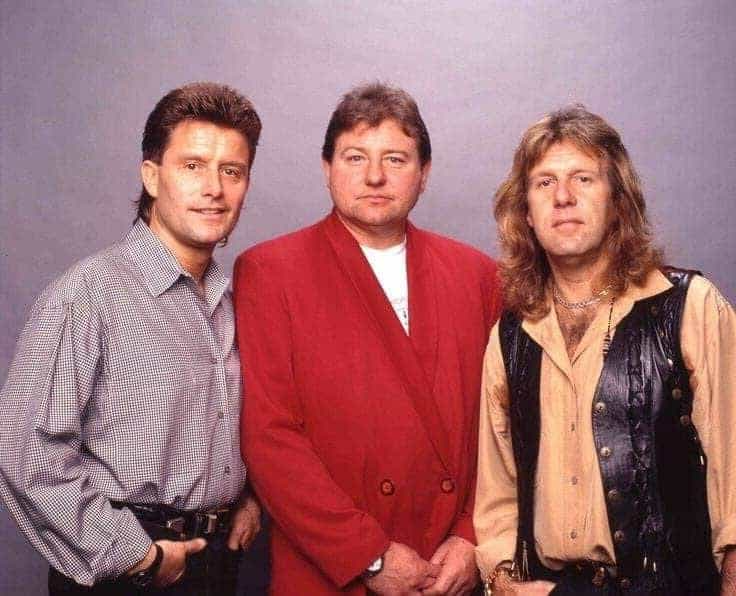
Few bands in rock history dared to think as big or play as boldly as Emerson, Lake & Palmer. Blending classical ambition with rock energy, ELP created a sound that was grand, theatrical, and unapologetically complex. From thunderous keyboard assaults to intricate compositions that felt more like symphonies than songs, their music pushed boundaries and redefined what a rock trio could achieve. Yet beneath the technical brilliance was a deep sense of drama and emotion that made their work resonate far beyond progressive circles. This collection of their most popular songs captures the full scope of their artistry, where virtuosity meets imagination, and every track feels like a journey into something larger than life.
1. Lucky Man
Lucky Man remains one of Emerson Lake And Palmer’s most beloved songs because it joins folk simplicity with progressive rock grandeur in a way that feels effortless. Greg Lake’s voice carries the story with a calm, almost ancient sadness, giving the song the feeling of a fable sung beside a dying fire. The lyric tells of wealth, status, glory, and fate, yet the emotional center is deeply human. It is a meditation on how quickly fortune can turn hollow when mortality arrives. Lake’s acoustic guitar gives the track warmth and intimacy, while the melody unfolds with graceful restraint.
What makes Lucky Man unforgettable is the way it transforms near the end. Keith Emerson’s Moog synthesizer solo rises like a strange new machine entering an old world, bending the song from pastoral reflection into cosmic drama. Carl Palmer’s drumming is tasteful rather than explosive, supporting the mood without crowding it. The result is one of the great bridges between classic songwriting and progressive ambition. Lucky Man is accessible enough to reach casual listeners, yet rich enough to satisfy devoted progressive rock fans. It remains a signature recording because it proves that Emerson Lake And Palmer could be majestic without losing emotional clarity.
2. From The Beginning
From The Beginning is one of Greg Lake’s most elegant vocal showcases and one of Emerson Lake And Palmer’s most enduring songs. Built around a beautifully fluid acoustic guitar figure, the recording feels reflective, intimate, and quietly sophisticated. Lake sings with remarkable restraint, allowing the melody to carry the emotional weight instead of forcing drama into the performance. The lyric suggests regret, acceptance, and the strange calm that sometimes follows emotional distance. It is not a theatrical confession. It is more like a private thought spoken aloud after years of silence.
The song’s power lies in its atmosphere. The acoustic foundation is warm and precise, while the bass and percussion give the arrangement a subtle pulse. Keith Emerson’s keyboard textures enter with great taste, adding color without disturbing the song’s delicate center. As the track develops, it expands into something more spacious and mysterious, proving that progressive rock could be intimate as well as grand. From The Beginning remains popular because it reveals a softer side of Emerson Lake And Palmer without diminishing their musical intelligence. It is melodic, graceful, and emotionally direct, yet still filled with the refined craftsmanship that defined the band. For many listeners, this is the song that best captures Greg Lake’s gift for making philosophical reflection sound deeply personal.
3. Karn Evil 9 1st Impression Part 2
Karn Evil 9 1st Impression Part 2 is the Emerson Lake And Palmer anthem that announced the spectacle of progressive rock with unmatched theatrical force. Its famous opening invitation feels like the curtain rising on a futuristic carnival, a place where technology, entertainment, excess, and danger collide under blinding lights. Greg Lake delivers the vocal with sly charisma, turning the song into both a welcome and a warning. The track has the swagger of arena rock, but its structure and musicianship belong unmistakably to the progressive imagination.
Keith Emerson’s keyboards dominate the landscape with dazzling confidence, switching from stabbing rhythmic figures to bright melodic bursts that feel almost orchestral in their command. Carl Palmer’s drumming is explosive, agile, and endlessly inventive, driving the song with the precision of a trained percussionist and the energy of a rock powerhouse. Lake’s bass work keeps the momentum firm while his voice gives the entire piece a human center. Karn Evil 9 1st Impression Part 2 remains one of the band’s most popular songs because it captures Emerson Lake And Palmer at their most iconic. It is bold, clever, dramatic, and packed with musical fireworks. More than a song, it feels like a full stage production compressed into a thrilling progressive rock statement.
4. Fanfare For The Common Man
Fanfare For The Common Man is Emerson Lake And Palmer at their most monumental, transforming Aaron Copland’s famous theme into a massive progressive rock statement. The recording begins with a sense of ceremonial power, as Keith Emerson’s keyboards present the melody with grandeur and authority. Rather than treating the composition as a delicate classical quotation, the band expands it into something muscular, modern, and physical. It feels like a procession, a battle cry, and a celebration all at once.
The brilliance of the track is in its scale. Emerson brings orchestral weight through synthesizers and keyboards, while Greg Lake’s bass gives the arrangement a deep, grounded force. Carl Palmer’s drumming is central to the experience, adding thunder, precision, and rhythmic excitement. The groove that develops is both stately and powerful, taking a theme associated with public dignity and giving it the electricity of a rock stage. Fanfare For The Common Man became one of the group’s most recognizable pieces because it captures their defining ambition: to make rock music feel as vast as classical music without sacrificing impact. It is grand, disciplined, and thrillingly confident. Few bands could take a familiar American concert work and make it sound like the future of progressive rock, but Emerson Lake And Palmer did exactly that.
5. Still…You Turn Me On
Still…You Turn Me On is one of Emerson Lake And Palmer’s most haunting ballads, a song filled with mystery, longing, and emotional ambiguity. Greg Lake’s voice is the center of the recording, carrying the lyric with a mixture of tenderness and quiet unease. The melody is beautiful, but not simple in mood. It feels romantic and troubled at the same time, as though desire has become tangled with memory, doubt, and fascination. Lake had a rare ability to sing intimate material with dignity, and this track remains one of his finest examples.
The arrangement is subtle by the band’s usual standards, yet it is full of atmosphere. Acoustic textures create warmth, while unusual instrumental colors give the song a slightly surreal edge. Keith Emerson adds touches that deepen the mood without overwhelming it, and Carl Palmer’s presence is measured with great care. The song does not need the explosive complexity often associated with the band because its drama is internal. Still…You Turn Me On remains popular because it shows Emerson Lake And Palmer’s ability to create emotional intensity through restraint. It is a love song, but not a predictable one. Its beauty comes from the tension between softness and strangeness, making it one of the most memorable pieces in the group’s catalog.
6. C’est La Vie
C’est La Vie is one of Greg Lake’s most graceful and melancholy songs, a reflective ballad that trades progressive rock spectacle for elegance and emotional poise. The phrase at the heart of the song suggests acceptance, yet Lake’s performance makes that acceptance feel complicated. He sings as if resignation has come only after disappointment, distance, and perhaps a love that could not be held in place. His voice is smooth, dignified, and deeply expressive, turning the song into a quiet meditation on fate and feeling.
The arrangement has a European romantic quality, with accordion like textures and a stately pace that give the track an almost old world atmosphere. This musical setting suits the lyric beautifully, allowing the song to feel both intimate and cinematic. Keith Emerson’s contributions are tasteful and evocative, adding color around Lake’s vocal rather than drawing attention away from it. Carl Palmer’s restraint is equally important, giving the recording its measured emotional pulse. C’est La Vie endures because it reveals the refined side of Emerson Lake And Palmer. It is not built on speed or virtuoso display, but on mood, melody, and interpretive depth. The song proves that the band’s ambition could be quiet as well as colossal, and that their most affecting moments often came when they allowed beauty to speak plainly.
7. Hoedown
Hoedown is Emerson Lake And Palmer in full instrumental flight, a dazzling adaptation that turns folk inspired classical material into a blazing progressive rock showpiece. The track bursts forward with thrilling speed and precision, giving Keith Emerson a platform for one of his most exciting keyboard performances. His playing is nimble, aggressive, and joyously theatrical, racing through the theme with the energy of a carnival ride and the discipline of a concert virtuoso. It is music designed to dazzle, but the excitement never feels empty.
Carl Palmer’s drumming gives Hoedown much of its explosive personality. He drives the piece with tremendous force, filling the arrangement with crisp accents, rapid movement, and controlled chaos. Greg Lake anchors the performance with bass work that keeps the momentum from flying apart, allowing Emerson and Palmer to charge ahead with fearless abandon. What makes the track so popular is its immediate impact. Even listeners who are not deeply familiar with progressive rock can feel the excitement of three musicians playing at the edge of their abilities. Hoedown captures the band’s love of transforming established music into something electric and audacious. It is fast, bright, muscular, and thrilling, a perfect example of Emerson Lake And Palmer turning technical brilliance into pure entertainment.
8. Tarkus
Tarkus is one of Emerson Lake And Palmer’s most ambitious achievements, a sprawling progressive rock suite that helped define the scale and imagination of the genre. The piece is bold from the start, driven by shifting rhythms, heavy organ tones, martial energy, and a sense of mythic conflict. Rather than functioning like a conventional song, Tarkus unfolds as a journey through connected musical scenes. It is strange, intense, and unmistakably the work of a band determined to expand what rock music could contain.
Keith Emerson’s keyboard work is the engine of the suite. His playing is fierce, complex, and architecturally powerful, combining classical influence with the force of hard rock. Carl Palmer matches him with drumming that is both technical and explosive, navigating rapid changes with remarkable control. Greg Lake brings contrast through his vocal sections, adding melody and emotional focus to the instrumental storm. The suite’s imagery, often associated with futuristic battle and surreal fantasy, gives the music an additional layer of fascination. Tarkus remains one of the band’s most popular long form works because it represents Emerson Lake And Palmer at their most fearless. It is challenging, theatrical, and uncompromising, yet it still communicates raw excitement. For progressive rock devotees, it stands as one of the essential monuments of the early seventies.
9. Jerusalem
Jerusalem is one of Emerson Lake And Palmer’s most majestic adaptations, taking a revered hymn and giving it the weight, volume, and drama of progressive rock. The band approaches the piece with respect, but not timidity. Keith Emerson’s keyboards create a grand, almost cathedral like atmosphere, while Greg Lake’s voice delivers the words with solemn clarity and emotional force. The result is neither simple hymn nor ordinary rock cover. It is a powerful fusion of tradition and modernity.
The recording works because Emerson Lake And Palmer understood how to magnify existing material without stripping away its dignity. Emerson’s arrangement gives the melody a massive presence, surrounding it with rich harmonic color and theatrical scale. Lake sings with controlled passion, avoiding excessive ornament while still giving the performance a strong human center. Carl Palmer’s drumming adds authority and forward motion, turning the piece into something ceremonial and urgent. Jerusalem remains popular among fans because it captures the band’s fascination with national, classical, and spiritual themes, all refracted through the sound of the rock era. It is bold, stately, and unmistakably ELP. In their hands, the hymn becomes a progressive rock statement of grandeur, proving once again that the group could make inherited music feel newly alive.
10. Take A Pebble
Take A Pebble is one of Emerson Lake And Palmer’s most beautiful early statements, a song that reveals the trio’s gift for combining lyrical sensitivity with extended musical exploration. The opening piano figure is striking in its delicacy, as Keith Emerson reaches directly into the strings of the instrument to create a shimmering, harp like effect. This quiet beginning sets a reflective mood before Greg Lake enters with one of his most tender vocal performances. His voice gives the song a sense of still water, memory, and inward searching.
What makes Take A Pebble remarkable is how naturally it expands. The song begins as an intimate ballad, then moves into instrumental passages that feel spacious and exploratory without losing the emotional thread. Emerson’s piano playing is elegant and inventive, drawing from jazz, classical, and improvisational traditions. Lake’s bass and Palmer’s drums support the shifts with sensitivity, showing that the band could be subtle as well as thunderous. The piece is lengthy, but it never feels empty because each section adds another shade to the atmosphere. Take A Pebble remains a fan favorite because it captures the young band discovering its own language. It is poetic, adventurous, and deeply musical, a reminder that Emerson Lake And Palmer’s grandeur often began with a single quiet gesture.

Edward Tomlin is a frequent contributor to Singers Room. Since 2005, Singersroom has been the voice of R&B around the world. Connect with us via social media below.