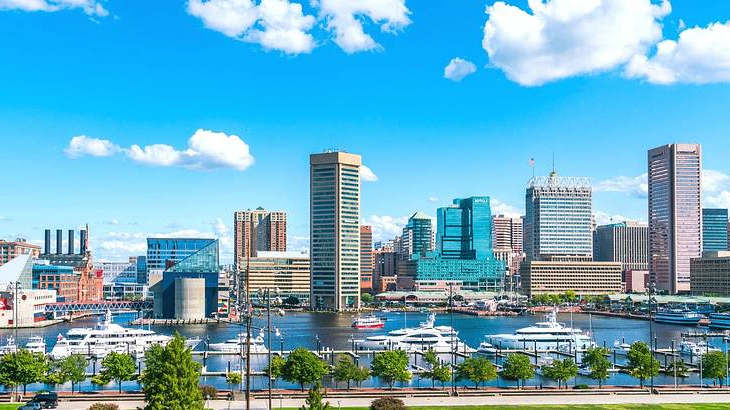
Maryland has produced an incredible lineup of musical talent, giving the world singers whose voices helped shape pop, soul, jazz, rhythm and blues, rock, gospel, and hip hop across generations. From the vibrant streets of Baltimore to the creative communities surrounding Washington’s influence, the state has long been a breeding ground for originality, emotion, and unforgettable performance. Some Maryland artists became global superstars with chart dominating hits, while others earned legendary status through groundbreaking artistry and timeless vocal ability. Their songs capture passion, resilience, romance, and innovation, reflecting the diverse cultural energy of the state itself. These singers helped establish Maryland as one of America’s most influential musical homes.
1. Billie Holiday
Billie Holiday remains one of the most important singers ever connected to Maryland, a Baltimore raised jazz legend whose voice changed the emotional possibilities of popular music. Her performance of “Strange Fruit” stands as one of the most haunting recordings in American history, a song that confronted racial terror with devastating restraint and unforgettable moral force. Holiday did not sing with the broad power of a conventional belter. Her genius lived in phrasing, timing, tone, and the ability to make silence feel as expressive as sound. She could bend a lyric until it sounded like a private confession, then let a note hang in the air with unbearable ache. Her catalog includes “God Bless the Child,” “Lady Sings the Blues,” “Lover Man,” “Good Morning Heartache,” “Fine and Mellow,” and “I’ll Be Seeing You,” songs that show her mastery of sorrow, romance, resilience, and bruised elegance. Billie Holiday became famous because she made every song feel lived rather than merely performed. Maryland is central to her story, especially through the Baltimore years that shaped her early life. Her voice remains timeless because it carries truth, pain, beauty, and humanity in every fragile phrase.
2. Frank Zappa
Frank Zappa, born in Baltimore, Maryland, was one of the most original and fearless musical minds of the twentieth century. As a singer, guitarist, composer, bandleader, satirist, and studio visionary, Zappa created a body of work that challenged nearly every rule of rock, jazz, classical composition, and pop culture. “Bobby Brown Goes Down” remains one of his most widely known songs, especially in Europe, and it captures his taste for provocative satire, unusual melodic turns, and sharp social commentary. Zappa’s voice often worked as a character instrument rather than a traditional pop vehicle. He could sound sarcastic, deadpan, theatrical, absurd, or biting, depending on the world he was building inside a song. His catalog includes “Don’t Eat the Yellow Snow,” “Cosmik Debris,” “Peaches en Regalia,” “Joe’s Garage,” “Montana,” and “Valley Girl,” showing a creative range that few artists could approach. Frank Zappa became famous because he refused to separate intelligence from humor or technical skill from rebellion. Maryland gave him his birthplace, but his imagination belonged to no single scene. His music remains essential because it rewards curiosity, challenges lazy listening, and proves that popular music can be strange, funny, complex, and completely fearless.
3. Toni Braxton
Toni Braxton is one of Maryland’s most successful rhythm and blues singers, a Severn raised superstar whose deep contralto voice became one of the defining sounds of 1990s soul and pop balladry. “Un Break My Heart” remains her signature masterpiece, a sweeping heartbreak ballad that gave her voice the perfect dramatic setting. Braxton sings the song with velvet richness, emotional control, and a sense of loss that never feels exaggerated. Her lower register gives the performance unusual weight, while her phrasing lets the pain unfold slowly and beautifully. Her catalog includes “Breathe Again,” “Another Sad Love Song,” “You’re Makin’ Me High,” “He Wasn’t Man Enough,” “Let It Flow,” and “Seven Whole Days,” songs that reveal her command of romance, regret, sensuality, and grown up vulnerability. Toni Braxton became famous because her voice sounded instantly different from the brighter pop soul voices around her. She brought sophistication, mood, and emotional gravity to contemporary rhythm and blues. Maryland is an important part of her story, from her family musical roots to the early path that led her toward global fame. Her best recordings remain powerful because they combine elegance, sorrow, and unforgettable vocal identity.
4. Tori Amos
Tori Amos is one of the most distinctive singer songwriters associated with Maryland, an artist whose piano driven music blends confession, myth, classical technique, alternative rock, and fearless emotional exposure. Raised in the Baltimore area and trained from a young age as a gifted pianist, Amos developed a style that felt unlike anything else in mainstream music during the 1990s. “Cornflake Girl” remains one of her most famous songs, a sharp, mysterious, rhythmically charged track that showcases her unusual melodic instincts and vivid lyrical imagination. Amos does not write songs that simply explain themselves. She builds worlds full of symbols, memory, anger, sensuality, spirituality, and psychological tension. Her catalog includes “Silent All These Years,” “Crucify,” “Winter,” “Caught a Lite Sneeze,” “A Sorta Fairytale,” and “Precious Things,” each revealing her ability to make personal experience feel mythic. Tori Amos became famous because she turned the piano into a weapon, a diary, a church, and a storm. Her voice can be delicate, biting, wounded, or commanding, often within the same song. Maryland helped shape her musical foundation, and her career remains a landmark in expressive alternative songwriting.
5. Logic
Logic, born and raised in Gaithersburg, Maryland, became one of the most recognizable hip hop artists of his generation through rapid fire lyricism, emotional honesty, and a deep love for rap craft. “1 800 273 8255” became his most widely known song, a powerful track that brought conversations about mental health, crisis, and survival into mainstream music. Featuring Alessia Cara and Khalid, the song connected with millions because it treated pain with seriousness while still reaching toward hope. Logic’s catalog also includes “Under Pressure,” “44 Bars,” “Homicide,” “Everyday,” “Black Spiderman,” “Gang Related,” and “Fade Away,” songs that show his range across technical rapping, storytelling, motivational themes, and pop accessible hooks. His voice is energetic, clear, and precise, especially when he locks into fast patterns without losing emotional focus. Logic became famous because he combined old school hip hop admiration with a modern sense of openness about identity, anxiety, ambition, and self doubt. Maryland is central to his story, not just as a hometown detail, but as the setting that shaped much of his early perspective. His music stands out because it often tries to turn personal struggle into connection, discipline, and survival.
6. Sisqó
Sisqó is one of Baltimore’s most famous rhythm and blues performers, a singer whose explosive personality and unmistakable voice made him a major pop culture figure at the turn of the millennium. As the lead singer of Dru Hill, he helped power 1990s rhythm and blues hits such as “In My Bed,” “Never Make a Promise,” “How Deep Is Your Love,” and “These Are the Times.” His solo smash “Thong Song” became a global phenomenon, combining dramatic vocals, orchestral style production, dance energy, and playful outrageousness into a song that remains instantly recognizable. What made Sisqó stand out was not only the song’s novelty appeal, but the sheer force of his vocal performance. He sang with gospel rooted intensity, sharp runs, and theatrical flair, making even the most flamboyant material feel musically serious. His solo catalog also includes “Incomplete,” a soaring ballad that proved he could deliver emotional vulnerability with the same conviction he brought to club ready material. Sisqó became famous because he had the voice, charisma, and visual style to dominate an era of high gloss rhythm and blues. Maryland, especially Baltimore, gave him the group roots and performance foundation that launched his memorable career.
7. Maggie Rogers
Maggie Rogers is one of Maryland’s most acclaimed modern pop and folk influenced singers, an Easton born artist whose music blends earthy songwriting with electronic textures and radiant emotional release. “Alaska” became her breakthrough song, a shimmering track that introduced listeners to her ability to combine natural imagery, danceable rhythm, and intimate reflection. The song feels both organic and modern, with Rogers’ voice moving gently through the verses before opening into a chorus that feels weightless and cleansing. Her catalog includes “Light On,” “Fallingwater,” “Dog Years,” “Love You for a Long Time,” “Want Want,” and “That’s Where I Am,” songs that show her growth from folk rooted discovery into confident pop artistry. Rogers sings with clarity and warmth, often sounding as though she is processing emotion in real time. Her music is filled with movement, weather, memory, and transformation, creating a sense of personal journey that listeners can easily enter. Maggie Rogers became famous because she made sincerity feel fresh in the streaming age. Maryland’s Eastern Shore shaped her early imagination, giving her songs a sense of open space, natural detail, and emotional honesty that continues to define her sound.
8. Joan Jett
Joan Jett, who spent important formative years in Rockville, Maryland, became one of the most iconic rock singers of all time through attitude, grit, and absolute commitment to the power of a loud guitar. “I Love Rock N Roll” remains her signature anthem, a simple, stomping, unforgettable song that turned her into a global symbol of rebellious rock confidence. Jett’s voice is direct and tough, built for choruses that demand participation rather than delicate admiration. Before her solo success with the Blackhearts, she helped break ground with The Runaways, bringing fierce teenage energy to songs like “Cherry Bomb.” Her catalog also includes “Bad Reputation,” “Crimson and Clover,” “Do You Wanna Touch Me,” “I Hate Myself for Loving You,” and “Light of Day,” songs that reveal her love for glam, punk, garage rock, and classic pop hooks. Joan Jett became famous because she made rock and roll sound fearless, compact, and impossible to ignore. Her influence reaches far beyond hit singles, especially for women in rock who saw in her a model of independence and power. Maryland is part of the story that helped shape a performer who turned defiance into a lasting musical identity.
9. Eva Cassidy
Eva Cassidy is one of Maryland’s most beloved vocal treasures, a singer whose posthumous fame revealed a voice of extraordinary purity, emotional honesty, and interpretive depth. Raised in the Washington area with deep ties to Maryland, Cassidy became known locally before the wider world discovered her recordings after her untimely death. Her performance of “Over the Rainbow” remains one of the most moving interpretations of the classic song ever recorded. Cassidy sings it with breathtaking restraint, letting each phrase unfold gently before rising into moments of luminous emotional release. Her catalog includes “Fields of Gold,” “Songbird,” “People Get Ready,” “Autumn Leaves,” “Wade in the Water,” and “Time After Time,” each showing her rare ability to move across jazz, folk, gospel, blues, and pop without sounding like a guest in any style. Eva Cassidy became famous because she treated every song as a living emotional moment. She did not rely on celebrity spectacle or elaborate production. Her voice did the work, quietly and completely. Maryland audiences knew her gift first, and the world later caught up. Her recordings remain treasured because they feel honest, intimate, and almost impossibly beautiful.
10. Cab Calloway
Cab Calloway is one of the most charismatic entertainers associated with Maryland, a legendary jazz singer and bandleader who spent important early years in Baltimore before becoming a defining figure of the swing era. “Minnie the Moocher” remains his immortal calling card, a wildly entertaining performance built around call and response vocals, playful slang, theatrical timing, and the famous hi de ho refrain. Calloway was more than a singer. He was a complete showman, using voice, movement, humor, fashion, and band energy to create a performance style that still feels electric. His catalog includes “St James Infirmary,” “The Jumpin’ Jive,” “Reefer Man,” “Kickin’ the Gong Around,” and “Are You Hep to the Jive,” songs that capture the excitement of jazz as both music and spectacle. His voice could be smooth, comic, dramatic, or explosively rhythmic, always serving the character of the performance. Cab Calloway became famous because he made swing music visual, theatrical, and irresistibly alive. Maryland played a meaningful role in his formative story, while his later fame carried him to the Cotton Club, film screens, and global recognition. His influence still echoes wherever singers combine musicianship with dazzling personality.

Edward Tomlin is a frequent contributor to Singers Room. Since 2005, Singersroom has been the voice of R&B around the world. Connect with us via social media below.