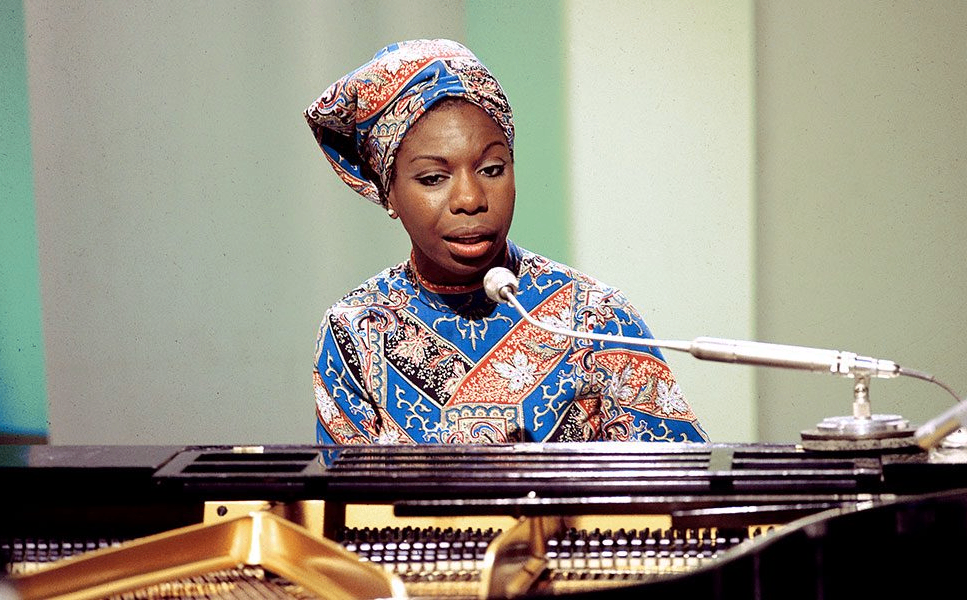
Soulful, fearless, and emotionally overwhelming, Nina Simone created music that transcended genre, blending jazz, blues, classical, folk, gospel, and protest music into a voice entirely her own. Her songs carried extraordinary emotional depth, capable of sounding tender, furious, heartbreaking, seductive, and spiritually defiant within the same performance. Simone was not simply a singer. She was an interpreter of human experience, using her powerful piano playing and unmistakable voice to confront racism, injustice, love, loneliness, freedom, and identity with uncompromising honesty. Whether performing intimate ballads or politically charged anthems, she brought an intensity that made every song feel deeply lived rather than merely performed. Her greatest recordings remain timeless because they combine technical brilliance with raw emotional truth, allowing listeners to feel every note, every pause, and every word. Decades after changing the landscape of American music, Nina Simone’s songs still resonate with astonishing power, beauty, and emotional courage.
1. Feeling Good
“Feeling Good” is one of Nina Simone’s most recognizable performances, a song that has become permanently associated with her commanding voice, dramatic timing, and ability to make a standard feel completely reborn. Originally from the musical “The Roar of the Greasepaint The Smell of the Crowd,” the song becomes something far deeper in Simone’s hands. She does not simply sing about optimism. She makes renewal sound earned, spiritual, and almost dangerous. Her opening vocal line feels like a door slowly opening into freedom, and every phrase that follows carries the weight of someone who understands darkness before claiming the light.
The arrangement is bold and cinematic, with brass surges that frame Simone’s voice like a royal entrance. Yet the performance never feels decorative. Simone controls the song with extraordinary authority, moving from quiet intensity to full, sweeping release. She gives the lyric a sense of liberation that is personal and political at the same time, as if the feeling of a new dawn belongs not only to one person, but to anyone who has survived struggle.
“Feeling Good” remains one of Simone’s most popular songs because it captures her rare ability to transform familiar material into something unmistakably her own. The song has been used widely in films, television, advertising, and countless modern covers, but Simone’s version remains definitive. It is elegant, fierce, and unforgettable, a performance that turns hope into a declaration of power.
2. I Put a Spell on You
“I Put a Spell on You” is one of Nina Simone’s most hypnotic performances, a darkly romantic recording that turns obsession, longing, and emotional command into pure theater. The song had already carried a wild reputation through earlier versions, but Simone reshaped it into something elegant, controlled, and deeply unsettling. Her voice moves with smoky authority, never rushing, never begging, always suggesting that the emotional spell has already been cast. She sounds less like someone asking for love and more like someone declaring possession over the feeling itself.
The arrangement is rich and dramatic, with orchestration that gives the performance a lush, nocturnal quality. Simone’s classical training can be felt in the precision of her phrasing, but the emotional center is pure blues. She stretches words, bends notes, and allows silence to deepen the tension. Every pause feels intentional. Every vocal turn seems to hold both seduction and warning.
The song remains one of her most popular recordings because it perfectly captures the magnetism that made Simone such a singular artist. She could make love sound beautiful, frightening, wounded, and powerful all at once. “I Put a Spell on You” is not merely a romantic song. It is a psychological performance, a study in desire pushed to its most intense edge. Simone’s version endures because it feels timelessly mysterious, full of atmosphere, control, and emotional danger.
3. Sinnerman
“Sinnerman” is one of Nina Simone’s most overwhelming recordings, a nearly ten minute spiritual storm that builds from relentless piano rhythm into a full body experience of guilt, flight, judgment, and revelation. Rooted in traditional spiritual music, the song becomes a monumental performance in Simone’s hands. She plays and sings with a force that feels ritualistic, as if the listener is being pulled into an urgent confrontation with conscience. The song does not simply tell a story about a sinner running. It makes the running feel physical.
The piano figure is hypnotic, driving the track with fierce momentum while percussion and handclaps intensify the sense of pursuit. Simone’s vocal enters with authority, cutting through the rhythm like a preacher, witness, and judge all at once. The repeated questions and responses create a spiritual drama that feels both ancient and immediate. There is no easy comfort here. The song asks where a person can hide when truth finally arrives.
“Sinnerman” remains one of Simone’s most popular and influential songs because it stands outside normal pop structure. It is jazz, gospel, blues, folk memory, and protest spirit fused into one towering performance. Its later use in film and television introduced it to new generations, but the recording’s power needs no context. It is raw, disciplined, ecstatic, and terrifyingly alive. Few songs in any genre build with this much intensity and moral force.
4. My Baby Just Cares for Me
“My Baby Just Cares for Me” is one of Nina Simone’s most charming and widely loved recordings, a playful jazz performance that reveals her lighter touch without diminishing her artistry. The song swings with effortless elegance, carried by Simone’s crisp piano work and cool, confident vocal phrasing. She treats the lyric with a sly smile, making the romantic devotion at its center feel both flattering and amusing. It is one of her most accessible performances, yet it still contains her unmistakable sophistication.
The piano is central to the recording’s personality. Simone’s playing has bounce, precision, and classical clarity, but it also swings with natural ease. Her voice enters with relaxed control, never overstating the lyric. She sounds amused by the idea that her lover ignores glamour, fame, and luxury in favor of her. That understated confidence gives the song its sparkle. She does not need to charm the listener loudly. She simply inhabits the song with style.
The song became especially famous after its revival in popular culture decades after its original release, proving how timeless Simone’s performance truly was. “My Baby Just Cares for Me” remains popular because it offers a different side of her genius. It is witty, elegant, and light on its feet, a reminder that Simone could be joyful and playful while still sounding musically brilliant. Its appeal lies in its balance of romance, swing, intelligence, and effortless cool.
5. Don’t Let Me Be Misunderstood
“Don’t Let Me Be Misunderstood” is one of Nina Simone’s most emotionally revealing songs, a plea for compassion from someone aware of her flaws, pain, and contradictions. Simone’s version is slower and more vulnerable than many later interpretations, giving the lyric a depth that feels almost confessional. She does not sing it as a simple apology. She sings it as a human being asking to be seen fully, beyond mistakes, moods, anger, or fear. That emotional honesty is what makes the recording so powerful.
The arrangement is restrained, allowing Simone’s voice to carry the emotional pressure. Her phrasing is careful and intensely expressive, shifting between tenderness and quiet frustration. She understands that being misunderstood is not only a romantic problem. It is an existential one. The song becomes a statement about identity, emotional survival, and the longing to be judged with mercy.
“Don’t Let Me Be Misunderstood” remains one of Simone’s most popular songs because it speaks to a universal human need. Everyone has moments when their actions fail to express their heart, when pain appears as anger, or when vulnerability hides behind pride. Simone gives that experience dignity. Her performance feels deeply personal, especially in light of the strength and complexity that defined her public life. The song endures because she makes imperfection sound honest, sorrowful, and profoundly human.
6. Mississippi Goddam
“Mississippi Goddam” is one of Nina Simone’s most fearless and historically important songs, a furious protest performance that transformed grief and outrage into sharp musical confrontation. Written in response to racist violence and the brutal realities of the civil rights era, the song refuses politeness. Simone uses an upbeat show tune style as a weapon, creating a chilling contrast between the bright musical surface and the anger in the lyric. That contrast makes the song even more powerful, because it exposes the absurdity of demanding patience from people living under constant injustice.
Simone’s performance is commanding, witty, bitter, and devastating. She does not soften her message for comfort. She names places, confronts hypocrisy, and turns the stage into a forum for truth. Her classical and jazz discipline gives the song structure, but the emotional force comes from lived anger. Every phrase feels sharpened by moral urgency.
“Mississippi Goddam” remains one of Simone’s most popular and essential recordings because it shows her as an artist who would not separate music from conscience. She understood that songs could entertain, but they could also accuse, awaken, and document history. The song’s bravery still feels startling. It is not background music for reflection. It demands attention. In Simone’s catalog, it stands as a monumental act of resistance, one of the clearest examples of art becoming protest without losing musical brilliance.
7. To Be Young Gifted and Black
“To Be Young Gifted and Black” is one of Nina Simone’s most uplifting and culturally significant songs, a proud anthem of Black identity, possibility, and affirmation. Inspired by Lorraine Hansberry, the song speaks directly to young Black listeners with a message of dignity and self belief. Simone’s performance carries warmth, strength, and purpose, making the song feel both intimate and communal. It is encouragement shaped into music, but it is also a political statement rooted in history, struggle, and hope.
The melody is simple and memorable, which gives the song its anthem like quality. Simone understood that a message this important needed clarity. She sings with directness, allowing the words to shine without unnecessary ornament. Yet the performance is far from plain. Her voice carries the authority of someone who knows why the message matters. She delivers pride not as abstraction, but as a necessary act of survival.
The song remains one of Simone’s most popular works because it continues to resonate across generations. It has been sung in classrooms, gatherings, cultural celebrations, and moments of remembrance because its message remains powerful. “To Be Young Gifted and Black” reflects Simone’s role as both musician and truth teller. She gave listeners not only beauty, but language for self recognition. The song stands as one of her greatest contributions to the musical and spiritual soundtrack of Black empowerment.
8. Four Women
“Four Women” is one of Nina Simone’s most haunting and profound compositions, a song that examines race, gender, history, and identity through four sharply drawn Black female characters. Each woman represents a different relationship to oppression, inheritance, appearance, labor, trauma, and survival. Simone does not present them as stereotypes. She gives them voices, names, wounds, and emotional weight. The result is one of the most powerful character studies in twentieth century song.
The arrangement is spare and intense, allowing the narrative to unfold with theatrical clarity. Simone’s vocal choices are extraordinary. She changes tone, emphasis, and emotional color as each character appears, making the song feel almost like a one woman dramatic performance. The tension builds gradually, and by the final section, the accumulated pain erupts with unforgettable force.
“Four Women” remains popular and deeply studied because it confronts subjects that popular music often avoided or softened. Simone uses song as historical witness, forcing listeners to reckon with the different ways Black women have been seen, used, judged, and forced to survive. The composition is not comfortable, and that is part of its greatness. It demands attention and reflection. In Simone’s catalog, “Four Women” stands as a masterwork of social consciousness and artistic control, proof that she could compress generations of pain into a few devastating minutes.
9. I Loves You Porgy
“I Loves You Porgy” was Nina Simone’s first major breakthrough, and it remains one of her most tender and emotionally controlled performances. Taken from “Porgy and Bess,” the song becomes deeply personal through Simone’s interpretation. She sings with fragility, restraint, and aching sincerity, creating a portrait of love mixed with fear and dependence. Her voice is soft, but the emotion underneath is enormous.
The beauty of Simone’s version lies in its intimacy. She does not perform the song as grand opera or theatrical display. She brings it inward, making it feel like a private confession whispered in a moment of vulnerability. Her piano work is delicate and thoughtful, giving the vocal space to breathe. Every phrase is shaped with care, and every silence seems to carry emotional meaning.
“I Loves You Porgy” remains one of Simone’s most popular recordings because it introduced many listeners to the depth of her interpretive gift. She could take material from the stage and transform it into something personal, immediate, and emotionally raw. The song also reveals her classical background, jazz sensitivity, and ability to communicate pain without overstatement. It is a performance of great tenderness, showing that Simone’s power was not only in protest or intensity. She could also devastate with softness, patience, and the smallest turn of a phrase.
10. Strange Fruit
“Strange Fruit” is one of the most harrowing songs Nina Simone ever recorded, a chilling interpretation of a composition already made historic by Billie Holiday. Simone approaches the song with grave seriousness, allowing its imagery of racial terror to stand without decoration or escape. Her voice is controlled, dark, and deliberate, making every line feel like testimony. There is no attempt to make the song comfortable. Its purpose is to confront, mourn, and accuse.
The arrangement is stark, which is exactly what the material demands. Simone’s delivery carries the weight of history, but it also brings her own moral authority to the song. She understood that “Strange Fruit” was not simply a standard to reinterpret. It was a witness statement set to music. Her classical sense of pacing and dramatic control intensifies the horror, allowing the listener to sit with each image rather than pass over it.
“Strange Fruit” remains one of Simone’s most powerful recordings because it reflects her commitment to truth, even when truth was painful. The song’s subject matter is brutal, but Simone’s performance gives it dignity and force. She does not sensationalize suffering. She holds it in the light. In her catalog, “Strange Fruit” stands as one of the clearest examples of music as moral memory. It is devastating, necessary, and unforgettable, a performance that refuses silence in the face of violence.

Edward Tomlin is a frequent contributor to Singers Room. Since 2005, Singersroom has been the voice of R&B around the world. Connect with us via social media below.