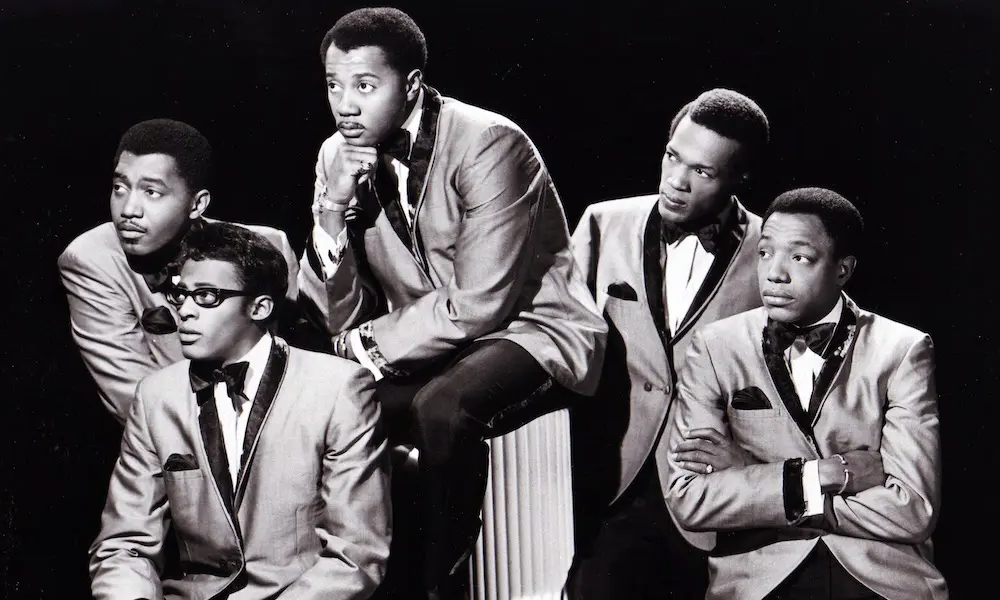
Smooth harmonies, sharp suits, and songs that could break your heart or lift your spirit in the same breath—The Temptations didn’t just define Motown, they elevated it. With voices that blended like silk yet stood strong on their own, the group delivered hits that captured love, loss, social change, and everything in between. From tender ballads to psychedelic soul anthems, their catalog spans eras while never losing its emotional core. This collection highlights the tracks that made them legends, celebrating the sound, style, and storytelling that continue to influence generations of music lovers.
1. My Girl
My Girl is one of those rare recordings that seems to carry sunlight inside it. From the opening guitar phrase, the song creates an atmosphere of warmth, ease, and emotional certainty. David Ruffin’s lead vocal is the heart of the performance, and his delivery remains one of the most recognizable in soul music. He does not overpower the song. He lets it bloom. His voice has enough grit to feel human and enough sweetness to make every line glow. That balance is a major reason the recording has lasted for generations.
The beauty of My Girl lies in its simplicity. The lyrics speak in plain images, sunshine, birds, honey, and love, yet the performance makes those familiar images feel newly alive. The Temptations turn romantic happiness into something elegant, graceful, and deeply memorable. The harmonies are polished but never sterile, wrapping around Ruffin’s lead like a velvet frame around a cherished photograph.
Musically, the arrangement is a masterclass in restraint. The bass line walks with confidence, the strings add lift, and the rhythm section keeps everything light without losing momentum. Nothing is wasted. Every detail serves the feeling. My Girl became a signature song because it captures love at its most generous and uncomplicated. It is not about drama or heartbreak. It is about the rare joy of knowing someone has changed the weather of your life. That emotional clarity is why the song still feels timeless.
2. Papa Was a Rollin’ Stone
Papa Was a Rollin’ Stone is one of The Temptations’ most cinematic and ambitious recordings, a soul epic built on tension, atmosphere, and emotional distance. The song does not rush toward its story. It stalks it. The extended instrumental introduction creates a world before the first vocal enters, with bass, strings, wah guitar, and percussion forming a dark urban landscape. By the time the singers begin asking questions about the father they barely knew, the listener is already inside the mystery.
The power of the song comes from its restraint. Instead of delivering a straightforward family drama, The Temptations perform it like a communal interrogation. Each voice carries a different shade of disappointment, suspicion, and inherited pain. The song transforms absence into architecture, building an entire emotional world around a man who is mostly remembered through rumor. That is an extraordinary achievement.
Norman Whitfield’s production is crucial. The groove is hypnotic rather than explosive, allowing the story to unfold with almost unbearable patience. The arrangement feels spacious, but never empty. Every instrumental detail contributes to the sense of unease. The result is not just a hit song, but a landmark of psychedelic soul.
Papa Was a Rollin’ Stone remains popular because it captures something larger than one family. It speaks to legacy, abandonment, myth, and the way children must assemble truth from fragments. The Temptations deliver the song with controlled intensity, making it both deeply personal and socially resonant.
3. Ain’t Too Proud to Beg
Ain’t Too Proud to Beg is a perfect example of The Temptations turning romantic desperation into pure soul fire. David Ruffin’s lead vocal is urgent from the first moment, filled with a pleading intensity that never slips into weakness. He sounds wounded, determined, and completely unwilling to let pride stand between him and the person he loves. That emotional nakedness gives the record its lasting power. The title itself is a declaration that love has become more important than ego.
The song’s rhythm is tight and driving, creating a sense of pressure beneath the vocal. The drums snap, the bass pushes forward, and the backing voices answer Ruffin with crisp precision. What makes Ain’t Too Proud to Beg so compelling is the way it makes vulnerability sound forceful. The narrator is begging, yes, but he is not defeated. He is fighting with the only tool left to him, honest emotion.
Ruffin’s performance is one of the great lead vocals in Motown history. His voice cracks with feeling but remains controlled enough to ride the groove. The Temptations’ harmonies provide contrast, giving the song structure and elegance while the lead vocal burns at the center. It is a remarkable balance of polish and rawness.
The song remains popular because it expresses a universal moment: the instant when dignity becomes less important than saving love. The Temptations make that moment dance, sweat, and testify.
4. Just My Imagination
Just My Imagination is one of The Temptations’ most beautiful and bittersweet recordings, a song that turns fantasy into heartbreak with devastating grace. Eddie Kendricks delivers the lead vocal in a delicate, floating tone that perfectly suits the story. The narrator imagines a complete romantic life with a woman he watches from afar, building dreams of marriage, children, and devotion. Then the truth arrives quietly: none of it is real. It is only imagination running away with him.
The brilliance of the song is that it never mocks the dreamer. Instead, it treats his fantasy with tenderness. The Temptations make loneliness sound elegant, fragile, and deeply human. The arrangement is soft and luminous, with strings, gentle rhythm, and background harmonies that seem to drift like memory. Every musical choice supports the sense of longing.
Kendricks’ vocal is essential to the song’s emotional effect. He sings with innocence, but not childishness. There is a wistful maturity in the performance, as if the narrator knows the dream is impossible even while he cannot stop returning to it. The group harmonies add warmth, suggesting that this private fantasy belongs to a broader human experience.
Just My Imagination remains popular because it captures the secret life of longing. Everyone has imagined a future that never happened, loved someone from a distance, or escaped into a dream more comforting than reality. The Temptations give that feeling melody, dignity, and unforgettable beauty.
5. I Can’t Get Next to You
I Can’t Get Next to You is The Temptations at their most explosive and playful within the psychedelic soul era. The song bursts open with theatrical energy, immediately announcing that this is not the smooth romantic Temptations of earlier ballads. This is a group transformed by funk, rhythm, personality, and studio imagination. Dennis Edwards leads with commanding force, but the performance is truly communal, with different voices jumping in and out like characters in a fast moving soul revue.
The central idea is clever and memorable. The narrator claims he can do impossible things, command nature, change the seasons, and perform miracles, yet he cannot get close to the person he desires. That contrast between supernatural confidence and romantic frustration gives the song its irresistible spark. The lyric is dramatic, but the performance keeps it lively and full of movement.
The groove is relentless. The bass and drums create a tough rhythmic foundation, while the arrangement shifts with dazzling speed. Handclaps, vocal exchanges, and instrumental accents all contribute to the song’s sense of controlled chaos. It feels spontaneous, but the precision is remarkable.
The song remains popular because it captures The Temptations as both vocal group and rhythmic machine. Every member contributes to the excitement. It is soulful, funky, theatrical, and wildly entertaining. I Can’t Get Next to You proves that the group could evolve with the times while retaining the vocal excellence that made them legends.
6. Get Ready
Get Ready is one of The Temptations’ most joyous and infectious recordings, a song that captures the excitement of pursuit, confidence, and romantic anticipation. Written and produced by Smokey Robinson, the track has a bright melodic charm that fits Eddie Kendricks’ lead vocal beautifully. Kendricks sings with a smooth, buoyant tone that gives the song its youthful lift. He sounds persuasive without being aggressive, playful without being careless, and completely at home inside the groove.
The arrangement is crisp, upbeat, and unmistakably Motown. The rhythm section moves with clean momentum, while the horns and backing vocals add bursts of energy. The genius of Get Ready is that it feels like motion itself, a song always leaning forward toward possibility. It does not dwell in doubt. It radiates confidence.
The Temptations’ harmonies give the record its polish, but they also add excitement. The group responses frame Kendricks’ lead like a chorus of encouragement, turning the song into something larger than a simple romantic address. It becomes a celebration of charm, timing, and emotional momentum.
What makes Get Ready endure is its irresistible lightness. It is not one of the group’s heavier dramatic statements, yet it is crafted with enormous skill. Every hook lands cleanly. Every vocal part sparkles. The song remains beloved because it captures The Temptations in a state of pure pop soul pleasure, stylish, energetic, and endlessly replayable.
7. Cloud Nine
Cloud Nine marks one of the great turning points in The Temptations’ career, a bold leap into psychedelic soul that reshaped their sound and expanded their subject matter. With Dennis Edwards newly in the vocal lineup, the group entered a harder, more socially aware musical world. The song’s rhythm is urgent and unsettled, and its production carries a grit that contrasts sharply with the polished romance of the earlier Motown years. This was The Temptations responding to a changing America and a changing musical landscape.
The lyrics describe escape from poverty, pressure, and social hardship through a dreamlike high above pain. The song’s brilliance lies in how it makes fantasy feel both seductive and tragic. Cloud nine is presented as relief, but not real liberation. The groove may move with excitement, yet the emotional undercurrent is serious. The narrator wants to rise because life below has become unbearable.
The vocal arrangement is dynamic and urgent, with voices trading lines and textures in a way that feels almost cinematic. Edwards brings a rawer edge, while the group harmonies keep the sound unmistakably Temptations. Norman Whitfield’s production adds layers of funk, rock influence, and studio atmosphere, pointing toward the group’s next era.
Cloud Nine remains popular because it captures artistic reinvention at the exact moment it happens. It is daring, socially charged, rhythmically exciting, and historically important. The Temptations did not merely adapt to psychedelic soul. They helped define it.
8. Ball of Confusion
Ball of Confusion is The Temptations’ social commentary at full speed, a whirlwind portrait of a world spinning through unrest, contradiction, and noise. The song does not settle into a traditional romantic narrative. Instead, it fires out images of political anxiety, racial tension, generational conflict, economic pressure, and cultural disorientation. The result is one of the most urgent records in the group’s catalog, a song that feels less like a performance than a news bulletin delivered through funk and soul.
Norman Whitfield’s production gives the track its nervous electricity. The rhythm is tight and relentless, while the bass and percussion create a sense of motion that never quite resolves. The genius of Ball of Confusion is that its structure mirrors its subject. The world described in the lyric feels crowded, unstable, and overwhelming, and the music moves with that same restless pressure.
The Temptations’ vocal interplay is extraordinary. Different voices enter like different witnesses, each adding urgency and perspective. The group sounds unified, but not calm. That tension gives the record its power. It is polished enough for radio, but jagged enough to feel dangerous.
The song remains popular because its observations continue to resonate. Even decades after its release, the sense of overload feels familiar. The Temptations capture the experience of living through chaotic times with intelligence, rhythm, and force. Ball of Confusion is protest music, dance music, and soul theater all at once.
9. The Way You Do the Things You Do
The Way You Do the Things You Do is a sparkling early Temptations classic that helped establish the group’s charm, vocal elegance, and playful romantic identity. Eddie Kendricks leads the song with a light, graceful vocal that turns clever wordplay into effortless flirtation. The lyric is built around a series of affectionate comparisons, each one simple, witty, and memorable. In less capable hands, the conceit might feel gimmicky. With The Temptations, it becomes pure delight.
The track has the buoyant sound of early Motown at its most appealing. The rhythm is crisp, the melody is bright, and the background vocals add polish without weighing anything down. The song works because it understands the art of charm. It does not push too hard. It smiles, dances, and wins the listener through elegance and timing.
Kendricks’ voice is central to that effect. His falsetto has sweetness, but also control. He makes each line feel conversational, as though the compliments are arriving naturally in the moment. The group’s harmonies provide a smooth foundation, showing how precisely The Temptations could balance individual personality with ensemble discipline.
The song remains popular because it captures the joy of romantic admiration without heavy drama. It is witty, warm, and beautifully performed. For listeners exploring The Temptations’ early period, The Way You Do the Things You Do is essential because it reveals the group before the psychedelic soul era, already confident, polished, and unmistakably charismatic.
10. Since I Lost My Baby
Since I Lost My Baby is one of The Temptations’ most elegant heartbreak songs, built on the powerful contrast between a graceful Motown arrangement and a lyric of emotional emptiness. The track moves with a gentle swing, almost suggesting that everything in the world is still functioning beautifully. The sun shines, birds sing, and life continues. Yet the narrator feels none of it because love has vanished. That contrast gives the song its quiet devastation.
David Ruffin’s lead vocal is magnificent. He does not sing the song as an open breakdown. Instead, he sounds stunned, hollowed out, and trying to maintain composure. That restraint makes the sadness even more convincing. The pain is not theatrical. It is the dull, persistent ache of someone moving through normal days while feeling inwardly ruined.
The group harmonies are smooth and carefully shaped, supporting Ruffin without softening the emotional impact. The arrangement has all the classic Motown virtues: melody, rhythm, polish, and economy. Yet beneath that beauty is a profound sense of loss. The song proves how sophisticated The Temptations could be when handling heartbreak. They did not need to slow everything down or exaggerate the sorrow. They could place grief inside an elegant groove and let the contrast do the work.
Since I Lost My Baby remains popular because it describes a painfully familiar emotional state: the world goes on, but the heart does not. The Temptations make that feeling unforgettable.

Samuel Moore is a frequent contributor to Singers Room. Since 2005, Singersroom has been the voice of R&B around the world. Connect with us via social media below.