From blistering solos that ignite stadiums to delicate acoustic melodies that stop listeners in their tracks, the greatest guitar players of all time have shaped the sound of modern music in unforgettable ways. Across rock, blues, jazz, country, metal, and folk, legendary guitarists transformed six strings into instruments of emotion, rebellion, storytelling, and pure technical brilliance. Some became famous for lightning fast riffs and jaw dropping improvisation, while others created timeless songs through simplicity, feel, and unmistakable tone. Their playing inspired generations of musicians to pick up a guitar and chase that same spark of magic. These iconic artists did more than master an instrument. They changed music history one note at a time.
1. Jimi Hendrix
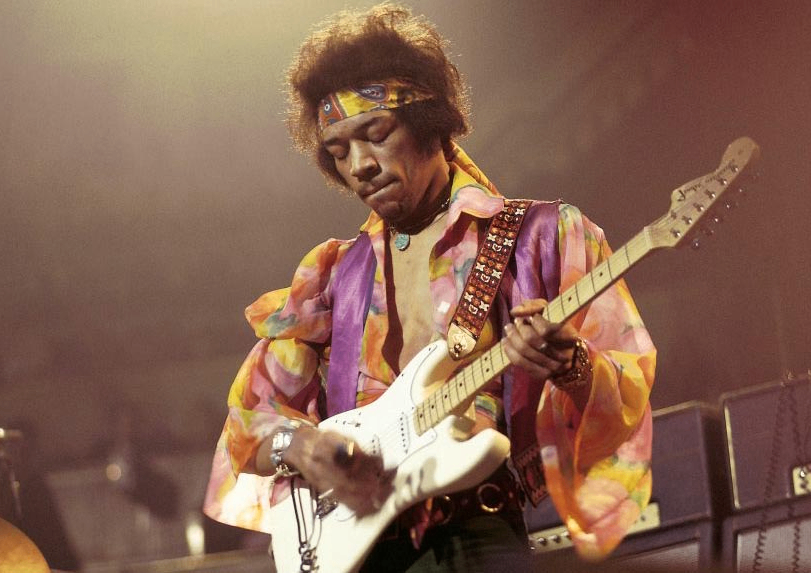
Jimi Hendrix remains the most mythic guitar player in popular music because he did not merely play the instrument. He seemed to reinvent its entire physical language. Born in Seattle and later transformed by the London rock scene, Hendrix fused blues, soul, psychedelia, funk, feedback, and raw imagination into a sound that still feels futuristic. His most famous recordings include Purple Haze, Foxey Lady, Voodoo Child, Little Wing, The Wind Cries Mary, and his explosive version of All Along the Watchtower. That Dylan cover became one of the greatest reinterpretations in rock history, with Hendrix turning a folk song into a cinematic storm of rhythm guitar, lead fire, and apocalyptic atmosphere. His playing was not only fast or loud. It was expressive in a way that made the guitar cry, laugh, scream, whisper, and speak in colors. Hendrix’s use of wah, fuzz, studio layering, and controlled feedback expanded what electric guitar could do. Even his rhythm playing had lead guitar imagination, full of chord fragments, melodic fills, and deep pocket groove. His career was tragically brief, but his influence is almost impossible to measure. Every guitarist who chases tone, emotion, freedom, and fearless invention eventually meets Hendrix at the crossroads.
2. Eric Clapton
Eric Clapton became one of the most famous guitar players of all time by carrying the language of blues into rock with taste, fire, and emotional economy. From his early days with The Yardbirds and John Mayall’s Bluesbreakers to his work in Cream, Blind Faith, Derek and the Dominos, and his long solo career, Clapton built a legacy around tone, phrasing, and soulful restraint. His most celebrated songs include Layla, Wonderful Tonight, Tears in Heaven, Cocaine, Crossroads, Sunshine of Your Love, and Badge. Layla stands as one of his defining achievements, a song of obsessive longing powered by one of rock’s most recognizable guitar riffs. The original recording with Derek and the Dominos blends desperation, blues influence, and melodic grandeur, making it both a guitar anthem and a deeply emotional confession. Clapton’s style has always been rooted in the singing quality of blues guitar. He rarely needed excess to make a phrase memorable. His bends, vibrato, and pauses often carry as much meaning as his fastest runs. While his career has moved through electric blues, acoustic ballads, pop, and roots music, his core identity remains that of a guitarist who understands feel. Clapton made the blues guitar vocabulary a central part of mainstream rock history.
3. Jimmy Page
Jimmy Page is one of rock’s great architects, a guitarist, producer, arranger, and sonic visionary whose work with Led Zeppelin helped define the scale and drama of heavy guitar music. Before forming Led Zeppelin, Page was already a respected session musician and a member of The Yardbirds, but it was with Zeppelin that his full imagination came into focus. His greatest recordings include Stairway to Heaven, Whole Lotta Love, Black Dog, Kashmir, Heartbreaker, Since I’ve Been Loving You, and Dazed and Confused. Stairway to Heaven remains his most legendary composition, moving from delicate acoustic fingerpicking into electric grandeur before arriving at one of rock’s most famous solos. Page’s genius lies in contrast. He could summon folk mystery, blues grit, hard rock power, and orchestral heaviness within the same piece of music. His guitar parts often feel like arrangements rather than simple riffs, with layers of acoustic and electric textures creating atmosphere as much as impact. He was also a master of studio sound, using distance, echo, and overdubbing to make Led Zeppelin recordings feel enormous. Page’s playing was sometimes loose in the best possible way, full of danger and personality. His influence lives wherever riffs feel mythic and guitar tracks sound larger than life.
4. Eddie Van Halen
Eddie Van Halen changed the vocabulary of rock guitar with a sense of joy, speed, rhythm, and invention that made technical brilliance feel like pure fun. Born in the Netherlands and raised in California, Eddie became the engine behind Van Halen, a band that brought flash, swagger, melody, and explosive musicianship into hard rock. His most famous songs include Eruption, Jump, Panama, Ain’t Talkin’ ’Bout Love, Runnin’ with the Devil, Hot for Teacher, and Dance the Night Away. Eruption is the recording that rewired the minds of guitar players everywhere. In less than two minutes, Eddie turned tapping, harmonics, tremolo bar work, speed picking, and wild phrasing into a dazzling declaration of possibility. Yet his greatness was never only about technique. His rhythm playing was funky, sharp, and full of bounce. His riffs had personality. His solos sounded spontaneous, mischievous, and melodic even when they were wildly advanced. Eddie also shaped guitar gear culture through his custom instruments, amplifiers, and tone experiments. He made the electric guitar feel like a machine built for flight. Generations copied his licks, but few captured his lightness, humor, and fearless musical imagination. Eddie Van Halen made virtuosity sound like celebration.
5. B.B. King
B.B. King is one of the most beloved guitar players in blues history, and his influence reaches deeply into rock, soul, jazz, and modern R&B. Born Riley B. King in Mississippi, he developed a style that emphasized emotional clarity over excess. His famous guitar, Lucille, became almost a duet partner, answering his voice with ringing bends, graceful vibrato, and perfectly placed phrases. King’s greatest songs include The Thrill Is Gone, Every Day I Have the Blues, Sweet Little Angel, Rock Me Baby, Why I Sing the Blues, and How Blue Can You Get. The Thrill Is Gone is his signature masterpiece, a slow blues performance filled with resignation, dignity, and quiet heartbreak. The guitar lines do not crowd the song. They speak between the vocals like thoughts too painful to say aloud. King’s style is instantly identifiable because of his vibrato, which could make one note feel like an entire paragraph of feeling. He influenced guitarists including Eric Clapton, Stevie Ray Vaughan, Buddy Guy, and countless others who learned that taste can be more powerful than speed. B.B. King’s popularity endures because his playing is so human. Every phrase sounds like a voice, and every note seems to carry a lifetime of experience.
6. Chuck Berry
Chuck Berry is one of the essential creators of rock and roll guitar, a player whose riffs, rhythms, stage moves, and storytelling songs gave the genre much of its early identity. Born in St. Louis, Berry combined blues phrasing, country swing, sharp lyrical detail, and teenage energy into a sound that became foundational. His most famous songs include Johnny B. Goode, Roll Over Beethoven, Maybellene, Sweet Little Sixteen, Rock and Roll Music, and Carol. Johnny B. Goode is his defining guitar anthem, built around an opening riff that may be the most recognizable introduction in rock history. That riff became a template for generations of guitar players, from British Invasion bands to stadium rock legends. Berry’s genius was not only instrumental. He wrote vivid songs about cars, school, dancing, ambition, and youth culture with a novelist’s eye for detail. His guitar style was rhythmic, bright, and full of forward motion. It made people move. It made the electric guitar the symbol of teenage rebellion and possibility. Without Berry, the sound of rock guitar would be almost unimaginable. His influence can be heard in The Beatles, The Rolling Stones, AC/DC, Bruce Springsteen, and nearly every guitarist who ever learned to make a riff jump out of the speakers.
7. Carlos Santana
Carlos Santana became one of the most distinctive guitar players in the world by blending blues based lead guitar with Latin rhythm, percussion, jazz harmony, and spiritual intensity. Born in Mexico and rising to fame in San Francisco, Santana brought a sound to rock that felt warm, melodic, and deeply rhythmic. His greatest songs include Black Magic Woman, Oye Como Va, Evil Ways, Samba Pa Ti, Europa, Smooth, and Maria Maria. Black Magic Woman became one of his signature performances, pairing a hypnotic groove with guitar lines that seem to glide, burn, and sing. Santana’s tone is instantly recognizable. A single sustained note can identify him before the phrase is even complete. His vibrato is vocal, his phrasing is passionate, and his sense of melody often feels closer to a singer than a typical lead guitarist. What makes Santana especially popular is the emotional directness of his playing. He can be technically impressive, but he rarely sounds mechanical. His solos feel devotional, romantic, and alive with movement. Santana also opened rock audiences to a richer rhythmic vocabulary, placing congas, timbales, and Afro Latin grooves at the center of guitar music. His career has crossed decades because his sound is both unmistakable and universal, rooted in feeling that transcends genre boundaries.
8. Stevie Ray Vaughan
Stevie Ray Vaughan revived blues guitar for a new generation with a tone, attack, and emotional force that felt both traditional and volcanic. Born in Texas, Vaughan absorbed the influence of Albert King, B.B. King, Buddy Guy, Jimi Hendrix, Lonnie Mack, and countless blues masters, then forged those lessons into a style of stunning intensity. With Double Trouble, he released recordings that made blues feel urgent in the 1980s, including Pride and Joy, Texas Flood, Cold Shot, Love Struck Baby, Couldn’t Stand the Weather, and Crossfire. Pride and Joy is one of his most popular tracks, powered by a muscular shuffle groove, sharp vocals, and guitar phrasing that swings hard while cutting deep. Vaughan’s playing had enormous physical presence. His strings were heavy, his bends were fierce, and his tone could sound like a storm breaking across a Texas roadhouse. Yet beneath the power was sensitivity. On slower blues pieces, he could make long notes ache with vulnerability. Vaughan’s tragic death in 1990 made his career painfully brief, but his impact was already secure. He reminded listeners that blues guitar was not museum music. In his hands, it was alive, dangerous, emotional, and capable of shaking modern rock audiences to their core.
9. David Gilmour
David Gilmour is one of the most beloved guitar players in rock because his style proves that space, tone, and emotional control can be more powerful than speed. As the voice and lead guitarist of Pink Floyd, Gilmour helped create some of the most atmospheric music ever recorded. His most famous performances appear on songs such as Comfortably Numb, Wish You Were Here, Shine On You Crazy Diamond, Time, Money, and Another Brick in the Wall Part 2. Comfortably Numb contains one of the most celebrated guitar solos in rock history, a soaring statement of melody, sadness, and release. Gilmour’s playing is instantly recognizable because he never seems hurried. He bends notes with vocal precision, lets phrases breathe, and uses sustain as an emotional tool. His sound often feels suspended in air, perfectly suited to Pink Floyd’s themes of alienation, memory, madness, and longing. Gilmour’s guitar does not simply decorate the songs. It often becomes the emotional narrator. His solos can express what the lyrics only suggest. He also contributed to the band’s songwriting and vocal identity, bringing warmth to their more conceptual landscapes. Gilmour’s popularity endures because his music speaks to listeners who value feeling over flash. Every note seems chosen, placed, and meant.
10. Brian May
Brian May is one of rock’s most imaginative guitar players, known for his majestic tone, orchestral layering, melodic solos, and unmistakable work with Queen. A musician with a scientific mind and a theatrical ear, May built his famous Red Special guitar with his father, creating an instrument that helped define his singular sound. His greatest Queen recordings include Bohemian Rhapsody, We Will Rock You, Keep Yourself Alive, Tie Your Mother Down, Somebody to Love, Brighton Rock, and Hammer to Fall. Bohemian Rhapsody remains one of the most iconic recordings in popular music, and May’s guitar work gives the song its rock operatic power. His solo enters with lyrical force, not as a display of speed, but as a perfectly composed melodic statement. May often approached the guitar like a choir or orchestra, stacking harmonized lines to create regal textures that sounded unlike anyone else. His playing could be heavy, elegant, playful, or deeply emotional, depending on what the song demanded. He was also crucial to Queen’s songwriting, contributing anthems that became stadium standards. May’s popularity comes from his ability to make guitar parts feel grand without losing heart. His tone sings, his solos tell stories, and his riffs helped Queen become one of the most beloved bands in history.
11. Keith Richards
Keith Richards is not famous because he plays the most notes. He is famous because he understands riffs, feel, groove, and rock and roll attitude at a primal level. As the rhythmic soul of The Rolling Stones, Richards helped create some of the most enduring guitar driven songs ever recorded. His greatest work includes Satisfaction, Jumpin’ Jack Flash, Brown Sugar, Honky Tonk Women, Start Me Up, Tumbling Dice, and Gimme Shelter. Satisfaction is one of the defining riffs in rock history, a simple, snarling figure that captured frustration, desire, and rebellion in a few unforgettable notes. Richards’ genius lies in the way he makes guitar parts lock with drums, bass, and vocal phrasing. He often plays as if rhythm and lead are inseparable. His use of open tunings gave The Rolling Stones many of their most recognizable textures, creating riffs that feel loose, swinging, and dangerous. Richards absorbed blues, Chuck Berry, country, reggae, and soul, then translated them into a swaggering rock language that became his own. His partnership with Mick Jagger produced a catalog of legendary songs, but Richards’ guitar is often the spark that makes them ignite. He made imperfection sound alive, and he made groove feel like destiny.
12. Jeff Beck
Jeff Beck was one of the most adventurous guitar players in modern music, a restless innovator who moved through blues rock, jazz fusion, instrumental rock, funk, and experimental textures with astonishing control. After replacing Eric Clapton in The Yardbirds, Beck quickly proved he was not interested in imitation. His solo career and work with The Jeff Beck Group produced an influential body of music that placed guitar expression at the center. His notable recordings include Beck’s Bolero, Cause We’ve Ended as Lovers, Freeway Jam, Going Down, People Get Ready, and Where Were You. Cause We’ve Ended as Lovers is perhaps his most admired instrumental performance, a deeply expressive piece where every bend, swell, and slide feels vocal. Beck’s technique was extraordinary, but he rarely sounded like a player showing off exercises. He manipulated pitch, tone, volume, harmonics, and the tremolo arm with painterly sensitivity. In later years, he seemed almost to remove the barrier between hand and sound, making the guitar respond like a human voice. Beck influenced musicians who cared about innovation as much as fame. He refused to stay in one lane, and that refusal made him legendary. His playing remains a masterclass in touch, imagination, and the endless expressive possibilities of the electric guitar.
13. Prince
Prince is often celebrated as a singer, songwriter, producer, performer, and cultural icon, but he also belongs among the greatest guitar players of all time. His guitar work fused funk rhythm, rock flamboyance, blues feeling, soul phrasing, and pure stage electricity. Because Prince was so gifted in so many areas, his guitar mastery was sometimes underrated by casual listeners, yet musicians have long recognized his brilliance. His greatest songs include Purple Rain, When Doves Cry, Kiss, Let’s Go Crazy, Little Red Corvette, 1999, and Raspberry Beret. Purple Rain is his ultimate guitar statement, building from gospel soaked balladry into a soaring solo that feels emotional, dramatic, and completely earned. Prince could play with breathtaking speed and fire, but his greatest strength was timing. He knew when a guitar should seduce, when it should stab, when it should dance, and when it should explode. His rhythm guitar work was equally remarkable, especially in funk settings where tight, clipped patterns created irresistible grooves. Prince carried the influence of Hendrix, Santana, James Brown, Sly Stone, and classic soul, then turned it into something uniquely Minneapolis, theatrical, and sensual. His guitar playing remains a reminder that virtuosity is most powerful when joined to songwriting, groove, and fearless personality.
14. Slash
Slash became one of the most recognizable guitar players in rock history through his work with Guns N’ Roses, where his top hat, Les Paul tone, bluesy bends, and dramatic solos helped define late 1980s hard rock. Born Saul Hudson, Slash brought a deep love of blues based classic rock into a band that mixed danger, melody, punk attitude, and arena scale ambition. His most famous songs include Sweet Child o’ Mine, Welcome to the Jungle, Paradise City, November Rain, Don’t Cry, Estranged, and Mr. Brownstone. Sweet Child o’ Mine begins with one of the most famous guitar introductions ever recorded, a bright, spiraling figure that instantly became part of rock culture. Slash’s playing combines melodic instinct with raw edge. His solos often feel carefully shaped without sounding overly polished. He can make a guitar sing with tenderness, then snarl with aggression moments later. On songs like November Rain, his leads become cinematic emotional statements, giving the music grandeur and heartbreak. Slash helped restore the guitar hero image for a new generation, but his appeal goes beyond image. His tone is warm, his phrasing is memorable, and his riffs are built to last. He made blues rooted hard rock feel dangerous, romantic, and larger than life.
15. Mark Knopfler
Mark Knopfler is one of the most distinctive guitar players in popular music, instantly recognizable for his fingerstyle technique, clean tone, lyrical phrasing, and understated storytelling. As the leader of Dire Straits, Knopfler brought a rare combination of musicianship, narrative songwriting, and quiet virtuosity to rock. His greatest songs include Sultans of Swing, Money for Nothing, Romeo and Juliet, Tunnel of Love, Brothers in Arms, So Far Away, and Telegraph Road. Sultans of Swing remains his signature guitar showcase, filled with crisp melodic lines, graceful fills, and a closing solo that builds with effortless authority. Knopfler’s playing is unusual because it avoids many rock guitar clichés. He often plays without a pick, using his fingers to create a percussive, vocal, and highly articulated sound. His solos are not about domination. They feel conversational, as if the guitar is telling its own side of the story. As a songwriter, Knopfler has a gift for characters, places, and small details, which gives his guitar work a cinematic quality. He can evoke city streets, fading bars, working lives, and private memories with a few carefully chosen phrases. His popularity endures because he proves that elegance, restraint, and tone can be every bit as thrilling as volume and speed.

Samuel Moore is a frequent contributor to Singers Room. Since 2005, Singersroom has been the voice of R&B around the world. Connect with us via social media below.