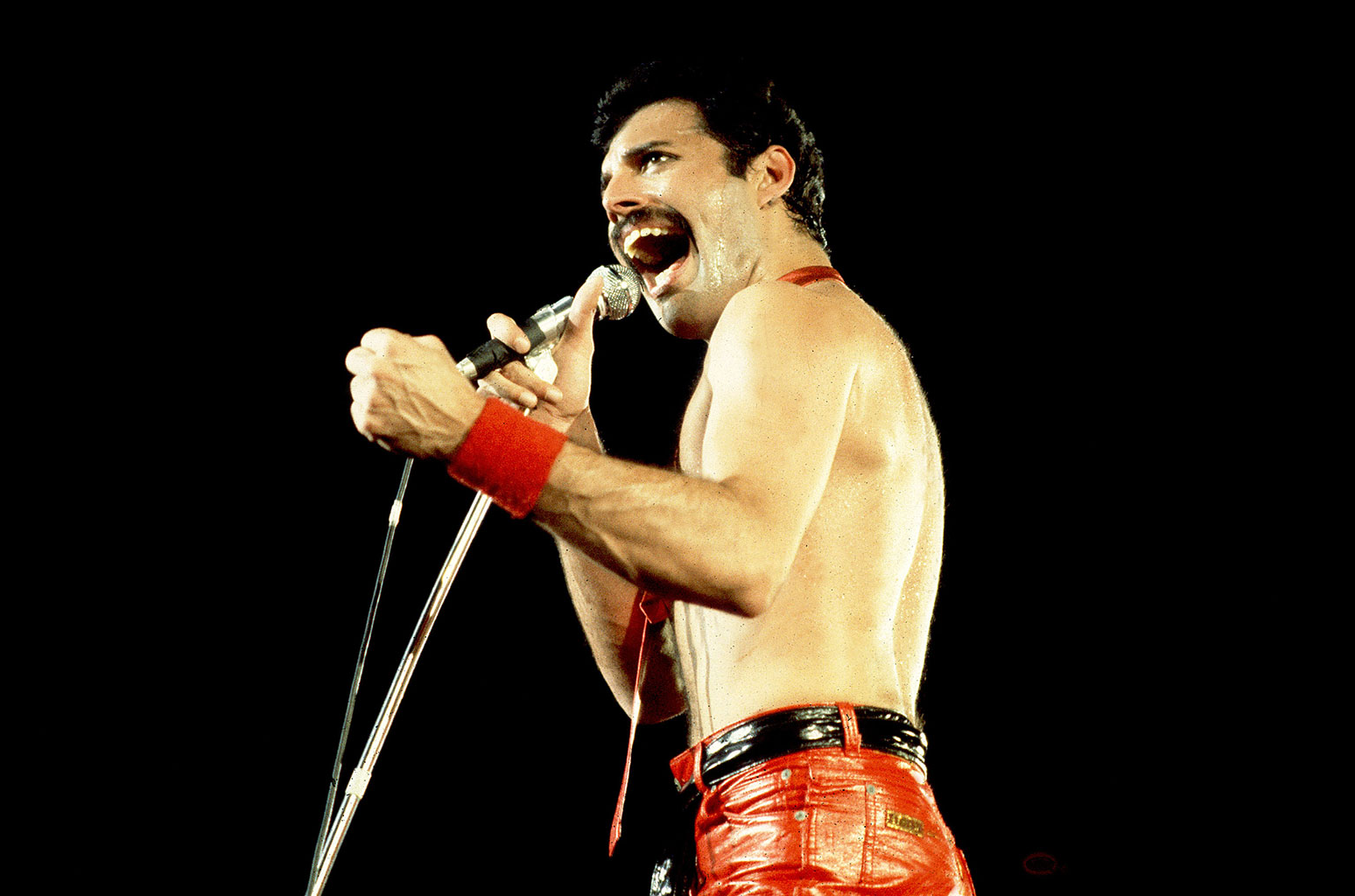
Few performers in music history have commanded the stage and the studio with the sheer brilliance of Freddie Mercury. With a voice that could soar from delicate vulnerability to operatic power in a single breath, he transformed songs into theatrical experiences that felt larger than life yet deeply personal. His catalog is a dazzling mix of rock, balladry, and bold experimentation, each track carried by charisma, precision, and fearless creativity. The most popular songs associated with him are not just hits but cultural landmarks, moments where emotion, spectacle, and melody collide. These timeless recordings continue to captivate audiences, proving that true artistry never fades, it only grows more legendary with time.
1. Bohemian Rhapsody
“Bohemian Rhapsody” is the ultimate monument to Freddie Mercury’s imagination, a song so audacious that it still feels impossible by ordinary pop standards. Written by Mercury and released with Queen in 1975, it refuses to behave like a conventional single. It begins as a confessional piano ballad, swells into operatic madness, erupts into hard rock, and then fades back into a wounded hush. What makes it astonishing is not merely its structure, but the emotional conviction Freddie brings to every strange turn. He sings as though the entire universe of guilt, fear, theater, humor, and defiance has been compressed into six unforgettable minutes.
The vocal performance is a masterclass in character, control, and drama. Mercury can sound fragile in one breath and godlike in the next, moving through the song’s shifting moods with total command. The famous operatic section reveals his love of spectacle, while the rock section unleashes the fury beneath the song’s theatrical mask. “Bohemian Rhapsody” became one of the most beloved songs of all time because it treats pop music as limitless. It is emotional, ridiculous, majestic, and deeply human all at once. Freddie Mercury did not simply write a hit. He created a world, and generations of listeners have been stepping inside it ever since.
2. Somebody to Love
“Somebody to Love” is one of Freddie Mercury’s most soul stirring compositions, a gospel drenched cry for connection delivered with astonishing vocal power. Released by Queen in 1976, the song shows Mercury turning personal loneliness into something communal, almost churchlike in its emotional sweep. The influence of gospel and soul is unmistakable, yet the result remains uniquely Queen, built from layered harmonies, dramatic piano, and Freddie’s unmatched ability to make vulnerability sound heroic. He does not sing the question quietly. He sends it upward like a prayer, a demand, and a confession all at once.
What makes “Somebody to Love” so enduring is the emotional contrast at its core. The arrangement feels grand and celebratory, but the lyric is full of exhaustion, doubt, and longing. Mercury’s vocal navigates that tension beautifully. He sounds desperate, theatrical, tender, and defiant, sometimes within the same line. The massed harmonies give the impression of a huge choir, yet Freddie remains the human center of the storm. The song became a favorite because it speaks to a universal hunger, the need to be seen, chosen, and loved. More than a rock anthem, it is a spiritual performance disguised as a chart hit. Freddie Mercury made loneliness sound magnificent.
3. We Are the Champions
“We Are the Champions” is Freddie Mercury at his most triumphant, transforming personal struggle into one of the most powerful victory anthems ever recorded. Released by Queen in 1977, the song has become a global soundtrack for celebration, but its emotional power comes from something deeper than winning. Mercury sings not as someone who has avoided pain, but as someone who has endured it and emerged standing. That is why the song carries such force. It is not merely boastful. It is hard earned.
The arrangement begins with piano and voice, giving Freddie space to sound reflective before the chorus opens into a massive statement of survival. His vocal is both regal and intimate, full of theatrical grandeur but grounded in real feeling. Every phrase seems designed for a crowd, yet the song never loses its personal edge. “We Are the Champions” works at sporting events and public celebrations because it gives listeners a language for shared victory. Still, beneath the communal roar is a portrait of perseverance. Mercury understood how to make triumph feel dramatic, noble, and emotionally complete. The song’s popularity has only grown with time because it connects private battles with public release. When Freddie sings it, victory becomes not just a result, but a declaration of identity.
4. Don’t Stop Me Now
“Don’t Stop Me Now” captures Freddie Mercury in pure motion, blazing through one of the most exhilarating performances in Queen’s catalog. Released in 1979, the song is a celebration of freedom, excess, speed, and unstoppable self belief. From the opening piano figure to the explosive rush of the full band, everything about it feels airborne. Mercury sings as if gravity no longer applies to him. The vocal is playful, athletic, and dazzlingly confident, turning the song into a portrait of joy at its most reckless and radiant.
The genius of “Don’t Stop Me Now” lies in its combination of musical precision and emotional abandon. The arrangement is tightly constructed, yet it gives the illusion of wild release. Freddie’s lyrics are filled with cosmic images, racing metaphors, and outrageous confidence, but he sells every line because he sounds utterly possessed by the thrill of the moment. His voice darts, climbs, and gleams, moving with the elegance of a showman and the power of a rock singer in full command. The song has become one of Queen’s most beloved recordings because it makes happiness feel explosive. It is not quiet contentment. It is life at maximum brightness. Freddie Mercury turned exhilaration into a three minute masterpiece of pure momentum.
5. Killer Queen
“Killer Queen” is one of Freddie Mercury’s most stylish creations, a dazzling blend of glam rock, music hall wit, and aristocratic mischief. Released by Queen in 1974, it revealed Mercury’s gift for character writing and theatrical detail. The song is compact, elegant, and filled with sharp little touches, from the clipped piano accents to the sophisticated harmonies. It introduced many listeners to Queen’s flair for dramatic pop that sounded both refined and dangerous. Freddie does not simply describe the title character. He paints her with a novelist’s eye and a cabaret performer’s wink.
Mercury’s vocal is deliciously precise. He glides through the lyrics with charm, irony, and a hint of danger, making every phrase feel polished but alive. The song’s arrangement mirrors the character’s elegance, moving with sly sophistication rather than brute force. “Killer Queen” became a major breakthrough because it showed Queen could be clever, glamorous, musically adventurous, and radio friendly at the same time. Freddie’s writing is full of decadent imagery, but the song never feels heavy. It sparkles. That sparkle is central to its enduring popularity. It is theatrical without being bloated, witty without being cold, and catchy without being ordinary. In just a few minutes, Freddie Mercury created a miniature world of luxury, mystery, and irresistible style.
6. Crazy Little Thing Called Love
“Crazy Little Thing Called Love” shows Freddie Mercury’s remarkable ability to step into a classic rock and roll idiom while still sounding completely himself. Written by Mercury and released by Queen in 1979, the song pays affectionate tribute to the spirit of early rock, especially the relaxed swagger of Elvis Presley and the crisp simplicity of fifties rhythm. Yet it never feels like mere imitation. Freddie brings a sly charm and unmistakable personality to the track, making it one of Queen’s most accessible and beloved hits.
The performance is beautifully economical. Instead of the operatic grandeur often associated with Queen, the song relies on bounce, groove, and attitude. Mercury’s vocal is playful and cool, full of rhythmic confidence. He sounds like he is having enormous fun, and that sense of ease is contagious. “Crazy Little Thing Called Love” became a massive success because it distilled Queen’s theatrical energy into something lean, stylish, and instantly lovable. The song proves that Freddie did not need elaborate structures to make an impact. He could command attention with a sharp hook, a clever phrase, and a perfectly placed vocal twist. Its popularity endures because it feels timeless in a different way from Queen’s grand epics. It is light on its feet, full of charm, and impossible not to enjoy.
7. Love of My Life
“Love of My Life” reveals Freddie Mercury at his most tender and emotionally exposed. Written by Mercury and featured on Queen’s 1975 album A Night at the Opera, the song is a delicate ballad of heartbreak, longing, and devotion. It stands apart from the band’s heavier and more theatrical work because of its simplicity of feeling. Freddie’s voice is softer here, almost fragile, yet the performance carries enormous emotional weight. He sings as though every word has been carefully lifted from a private wound.
The melody is graceful and almost classical in its shape, supported by elegant instrumental textures that allow the lyric to shine. What makes “Love of My Life” especially powerful is the way it grew into a sacred concert moment. Audiences around the world would sing it back to Freddie, turning a personal lament into a shared ritual of affection. That transformation says much about his relationship with listeners. He could make theatrical spectacle feel intimate, and intimate sorrow feel universal. The song remains popular because it captures love after loss without bitterness. It is pleading, beautiful, and vulnerable, but never weak. Freddie Mercury’s gift was not only in commanding stadiums. It was also in making a single broken heart feel enormous enough to fill one.
8. Under Pressure
“Under Pressure” is one of the most iconic collaborations in rock history, bringing together Queen and David Bowie for a song of extraordinary tension, compassion, and urgency. Freddie Mercury’s presence is central to its emotional architecture. His vocal exchanges with Bowie create a dramatic push and pull, as if two distinct spirits are wrestling with the same crisis from different angles. The instantly recognizable bass line gives the track its pulse, but Mercury’s voice gives it lift, theatrical force, and human vulnerability.
The song’s greatness comes from its ability to turn anxiety into art without losing sight of empathy. It addresses pressure not as an abstract idea, but as a force that bends people, relationships, and society. Freddie’s vocal bursts are electric, moving from rhythmic intensity to soaring release. His phrasing adds color and drama, while Bowie’s contrasting tone deepens the conversation. “Under Pressure” remains wildly popular because it still feels urgent. Its message about love, strain, and human responsibility has not aged. Mercury’s performance helps make the song both restless and redemptive. He understands the theatrical stakes, but he also understands the emotional ones. The result is a recording that feels like a warning, a prayer, and a call for tenderness in a world that keeps squeezing the human spirit.
9. Barcelona
“Barcelona” is Freddie Mercury’s grand operatic dream brought fully into the light, a remarkable collaboration with soprano Montserrat Caballé that revealed the full scale of his ambition. Released in the late 1980s, the song fused rock theatricality with classical vocal grandeur in a way that felt both unlikely and completely natural for Mercury. He had always loved drama, scale, and vocal architecture, and “Barcelona” gave him the chance to meet one of opera’s great voices on a stage worthy of his imagination.
What makes the song extraordinary is Freddie’s fearlessness. Standing beside Caballé, he does not attempt to become a conventional opera singer, nor does he retreat into rock mannerisms. Instead, he brings his own instrument, personality, and sense of theater into dialogue with hers. The result is majestic, emotional, and deeply celebratory. The arrangement rises with ceremonial power, making the city of Barcelona feel like both a real place and a symbolic dream of art, passion, and unity. Mercury’s voice is full of awe, but also confidence. He sounds thrilled by the scale of the project, as though he has finally found a canvas large enough for his most extravagant instincts. “Barcelona” remains one of his most important solo moments because it proves that his artistry could not be contained by genre.
10. Living on My Own
“Living on My Own” is one of Freddie Mercury’s most revealing solo recordings, a song that combines dance floor energy with a surprisingly poignant portrait of isolation. Originally released in the mid 1980s and later revived through a hugely successful remix, it captures Mercury’s fascination with club culture, rhythm, and flamboyant self presentation. Yet beneath its glamorous surface is a lyric about loneliness, restlessness, and the strange emptiness that can exist inside a dazzling public life. That contradiction gives the song its bite.
Freddie’s vocal is playful, elastic, and full of personality. He scatters phrases with jazzy flair, moves through the groove with effortless charisma, and turns even the oddest vocal moments into signatures of style. “Living on My Own” sounds celebratory, but it is not simply carefree. The beat suggests movement and escape, while the lyric hints at solitude behind the party. That mixture feels deeply connected to Mercury’s artistic identity. He understood spectacle, but he also understood the loneliness that can hide within it. The song’s later success introduced a new generation to his solo work and proved that his charisma could thrive outside Queen’s enormous sound. It remains one of his most popular individual recordings because it is bright, stylish, strange, and emotionally more complex than its surface first suggests.

Samuel Moore is a frequent contributor to Singers Room. Since 2005, Singersroom has been the voice of R&B around the world. Connect with us via social media below.