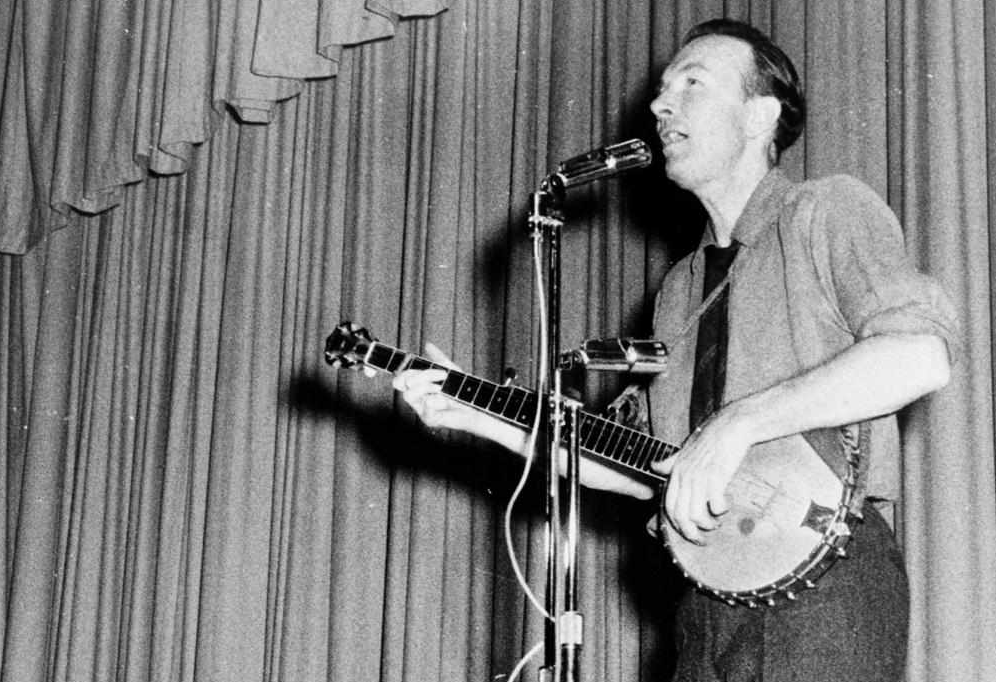
Folk music has always carried the stories, struggles, dreams, and traditions of everyday people through simple melodies and unforgettable lyrics. The greatest folk songs feel timeless because they speak directly to the heart, whether through tales of love, freedom, hardship, protest, travel, or hope. From acoustic ballads sung around campfires to powerful anthems that inspired social movements, folk music has shaped generations of listeners with honesty and emotional depth. These classic songs introduced legendary storytellers whose voices and songwriting continue to influence artists across every genre of music. Their lasting appeal comes from authenticity, poetic beauty, and the ability to make personal experiences feel universal no matter when or where the songs are heard.
1. Blowin’ in the Wind by Bob Dylan
Bob Dylan’s Blowin’ in the Wind is one of the most important folk songs ever written because it turns a series of simple questions into a timeless moral challenge. The song does not lecture, shout, or give easy answers. Instead, it asks listeners to confront war, freedom, injustice, and human responsibility through language that feels plain on the surface but endlessly deep underneath. Dylan’s voice, raw and conversational, gives the song its extraordinary authority. He does not sing like someone trying to decorate a melody. He sings like a witness, a wanderer, and a young poet trying to make sense of a troubled world.
Bob Dylan’s catalog includes landmark songs such as The Times They Are a Changin’, Mr. Tambourine Man, Like a Rolling Stone, and Don’t Think Twice, It’s All Right, but Blowin’ in the Wind remains one of his most universally recognized works. Its popularity comes from the way it became connected to the civil rights era while also reaching beyond one specific moment. The melody is gentle enough for anyone to sing, which helped it travel through marches, classrooms, concerts, and quiet personal reflection. Dylan captured the folk tradition at its most powerful: a song made of few chords and direct words, yet capable of carrying the weight of history. It remains popular because its questions still feel alive.
2. This Land Is Your Land by Woody Guthrie
Woody Guthrie’s This Land Is Your Land is one of the great American folk songs because it sounds simple enough for children to sing while carrying a deeper vision of belonging, fairness, and shared dignity. Guthrie wrote and performed with the plainspoken honesty of a traveler who had seen the country from the road, the field, the train, and the margins. The song’s familiar melody and direct language helped it become part of American public life, but its meaning reaches beyond patriotic surface. It asks who truly gets to claim the land, who is left out, and whether a nation can live up to its own promise.
Woody Guthrie’s catalog includes essential folk songs such as Pastures of Plenty, Deportee, Do Re Mi, and Hard Travelin’. Still, This Land Is Your Land is his most famous creation because it expresses the heart of his artistic mission. Guthrie sang for workers, migrants, poor families, and ordinary people whose stories were often ignored by mainstream culture. His style was direct, but never empty. He used simple words because he wanted songs to travel freely from person to person. The enduring popularity of This Land Is Your Land comes from that openness. It can be sung as a celebration, a protest, a memory, or a challenge. Few folk songs have carried so many meanings with such natural grace.
3. The Sound of Silence by Simon and Garfunkel
Simon and Garfunkel’s The Sound of Silence is one of the most haunting folk songs of the twentieth century, a quiet meditation on alienation, communication, and modern loneliness. Paul Simon’s lyric has a dreamlike quality, full of images that seem both personal and prophetic. Art Garfunkel’s pure harmony gives the song an almost sacred glow, while Simon’s lower voice grounds it in human unease. Together, their vocals create a sound that is intimate and distant at the same time, which perfectly matches the song’s central tension.
Simon and Garfunkel built one of folk music’s most beloved catalogs with songs such as Bridge Over Troubled Water, The Boxer, Homeward Bound, America, and Scarborough Fair. The Sound of Silence remains one of their defining masterpieces because it captured a mood that listeners continue to recognize. The song began as an acoustic folk piece, then gained wider impact with an electric arrangement that helped push it into the broader folk influenced popular landscape. Its popularity comes from the way it feels mysterious without becoming obscure. The words suggest a world full of noise but starved for real connection. The melody is memorable, but the atmosphere is what lingers most. It is a song that can feel peaceful on first listen and deeply unsettling on the next, which is why it has remained so powerful across generations.
4. If I Had a Hammer by Pete Seeger
Pete Seeger’s If I Had a Hammer is one of the most enduring folk songs of justice, hope, and collective action. Written with Lee Hays, the song uses the symbols of a hammer, bell, and song to imagine a world shaped by freedom, love, and warning against injustice. It is simple in structure, but that simplicity is exactly what made it powerful. Folk music often works best when a song can be learned quickly, carried by a crowd, and used in real life. If I Had a Hammer does all of that beautifully.
Pete Seeger was one of the central figures in American folk music, known for songs and performances connected to labor rights, civil rights, peace movements, and community singing. His wider legacy includes Where Have All the Flowers Gone, Turn Turn Turn, We Shall Overcome, and Guantanamera. If I Had a Hammer became one of his most popular songs because it brings moral conviction into a form that feels joyful rather than heavy. Seeger believed music could gather people, strengthen courage, and turn private belief into public action. The song’s popularity grew through many versions, but its spirit remains tied to Seeger’s belief in singing as a democratic act. It is not a song for passive listening only. It wants voices to join in. That is why it continues to feel alive wherever people gather for justice and hope.
5. The Times They Are a Changin’ by Bob Dylan
Bob Dylan’s The Times They Are a Changin’ is one of folk music’s most famous songs of social transformation, written with the clarity and force of a public proclamation. The song sounds almost biblical in its rhythm and imagery, calling parents, writers, politicians, and citizens to recognize that a new era is arriving. Dylan’s voice is firm and unsentimental, carrying the message with the authority of someone who understands that history does not ask permission before moving forward. The melody is direct, almost hymn like, which helped the song become a natural anthem for a generation facing dramatic cultural change.
Dylan’s body of work includes folk classics such as Blowin’ in the Wind, Don’t Think Twice, It’s All Right, A Hard Rain’s a Gonna Fall, and Mr. Tambourine Man. The Times They Are a Changin’ remains one of his most widely quoted songs because its message can be applied to many eras. Although deeply associated with the nineteen sixties, it has never been trapped there. The song’s popularity comes from its sense of inevitability. It does not merely ask for change. It announces that change has already begun. Folk music has always been a vessel for memory and movement, and Dylan used this song to capture the sound of a society turning a corner.
6. Both Sides Now by Joni Mitchell
Joni Mitchell’s Both Sides Now is one of folk music’s most beautifully reflective songs, a meditation on clouds, love, life, and the difficult wisdom that comes from experience. Mitchell wrote with a painter’s eye and a poet’s sense of emotional contradiction. The song begins with images of clouds that seem whimsical and light, then gradually reveals a deeper theme: the more a person lives, the more complicated everything becomes. Love is beautiful and confusing. Life is full of wonder and disappointment. Understanding often brings humility rather than certainty.
Joni Mitchell’s catalog includes extraordinary songs such as Big Yellow Taxi, A Case of You, River, Woodstock, and Blue. Yet Both Sides Now remains one of her most beloved compositions because it captures a kind of emotional intelligence rare in any genre. Mitchell’s folk roots are clear in the song’s graceful melody and lyrical directness, but her harmonic sensibility already points toward the jazz influenced sophistication she would later explore. Its popularity comes from how naturally it grows with the listener. A young person may hear it as a lovely song about changing perspective. An older listener may hear the ache of memory, lost illusions, and hard earned acceptance. Few folk songs hold innocence and maturity so delicately in the same hand. Both Sides Now remains timeless because it understands that wisdom often arrives with sorrow attached.
7. Big Yellow Taxi by Joni Mitchell
Joni Mitchell’s Big Yellow Taxi is one of the most popular folk songs about environmental loss, written with brightness, wit, and a sting sharp enough to last for decades. The song’s melody is lively and instantly memorable, but the message is serious: people often fail to value beauty, nature, and love until they are gone. Mitchell’s vocal performance carries both playfulness and alarm, making the song feel approachable without softening its critique. The famous line about paving paradise captures ecological damage in language so clear that it became part of popular culture.
Mitchell’s catalog is rich with classics such as Both Sides Now, Woodstock, Carey, A Case of You, and Free Man in Paris. Big Yellow Taxi stands apart because it shows her ability to turn social observation into a singable, infectious folk pop statement. She does not need a long argument to make the point. A few images of trees, parking lots, hotels, and loss are enough. Its popularity comes from that balance of charm and warning. The song sounds sunny, but its meaning cuts deeply. It has been covered by many artists because the theme remains painfully relevant. Mitchell created a folk classic that feels light on its feet while carrying a heavy truth: progress without care can erase the very things that make life beautiful.
8. Suzanne by Leonard Cohen
Leonard Cohen’s Suzanne is one of the most poetic folk songs ever recorded, a mysterious and intimate piece that helped establish Cohen as one of modern songwriting’s great literary voices. The song moves through images of rivers, tea, oranges, Jesus, sailors, and spiritual longing with a dreamlike calm. Cohen’s voice is low and restrained, almost spoken, which allows the lyric to carry the emotional weight. He does not perform the song with obvious drama. He lets the images unfold quietly, inviting the listener into a world where desire, faith, and imagination blur together.
Cohen’s catalog includes beloved songs such as Hallelujah, Bird on the Wire, Famous Blue Raincoat, and So Long, Marianne. Suzanne remains one of his defining early works because it captures his unique blend of sensuality and spirituality. As a songwriter, Cohen brought the precision of poetry into folk music without losing the human warmth of song. The melody is simple, almost circular, which makes the lyric feel like a meditation. Its popularity comes from how open the song remains. Listeners can hear it as a love song, a spiritual reflection, a portrait, or a memory. Cohen’s genius was his ability to make ambiguity feel deeply personal. Suzanne still sounds like a secret being shared in candlelight.
9. Leaving on a Jet Plane by John Denver
John Denver’s Leaving on a Jet Plane is one of folk music’s most enduring songs of farewell, longing, and emotional uncertainty. Although Peter, Paul and Mary made the song a major hit, Denver’s authorship and later performances helped define his gift for writing direct, heartfelt melodies that connect instantly with listeners. The song captures the ache of departure in plain language. There is no elaborate metaphor needed. Someone is leaving, someone is waiting, and love is suspended between promise and distance. That simplicity gives the song its lasting emotional pull.
John Denver became one of the most beloved folk and country influenced singer songwriters of his era with songs such as Take Me Home, Country Roads, Annie’s Song, Rocky Mountain High, and Sunshine on My Shoulders. Leaving on a Jet Plane remains one of his most famous compositions because it speaks to a universal human moment. Airports, goodbyes, travel, military departures, touring musicians, and separated lovers all seem to live inside the song. Denver’s writing has a sincerity that some artists spend entire careers trying to imitate. Its popularity comes from how easy it is to feel. The melody is gentle, the chorus is unforgettable, and the emotion is honest without becoming melodramatic. It remains a folk classic because it turns the ordinary act of leaving into a deeply human confession.
10. The Boxer by Simon and Garfunkel
Simon and Garfunkel’s The Boxer is one of the greatest folk story songs because it blends personal struggle, urban loneliness, and quiet resilience into a beautifully crafted recording. Paul Simon’s lyric follows a young man facing poverty, disappointment, and survival in a city that feels both promising and indifferent. The song’s repeated refrain becomes more than a musical hook. It feels like the sound of endurance when words are no longer enough. Art Garfunkel’s harmony gives the track a haunting purity, while Simon’s lead vocal keeps the story grounded and human.
Simon and Garfunkel created many beloved songs, including The Sound of Silence, Bridge Over Troubled Water, Homeward Bound, America, and Scarborough Fair. The Boxer stands among their finest works because it shows their gift for making folk music feel cinematic. The arrangement grows carefully, adding percussion, harmony, and atmosphere without overwhelming the song’s emotional center. Its popularity comes from its empathy. The boxer becomes a figure for anyone who has been beaten down by life but continues standing. Simon’s writing is rich with detail yet never loses the simplicity of the central feeling. The song is sad, but not defeated. It carries the weary dignity of someone who has learned to survive. That emotional truth has kept The Boxer alive for generations.
11. Mr. Tambourine Man by Bob Dylan
Bob Dylan’s Mr. Tambourine Man is one of the most enchanting folk songs of the nineteen sixties, a dreamlike invitation into imagination, escape, and poetic freedom. The song’s language is rich, surreal, and musical, filled with images that seem to drift between waking life and vision. Dylan’s performance is loose yet mesmerizing, carried by acoustic guitar and a melody that feels both wandering and inevitable. Rather than telling a straightforward story, the song creates a state of mind. It asks to be taken somewhere beyond weariness, into music, memory, and motion.
Dylan’s catalog includes landmark works such as Blowin’ in the Wind, The Times They Are a Changin’, Like a Rolling Stone, and Don’t Think Twice, It’s All Right. Mr. Tambourine Man remains one of his most popular folk compositions because it captures his lyrical transformation from topical songwriter into visionary poet. The Byrds famously turned the song into a folk influenced rock hit, but Dylan’s own version retains a mysterious intimacy. Its popularity comes from how open and evocative it feels. The listener is not told exactly who the tambourine man is or where the journey leads. That mystery is the point. Folk music often carries stories of real places and people, but here Dylan uses the tradition as a doorway into inner travel, making the song feel endlessly fresh.
12. Where Have All the Flowers Gone by Pete Seeger
Pete Seeger’s Where Have All the Flowers Gone is one of folk music’s most moving antiwar songs, built on a circular structure that makes its message feel both simple and devastating. The song moves from flowers to young girls, young men, soldiers, graveyards, and back again, creating a cycle of loss that is impossible to ignore. Seeger’s genius was his ability to write songs that sounded as if they had always existed. This one feels like a traditional lament, but its moral clarity belongs unmistakably to the modern folk revival.
Seeger’s catalog includes important songs such as If I Had a Hammer, Turn Turn Turn, We Shall Overcome, and Guantanamera. Where Have All the Flowers Gone became one of his most enduring works because it turns grief into a question that repeats until it becomes conscience. The melody is gentle, almost lullaby like, which makes the subject matter even more powerful. Its popularity grew through many performances and covers, but Seeger’s spirit remains at its center. The song does not rage loudly against war. It mourns, asks, and remembers. That restraint gives it lasting strength. Folk music has often served as a vessel for protest, and this song shows how protest can be quiet yet piercing. It remains relevant because humanity keeps needing to ask why it repeats the same sorrows.
13. Turn Turn Turn by The Byrds
The Byrds’ Turn Turn Turn is one of the most beloved folk influenced songs of the nineteen sixties, pairing ancient wisdom with the bright electric shimmer of folk rock. Adapted from words in Ecclesiastes and shaped musically by Pete Seeger, the song reflects on time, change, birth, death, peace, loss, and healing. The Byrds brought it to a wide popular audience with ringing guitars and luminous harmonies, creating a recording that feels both sacred and radio ready. Its beauty lies in the way it treats time not as an enemy, but as a rhythm of human life.
The Byrds became one of the defining groups of folk rock with songs such as Mr. Tambourine Man, Eight Miles High, All I Really Want to Do, and So You Want to Be a Rock and Roll Star. Turn Turn Turn remains one of their most popular recordings because it captures their harmony rich sound at its most graceful. Roger McGuinn’s guitar gives the song its sparkling identity, while the group vocals bring warmth and reverence. Its popularity comes from the way it feels timeless in both lyric and sound. The message is simple but profound: life moves through seasons, and each season carries meaning. At a time of social change and conflict, the song offered reflection and hope. It still does.
14. City of New Orleans by Arlo Guthrie
Arlo Guthrie’s City of New Orleans is one of the great American folk songs about travel, memory, and disappearing ways of life. Written by Steve Goodman and made widely beloved through Guthrie’s performance, the song follows a train journey through the heart of the country while quietly mourning a fading era. The lyrics are rich with images of passengers, towns, rails, card games, and early morning landscapes. Guthrie sings with warmth and understatement, allowing the song to feel like a moving postcard from a country changing faster than it can fully understand.
Arlo Guthrie, son of Woody Guthrie, built his own folk legacy through songs and performances such as Alice’s Restaurant Massacree, Coming into Los Angeles, and Massachusetts. City of New Orleans remains one of his most popular recordings because it combines storytelling with a deep sense of place. The train becomes more than transportation. It becomes a symbol of connection, working class history, and the romance of American distance. The chorus is memorable and emotionally generous, making the song easy to sing while still carrying quiet sadness. Its popularity comes from that blend of affection and loss. Folk music often preserves what modern life threatens to forget, and this song does exactly that. It listens to the rhythm of the rails and hears a nation’s memory inside it.
15. American Pie by Don McLean
Don McLean’s American Pie is one of the most famous folk influenced songs ever recorded, an epic reflection on music, memory, innocence, and cultural change. The song begins with the loss of Buddy Holly, Ritchie Valens, and the Big Bopper, then expands into a sweeping symbolic journey through rock and roll history and American consciousness. McLean’s lyrics are dense with images that fans have debated for decades, but the emotional foundation is clear: something beautiful was lost, and the world that followed never felt quite the same.
Don McLean’s catalog includes songs such as Vincent, And I Love You So, Castles in the Air, and Crying, but American Pie remains his towering signature. Its popularity comes from its rare combination of length, mystery, melody, and communal appeal. The chorus is one of the most recognizable singalong moments in popular music, while the verses unfold like a coded folk ballad for the modern age. McLean performs with the clarity of a storyteller who understands that history becomes myth when filtered through song. The recording feels personal and national at the same time. It is about music, but also about growing up, losing certainty, and watching culture change beyond recognition. American Pie remains beloved because it turns nostalgia into something grand, poetic, and unforgettable.

Edward Tomlin is a frequent contributor to Singers Room. Since 2005, Singersroom has been the voice of R&B around the world. Connect with us via social media below.