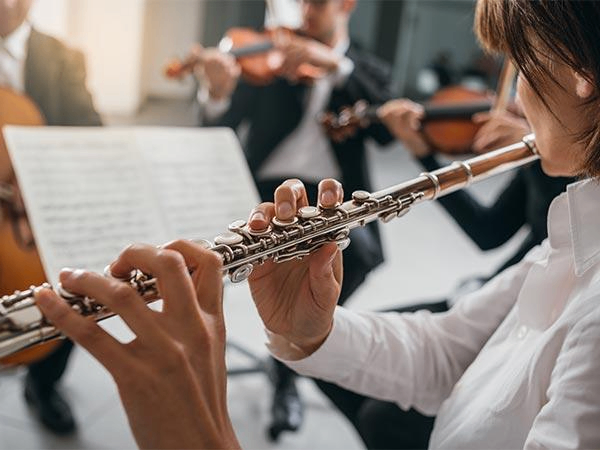
The flute has enchanted listeners for centuries with its shimmering tone, graceful agility, and emotional range. From breathtaking classical concertos to soulful jazz improvisations and unforgettable folk melodies, the world’s greatest flute players transformed a simple silver instrument into a powerful musical voice. Some became legends through dazzling technical brilliance, while others captivated audiences with warmth, lyricism, and unmistakable personality. Their performances helped shape orchestral music, jazz, film scores, and contemporary styles across generations. Whether soaring above a symphony orchestra or carrying an intimate melody alone, the flute has remained one of music’s most expressive instruments thanks to the extraordinary artistry of these iconic performers.
1. James Galway
James Galway is one of the most recognizable flute players in the world, often called The Man with the Golden Flute because of his radiant tone and remarkable public appeal. His performance of Danny Boy captures exactly why he became such a beloved figure beyond the usual classical audience. The melody is simple, familiar, and deeply emotional, yet Galway gives it a glowing elegance that makes every phrase feel freshly sung. His sound has a bright center, a polished surface, and a lyrical warmth that allows the flute to speak with an almost vocal tenderness.
Galway built a career that moved easily between Mozart concertos, Irish melodies, film music, popular arrangements, and major orchestral showpieces. His recordings of Mozart, Devienne, Reinecke, and Bach helped establish him as a classical master, while albums featuring traditional Irish songs introduced his playing to listeners who might never have owned a flute concerto recording. That crossover success was not accidental. Galway understood melody at a very human level.
His top performances include Danny Boy, The Flight of the Bumblebee, Mozart’s flute concertos, and countless lyrical arrangements that showcase his singing tone. What makes Galway so popular is his ability to make virtuosity sound natural. He never treats the flute as a cold technical machine. In his hands, it becomes warm, graceful, expressive, and instantly memorable.
2. Jean Pierre Rampal
Jean Pierre Rampal was one of the most important flute players of the twentieth century, a musician who helped restore the flute to full solo prominence on the international stage. His performance of Mozart’s Flute Concerto in D major reveals the qualities that made him legendary: elegance, charm, tonal clarity, and a sparkling sense of classical style. Rampal’s playing had a distinctly French refinement, with phrases that seemed to float effortlessly while still carrying rhythmic life and personality.
Rampal’s most famous recordings include Mozart’s flute concertos, Bach sonatas, Vivaldi concertos, Poulenc’s Flute Sonata, and a vast range of baroque and classical works. He recorded extensively, toured internationally, and collaborated with many of the finest musicians of his era. His tone was not overly heavy or dramatic. Instead, it had transparency, grace, and conversational ease, making even technically demanding passages sound graceful and alive.
What made Rampal so popular was his ability to present the flute as a true solo instrument with an aristocratic voice. Before his rise, flute players were often viewed mostly as orchestral specialists. Rampal changed that perception through charisma, recording activity, and a deep belief in the instrument’s expressive power. His artistry opened doors for generations of flute soloists. Every modern classical flutist owes something to the elegance and authority he brought to the instrument.
3. Ian Anderson
Ian Anderson changed the public image of the flute by bringing it roaring into progressive rock through his work with Jethro Tull. His famous performance of Bourée, based on music by Johann Sebastian Bach, became one of the most iconic flute moments in rock history. Instead of treating the flute as delicate decoration, Anderson used it as a wild, percussive, bluesy, theatrical lead instrument. His sound could be breathy, aggressive, jazzy, comic, and explosive, often within the same solo.
With Jethro Tull, Anderson helped create classics such as Aqualung, Locomotive Breath, Living in the Past, Thick as a Brick, and Bourée. His flute style became part of the band’s identity, giving their music an instantly recognizable twist. He did not follow the polished classical model. Instead, he leaned into breath noise, rhythmic attack, vocal effects, and stage presence. The image of Anderson playing flute on one leg became one of rock’s most memorable visual signatures.
What makes Anderson so popular is that he gave the flute a completely different kind of authority. He proved it could stand beside electric guitar, bass, and drums without losing power. His best performances are not just solos. They are bursts of character. For rock listeners, Ian Anderson remains the flute’s great rebel showman.
4. Herbie Mann
Herbie Mann was one of the most popular jazz flutists of all time, famous for bringing the instrument into soul jazz, Latin jazz, funk, world music, and groove based fusion. His classic recording Memphis Underground remains a defining statement of late 1960s jazz crossover. The track blends blues feeling, Memphis rhythm, electric textures, and Mann’s earthy flute sound into a hypnotic groove that still feels fresh. His playing on it is relaxed but incisive, melodic but rhythmically alert, and full of atmosphere.
Mann’s top recordings include Memphis Underground, Comin’ Home Baby, Push Push, Hijack, and his many Brazilian influenced projects. He had an unusual ability to absorb different musical cultures and bring the flute into new settings without making it sound ornamental. His flute could ride a funk groove, float over Latin percussion, or dig into a blues phrase with soulful directness.
What made Mann popular was his instinct for connection. He did not limit himself to strict jazz expectations. He followed rhythm, melody, dance, and mood. Some purists debated his commercial direction, but his impact is undeniable. He helped make the flute a central voice in groove driven jazz. For listeners who enjoy warmth, rhythm, and adventurous fusion, Herbie Mann remains one of the instrument’s most important popularizers.
5. Hubert Laws
Hubert Laws is one of the rare flute players equally respected in jazz, classical music, rhythm and blues, and studio recording. His version of The Rite of Spring became a fascinating example of how a classically trained flutist could reinterpret a major orchestral landmark through a jazz fusion lens. Laws brought precision, elegance, and improvisational ease to music that demanded both technical command and imagination. His tone is polished and agile, but it also carries soulfulness, making him one of the most versatile flute artists of his generation.
Laws’s best known recordings include The Rite of Spring, Morning Star, Family, Romeo and Juliet, and Land of Passion. He also contributed to countless sessions with major artists, becoming one of the most sought after flutists in the studio world. His classical training gave him discipline and clarity, while his jazz instincts gave his playing flexibility, swing, and emotional color.
What makes Laws so popular is his ability to move through musical worlds without losing identity. He can play with orchestral refinement, then turn around and phrase with bluesy warmth. His flute sound is sophisticated, smooth, and deeply expressive. Hubert Laws helped prove that the flute could thrive in serious jazz fusion while retaining classical beauty and technical brilliance.
6. Rahsaan Roland Kirk
Rahsaan Roland Kirk was one of jazz’s most original multi instrumentalists, and his flute playing had a raw imagination unlike anyone else’s. His piece Serenade to a Cuckoo is one of his most famous flute centered performances, later becoming widely known to rock audiences when Jethro Tull recorded it. Kirk’s original version has a bluesy charm, playful phrasing, and a slightly mysterious atmosphere. His flute sings, bends, laughs, and cries, turning a simple melodic idea into something unmistakably personal.
Kirk was famous for playing multiple instruments, sometimes at the same time, but his flute work should never be treated as a novelty. He used vocal effects, breath sounds, overblowing, and expressive bends in ways that expanded the instrument’s jazz language. His important recordings include Serenade to a Cuckoo, The Inflated Tear, Volunteered Slavery, Bright Moments, and I Talk with the Spirits, an album focused strongly on flute.
What makes Kirk so popular among adventurous listeners is his complete individuality. He did not play music as if it belonged in neat categories. His flute sounded like a human voice filled with history, humor, sorrow, and surprise. For anyone exploring the expressive edge of jazz flute, Rahsaan Roland Kirk is essential.
7. Bobbi Humphrey
Bobbi Humphrey brought the flute into the heart of soul jazz and jazz funk during the 1970s, becoming one of the most important women instrumentalists in popular jazz. Her recording Harlem River Drive is a standout example of her silky tone, rhythmic ease, and deep connection to groove. The track moves with a lush urban atmosphere, blending flute melody, soul production, and funk rhythm into a sound that feels elegant and streetwise at the same time. Humphrey’s flute does not sit politely above the band. It becomes part of the groove itself.
Her best known recordings include Harlem River Drive, Chicago Damn, Blacks and Blues, San Francisco Lights, and Uno Esta. Working with the Mizell Brothers, she created music that has remained beloved by jazz funk collectors, soul listeners, and hip hop producers. Her playing had warmth, femininity, confidence, and rhythmic flow, giving the flute a powerful voice in a field often dominated by saxophone and trumpet.
What makes Humphrey so popular is the atmosphere she creates. Her flute sound is smooth, soulful, and unmistakably stylish. She helped redefine what a jazz flutist could be in the modern recording era. Her music still feels vibrant because it connects melody, groove, and mood with effortless grace.
8. Emmanuel Pahud
Emmanuel Pahud is one of the leading classical flute players of the modern era, admired for his golden tone, technical perfection, and extraordinary musical intelligence. His performance of Mozart’s Flute Concerto in G major shows why he is considered one of today’s finest flutists. The playing is bright, elegant, and incredibly controlled, with every phrase shaped naturally. Pahud has the ability to make difficult passages sound effortless while preserving freshness and spontaneity.
As principal flutist of the Berlin Philharmonic, Pahud has performed at the highest orchestral level while also building a major solo career. His top performances and recordings include Mozart’s flute concertos, Bach sonatas, Nielsen’s Flute Concerto, Ibert’s Flute Concerto, and contemporary works written for or championed by him. He is equally convincing in baroque repertoire, classical concertos, French modernism, and new music.
What makes Pahud popular is the balance of beauty and authority in his playing. His sound can be luminous and delicate, but it also carries projection and strength. He represents the modern classical flute at its most polished and expressive. For students and listeners alike, Pahud’s recordings are models of breath control, phrasing, tone, and musical taste. His artistry confirms that the flute remains a commanding solo instrument in the twenty first century.
9. Yusef Lateef
Yusef Lateef was a visionary musician whose flute playing formed part of a much broader artistic world that included tenor saxophone, oboe, world instruments, composition, and spiritual exploration. His performance of Love Theme From Spartacus is one of his most beloved recordings, admired for its haunting tenderness and meditative depth. Lateef’s flute sound is soft but penetrating, carrying a sense of longing that turns the melody into something almost prayerful.
Lateef’s major recordings include Eastern Sounds, The Blue Yusef Lateef, Psychicemotus, Live at Pep’s, and Jazz Mood. He was among the early jazz artists to meaningfully incorporate Middle Eastern, Asian, and African influences into his music, not as surface decoration but as part of a sincere search for expanded expression. On flute, he often favored atmosphere and emotional resonance over technical flash.
What makes Lateef so popular among deep jazz listeners is his unmistakable sense of purpose. His music feels reflective, spacious, and spiritually curious. His flute playing is less about display than revelation. In Love Theme From Spartacus, every phrase seems to breathe with patience and compassion. Yusef Lateef helped broaden the emotional and cultural vocabulary of jazz flute, leaving behind performances that remain profoundly moving.
10. Matt Molloy
Matt Molloy is one of the greatest Irish traditional flute players of all time, known for his astonishing speed, rhythmic drive, and deep command of dance tunes. His performances with The Chieftains brought Irish flute playing to audiences across the world, and the Matt Molloy Medley captures the fire and lift that define his style. His wooden flute tone is earthy, bright, and agile, carrying the pulse of reels, jigs, and traditional sets with breathtaking fluency.
Molloy’s important recordings include his solo albums, his work with The Bothy Band, Planxty, and The Chieftains, along with countless performances of traditional tunes such as The Bucks of Oranmore, The Morning Dew, and The Mason’s Apron. His playing is admired because it combines speed with phrasing. He does not simply rush through notes. He shapes them with cuts, rolls, breath accents, and rhythmic nuance rooted in the Irish tradition.
What makes Molloy so popular is the sheer life in his music. His flute playing feels like movement, conversation, celebration, and memory all at once. He helped define the modern sound of Irish flute for listeners far beyond Ireland. For anyone exploring traditional flute, Matt Molloy is an essential master whose influence is enormous.
11. Marcel Moyse
Marcel Moyse is one of the most revered figures in classical flute history, admired as a performer, teacher, and author of studies that remain central to flute training. His performance of Debussy’s Syrinx offers a historic glimpse into a deeply expressive French school of flute playing. The piece is short, mysterious, and exposed, requiring the player to create an entire world through tone color, pacing, and breath. Moyse approaches it with an intimate sense of speech, making the flute sound ancient, fragile, and human.
Moyse’s influence extends far beyond his recordings. His teaching shaped generations of flutists, and his books on tone, phrasing, articulation, and daily exercises became essential materials for serious students. He emphasized the idea that flute playing should imitate the expressive qualities of singing. That belief can be heard in his approach to phrasing, where each line seems to breathe with meaning.
His most important musical associations include Debussy, Fauré, Mozart, Bach, and the broader French repertoire. Moyse helped establish ideals of tone and expression that still guide classical flutists today. His popularity among musicians comes from his depth rather than celebrity. To study Moyse is to study the flute as a voice, not just an instrument. His legacy remains foundational.
12. Julius Baker
Julius Baker was one of the most influential American classical flutists of the twentieth century, admired for his pure tone, elegance, and enormous impact as a teacher. His live performance of the Bach Sonata in G minor reflects the qualities that made him a central figure in American flute playing. The sound is clear, poised, and beautifully balanced, with phrasing that respects baroque structure while maintaining warmth and lyricism.
Baker held major orchestral positions, including work with the New York Philharmonic, and he trained many prominent flutists through his teaching. His recordings and performances of Bach, Mozart, Handel, Hindemith, and American works helped define a polished American flute style. He was not a flashy performer in the popular sense. His greatness lay in refinement, consistency, musical taste, and a tone that carried with effortless dignity.
What makes Baker so important is the breadth of his influence. Many leading flutists passed through his orbit, absorbing his ideas about sound, control, and musical discipline. His legacy lives not only in recordings but in the playing of generations who followed him. Julius Baker represents the flute as an instrument of classical clarity and noble expression. For students of flute history, his name remains indispensable.
13. Jasmine Choi
Jasmine Choi is one of the most exciting flute virtuosos of the modern era, known for dazzling technique, brilliant tone, and a powerful ability to connect with contemporary audiences. Her performance of Borne’s Carmen Fantasy shows her at her most spectacular. The piece is a showpiece filled with theatrical melodies, rapid passagework, dramatic contrasts, and operatic flair. Choi handles it with confidence, elegance, and a vivid sense of character, turning the flute into a dazzling dramatic voice.
Her popular performances include Carmen Fantasy, The Flight of the Bumblebee, arrangements of beloved melodies, concertos, and solo works that highlight both speed and expressive beauty. Choi has also used video platforms and modern media effectively, helping introduce virtuosic flute playing to audiences who might not usually follow classical soloists. Her tone is bright and clean, but it also carries warmth and personality.
What makes Choi popular is the combination of technical brilliance and approachable charisma. She makes flute virtuosity feel thrilling rather than distant. Her performances often celebrate the instrument’s agility, sparkle, and vocal expressiveness. For younger listeners and aspiring flutists, Jasmine Choi represents a modern model of classical artistry: highly skilled, visually engaging, musically serious, and globally connected.
14. Paula Robison
Paula Robison is one of America’s most admired flute players, celebrated for her lyrical warmth, chamber music artistry, and wide ranging musical imagination. Her performance of Bach’s Badinerie from the Orchestral Suite No. 2 highlights her lively articulation, graceful phrasing, and joyful sense of motion. The piece is one of the most famous flute showcases in the classical repertoire, and Robison gives it sparkle without making it feel mechanical.
Robison has built a career that embraces Bach, Mozart, Debussy, American music, chamber works, and imaginative programming. As a founding member of the Chamber Music Society of Lincoln Center, she helped bring the flute into richly collaborative musical settings. Her recordings include baroque sonatas, romantic pieces, contemporary works, and arrangements that reveal her instinct for storytelling through sound.
What makes Robison popular is the deeply personal quality of her playing. She combines technical command with warmth, curiosity, and expressive freedom. Her flute sound feels generous and human, never merely polished. She has also been an important educator and advocate, inspiring younger musicians to think beyond technical display. Paula Robison represents the flute as a lyrical, intelligent, and communicative voice, equally at home in virtuoso works and intimate chamber music.
15. Greg Pattillo
Greg Pattillo became a viral flute phenomenon by combining classical flute technique with beatboxing, transforming the instrument into a rhythmic, percussive, and wildly entertaining solo machine. His Inspector Gadget beatbox flute remix became one of the most famous flute videos online, introducing millions of viewers to a completely different way of hearing the instrument. Instead of presenting the flute as delicate or purely lyrical, Pattillo made it groove, snap, pulse, and surprise.
As a member of PROJECT Trio, Pattillo helped bring flute, cello, and bass into energetic arrangements that blend classical skill, hip hop rhythm, jazz influence, and popular culture. His performances of themes from video games, television, and familiar tunes made advanced flute techniques accessible to wide audiences. Beatbox flute requires breath control, coordination, articulation, embouchure flexibility, and rhythmic precision, and Pattillo turned those skills into a highly recognizable style.
What makes Pattillo popular is his originality and entertainment value. He expanded the public imagination of what a flute player could do. His work inspired countless young flutists to experiment with rhythm, extended techniques, and online performance. While rooted in serious musicianship, his playing carries humor, energy, and modern creativity. Greg Pattillo represents the flute in the digital age: inventive, rhythmic, surprising, and impossible to ignore.

Samuel Moore is a frequent contributor to Singers Room. Since 2005, Singersroom has been the voice of R&B around the world. Connect with us via social media below.