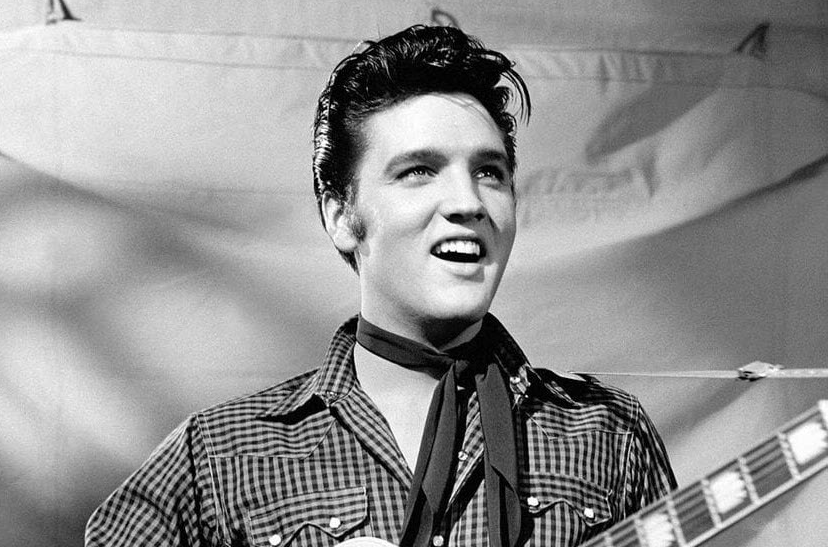
From electrifying hips to unforgettable melodies, Elvis Presley didn’t just make music—he defined an era. Blending rock ‘n’ roll, gospel, blues, and country, his voice carried raw emotion and irresistible charm that still echoes decades later. Whether it’s a heart-melting ballad or a foot-stomping anthem, his songs continue to captivate new generations. This collection dives into the timeless hits that turned a young man from Memphis into the King of Rock ‘n’ Roll, celebrating the tracks that shaped music history and cemented his legendary status.
1. Hound Dog
Hound Dog is Elvis Presley at his most volcanic, a record that still sounds like it kicked open the door rather than politely entered the room. The song had already lived a powerful life before Elvis made it his own, but his version turned it into a cultural flashpoint. What stands out immediately is the attack in his voice. He is not crooning, pleading, or smoothing the edges. He is barking back with confidence, wit, and youthful nerve. Every phrase lands with a kind of rhythmic bite, giving the performance a physical quality that made listeners feel the music as much as hear it.
The arrangement is brilliantly direct. The drums, guitar, and backing vocals create a lean rock and roll machine, but Elvis is the engine. His delivery captures the moment when popular music began moving faster, louder, and with far more attitude. This is not merely a famous Elvis song. It is one of the moments where rock and roll became impossible to ignore. The track remains beloved because it has no wasted motion. It is short, sharp, funny, rebellious, and instantly memorable. Decades later, Hound Dog still carries the thrill of something dangerous being played just loudly enough to upset the neighbors.
2. Jailhouse Rock
Jailhouse Rock is one of the great examples of Elvis Presley understanding that rock and roll was never just sound. It was movement, character, attitude, and spectacle. From its opening guitar figure, the song feels theatrical without losing its street corner vitality. It swings hard, but it also grins. The lyric sketches a comic scene inside a prison dance, yet Elvis treats the material with such conviction that the fantasy becomes irresistible. He makes the whole thing feel like a private party that has gotten completely out of hand.
Vocally, Elvis is relaxed but commanding. He rides the rhythm with uncanny precision, turning small syllables into hooks and making every line feel animated. The band plays with a tightness that gives the song its snap, while the groove keeps everything moving with a restless bounce. The genius of Jailhouse Rock lies in how effortlessly it merges song, cinema, and personality. It is impossible to separate the recording from Elvis as a visual performer, because the music itself seems choreographed. Every stop, accent, and vocal turn feels like a gesture.
As a rock and roll record, it is both playful and muscular. As an Elvis performance, it is definitive. Jailhouse Rock remains popular because it captures the King in full command of his gifts: humor, rhythm, charisma, and that unmistakable sense that something exciting is happening right now.
3. Can’t Help Falling in Love
Can’t Help Falling in Love reveals the softer architecture of Elvis Presley’s artistry. Where many of his early hits thrive on impact, swagger, and rhythmic electricity, this song glows from within. It is built on patience. The melody moves with graceful inevitability, almost like a thought becoming a confession. Elvis sings it with extraordinary restraint, and that restraint is precisely what makes the performance so powerful. He never forces the emotion. He allows it to arrive naturally, phrase by phrase, until the listener feels surrounded by it.
The beauty of the recording is in its clarity. Elvis does not need vocal acrobatics to prove the depth of the feeling. His tone carries warmth, vulnerability, and quiet certainty. Few popular love songs have ever balanced simplicity and grandeur so effectively. The words are direct, but the performance suggests something larger than romance alone. It speaks to surrender, trust, and the frightening sweetness of giving the heart permission to lead.
Part of the song’s enduring appeal is its adaptability. It can feel intimate in a quiet room, ceremonial at a wedding, nostalgic in a film, or deeply personal through headphones late at night. Elvis gives it a timeless center. His voice sounds close enough to touch, yet distant enough to feel legendary. Can’t Help Falling in Love remains one of his most popular songs because it captures tenderness without sentimentality and devotion without excess.
4. Suspicious Minds
Suspicious Minds is Elvis Presley as a mature dramatic interpreter, fully aware of how to turn emotional conflict into musical momentum. The song is built around mistrust, but its power comes from the fact that Elvis never sings it as a simple accusation. He sounds wounded, frustrated, pleading, and determined all at once. That complexity gives the recording its remarkable staying power. It is not just about suspicion. It is about two people trapped in a pattern they cannot seem to break.
The arrangement has a restless pulse that mirrors the lyric’s anxiety. The rhythm section keeps pushing forward, the backing vocals rise like emotional pressure, and Elvis moves through it all with masterful control. His voice expands as the song develops, growing more urgent without becoming careless. By the final stretch, the performance feels less like a pop recording and more like a soul charged courtroom testimony. He is making his case, but he is also revealing how deeply the situation has cut him.
The famous fade and return adds to the drama, giving the impression that the conflict refuses to end. Just when the song seems to disappear, it comes roaring back, much like the doubts described in the lyric. Suspicious Minds remains one of Elvis’s most admired recordings because it combines pop craft, soul intensity, and adult emotional realism. It is grand, wounded, and unforgettable.
5. Love Me Tender
Love Me Tender is one of the clearest examples of Elvis Presley’s ability to create intimacy through understatement. The song does not depend on a large arrangement, a driving rhythm, or a dramatic vocal climax. Instead, it rests almost entirely on tone, sincerity, and melodic grace. Elvis sings with a gentleness that feels almost private, as though he is protecting the emotion rather than displaying it. That quality gives the recording its lasting charm.
What makes Love Me Tender so effective is the way Elvis softens his presence without diminishing it. He remains unmistakably himself, but the swagger is set aside. In its place is a kind of openhearted directness. The vocal is smooth, careful, and deeply human. It is a performance that understands romance not as spectacle, but as reassurance. Every line seems designed to comfort, to promise, and to linger.
The song’s melody has an old world simplicity, which helps explain why it feels older than its recording date and somehow untouched by changing trends. It sounds less like a product of a particular pop moment and more like something passed down. Elvis gives that familiar melodic shape a modern emotional glow. He brings youth to it, but also reverence.
Love Me Tender remains popular because it presents Elvis not as a rebel or a phenomenon, but as a singer capable of profound tenderness. It is quiet, graceful, and beautifully sincere.
6. Heartbreak Hotel
Heartbreak Hotel is one of Elvis Presley’s most atmospheric recordings, and its darkness still feels startling. Rather than presenting heartbreak as polished sadness, the song imagines it as a physical destination, a lonely place where the abandoned gather. That image gives the record a strange, almost cinematic quality. Elvis does not merely sing about sorrow. He checks into it, walks its halls, and lets the echo surround him.
The production is crucial to the song’s identity. The space around Elvis’s voice feels vast and cold, making the recording sound haunted. His vocal performance is controlled but wounded, filled with little bends and pauses that suggest isolation. He stretches certain phrases as though testing how far loneliness can travel before it breaks. This is one of the great early examples of rock and roll embracing mood as powerfully as rhythm.
Unlike some of Elvis’s brighter hits, Heartbreak Hotel does not try to charm its way into the listener’s memory. It unsettles. The blues influence is unmistakable, but Elvis reshapes it into something lean, modern, and commercially explosive. The song helped prove that popular music could be emotionally stark and still become a phenomenon.
Its popularity endures because the central metaphor remains perfect. Everyone understands the idea of being stranded inside heartbreak. Elvis gives that feeling a voice that is stylish, wounded, and unforgettable. Heartbreak Hotel is not just a hit. It is an address in American music history.
7. Burning Love
Burning Love captures Elvis Presley in full late career fire, proving that his rock and roll instincts had not dimmed with time. The song surges from the first moments with a sense of heat, motion, and physical excitement. It is a performance built around combustion. Elvis sounds energized, almost challenged by the track’s pace, and he responds with a vocal that is big, bright, and full of appetite.
The arrangement has a muscular drive that suits him beautifully. The guitars push forward, the rhythm section keeps the pressure high, and the backing vocals add flashes of gospel flavored intensity. Elvis navigates the whole thing with a thrilling blend of control and abandon. What makes Burning Love so satisfying is that it does not feel like nostalgia. It feels like renewal. The song reconnects him with the explosive spirit of his early rock records while placing him inside a fuller, heavier sound.
Lyrically, the track is simple in the best possible way. Desire becomes heat, heat becomes danger, and danger becomes release. Elvis sells that emotional escalation completely. His voice rises with the temperature of the song, especially near the final section, where the performance becomes almost ecstatic.
Burning Love remains one of his most popular songs because it is pure momentum. It is passionate, immediate, and alive with the sound of an artist reminding everyone that he could still ignite a room with a single vocal performance.
8. Are You Lonesome Tonight?
Are You Lonesome Tonight? is one of Elvis Presley’s most delicate performances, a song that depends on emotional poise rather than force. It is a study in quiet devastation. The question in the title is simple, but Elvis turns it into something layered and theatrical. He sounds as though he is reaching across distance, memory, and regret, trying to understand whether love still exists in the space between two people.
The vocal is beautifully restrained. Elvis allows his softer register to carry the emotional weight, and the result is intimate without feeling fragile. He phrases the melody with a conversational ease that makes the song feel personal, almost overheard. Then comes the spoken passage, one of the most distinctive moments in his catalog. In less capable hands, it might feel overly dramatic. With Elvis, it becomes a miniature stage scene, filled with reflection, hurt, and old fashioned romantic elegance.
The power of Are You Lonesome Tonight? lies in its willingness to be vulnerable. Elvis does not hide behind rhythm, spectacle, or vocal power. He lets the ache show. The arrangement gives him room to do that, surrounding the voice with a gentle atmosphere that never intrudes.
The song remains popular because loneliness is one of the oldest subjects in music, and Elvis treats it with dignity. He makes heartbreak sound graceful, memory sound vivid, and longing sound almost sacred. It is a quiet masterpiece of emotional interpretation.
9. All Shook Up
All Shook Up is Elvis Presley at his most playfully magnetic. The song captures the physical comedy of falling in love, where the body betrays the heart before the mind can explain anything. Elvis sings it with a grin in his voice, making every nervous symptom feel charming rather than foolish. The genius of the performance is that he never treats the lyric as throwaway novelty. He gives it rhythm, character, and just enough swagger to make romantic confusion sound exciting.
The arrangement is crisp and wonderfully economical. The groove moves with a light bounce, leaving plenty of room for Elvis’s vocal personality. He uses small inflections to animate the song, bending words, clipping phrases, and leaning into the rhythm with natural ease. Few singers could make simplicity feel this alive. Every element works in service of the hook, and the result is a record that feels effortless even though its craft is immaculate.
What makes All Shook Up endure is its joy. It is not trying to be profound, yet it captures something universally recognizable: the dizzy, ridiculous, electrifying effect of attraction. Elvis brings that sensation into the room with total confidence. He sounds young, amused, and completely in command.
The song remains one of his most popular because it distills early Elvis into a perfect pop form. It has rhythm, wit, flirtation, and immediacy. It is a small record with enormous charm, and it still moves with a smile.
10. In the Ghetto
In the Ghetto stands apart in Elvis Presley’s catalog because of its narrative seriousness and social compassion. This is not a song built around romance, rebellion, or performance glamour. It tells a story about poverty, environment, and repetition, following a child born into hardship and tracing the tragic cycle that surrounds him. Elvis approaches the material with remarkable sensitivity. He does not overplay the drama. Instead, he lets the story carry its own weight.
His vocal is measured, compassionate, and deeply focused. There is sadness in it, but also restraint, which makes the song more powerful. He sounds less like an entertainer seeking applause and more like a witness asking the listener not to look away. That shift in posture gives In the Ghetto its moral force. Elvis was capable of grandeur, but here he chooses empathy.
The arrangement supports the lyric with quiet dignity. It builds carefully, allowing the narrative to unfold without melodrama. The melody is memorable, but it never distracts from the subject. Every musical choice seems designed to keep attention on the human cost at the center of the song.
In the Ghetto remains popular because it reveals a thoughtful side of Elvis that casual listeners sometimes overlook. It shows him engaging with a story larger than himself and delivering it with sincerity. The recording is haunting because its message still feels painfully recognizable. It is one of his most important performances, and one of his most humane.

Samuel Moore is a frequent contributor to Singers Room. Since 2005, Singersroom has been the voice of R&B around the world. Connect with us via social media below.