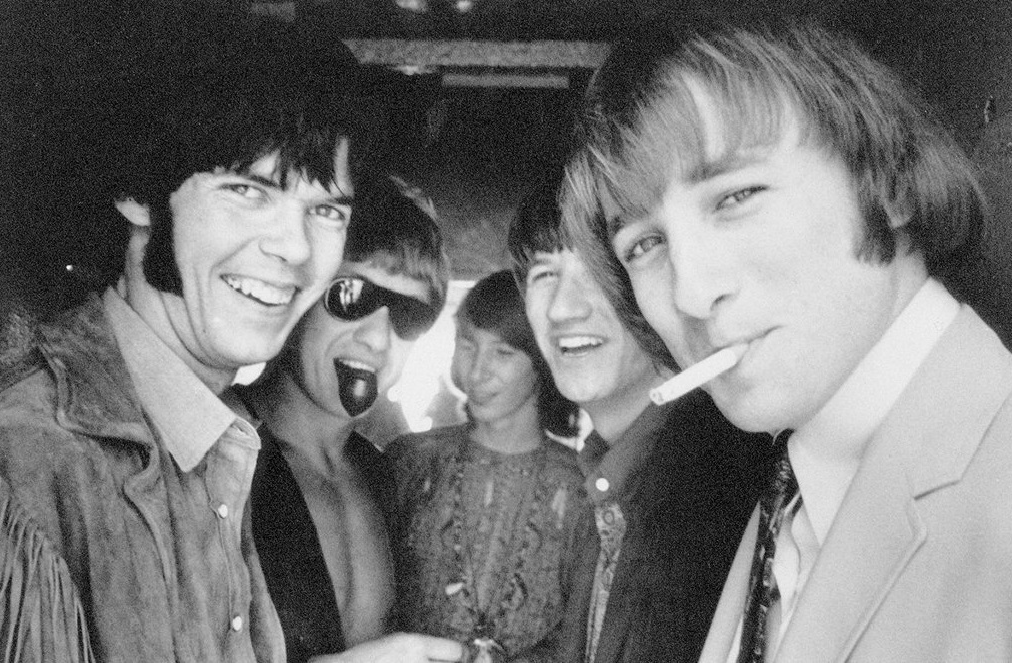
Few bands captured the restless spirit of the late 1960s quite like Buffalo Springfield. Blending folk introspection, rock energy, and sharp social awareness, they created songs that felt both personal and politically charged. With a lineup that included future icons, their music carried a sense of urgency and experimentation, shifting effortlessly between gentle melodies and electrified tension. Each track reveals a band searching for meaning in a rapidly changing world, using harmonies, guitars, and thoughtful songwriting to reflect both hope and uncertainty. Though their time together was brief, the impact of their sound continues to echo, shaping the direction of rock music and inspiring generations to come.
1. For What It’s Worth
“For What It’s Worth” is the song that forever placed Buffalo Springfield in the center of American rock history. Written by Stephen Stills, it became one of the defining sounds of the late sixties, not because it shouts its message, but because it observes unease with chilling calm. The famous opening guitar harmonics feel like a warning bell drifting through Los Angeles night air. They are simple, unforgettable, and instantly atmospheric. The track does not explode with protest fury. Instead, it moves with quiet suspicion, capturing the feeling of people watching tension rise before anyone fully understands what is happening.
The brilliance of the performance lies in restraint. Stills sings with measured seriousness, while the band creates a spare and haunting backdrop. Neil Young’s guitar accents add ghostly color, Richie Furay’s presence supports the vocal atmosphere, and the rhythm section keeps everything grounded in a slow, deliberate pulse. The song feels less like a speech and more like a moment of collective awakening.
Its popularity has endured because every generation seems to find new meaning in it. Whether heard as social commentary, a portrait of unrest, or simply a masterful folk rock recording, “For What It’s Worth” remains timeless. It captures fear, confusion, caution, and awareness in a way that still feels startlingly modern. Few songs say so much with such careful quiet.
2. Mr. Soul
“Mr. Soul” is Buffalo Springfield at their sharpest, most sardonic, and most electric. Written by Neil Young, the song has a jagged swagger that sets it apart from the gentler folk rock textures often associated with the band. The riff carries a dark, biting energy, while Young’s vocal moves with cool detachment and sly humor. It is a song about public identity, fame, self doubt, and the strange pressure of being watched. Yet it never sounds fragile. It sounds wired, restless, and slightly dangerous.
The track’s popularity comes from the way it captures Buffalo Springfield’s internal contrast. This was a band capable of pristine harmonies and delicate acoustic textures, but “Mr. Soul” reveals their harder edge. The guitars snarl with garage rock attitude, the rhythm pushes forward with urgency, and the vocal performance feels both amused and suspicious. It is the sound of a young songwriter recognizing that attention can become its own strange trap.
What makes “Mr. Soul” so compelling is its personality. The lyrics are clever without becoming distant, and the music is raw without losing precision. Neil Young would revisit these themes throughout his career, but this recording remains one of the earliest and most thrilling examples of his uneasy relationship with stardom. Buffalo Springfield made the song feel compact, tense, and unforgettable, turning personal anxiety into a classic rock statement.
3. Bluebird
“Bluebird” is one of Buffalo Springfield’s most dazzling musical achievements, a track that showcases Stephen Stills’ gift for blending folk lyricism, rock drive, and instrumental imagination. The song begins with a sense of mystery and movement, carried by ringing guitars and a melody that feels both romantic and elusive. Stills sings with a graceful intensity, giving the track a feeling of yearning without making it overly sentimental. The bluebird image feels symbolic, suggesting freedom, beauty, distance, and something emotionally unreachable.
The arrangement is a major reason the song remains so admired. The guitar work is lively and intricate, shifting between bright acoustic textures and electrified force. Buffalo Springfield sound adventurous here, refusing to keep the song locked into one mood. It moves, opens, tightens, and glows with a kind of restless creativity. There is a sense that the band is discovering new possibilities inside the folk rock form while the tape is rolling.
“Bluebird” has stayed popular among fans because it captures the group’s musical ambition at full stretch. It is not merely a catchy single or a period piece. It is a carefully shaped recording filled with atmosphere and instrumental personality. Stills’ songwriting feels poetic but grounded, while the band gives the song a shimmering tension that still sounds fresh. “Bluebird” remains one of the clearest examples of why Buffalo Springfield mattered far beyond their brief time together.
4. Expecting to Fly
“Expecting to Fly” is one of the most haunting songs in the Buffalo Springfield catalog, a Neil Young composition that floats closer to chamber pop than standard rock. The track feels suspended in air, shaped by orchestral textures, dreamy pacing, and a vocal that sounds as if it is arriving from memory rather than the present moment. Young’s writing captures emotional departure with remarkable delicacy. The song is not simply about leaving. It is about the strange sadness that comes when a connection has already begun to vanish before anyone says goodbye.
The production gives the track its unforgettable atmosphere. Strings rise and fall like mist, the rhythm remains understated, and the melody unfolds with a fragile beauty. Unlike the more guitar driven Buffalo Springfield songs, “Expecting to Fly” works through space, mood, and suggestion. It feels cinematic, private, and deeply melancholy. The listener is not pulled into a crowd scene or a bandstand performance. The listener is placed inside an emotional landscape.
Its popularity among devoted fans comes from its uniqueness. “Expecting to Fly” revealed how far Buffalo Springfield could move beyond conventional folk rock. It also pointed toward the kind of dreamlike introspection Neil Young would continue exploring in later years. The song remains extraordinary because it sounds less like a product of its time than a fragile message preserved outside of time.
5. Rock and Roll Woman
“Rock and Roll Woman” is one of Buffalo Springfield’s most graceful and infectious recordings, a Stephen Stills song that shines with vocal harmony, rhythmic lift, and California glow. The track has a breezy surface, but underneath it sits a beautifully controlled piece of songwriting. Stills crafts a melody that feels natural and flowing, while the band surrounds it with bright guitars and warm voices. The result is a song that captures the softer side of rock without losing momentum or sophistication.
One of the great pleasures of “Rock and Roll Woman” is the vocal blend. The harmonies create a sense of community, giving the song an open, luminous quality that anticipates the harmony rich rock Stills would help shape in later years. The guitars move with taste and sparkle, never overcrowding the melody. There is a looseness to the performance, but also a remarkable sense of craft. It sounds effortless because the musicians understand exactly how to leave space for the song to breathe.
The song’s popularity comes from its warmth and melodic strength. It is not as politically iconic as “For What It’s Worth” or as psychologically sharp as “Mr. Soul,” but it shows Buffalo Springfield’s ability to make rock music feel elegant, soulful, and inviting. “Rock and Roll Woman” remains a favorite because it captures a moment when folk, rock, and harmony singing came together with rare ease.
6. Kind Woman
“Kind Woman” is one of Richie Furay’s most beloved contributions to Buffalo Springfield, and it carries a tenderness that helped point toward the future of country rock. The song is gentle, heartfelt, and beautifully uncluttered. Furay’s vocal has a sincere warmth that makes the lyric feel direct and personal, as though the song is being offered rather than performed. There is no need for grand drama here. Its emotional power comes from gratitude, humility, and melodic sweetness.
The arrangement is especially important. The pedal steel color gives the song a soft country soul texture, while the rhythm keeps it moving with quiet steadiness. The recording feels intimate but not small. It has the emotional openness of folk, the polish of studio craft, and the rootsy feeling that would soon become central to bands like Poco. “Kind Woman” sounds like a bridge between Buffalo Springfield’s restless experimentation and the warmer country rock sound that followed.
Its popularity has endured because it offers a different kind of Buffalo Springfield magic. Instead of social tension or psychedelic mystery, the song gives listeners sincerity and calm. Furay’s performance is deeply human, full of affection without becoming overly sweet. “Kind Woman” remains one of the group’s most cherished songs because it proves that softness can be just as memorable as electricity when the writing is honest and the performance is true.
7. Sit Down I Think I Love You
“Sit Down I Think I Love You” captures Buffalo Springfield in their bright early folk rock mode, full of youthful charm, melodic confidence, and rhythmic bounce. Written by Stephen Stills, the song has an inviting directness that makes it immediately appealing. The title itself feels casual and disarming, as if romance has arrived suddenly and the singer can barely organize the thought before saying it aloud. That sense of spontaneous affection gives the song much of its personality.
The recording is lively and polished, with jangling guitars and a vocal approach that reflects the influence of mid sixties folk rock while still carrying Buffalo Springfield’s own identity. The melody is crisp, the arrangement moves with light energy, and the performance has a freshness that makes it feel like a snapshot of the band’s early promise. There is innocence in the song, but there is also skill. Stills already shows his ability to write compact, memorable tunes with a strong rhythmic foundation.
“Sit Down I Think I Love You” remains popular because it shows the group before their sound became more complex and fragmented. It is bright, catchy, and full of first album vitality. The song may not carry the cultural weight of their most famous work, but it has its own lasting appeal. It presents Buffalo Springfield as a band capable of turning a simple romantic impulse into a sparkling piece of classic folk rock.
8. On the Way Home
“On the Way Home” is one of Buffalo Springfield’s most beautiful late period songs, a Neil Young composition given a glowing vocal performance by Richie Furay. The song has a reflective quality that feels both hopeful and wistful, as though it is looking backward and forward at the same time. Its melody is graceful, its mood gently mysterious, and its emotional tone suggests movement through memory, uncertainty, and return.
Furay’s vocal is central to the song’s charm. He brings warmth and clarity to Young’s writing, making the lyric feel open and inviting rather than cryptic. The arrangement adds subtle richness, with guitars and orchestral touches creating a soft, layered atmosphere. The song does not rush toward a dramatic peak. Instead, it unfolds with patience, allowing its melody to carry the emotional weight. It feels like sunrise after a restless night.
“On the Way Home” remains popular because it captures the bittersweet beauty of Buffalo Springfield near the end of their run. There is a sense of farewell inside the music, even if the song is not explicitly about the band itself. It reflects the group’s rare ability to combine folk rock structure with emotional ambiguity. The track is melodic enough to feel instantly familiar, yet deep enough to reward repeated listening. It stands as one of their most graceful and enduring recordings.
9. Nowadays Clancy Can’t Even Sing
“Nowadays Clancy Can’t Even Sing” was Buffalo Springfield’s debut single, and it introduced the band with a song that was unusual, poetic, and quietly adventurous. Written by Neil Young, it already displays his gift for mysterious imagery and emotional displacement. Rather than offering a straightforward pop narrative, the song moves through fragmented impressions, creating a feeling of confusion, frustration, and distance. That strangeness is part of its lasting fascination.
Richie Furay’s lead vocal gives the song a bright and approachable surface, helping Young’s more elusive writing connect with listeners. The arrangement blends folk rock jangle with a slightly country flavored ease, giving the track a distinctive identity within the mid sixties landscape. It does not sound as immediately forceful as some of the band’s later classics, but it carries a freshness that marks the arrival of something new. The song feels like young musicians testing the boundaries of what a folk rock single could be.
Its popularity among fans comes from its historical importance and its subtle beauty. “Nowadays Clancy Can’t Even Sing” shows Buffalo Springfield forming their voice before the major breakthroughs arrived. It contains the seeds of Neil Young’s later lyrical style, the band’s harmony based charm, and the tension between accessibility and experimentation that would define their brief career. As a first statement, it remains remarkable, strange, and quietly magnetic.
10. Flying on the Ground Is Wrong
“Flying on the Ground Is Wrong” is one of Buffalo Springfield’s most tender and emotionally revealing songs, a Neil Young composition that captures disorientation with delicate melodic grace. The title alone suggests contradiction, a feeling of being lifted and lost at the same time. That emotional uncertainty runs through the entire recording. It is a song about inner imbalance, romantic confusion, and the strange sensation of not quite belonging to the world around you.
The performance is beautifully restrained. The vocal carries a soft ache, and the instrumentation supports the mood without overwhelming it. The guitars shimmer gently, the rhythm stays relaxed, and the melody unfolds with fragile confidence. It is the kind of song that seems quiet at first, then grows more affecting the longer it stays with you. Buffalo Springfield were especially strong at this kind of emotional ambiguity, where the music feels lovely while the lyric suggests something unsettled beneath the surface.
“Flying on the Ground Is Wrong” remains popular because it speaks to a very specific feeling that is difficult to name. It is not a grand anthem or a dramatic protest song. It is intimate, inward, and beautifully crafted. The song also points toward Neil Young’s future as a writer of vulnerable, elliptical, emotionally resonant music. Within Buffalo Springfield’s catalog, it stands as one of the most quietly powerful examples of their sensitivity and range.

Edward Tomlin is a frequent contributor to Singers Room. Since 2005, Singersroom has been the voice of R&B around the world. Connect with us via social media below.