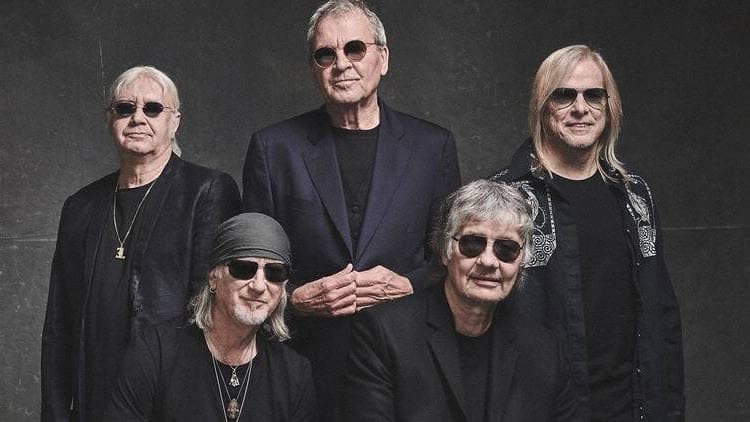
Deep Purple is a name that resonates through the annals of rock history, a band that has left an indelible mark on the hearts of music lovers worldwide. With their electrifying guitar riffs, thunderous drumbeats, and unforgettable vocals, Deep Purple has become one of the defining forces of hard rock and heavy metal. From their formation in 1968 to their enduring influence today, this legendary British band has delivered a treasure trove of timeless classics that continue to ignite passion and energy in fans across generations.
In this article, we delve into the top 10 most popular Deep Purple songs of all time—a celebration of the tracks that have defined their career and shaped the rock music landscape. Whether you’re a die-hard fan or a newcomer eager to explore their legacy, this list will take you on a journey through soaring anthems, blistering solos, and the raw power that defines Deep Purple’s sound. From the iconic “Smoke on the Water” to lesser-known gems that deserve their place in the spotlight, these songs showcase the band’s unparalleled creativity and musical genius. So, turn up the volume, and let’s dive into the unforgettable world of Deep Purple’s greatest hits!
1. Smoke on the Water (1972)
Few rock songs are as instantly recognizable as Smoke on the Water, Deep Purple’s 1972 classic from their Machine Head album. With its legendary opening riff, played by Ritchie Blackmore, the song has become a rite of passage for aspiring guitarists worldwide. But beyond its musical brilliance, Smoke on the Water tells a real-life story—one that adds to its mythic status.
The lyrics recount the infamous fire that broke out at a Frank Zappa concert in Montreux, Switzerland, where Deep Purple had planned to record. A fan fired a flare gun into the casino ceiling, igniting a blaze that burned the venue to the ground. The band watched from their hotel across Lake Geneva, witnessing the thick smoke rising over the water—hence the song’s title.
Ian Gillan’s vivid storytelling and the tight, bluesy rhythm section of Roger Glover and Ian Paice bring the narrative to life, while Jon Lord’s organ work adds an extra layer of intensity. Despite its straightforward structure, Smoke on the Water is a masterclass in rock songwriting, combining real-life drama with an unforgettable musical hook. Even decades after its release, it remains a staple of rock radio, a must-know guitar riff, and one of the greatest rock anthems of all time.
2. Highway Star (1972)
If there was ever a song that perfectly captured the feeling of high-speed adrenaline, it’s Highway Star. Released in 1972 on Machine Head, this track is a high-energy explosion of power, speed, and technical prowess. Considered one of the earliest examples of heavy metal, the song is a tour de force of musicianship.
From the moment Ritchie Blackmore’s rapid-fire guitar riff kicks in, Highway Star never lets up. Ian Gillan’s vocals soar over the aggressive instrumentation, belting out lyrics about a fast car and an untouchable sense of freedom. The song’s intensity is elevated by Jon Lord’s classically influenced keyboard solo, which blends baroque-style flourishes with pure rock fury. Blackmore’s guitar solo, full of blistering arpeggios and lightning-fast runs, further cements the track as one of Deep Purple’s most technically impressive performances.
The song became a staple of the band’s live shows, often serving as an electrifying set opener. Its influence can be heard in countless metal and hard rock songs that followed. Whether you’re on the open road or just craving an injection of pure rock energy, Highway Star delivers an unforgettable rush.
3. Child in Time (1970)
Child in Time is one of Deep Purple’s most haunting and powerful compositions, an epic piece that blends raw emotion with incredible musicianship. Released in 1970 on Deep Purple in Rock, this ten-minute masterpiece builds from a slow, melancholic beginning into a dramatic crescendo, taking listeners on an intense musical journey.
The song carries a strong anti-war message, with Ian Gillan’s lyrics and vocal delivery expressing deep sorrow and anguish. His voice starts off soft and plaintive before erupting into a series of banshee-like wails, demonstrating his incredible vocal range. Jon Lord’s eerie, sustained organ chords add to the song’s tension, setting the stage for Ritchie Blackmore’s explosive guitar solo—one of the most impassioned of his career.
The song’s structure mirrors the turmoil it conveys, moving from delicate introspection to full-throttle intensity. The dynamic contrast between the quiet verses and the song’s climactic explosions makes Child in Time one of Deep Purple’s most dramatic and emotionally charged tracks. Though it has not been regularly performed since the ’90s due to Gillan’s vocal strain, its legacy remains untouchable, solidifying its status as one of the greatest progressive rock ballads ever written.
4. Hush (1968)
Originally written by Joe South and recorded by Billy Joe Royal, Hush found new life when Deep Purple covered it in 1968, transforming it into an electrifying rock hit. Featured on their debut album, Shades of Deep Purple, this track helped launch the band’s career, giving them their first major chart success.
Unlike the heavy, hard rock sound that Deep Purple would later become known for, Hush is a groovy, organ-driven track with a hypnotic rhythm that instantly grabs the listener. Jon Lord’s swirling Hammond organ riff takes center stage, setting a pulsating foundation that makes the song both danceable and compelling. Rod Evans, the band’s original vocalist, delivers a charismatic and smooth performance, giving the song a playful yet soulful edge.
The track’s call-and-response chorus is irresistibly catchy, making it a favorite among fans and a staple of classic rock radio. While Deep Purple later moved toward a heavier, more guitar-driven sound, Hush remains a testament to their early ability to blend blues, psychedelia, and rock in a way that was both fresh and exciting. Even after more than five decades, the song’s infectious groove continues to captivate listeners, proving that Deep Purple’s early work still has lasting appeal.
5. Lazy (1972)
Deep Purple’s Lazy is anything but what its name suggests. This seven-minute blues-rock jam, featured on Machine Head, is a showcase of the band’s technical prowess and improvisational energy. Blending elements of blues, jazz, and hard rock, Lazy stands as one of the most instrumentally rich tracks in the band’s catalog.
The song opens with an extended, atmospheric organ solo from Jon Lord, setting a smoky, late-night club vibe before Ritchie Blackmore’s guitar joins in with bluesy licks. The band takes their time building momentum, creating an irresistible groove before Ian Gillan’s vocals finally enter nearly four minutes in. His delivery is playful and full of attitude, reinforcing the song’s carefree spirit.
One of the highlights of Lazy is the interplay between Blackmore’s guitar and Lord’s organ, as they engage in a musical duel of intricate solos and call-and-response moments. Ian Paice’s drumming adds to the song’s dynamic feel, keeping the groove tight yet spontaneous.
A staple of Deep Purple’s live performances, Lazy often served as an extended jam session, allowing each member to show off their virtuosity. Whether you’re a fan of blues-infused rock or just appreciate top-tier musicianship, Lazy remains one of the band’s most enjoyable and enduring tracks.
6. Burn (1974)
With the release of Burn in 1974, Deep Purple entered a new era. This song, the title track from the album, marked the arrival of vocalist David Coverdale and bassist/vocalist Glenn Hughes, ushering in the band’s Mark III lineup. The result? A fiery, fast-paced rocker that stands as one of the band’s most exhilarating tracks.
From the very first note, Burn commands attention with Ritchie Blackmore’s aggressive, galloping riff. The song’s sheer speed and intensity made it a departure from Deep Purple’s previous material, leaning more into heavy metal territory. Coverdale and Hughes trade off vocals, bringing a fresh dynamic to the band’s sound. Coverdale’s bluesy, deep register contrasts beautifully with Hughes’ soaring harmonies, adding an extra layer of energy to the track.
Jon Lord’s keyboard work is as explosive as ever, with a solo that blends classical influences with pure rock fury. Ian Paice’s drumming is equally relentless, driving the song forward with machine-gun precision. Burn quickly became a favorite among fans and remains a staple of hard rock and metal playlists. Even though Deep Purple’s lineup continued to change over the years, this track remains a defining moment in their evolution—one that proves they could still deliver high-octane rock at its finest.
7. Black Night (1970)
Deep Purple’s Black Night is a perfect example of how a simple yet powerful riff can create a rock classic. Released in 1970 as a standalone single, this song became one of the band’s biggest hits, reaching the top of the UK charts and solidifying their place in the rock world. Though it wasn’t initially included on an album, Black Night has since become one of Deep Purple’s most celebrated tracks.
The song’s main riff, inspired by Ricky Nelson’s Summertime, is immediately infectious. Ritchie Blackmore’s guitar work is straightforward yet undeniably effective, laying down a groove that’s impossible to ignore. Ian Gillan’s vocal performance is equally commanding, filled with swagger and raw energy that perfectly complements the song’s driving rhythm.
One of the standout elements of Black Night is its call-and-response structure, where the instrumental breaks leave just enough space for Gillan’s vocals to shine. Jon Lord’s organ playing adds depth to the track, reinforcing its blues-rock foundation. Meanwhile, Roger Glover’s steady bassline and Ian Paice’s crisp drumming keep the song locked in an irresistible groove.
Despite its relatively simple structure compared to some of Deep Purple’s more complex compositions, Black Night remains a fan favorite. Its combination of bluesy riffs, tight musicianship, and anthemic quality ensures its place as one of the band’s most enduring songs. Even decades after its release, Black Night still ignites energy whenever it’s played live, proving that sometimes, less is more when it comes to rock and roll.
8. Space Truckin’ (1972)
Deep Purple’s Space Truckin’ is a high-energy, sci-fi-infused rock anthem that showcases the band’s playful side while maintaining their signature hard rock intensity. Released in 1972 as part of the Machine Head album, this track quickly became a staple of their live performances, often stretched into extended jams lasting well over 20 minutes.
The song bursts open with a pounding drum beat from Ian Paice, immediately setting the stage for a wild, interstellar ride. Ritchie Blackmore’s aggressive, chugging guitar riff gives Space Truckin’ a powerful momentum, while Jon Lord’s organ flourishes add a spacey, futuristic feel to the track. Ian Gillan delivers one of his most energetic vocal performances, singing about intergalactic travel with a sense of excitement and urgency. His signature wails, particularly in live renditions, make this song even more electrifying.
Lyrically, Space Truckin’ is one of Deep Purple’s most unique songs. It takes the concept of classic rock and roll touring and transports it into outer space, adding a fun, almost comic-book-like storytelling aspect to the track. Lines like “We had a lot of luck on Venus, we always had a ball on Mars” add to the song’s charm, making it a standout in the band’s catalog.
Live performances of Space Truckin’ became legendary, with the band turning the song into a long, improvisational jam filled with explosive solos and extended instrumental sections. Whether in its original studio form or as a stretched-out live spectacle, Space Truckin’ remains one of Deep Purple’s most exciting and dynamic songs.
9. Perfect Strangers (1984)
After nearly a decade apart, Deep Purple’s Mark II lineup reunited in 1984 and released Perfect Strangers, a song that proved they hadn’t lost their magic. Serving as the title track of their comeback album, Perfect Strangers is a haunting and powerful song that stands among the band’s best.
From the opening notes, Perfect Strangers has an almost mystical quality, with Jon Lord’s atmospheric keyboard melody setting the tone. Unlike some of Deep Purple’s faster-paced classics, this song builds slowly, creating an epic, cinematic feel. Ritchie Blackmore’s guitar work is more restrained but no less impactful, with a commanding riff that gives the track a dark, brooding energy.
Ian Gillan’s vocal performance is particularly striking in this song. His lyrics are cryptic and poetic, speaking of destiny, longing, and reunion—perhaps a reflection of the band’s own return. The chorus, with its dramatic intensity, feels like a declaration of purpose, making it one of Deep Purple’s most emotionally charged songs.
The production on Perfect Strangers is more polished compared to the band’s earlier work, but it retains the essence of what made Deep Purple great. The balance between power and subtlety, between rock and melody, makes this song a standout moment in their discography. As a comeback track, Perfect Strangers not only proved that Deep Purple was back, but that they were still capable of crafting songs that resonated deeply with their fans.
10. Woman from Tokyo (1973)
Deep Purple’s Woman from Tokyo, released in 1973 on Who Do We Think We Are, is a vibrant and dynamic track that showcases the band’s ability to blend hard rock with melodic elements. Inspired by the band’s first trip to Japan, the song captures the excitement and mystique of traveling to a distant land.
Opening with one of Ritchie Blackmore’s most recognizable riffs, Woman from Tokyo immediately sets a groove that is both powerful and catchy. The rhythm section, driven by Roger Glover’s bass and Ian Paice’s drumming, provides a rock-solid foundation for the song’s infectious energy. Jon Lord’s keyboard work adds depth, giving the track a sense of grandeur.
Ian Gillan’s vocal delivery is full of enthusiasm and admiration, as he sings about an alluring woman from Tokyo with a sense of fascination. The chorus is particularly memorable, soaring with melodic richness that makes the song instantly singable. Deep Purple also incorporates an unexpected breakdown in the middle of the song, shifting to a dreamy, atmospheric interlude before launching back into the main riff, showcasing their knack for dynamic songwriting.
Although Woman from Tokyo wasn’t initially a major hit upon release, it has since become one of Deep Purple’s most beloved tracks. Its catchy melody, engaging lyrics, and high-energy performance make it a standout in the band’s catalog. Whether played on the radio or performed live, Woman from Tokyo continues to capture the imagination of listeners worldwide.

Edward Tomlin is a frequent contributor to Singers Room. Since 2005, Singersroom has been the voice of R&B around the world. Connect with us via social media below.