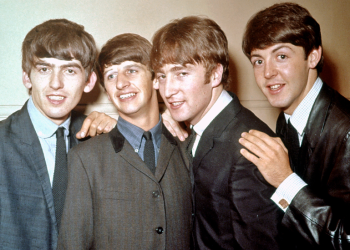
John Lennon, a name synonymous with musical genius and cultural revolution, continues to inspire millions around the globe decades after his untimely passing. As a founding member of The Beatles and a trailblazing solo artist, Lennon’s music transcends generations, blending poetic brilliance, raw emotion, and profound social commentary. Whether he was crafting melodies that defined the 1960s or penning heartfelt anthems for peace and love, Lennon’s artistry remains unparalleled.
But what are the songs that have cemented John Lennon’s status as one of the greatest icons in music history? From his early days with The Beatles to his groundbreaking solo career, Lennon’s catalog is a treasure trove of unforgettable hits. In this article, we’ll take you on a journey through the top 10 most popular John Lennon songs of all time—a collection of tracks that showcase his unmatched ability to connect with the human spirit.
Prepare to relive the magic of classics that have stood the test of time. From soul-stirring ballads to revolutionary anthems, these songs capture the essence of Lennon’s genius and his enduring impact on music and culture. Let’s dive into the music that continues to echo through history.
1. Imagine (1971)
“Imagine” is not just John Lennon’s most iconic song—it’s a universal anthem that has transcended generations. Released in 1971 as the title track of his second solo album, the song delivers a simple yet profound vision of a world without borders, materialism, or conflict. With its gentle piano melody and soothing arrangement, “Imagine” carries a sense of calm and hope, making its message even more powerful. Lennon’s lyrics encourage listeners to envision a world of unity, where humanity is not divided by religion, nationality, or possessions. This utopian dream resonates deeply, making the song a rallying cry for peace movements across the decades.
The song’s enduring appeal lies in its sincerity. Lennon’s voice, full of conviction yet remarkably soft, draws listeners in, making them feel as though they are part of his dream. The track’s minimalist production ensures that the message remains at the forefront, unclouded by excess instrumentation. Over the years, “Imagine” has been covered by countless artists, performed at global events, and referenced in moments of both hope and tragedy. Whether it’s played at peace rallies, memorial services, or cultural celebrations, the song continues to be a symbol of optimism.
Beyond its beauty, “Imagine” also invites reflection. While some critics have pointed out its idealism, that very quality is what makes it so powerful. It’s not just a song—it’s an invitation to think differently, to strive for a better world, and to believe that change is possible. More than fifty years after its release, “Imagine” remains as relevant as ever, proving that music has the power to inspire and unite people across all walks of life.
2. Instant Karma! (We All Shine On) (1970)
“Instant Karma!” is one of the fastest-recorded and released songs in history, embodying the raw energy and urgency of John Lennon’s artistic vision. Written and recorded in a single day in 1970, the track showcases Lennon’s ability to capture a moment of inspiration and turn it into something unforgettable. From its pounding piano chords to its anthemic chorus, the song bursts with an intensity that grabs hold of the listener immediately.
At its core, “Instant Karma!” is about the idea of immediate consequences—what you put into the world comes back to you. This spiritual philosophy is reflected in the lyrics, urging people to take responsibility for their actions and embrace positivity. Lines like “Why in the world are we here? Surely not to live in pain and fear” highlight Lennon’s call for a more conscious and compassionate way of living. The chorus, with its repeated mantra of “We all shine on,” serves as both reassurance and a wake-up call.
Musically, the song is a powerhouse. The pounding piano, driving drumbeat, and Phil Spector’s signature “Wall of Sound” production create an urgent, almost hypnotic rhythm. The backing vocals, featuring Yoko Ono and other musicians, add a sense of communal energy, reinforcing the song’s message of unity and shared destiny.
“Instant Karma!” became an instant hit, reaching the Top 10 on both the U.S. and U.K. charts. More than just a great rock song, it remains a powerful declaration of personal responsibility and the idea that we all have the ability to create change. Its message still resonates today, reminding us that what we do in the present moment can shape our future.
3. Jealous Guy (1971)
“Jealous Guy” is one of John Lennon’s most emotionally raw and introspective songs, revealing a side of him that few had seen before. Originally written during The Beatles’ White Album sessions under the working title “Child of Nature,” the song eventually took a new form and was released on Lennon’s 1971 Imagine album.
Unlike some of Lennon’s more outwardly political or philosophical songs, “Jealous Guy” is deeply personal. The lyrics are an open confession of insecurity, possessiveness, and regret—feelings that Lennon admits to struggling with in his own relationships. The song’s haunting melody, carried by a tender piano arrangement, adds to its melancholic beauty. Lines like “I didn’t mean to hurt you, I’m sorry that I made you cry” expose a vulnerable side of Lennon, making the song feel more like a heartfelt apology than a traditional love song.
The sincerity in Lennon’s voice makes “Jealous Guy” especially moving. There’s an aching sadness in his delivery, as if he’s reliving the emotions as he sings them. The subtle orchestral arrangement that builds throughout the song enhances its emotional weight without overshadowing its simplicity.
Over the years, “Jealous Guy” has been covered by many artists, most notably Roxy Music, whose version became a hit after Lennon’s passing in 1980. The song remains one of his most beloved works, not because of grand statements or social messages, but because of its honesty. It’s a reminder that even those who seem larger than life struggle with personal demons, and that sometimes, admitting our flaws is the first step toward healing.
4. Working Class Hero (1970)
“Working Class Hero” is one of John Lennon’s most cutting and unfiltered songs, a stark commentary on societal oppression and the struggles of the working class. Released in 1970 on his debut solo album, John Lennon/Plastic Ono Band, the song strips away all musical embellishments, leaving behind nothing but Lennon’s voice and a simple acoustic guitar. This raw approach amplifies the song’s impact, making it feel more like a confessional than a traditional folk song.
Lennon’s lyrics are biting and cynical, painting a picture of a system designed to keep people complacent and obedient. He describes a world where individuals are molded from childhood into workers who conform, only to realize too late that the promise of success and happiness was a lie. “Keep you doped with religion and sex and TV,” he sings, highlighting the distractions used to pacify people while they are quietly exploited. The song’s refrain, “A working-class hero is something to be,” is both a statement of defiance and a grim irony—there’s no real reward for the struggle, just the illusion of achievement.
At the time of its release, “Working Class Hero” was controversial, partly due to its use of explicit language, but also because of its brutally honest depiction of social inequality. Some critics accused Lennon, a wealthy rock star, of being hypocritical for writing a song about the working class. However, Lennon wasn’t claiming to be one—he was shedding light on a system he saw as deeply flawed.
Decades later, “Working Class Hero” remains a powerful protest song, embraced by those who feel disillusioned with society. It stands as a testament to Lennon’s willingness to challenge authority and speak uncomfortable truths, even when they weren’t easy to hear.
5. (Just Like) Starting Over (1980)
“(Just Like) Starting Over” is a song filled with hope, nostalgia, and bittersweet significance. Released in 1980 as the lead single from Double Fantasy, it marked John Lennon’s return to music after a five-year hiatus. Sadly, the song gained an even deeper meaning after Lennon’s tragic death, becoming a posthumous farewell from an artist who was just beginning a new chapter in his life.
Musically, “(Just Like) Starting Over” is a loving tribute to the rock ‘n’ roll of the 1950s, with influences from Elvis Presley and Roy Orbison shining through. The track opens with a dreamy, almost cinematic intro before launching into a bouncy, doo-wop-inspired melody. Lennon’s vocals are warm and playful, reflecting the song’s theme of rekindling love and embracing second chances. The lyrics speak directly to Yoko Ono, expressing his desire to leave the past behind and move forward together: “It’s time to spread our wings and fly / Don’t let another day go by.”
The song’s uplifting energy made it an instant hit, reaching No. 1 on the Billboard charts shortly after Lennon’s passing. What was originally intended as a celebration of renewal took on a haunting quality, as fans mourned the loss of one of music’s greatest voices.
Despite its tragic context, “(Just Like) Starting Over” remains a joyful song at its core. It captures Lennon’s happiness and optimism in his final years, showing a man who had found peace in his personal life. Today, it stands as both a nostalgic throwback and a poignant reminder of the creative spirit that Lennon carried with him until the very end.
6. Give Peace a Chance (1969)
“Give Peace a Chance” isn’t just a song—it’s an anthem for activism. Released in 1969, this simple yet powerful protest song was recorded during John Lennon and Yoko Ono’s famous “Bed-In for Peace” in Montreal. With little more than an acoustic guitar and a room full of people chanting the chorus, the song became an instant rallying cry for the anti-war movement.
Lennon’s lyrics are spontaneous and conversational, capturing the free-spirited energy of the era. The verses, which list various social and political issues of the time, feel almost improvised, while the repetitive chorus—“All we are saying is give peace a chance”—delivers a clear and unforgettable message. The beauty of the song lies in its simplicity; it doesn’t try to be poetic or complex, but rather invites people to join in and make their voices heard.
At a time when the Vietnam War was escalating, “Give Peace a Chance” became a symbol of resistance. Protesters around the world adopted the song as their own, chanting it at rallies and demonstrations. The song’s influence extended far beyond the 1960s, continuing to be used in peace movements and humanitarian efforts for decades.
What makes “Give Peace a Chance” so enduring is its universal message. While it was written in response to a specific conflict, its call for peace remains relevant in any era. Lennon’s belief in the power of music to inspire change shines through, making this one of his most impactful contributions to the world. More than 50 years later, its chorus still echoes at protests, reminding us that peace is always worth fighting for.
7. Mind Games (1973)
“Mind Games,” released in 1973, is one of John Lennon’s most introspective and philosophical tracks, blending themes of love, self-discovery, and spirituality. The song, which serves as the title track for his album Mind Games, delves deep into the complexities of human emotions and relationships, with Lennon exploring the idea of playing with one’s own mind in the pursuit of peace and inner harmony.
Musically, “Mind Games” showcases a lush arrangement filled with dreamy synthesizers, hypnotic percussion, and soaring strings, all combining to create a sense of spiritual transcendence. Lennon’s voice, though slightly disembodied and otherworldly at times, remains at the core of the song’s emotional resonance. His vocal delivery is soothing yet slightly detached, perfectly reflecting the idea of distancing oneself from the chaos of the world to achieve inner clarity.
Lyrically, “Mind Games” presents a call for spiritual awakening. Lennon famously sings, “We’re playing those mind games together, pushing the barriers, planting seeds,” inviting the listener to question the limitations imposed by society and by our own minds. The song advocates for the breaking of mental boundaries in order to embrace a more peaceful and enlightened existence. Lennon’s “mind guerrillas” are portrayed as people who rebel against negative thoughts, choosing to spread positivity and peace instead.
While the song’s gentle instrumentation and uplifting message give it a serene quality, there is an underlying tension in its lyrics—a subtle acknowledgment of the struggle that comes with achieving mental and emotional clarity. This duality gives “Mind Games” a depth that invites listeners to return to it repeatedly, uncovering new meanings with each listen. It stands as one of Lennon’s most thought-provoking works, demonstrating his deepening interest in the spiritual and philosophical dimensions of life.
8. Watching the Wheels (1980)
“Watching the Wheels” is one of John Lennon’s most reflective and peaceful songs, released in 1980 on his album Double Fantasy. In this track, Lennon addresses his decision to step away from the public eye and focus on his family life, after years of intense fame and the chaos that came with it. The song’s soft, melodic piano riff and soothing rhythm create a relaxed atmosphere that reflects the calmness Lennon felt during his hiatus from the music scene.
The lyrics of “Watching the Wheels” are simple yet profound. Lennon explains how he has spent the past few years “watching the wheels go round and round,” implying that he’s no longer trying to keep up with the expectations placed on him. He acknowledges the pressures of fame, but he’s come to a place of acceptance, choosing to live in the moment and appreciate his life outside of the spotlight. The song offers a sense of tranquility, as Lennon sings, “I just had to let it go.”
“Watching the Wheels” is often considered one of Lennon’s most personal songs, as it reveals his feelings of contentment with the choices he made. The song captures the essence of a man who has found peace after years of tumultuous experiences, both professionally and personally.
Tragically, the song also holds a bittersweet significance as one of Lennon’s last recordings before his untimely death in December 1980. With its serene tone and reflective message, “Watching the Wheels” serves as a farewell from a man who had finally found a sense of balance and peace in his life. For many fans, the song’s peaceful resignation and thoughtful lyrics make it a poignant and fitting tribute to Lennon’s legacy.
9. Woman (1980)
“Woman,” released in 1980 on Double Fantasy, is a tender, romantic song that stands as one of John Lennon’s most heartfelt tributes to his wife, Yoko Ono. The song’s soft, melodic flow, accompanied by lush instrumentation, creates an intimate atmosphere that complements the song’s deeply personal lyrics. “Woman” is a reflection of Lennon’s deep appreciation for Yoko and his feelings of love, respect, and devotion.
The lyrics of “Woman” are straightforward yet deeply emotional, with Lennon expressing admiration for the woman who has stood by him through all the ups and downs of his life. He sings, “Woman, I can hardly express / My mixed emotions at my thoughtlessness,” acknowledging both his love for Yoko and the ways he may have taken her for granted in the past. The song’s vulnerability adds to its power, as Lennon opens up about the complexities of his relationship and the lessons he has learned about love and commitment.
“Woman” is often interpreted as a celebration of the tenderness and strength that comes with a deep emotional connection. The song’s gentle, lush production mirrors the feelings of affection and warmth that Lennon felt toward Yoko, and it stands as a testament to the profound impact she had on his life and music. With its beautiful melody and poignant lyrics, “Woman” became one of Lennon’s most enduring songs, continuing to resonate with fans for its timeless portrayal of love and devotion.
Sadly, “Woman” also takes on a deeper significance in light of Lennon’s tragic death shortly after its release. The song serves as both a tribute to his wife and a poignant farewell from the artist, marking the final chapter in his remarkable journey as a musician and as a person.
10. Happy Xmas (War Is Over) (1971)
“Happy Xmas (War Is Over)” is one of John Lennon’s most iconic songs, combining the festive spirit of Christmas with a powerful anti-war message. Released in 1971, the song features a children’s choir and a lush arrangement that creates a sense of warmth and holiday cheer, while its message remains deeply political and socially conscious. The song was written by Lennon and Yoko Ono as part of their ongoing campaign for peace, following the couple’s famous “Bed-In for Peace” protests earlier that year.
The lyrics are simple yet effective, calling for an end to war and violence, while wishing for peace and unity. “War is over if you want it,” Lennon sings, directly addressing the listener, inviting them to join in the call for change. The repetition of the chorus, “Happy Christmas, war is over,” creates a sense of collective unity, reminding people that peace is not just an abstract ideal, but something that can be achieved through collective action and a change of heart.
Despite being a Christmas song, “Happy Xmas (War Is Over)” is not just about holiday cheer—it’s a statement about the state of the world and a call for social change. The song’s powerful combination of optimism, activism, and holiday spirit makes it a timeless classic, played every year during the Christmas season and serving as a reminder of Lennon’s unwavering commitment to peace and justice. It remains a song that transcends generations, continuing to inspire those who believe in the possibility of a better world.

Edward Tomlin is a frequent contributor to Singers Room. Since 2005, Singersroom has been the voice of R&B around the world. Connect with us via social media below.