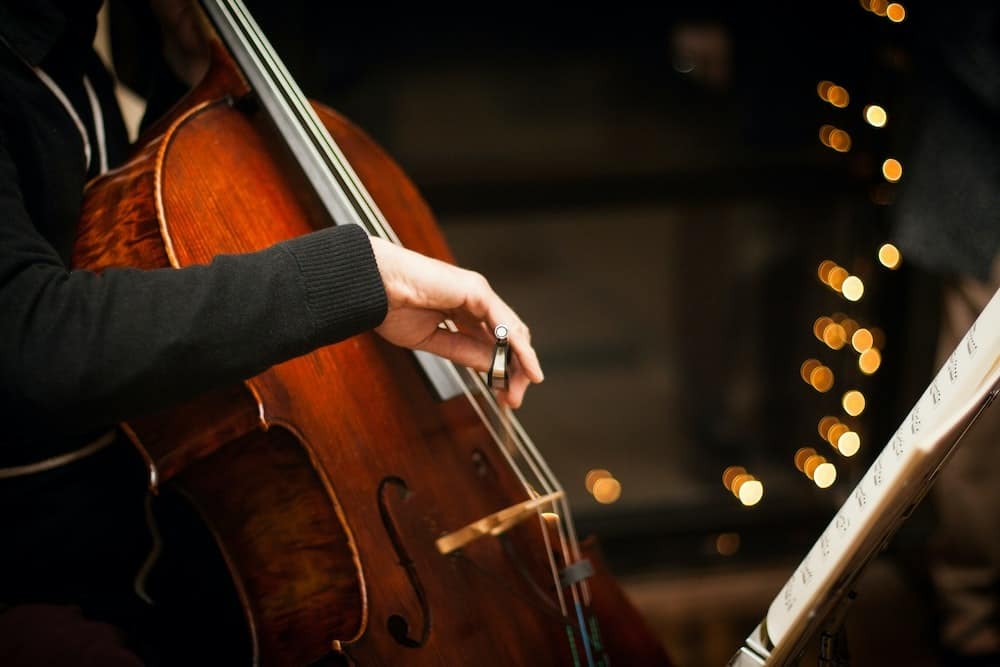
Cellists, the maestros of the deep, resonate tones that echo with soulful richness, embark on a musical journey that embraces both power and grace. With the cello nestled between their knees, cellists draw forth a warm, enveloping sound that can evoke the entire spectrum of human emotions.
These skilled musicians wield the bow with precision, coaxing melodies that soar and lament, their fingers dancing across the strings to craft harmonies that resonate with profound depth. From the grandeur of a concerto to the intimacy of chamber music, cellists are the custodians of an instrument that bridges the gap between the orchestral and the intimately personal.
Cellists are not mere players; they are storytellers, weaving narratives with each nuanced stroke. Their instruments, like extensions of their beings, sing with a warmth that embraces the listener. The cello’s timbre, melancholic yet uplifting, is a testament to the versatility and expressiveness that cellists command.
From the iconic compositions of Bach and the emotive works of Dvořák to contemporary explorations, cellists embrace a vast repertoire. Their commitment to musical excellence and their ability to communicate profound emotions make them indispensable in symphony orchestras, chamber ensembles, and as soloists, bringing forth the soul-stirring resonance that only a cello can offer. In the hands of a cellist, the cello becomes a conduit for the human spirit, a vessel for stories told through strings and bows.
1. Anner Bylsma
Anner Bylsma (1934–2019) was a highly respected Dutch cellist and one of the pioneering figures in the world of historically informed performance practice. Born on February 17, 1934, in The Hague, Netherlands, Bylsma played a significant role in revitalizing the approach to playing the cello in the context of Baroque and Classical music.
Bylsma’s interest in historical performance practices led him to study original manuscripts, historical treatises, and playing techniques from the Baroque and Classical eras. He was a proponent of using gut strings, period bows, and adopting historically accurate playing styles in order to recreate the sound and expression intended by composers of the past.
Throughout his career, Anner Bylsma collaborated with prominent musicians and conductors, and he was a sought-after soloist and chamber musician. He made numerous recordings, including acclaimed interpretations of the Bach Cello Suites, which highlighted his commitment to historical accuracy and expressive playing.
In addition to his performance career, Bylsma was an influential teacher, sharing his knowledge and insights with students. He held teaching positions at institutions such as the Royal Conservatory in The Hague and the Conservatorium van Amsterdam.
Anner Bylsma’s contributions to the world of classical music and his advocacy for historically informed performance practices have left a lasting impact. He passed away on July 25, 2019, leaving behind a legacy of scholarly and artistic achievements that continue to inspire cellists and musicians interested in historically informed performance.
2. Alban Gerhardt
Alban Gerhardt is a German cellist celebrated for his artistry, technical prowess, and passionate performances. Born on May 3, 1969, in Berlin, Germany, Gerhardt has established himself as one of the leading cellists of his generation.
Known for his dynamic interpretations and engaging stage presence, Alban Gerhardt has collaborated with major orchestras worldwide and worked with esteemed conductors. His repertoire spans a wide range, from the classical masterpieces to contemporary compositions. Gerhardt is particularly acclaimed for his interpretations of the Romantic cello repertoire, including works by composers such as Dvořák, Tchaikovsky, and Schumann.
Alban Gerhardt’s discography is extensive, featuring recordings that showcase his versatility and dedication to both well-known and lesser-known works. His interpretations often bring out the emotional depth and subtleties of the music he performs.
In addition to his solo career, Gerhardt is an avid chamber musician and has collaborated with other renowned artists in various chamber music settings. His commitment to musical education is reflected in his masterclasses and workshops, where he shares his insights and experiences with aspiring musicians.
3. Sol Gabetta
Sol Gabetta is an Argentine-Swiss cellist who has gained international acclaim for her exceptional musical talent and profound interpretations. Born on April 18, 1981, in Villa Maria, Argentina, Gabetta began playing the cello at a young age, and her prodigious abilities quickly garnered attention.
Sol Gabetta’s performances are characterized by her expressive playing, technical precision, and a deep connection to the emotional content of the music. She has collaborated with major orchestras and renowned conductors, showcasing her versatility across a diverse repertoire that spans from the classical to contemporary works.
Gabetta has received numerous awards for her contributions to classical music, and her recordings have earned critical acclaim. Her interpretations of well-known cello concertos and chamber music pieces have captivated audiences worldwide. Notable recordings include works by composers like Tchaikovsky, Shostakovich, Elgar, and more.
Beyond her solo career, Sol Gabetta is recognized for her collaborative efforts with other musicians and ensembles. Her chamber music collaborations and partnerships with orchestras have solidified her standing as a prominent figure in the classical music world.
As a testament to her international recognition, Sol Gabetta has performed at prestigious venues and festivals globally, leaving an indelible mark on the classical music scene. Her contributions to the cello repertoire and her commitment to musical excellence continue to inspire both audiences and aspiring musicians.
4. Paul Tortelier
Paul Tortelier (1914–1990) was a French cellist of great distinction, renowned for his passionate and expressive playing. Born on March 21, 1914, in Paris, Tortelier began his musical education at the Paris Conservatoire at the age of seven. His early studies were in composition, but he eventually turned his focus to the cello.
Tortelier’s career took off after winning several major competitions, and he quickly gained international recognition as a soloist. His performances were characterized by a combination of technical brilliance and emotional depth, making him one of the leading cellists of his time.
Paul Tortelier had a rich and varied repertoire, encompassing works from the Baroque era to contemporary compositions. He was particularly known for his interpretations of French composers, such as Saint-Saëns and Debussy, as well as the standard classical repertoire.
In addition to his solo career, Tortelier was an accomplished chamber musician and collaborated with distinguished musicians and conductors. He also composed, and his compositions include cello concertos, chamber music, and works for solo cello.
Tortelier’s legacy extends beyond his performances and compositions. He was an influential teacher, serving on the faculties of several music institutions, including the Folkwang Hochschule in Essen, Germany, and the Royal Academy of Music in London.
Paul Tortelier passed away on December 18, 1990, leaving behind a significant contribution to the world of classical music through his performances, compositions, and teachings.
5. Antonio Meneses
Antonio Meneses is a Brazilian cellist born on August 23, 1957, in Recife, Brazil. He is renowned for his exceptional musicality, technical proficiency, and deep interpretative skills. Meneses has established himself as one of the prominent cellists of his generation.
Meneses began his musical studies at a young age and quickly gained recognition for his talent. He rose to international prominence after winning the Gold Medal in the Tchaikovsky Competition in Moscow in 1982. This victory catapulted him onto the global stage, leading to a successful and illustrious career.
Known for his warm and rich tone, Antonio Meneses has collaborated with leading orchestras and conductors worldwide. He has performed a diverse repertoire, ranging from the classical masterpieces to contemporary works. Meneses is particularly acclaimed for his interpretations of the works of Johann Sebastian Bach, offering insightful and deeply expressive renditions.
As a chamber musician, Meneses has been involved in various collaborations with renowned artists and ensembles. He has contributed to numerous recordings, showcasing his versatility and commitment to both solo and ensemble repertoire.
In addition to his performing career, Antonio Meneses has been involved in teaching, sharing his knowledge and expertise with the next generation of musicians. He has served as a professor at several institutions, passing on his insights into cello playing and interpretation.
Antonio Meneses continues to be an influential figure in the world of classical music, admired for his artistry and significant contributions to the cello repertoire. His performances and recordings reflect a deep understanding of the music he interprets, earning him respect and admiration from audiences and fellow musicians alike.
6. Steven Isserlis
As of my last knowledge update in January 2022, Steven Isserlis is an esteemed British cellist celebrated for his profound musicianship, captivating performances, and contributions to classical music. Born on December 19, 1958, in London, Isserlis hails from a family of musicians and began playing the cello at an early age.
Steven Isserlis has garnered acclaim for his expressive and insightful interpretations of a wide range of musical repertoire. He has collaborated with major orchestras and conductors globally, showcasing his versatility and commitment to both classical and contemporary works. Isserlis is particularly noted for his advocacy of lesser-known and neglected compositions, shedding light on hidden gems in the cello repertoire.
In addition to his career as a soloist, Isserlis is an avid chamber musician, frequently collaborating with distinguished artists and ensembles. His chamber music performances, marked by sensitivity and collaborative spirit, have contributed to the genre’s vitality.
Isserlis is also an author, and his writings often explore the world of classical music, providing insights into the life of a musician and the art of interpretation. His books include “Why Beethoven Threw the Stew” and “Robert Schumann’s Advice to Young Musicians.”
Apart from his musical pursuits, Steven Isserlis has been involved in educational activities, emphasizing the importance of music education and nurturing the talents of young musicians.
As with any artist, developments in Steven Isserlis’s career may have occurred since my last update. He remains a respected and influential figure in the classical music world, appreciated for his artistry, advocacy, and contributions to the broader cultural understanding of classical music.
7. Pablo Casals
Pablo Casals (1876–1973) was a legendary Catalan cellist and conductor, widely regarded as one of the greatest cellists of all time. He was born on December 29, 1876, in El Vendrell, Catalonia, Spain.
Casals began studying music at an early age with his father, and by his teens, he had already established himself as a talented cellist. In 1896, he premiered a composition by Isaac Albéniz and gained recognition for his virtuosity and expressiveness.
Known for his profound interpretations and technical mastery, Casals played a crucial role in popularizing the cello as a solo instrument. He was particularly noted for his interpretations of the Bach Cello Suites, which he discovered in a second-hand music store in Barcelona. His recordings of the suites are considered seminal interpretations and have influenced countless cellists.
In addition to his contributions as a performer, Pablo Casals was a distinguished conductor and a fervent advocate for peace and human rights. He refused to perform in countries that recognized the Franco regime in Spain and became an exile during the Spanish Civil War.
Casals spent many years in exile, residing in countries such as France and Puerto Rico. He later returned to Spain after the death of Francisco Franco and played a significant role in the cultural renaissance of Catalonia.
Pablo Casals’ impact on the world of classical music extended far beyond his remarkable playing; he was a symbol of artistic integrity and a champion of social and political causes. He passed away on October 22, 1973, in San Juan, Puerto Rico, leaving a lasting legacy as a cellist, conductor, and humanitarian.
8. Yo-Yo Ma
Yo-Yo Ma, born on October 7, 1955, in Paris, France, is a world-renowned cellist and one of the most celebrated and revered musicians of our time. Recognized for his virtuosity, expressive artistry, and versatility, Yo-Yo Ma has left an indelible mark on the world of classical music.
Beginning his musical studies at a young age, Yo-Yo Ma exhibited exceptional talent early on. His family moved to the United States when he was seven, and he later attended The Juilliard School. Ma’s career took off when, at the age of five, he performed for President John F. Kennedy.
Known for his ability to cross musical boundaries, Yo-Yo Ma has collaborated with musicians from various genres, including folk, jazz, and world music. His discography encompasses a broad spectrum of repertoire, from classical masterpieces to innovative cross-genre projects. One of his most iconic recordings is the complete set of Johann Sebastian Bach’s Six Unaccompanied Cello Suites.
Yo-Yo Ma has won numerous awards, including multiple Grammy Awards, and has received the Presidential Medal of Freedom and the National Medal of Arts. He is a frequent soloist with major orchestras and has worked with many renowned conductors.
Apart from his performing career, Yo-Yo Ma is actively involved in educational and cultural initiatives. He founded the Silk Road Ensemble, a collective of musicians from around the world exploring cultural connections, and he is committed to promoting the importance of arts education.
Yo-Yo Ma’s impact extends beyond his musical accomplishments; his dedication to fostering cultural understanding and creating connections through music has made him a beloved figure worldwide. His artistry continues to inspire audiences and fellow musicians alike.
9. Julius Berger
Julius Berger is a German cellist known for his achievements as a performer and teacher. Born on April 3, 1954, in Augsburg, Germany, Berger has made significant contributions to the world of classical music.
Julius Berger has had a distinguished career as a soloist and chamber musician. He has collaborated with various orchestras and performed in concert halls around the world. His interpretations often reflect a deep understanding of the music he plays, and he is recognized for his technical skill and expressive playing.
In addition to his performing career, Julius Berger has been involved in teaching and has served as a professor at several institutions. Sharing his knowledge and experience with aspiring musicians, he has contributed to the education and development of future generations of cellists.
10. Jacqueline du Pre
Jacqueline du Pré (1945–1987) was a British cellist who achieved international acclaim for her exceptional musical talent, passionate performances, and charismatic stage presence. Born on January 26, 1945, in Oxford, England, du Pré displayed prodigious musical abilities from an early age. She began studying the cello with her mother and later became a pupil of renowned cellist William Pleeth.
Jacqueline du Pré rose to prominence in the 1960s, captivating audiences and critics alike with her virtuosic playing and emotionally charged interpretations. She became particularly associated with the Elgar Cello Concerto, a work she recorded with Sir John Barbirolli and the London Symphony Orchestra, a rendition that is widely regarded as one of the definitive interpretations of the piece.
Du Pré’s career was tragically cut short by the onset of multiple sclerosis, a degenerative neurological condition, which forced her to retire from performing in the early 1970s. Despite her relatively brief career, her impact on the world of classical music was profound.
Her recordings, including collaborations with pianist and future husband Daniel Barenboim, remain highly regarded and influential. The intensity and emotional depth of her playing continue to resonate with listeners, making her one of the most beloved cellists in the history of classical music.
Jacqueline du Pré’s life and career were the subject of the biographical film “Hilary and Jackie” (1998), which explored her relationship with her sister, flutist Hilary du Pré, as well as the challenges she faced due to her illness. Despite the difficulties she encountered, Jacqueline du Pré’s legacy endures, and her contributions to the cello repertoire continue to inspire generations of musicians and music lovers.
11. Mstislav Rostropovich
Mstislav Rostropovich (1927–2007) was a Russian cellist, conductor, and composer, widely regarded as one of the greatest cellists of the 20th century. He was born on March 27, 1927, in Baku, Azerbaijan, then part of the Soviet Union.
Rostropovich’s impact on the world of classical music was profound and multifaceted. As a cellist, he was celebrated for his technical brilliance, expressive playing, and a deep emotional connection to the music. He premiered many works, including Dmitri Shostakovich’s two cello concertos, which were dedicated to him.
In addition to his achievements as a performer, Rostropovich was a highly regarded conductor. He served as the conductor of the National Symphony Orchestra in Washington, D.C., from 1977 to 1994. His conducting repertoire encompassed a wide range of orchestral works, and he collaborated with leading orchestras around the world.
Rostropovich was also a prominent composer, producing a significant body of works that includes symphonies, concertos, chamber music, and vocal compositions. His compositions often reflected his deep concern for human rights and his experiences as an artist living under Soviet rule.
Beyond his musical contributions, Mstislav Rostropovich was an outspoken advocate for human rights and democracy. His support for dissident artists and intellectuals in the Soviet Union led to conflicts with the authorities, resulting in his exile in 1974. He returned to Russia in 1990 after the political changes that followed the end of the Soviet Union.
Mstislav Rostropovich passed away on April 27, 2007, in Moscow, leaving behind a legacy as a virtuoso cellist, conductor, composer, and a symbol of artistic and political courage. His influence extended far beyond the stage, making him a revered figure in the realms of music and human rights.
12. Janos Starker
János Starker (1924–2013) was a Hungarian-American cellist widely regarded as one of the 20th century’s greatest virtuosos of the instrument. Born on July 5, 1924, in Budapest, Hungary, Starker’s musical journey began at a young age under the guidance of his father, who was a professional cellist.
Starker’s prodigious talent became evident early on, and he made his solo debut with the Budapest Concert Orchestra at the age of eight. His studies continued at the Franz Liszt Academy of Music in Budapest, where he honed his skills and established himself as a rising star.
In 1948, János Starker left Hungary and eventually settled in the United States. His American debut with the Dallas Symphony Orchestra in 1948 marked the beginning of a remarkable international career. Starker became renowned for his technical precision, impeccable musicianship, and a deeply expressive and intellectual approach to music.
Starker’s repertoire spanned a wide range, from Baroque to contemporary works, and he collaborated with leading orchestras and conductors worldwide. He held principal cellist positions with the Dallas Symphony Orchestra, Metropolitan Opera Orchestra, and Chicago Symphony Orchestra at various points in his career.
In addition to his performing career, János Starker was a dedicated teacher. He held teaching positions at various institutions, including Indiana University’s Jacobs School of Music, where he became one of the most influential cello pedagogues of his time. Many of his students have gone on to successful careers as performers and educators.
Starker’s discography includes numerous recordings that showcase his interpretative depth and technical mastery. His contributions to the world of classical music, both as a performer and an educator, have left an enduring legacy, and he is remembered as one of the most influential cellists of the 20th century.
13. Pierre Fournier
Pierre Fournier (1906–1986) was a distinguished French cellist, renowned for his elegant and expressive playing. Born on June 24, 1906, in Paris, Fournier began his musical studies at a young age and quickly gained recognition for his exceptional talent.
Fournier’s career as a cellist spanned several decades, during which he established himself as one of the leading cellists of the 20th century. Known for his refined and poetic interpretations, he collaborated with many renowned conductors and orchestras, performing a vast repertoire that ranged from Baroque to contemporary compositions.
Pierre Fournier was particularly celebrated for his interpretations of the classical and Romantic cello repertoire. His performances of the cello concertos of Brahms, Dvořák, and Schumann, among others, are highly regarded for their warmth, lyrical phrasing, and technical finesse. His chamber music collaborations, including partnerships with pianist Artur Schnabel and violinist Henryk Szeryng, were also esteemed for their musical synergy.
Fournier’s discography is extensive, featuring recordings that showcase his artistry and sensitivity as a cellist. His interpretations continue to be appreciated by music enthusiasts and aspiring cellists.
Apart from his solo career, Pierre Fournier was known for his dedication to teaching. He held teaching positions at the Paris Conservatoire and the Conservatoire de Musique de Genève, influencing the next generation of cellists.
Pierre Fournier passed away on January 8, 1986, in Geneva, Switzerland, leaving behind a legacy as a masterful cellist whose artistry has left a lasting impact on the world of classical music.
14. Lynn Harrell
Lynn Harrell (1944–2020) was an acclaimed American cellist known for his exceptional talent, technical prowess, and deep musical expressiveness. Born on January 30, 1944, in New York City, Harrell came from a musical family—his father was the baritone Mack Harrell, and his mother, Marjorie Fulton, was a violinist.
Harrell’s musical education began at an early age, and he quickly gained recognition for his outstanding abilities. He studied at the Juilliard School in New York City under the renowned cellist Leonard Rose. Harrell’s breakthrough came in 1961 when he won the prestigious Naumburg International Cello Competition.
Throughout his illustrious career, Lynn Harrell collaborated with major orchestras and esteemed conductors worldwide. His performances were characterized by a rich, warm tone, technical brilliance, and a profound musicality that resonated with audiences and fellow musicians.
Harrell’s repertoire encompassed a broad range of musical styles, from classical to contemporary works. He premiered numerous compositions, further contributing to the cello repertoire. Notable among his recordings is the complete set of Beethoven’s cello sonatas with pianist Vladimir Ashkenazy.
In addition to his accomplishments as a soloist, Lynn Harrell was a dedicated chamber musician. He performed with renowned ensembles and musicians, contributing to memorable collaborations.
Harrell’s legacy extends beyond his performing career. He served as a teacher and mentor, sharing his knowledge and passion for music with younger generations of musicians. Lynn Harrell passed away on April 27, 2020, leaving behind a significant impact on the world of classical music and a legacy that continues to inspire cellists and music lovers around the globe.
15. Mischa Maisky
Mischa Maisky is a Latvian-born Israeli cellist renowned for his expressive playing, technical virtuosity, and extensive repertoire. He was born on January 10, 1948, in Riga, Latvia, which was then part of the Soviet Union. Maisky began studying the cello at a young age, and his talent quickly became evident.
Maisky has collaborated with some of the world’s leading orchestras and conductors, establishing himself as one of the preeminent cellists of his generation. His performances are known for their emotional depth, rich tone, and impeccable technique. Maisky’s repertoire spans a wide range of styles, from the Baroque to contemporary works, and he has premiered compositions by notable contemporary composers.
In addition to his solo career, Mischa Maisky is an accomplished chamber musician and has collaborated with distinguished artists in various ensemble settings. His collaborations include performances with pianist Martha Argerich, violinist Gidon Kremer, and other renowned musicians.
Maisky has an extensive discography, with recordings featuring a diverse selection of works for the cello. His interpretations of the standard cello repertoire, including the Bach Cello Suites and major concertos, have received critical acclaim.
Mischa Maisky’s musical activities are not confined to classical repertoire; he has explored cross-genre collaborations and has expressed an interest in jazz and other musical styles. His versatility and passion for music have contributed to his widespread popularity among audiences worldwide.

Edward Tomlin is a frequent contributor to Singers Room. Since 2005, Singersroom has been the voice of R&B around the world. Connect with us via social media below.