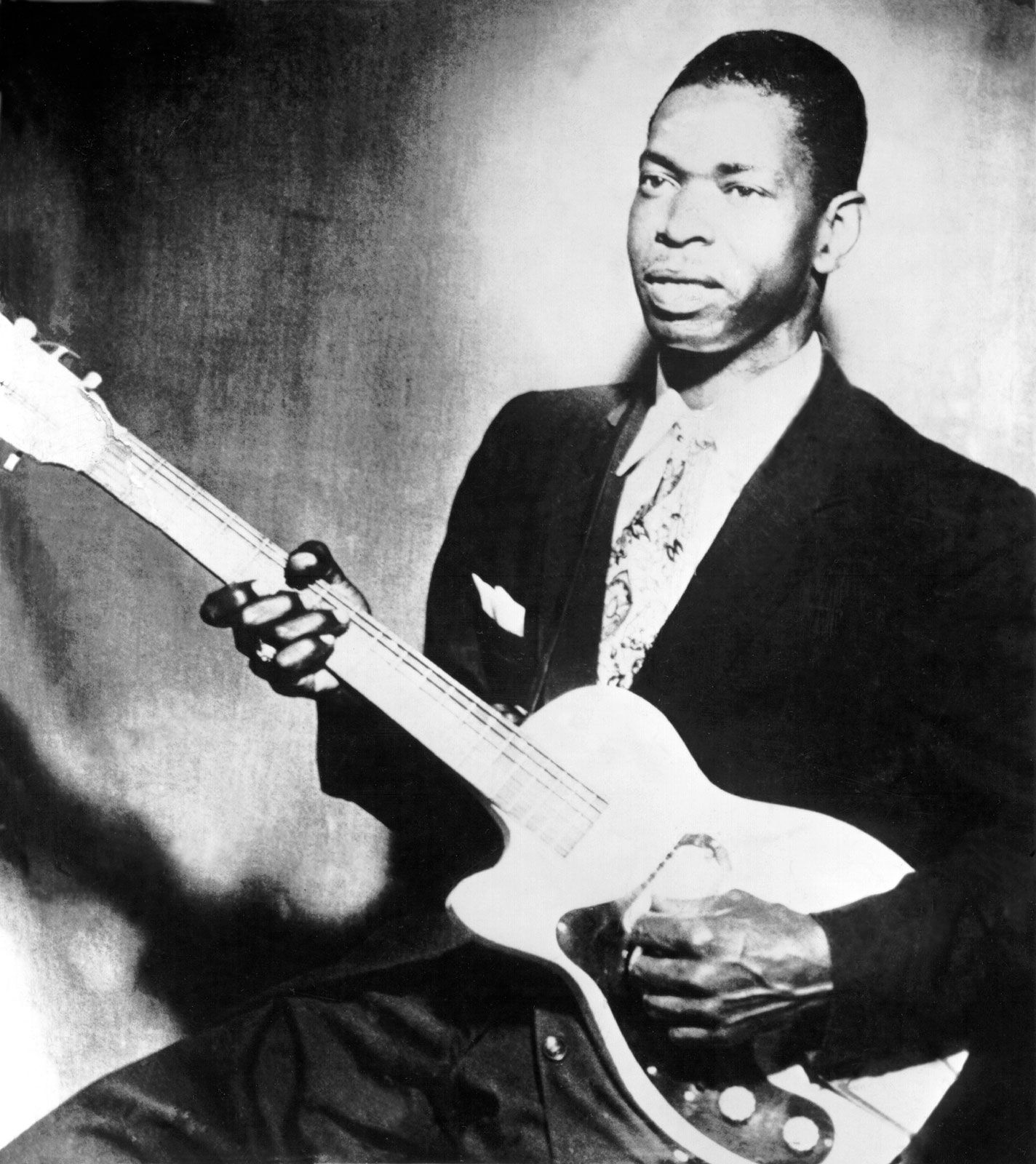
Few artists in blues history ever sounded as raw, electrifying, and unforgettable as Elmore James. Known forever as the “King of the Slide Guitar,” James turned simple riffs into thunderous declarations that could shake the walls of a juke joint and echo across generations of rock and blues music. His recordings carried a fierce emotional intensity—part heartbreak, part celebration, and all soul. Whether delivering fiery boogie rhythms or aching slow blues, he possessed a voice and guitar style that felt completely untamed. From smoky Delta roots to amplifiers pushed to their limits, his music became a blueprint for countless legends who followed. The songs gathered here capture the grit, passion, and swagger that made Elmore James one of the most influential blues musicians ever to plug in a guitar and let it cry.
1. Dust My Broom
“Dust My Broom” is the recording that permanently welded Elmore James’s name to the electric blues canon. The opening slide guitar figure arrives like a warning siren, bright, sharp, and instantly recognizable. It is one of those rare musical moments where a few notes seem to carry an entire history inside them. James took a song associated with Robert Johnson and transformed it into something louder, tougher, and more modern, giving Delta blues a new electric body. His voice sounds urgent from the first line, as if the decision to leave has already been made and the only thing left is to announce it with fire.
What makes the song so powerful is its simplicity. The rhythm pushes forward with a driving confidence, while James’s slide guitar answers the vocal like a second singer with a harsher tongue. Every phrase feels built for movement, restlessness, and release. “Dust My Broom” became a template for countless blues and rock musicians because it captures the exact point where rural blues energy began roaring through amplifiers. It is not merely one of Elmore James’s most popular songs. It is one of the great foundation stones of electric blues itself.
2. The Sky Is Crying
“The Sky Is Crying” shows Elmore James at his most emotionally devastating. While many listeners first associate him with fierce slide guitar attacks and stomping rhythms, this song reveals the deep ache that sat at the center of his artistry. The image of the sky weeping is pure blues poetry, but James makes it feel physical. His vocal does not simply describe sadness. It bends, cracks, and pleads until the weather itself seems to belong to the brokenhearted narrator. The song’s slow pace gives every note room to breathe, and that space is where the pain gathers.
The slide guitar work is magnificent because it never overwhelms the song’s sorrow. Instead, it rises and falls like a human cry, decorating the melody with streaks of silver grief. James had a gift for making the guitar sound less like an instrument and more like a voice caught between prayer and complaint. “The Sky Is Crying” became one of his most enduring compositions because it feels timeless in its emotional clarity. Countless artists have covered it, yet the original remains special because of its raw intimacy. It is blues as atmosphere, confession, and spiritual weather all at once.
3. Shake Your Money Maker
“Shake Your Money Maker” captures the rowdy, dance floor side of Elmore James with irresistible force. The song is loose, lively, and full of swagger, driven by a rhythm that feels built for crowded rooms, hot lights, and bodies moving shoulder to shoulder. James’s vocal performance is playful but commanding, full of the kind of confidence that made his records leap out of jukeboxes. There is nothing delicate about the track. It is direct, physical, and wonderfully alive, the sound of a blues band working for dancers rather than scholars.
The guitar tone is the secret weapon. James’s slide does not merely decorate the groove. It slashes through it, adding sparks to an already burning performance. The arrangement has the energy of a party that might spill into the street at any moment. Yet beneath all the fun is serious musicianship, especially in the way the band locks into a simple pattern and keeps squeezing new excitement from it. “Shake Your Money Maker” later became a favorite for rock and blues revivalists because it has a natural electricity that crosses eras easily. It is one of Elmore James’s great crowd pleasers, a song that proves the blues can mourn deeply one moment and throw the room into motion the next.
4. It Hurts Me Too
“It Hurts Me Too” is one of Elmore James’s most moving performances, a blues song built on empathy, longing, and quiet heartbreak. The narrator is not simply suffering for himself. He is wounded by watching someone he loves endure mistreatment. That emotional angle gives the song a rare tenderness. James sings with a bruised intensity that makes every line feel personal, as though he is standing close to the listener and speaking from painful experience. His voice carries the grain of real life, full of strain, warmth, and resignation.
The beauty of the recording lies in how perfectly the arrangement supports that mood. The rhythm is steady and restrained, allowing the vocal and slide guitar to carry the emotional weight. James’s guitar fills are piercing but never excessive. Each one feels like a sigh that has been sharpened into sound. “It Hurts Me Too” became a blues standard because its feeling is universal. It speaks to anyone who has watched love turn complicated, anyone who has wanted to rescue someone from pain but could not quite reach them. In Elmore James’s hands, the song becomes more than a familiar blues form. It becomes a compassionate confession, sung with the authority of a man who understood heartbreak from the inside.
5. Done Somebody Wrong
“Done Somebody Wrong” is Elmore James in full electric command, delivering a compact burst of blues guilt, drive, and muscular rhythm. The song carries the classic feeling of trouble arriving at the door, but James gives it a special urgency. His vocal sounds alert and uneasy, as if the consequences of a bad decision are catching up faster than expected. That tension is exactly what makes the record so gripping. It does not drift or linger. It moves with purpose, pulled forward by a band that knows how to make a groove feel both tight and dangerous.
The slide guitar has a cutting presence throughout, answering the vocal with short, fiery remarks that seem to accuse, defend, and confess all at once. James’s genius was not only his tone, though that tone remains legendary. It was also his sense of timing. He knew when to strike, when to leave space, and when to let the rhythm carry the emotion. “Done Somebody Wrong” later gained wider recognition through the Allman Brothers Band, but Elmore James’s original has a lean force that is impossible to duplicate. It is a classic example of how he could take a simple blues idea and turn it into something explosive, memorable, and deeply human.
6. Madison Blues
“Madison Blues” is one of Elmore James’s most infectious recordings, a number that swings with a bright, confident pulse while still carrying his unmistakable blues bite. The song has a rolling quality that makes it feel almost effortless, but that ease is deceptive. The band plays with remarkable focus, keeping the rhythm buoyant while James’s guitar throws sparks across the surface. His vocal delivery is relaxed but never lazy, riding the groove with the authority of a musician completely at home inside the form.
What separates “Madison Blues” from a routine shuffle is its sense of movement. The song feels like travel, nightlife, and conversation all woven together. James had a way of making local scenes sound mythic, turning place names and personal details into part of the larger blues landscape. His slide guitar remains the dominant personality, but the performance succeeds because everything around it works with equal purpose. The beat dances, the vocal smiles through the grit, and the arrangement keeps inviting the listener back into its pocket. It became one of his most beloved tracks because it shows another dimension of his talent. Elmore James was not only a master of raw emotional force. He could also create music with charm, swing, and a sense of communal joy.
7. Rollin’ and Tumblin’
“Rollin’ and Tumblin’” connects Elmore James to one of the deepest streams in blues tradition. The song had already lived many lives before James placed his stamp on it, but his version burns with the intensity that made his recordings so influential. The melody feels ancient, almost circular, as if the singer is trapped inside a cycle of desire, confusion, and regret. James takes that old blues language and electrifies it, giving the performance a bite that feels modern even decades later. His voice is rugged and urgent, perfectly suited to a lyric world where emotional stability has vanished.
The slide guitar is the engine of the track. It wails, lunges, and curls around the vocal lines, creating the sensation of someone losing balance and trying to recover it through sound. The rhythm has a hypnotic quality, rooted in older country blues patterns but sharpened by electric power. “Rollin’ and Tumblin’” matters because it shows James as both inheritor and innovator. He respected the traditional shape of the blues while refusing to treat it like a museum piece. In his hands, the song becomes immediate, sweaty, and alive. It is a performance that bridges generations, reminding listeners that the blues survives because artists like Elmore James kept finding new voltage inside old forms.
8. Standing at the Crossroads
“Standing at the Crossroads” places Elmore James inside one of the most symbolic landscapes in blues music. The crossroads has long carried meanings of choice, fate, temptation, and transformation, and James approaches that imagery with his usual mixture of force and vulnerability. His vocal sounds like a man caught between roads, unsure whether salvation or ruin waits in the next direction. That emotional uncertainty gives the song its power. It feels less like a scene and more like a state of mind.
The performance is rich with atmosphere. James’s slide guitar cuts through the track with a tone that is both mournful and commanding, making every response to the vocal feel like a flash of inner conflict. The rhythm keeps the song grounded, but the guitar keeps pulling it toward something more dramatic. What makes “Standing at the Crossroads” so compelling is the way James turns familiar blues mythology into personal testimony. He does not sound like he is borrowing an image. He sounds like he has lived it. The song remains popular because it captures a central blues truth with remarkable directness. Life offers choices, love creates wounds, and sometimes the only honest place to stand is where every road looks dangerous.
9. My Bleeding Heart
“My Bleeding Heart” is Elmore James at his most aching and dramatic, a performance that turns romantic pain into a full bodied blues lament. The title alone suggests emotional exposure, but James makes the wound audible. His singing carries a desperate edge, moving between tenderness and anguish with natural force. He does not smooth out the feeling or make it polite. He lets it pour through the record, giving the song a deeply human quality that still feels immediate.
The guitar work is especially expressive. James’s slide lines seem to open the song wider each time they appear, pulling more grief from the melody without ever becoming ornamental. The tone is raw but controlled, a perfect match for the lyric’s sense of love gone wrong and pride pushed aside. “My Bleeding Heart” has also attracted attention because of its connection to later guitar heroes, but the original stands on its own as a major Elmore James statement. It shows how deeply he understood the theatrical side of blues without losing authenticity. There is drama here, certainly, but it never feels artificial. The emotion is too direct, the vocal too scarred, the guitar too alive. It is one of his great heartbreak records, full of pain that refuses to stay quiet.
10. I Can’t Hold Out
“I Can’t Hold Out” is one of Elmore James’s most satisfying performances, a song that combines emotional pressure with a groove that simply refuses to sit still. The lyric centers on desire, communication, and the strain of waiting, but James delivers it with such force that the situation feels urgent rather than merely romantic. His voice has that unmistakable rasp and lift, pushing each line forward as if the words can barely contain the feeling behind them. It is a masterclass in making a familiar blues theme sound freshly alive.
The arrangement has a wonderful snap. The band keeps the rhythm firm and lively, while James’s slide guitar enters with bright, stinging authority. Every guitar response seems to heighten the narrator’s impatience. There is longing in the song, but there is also swagger, which is one of the reasons it remains so memorable. “I Can’t Hold Out” demonstrates how Elmore James could turn emotional vulnerability into musical power. He never sounds passive, even when the lyric admits need. Instead, he sounds energized by the very intensity of wanting. The song became a favorite among blues guitarists because it offers everything that made James essential: a commanding vocal, a tough groove, and slide guitar phrasing that feels like electricity shaped into speech.

Samuel Moore is a frequent contributor to Singers Room. Since 2005, Singersroom has been the voice of R&B around the world. Connect with us via social media below.