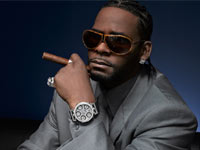
Public attention once again turned toward R. Kelly after reports surfaced that the R and B singer had canceled another scheduled tour date, adding to a long series of disruptions that have surrounded his live performances in recent years. The cancellation immediately sparked discussion among fans, critics, and industry observers, many of whom continue to follow developments in his career and legal situation.
R. Kelly was once regarded as one of the most influential figures in contemporary R and B music. Known for his distinctive voice, songwriting ability, and chart dominating hits, he built a career that spanned decades and produced some of the genre’s most recognizable songs. However, in recent years, his public image and professional activities have been heavily affected by legal challenges, incarceration, and ongoing controversies that have reshaped the way audiences view his legacy.
The latest tour cancellation reportedly involved a scheduled performance that was expected to draw significant attention from both supporters and critics. While official explanations for the cancellation varied depending on the source, such disruptions have become increasingly common in connection with his name. Health concerns, legal restrictions, logistical complications, and institutional limitations have all been cited at different times in relation to canceled appearances.
For fans who continue to follow R. Kelly’s music, each canceled date represents another moment of uncertainty about whether live performances will resume in a consistent way. Many longtime listeners still connect deeply with his early catalog, which includes numerous R and B classics that helped define an era of urban music. At the same time, public reaction remains divided due to the serious allegations and convictions that have overshadowed his career in recent years.
Industry analysts note that touring is one of the most complex aspects of any musical career, even under normal circumstances. It requires coordination between venues, promoters, legal teams, and management. When legal or institutional factors are involved, the challenges become even more complicated. In cases like this, scheduling instability often reflects broader issues beyond simple artistic planning.
The cancellation also reignited conversations about the separation of art and artist. Some listeners argue that musical contributions should be evaluated independently of personal conduct, while others believe that an artist’s behavior must be considered when engaging with their work. This debate has followed R. Kelly for years and continues to shape how his music is consumed, played, or removed from public platforms.
Streaming services, radio stations, and event organizers have all responded differently over time, with some reducing visibility of his catalog while others maintain availability based on listener demand. These decisions often reflect broader cultural shifts regarding accountability and public sensitivity rather than purely artistic considerations.
For supporters who remain engaged with his music, tour cancellations can feel like a continuation of a longer pattern of interruptions that have affected his ability to maintain a stable public presence. Some fans express frustration, while others acknowledge the broader circumstances that have led to ongoing disruptions in his career.
At the same time, critics argue that continued attention to canceled performances should be viewed within the larger context of his legal history and the consequences that have followed. For them, each cancellation reinforces the reality that his career has fundamentally changed and is unlikely to return to its former trajectory.
Entertainment commentators emphasize that situations like this highlight the fragile nature of celebrity careers, especially when legal and personal issues intersect with public performance. A once thriving touring schedule can quickly become unpredictable when external pressures override artistic planning. In R. Kelly’s case, those pressures have been especially significant and long lasting.
The music industry itself continues to grapple with how to handle legacy artists whose work remains popular but whose personal conduct has generated controversy. Decisions about bookings, licensing, and public promotion often require balancing audience interest with ethical considerations and public perception.
As for the canceled tour date, no clear indication has been given about whether it will be rescheduled. In many similar cases, canceled performances are either postponed indefinitely or removed entirely from touring plans depending on circumstances. For now, uncertainty remains the defining factor surrounding any future live appearances.
Ultimately, the latest cancellation adds another chapter to a complicated and highly scrutinized career. R. Kelly’s influence on R and B music is undeniable, but his present situation reflects a dramatically different reality from the peak of his success. Each announcement, including canceled shows, continues to draw attention not only to his music but also to the broader conversations surrounding accountability, legacy, and the evolving relationship between artists and their audiences.

Since 2005, Singersroom has been the voice of R&B around the world. Connect with us via social media below.