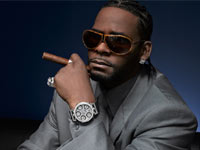
A courtroom appearance involving R. Kelly drew unexpected attention after reports emerged that a fan was arrested and booked for allegedly taking a photograph inside the court during proceedings. The incident has sparked renewed discussion about courtroom rules, celebrity culture, and the strict enforcement of no recording policies in legal settings.
According to early accounts, the individual involved attempted to capture an image of the singer while court was in session. Courtrooms are typically governed by strict regulations that prohibit photography, video recording, and audio recording without explicit permission from the judge. These rules are designed to protect the integrity of the legal process, ensure fair proceedings, and maintain privacy for all parties involved, including defendants, legal teams, witnesses, and court staff.
Security personnel and court officers reportedly responded quickly once the alleged action was discovered. The fan was taken into custody and later booked on charges related to violating court rules. While the specifics of the charges may vary depending on jurisdiction, unauthorized photography in a courtroom is often treated as a serious breach of conduct. In some cases, it can lead to fines, contempt of court findings, or additional legal consequences.
The presence of high profile defendants such as R. Kelly often increases public interest in courtroom proceedings. His legal matters have drawn widespread media attention for years, leading to large numbers of spectators, journalists, and observers attempting to gain access to hearings. However, even in cases involving celebrities, courtroom rules remain strict and are enforced without exception.
Legal experts emphasize that courtrooms are not public entertainment spaces, even when cases involve well known figures. The judicial system depends on maintaining order and ensuring that proceedings are not influenced by outside interference. Photography restrictions are particularly important because images captured inside a courtroom can potentially compromise privacy, affect testimony, or be shared in ways that misrepresent the legal process.
In this case, the arrest highlights the ongoing tension between public curiosity and legal boundaries. Fans of public figures often feel a strong desire to document or share moments involving celebrities, especially during high profile trials. However, courts consistently reinforce that such behavior is not permitted and can result in immediate consequences.
Observers note that modern technology has made enforcement of courtroom rules more challenging. Smartphones equipped with high quality cameras are now common, making it easier for individuals to attempt discreet photography. As a result, many courthouses have strengthened security protocols, including increased monitoring, clear signage, and strict screening procedures at entry points.
The reaction to the incident has been mixed across social media and public forums. Some individuals expressed concern about the arrest, questioning whether the punishment was too severe for what they view as a minor action. Others supported the enforcement, arguing that rules must be applied consistently to preserve the dignity and fairness of legal proceedings.
R. Kelly’s ongoing legal situation has long been a subject of intense public attention, with supporters and critics closely following developments. This heightened attention often creates emotionally charged environments around court appearances, increasing the likelihood of incidents involving spectators. Court officials are therefore tasked with balancing public access to justice with the need to maintain strict order inside the courtroom.
Legal analysts point out that contempt related offenses, including unauthorized photography, are not uncommon in high profile trials. Judges often issue clear warnings at the start of proceedings to remind attendees that recording devices are prohibited. Despite these warnings, occasional violations still occur, sometimes resulting in immediate removal from the courtroom and arrest.
The incident also raises broader questions about how celebrity legal cases are covered in the digital age. While traditional media outlets follow strict reporting guidelines, individual spectators may not always understand or follow courtroom restrictions. This creates a complex environment where public interest intersects with legal boundaries.
As the situation continues to be discussed, it serves as a reminder that courtroom behavior is tightly regulated regardless of who is involved in a case. The arrest of a fan for attempting to take a photograph underscores how seriously these rules are enforced and how quickly violations can escalate into legal consequences.
Ultimately, the event reflects the ongoing challenge of managing public fascination with high profile trials while preserving the integrity of the justice system. Even in cases involving widely recognized figures like R. Kelly, the courtroom remains a controlled legal environment where rules must be followed without exception.

Since 2005, Singersroom has been the voice of R&B around the world. Connect with us via social media below.