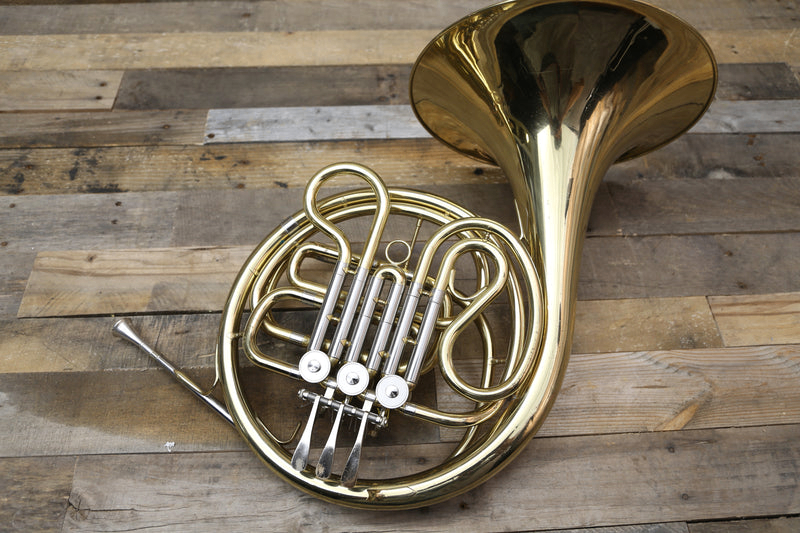
The rich, golden voice of the French horn has long added a sense of grandeur, elegance, and emotional depth to classical music. From majestic symphonies to unforgettable film scores, the instrument has captivated audiences through the artistry of legendary performers who pushed its expressive power to extraordinary heights. The greatest French horn players of all time are celebrated not only for their flawless technique, but also for their ability to bring warmth, heroism, and haunting beauty to every performance. Whether performing in world-famous orchestras or dazzling listeners as soloists, these musicians helped elevate the French horn into one of the most respected and recognizable instruments in music history. Their influence continues to inspire generations of horn players around the world.
1. Dennis Brain
Dennis Brain remains one of the most beloved French horn players in classical music history, and his recordings still feel astonishingly fresh decades after they were made. His name is closely tied to Mozart’s horn concertos, especially performances that combine elegance, clarity, wit, and a singing tone that seems almost vocal. Brain had a way of making the horn sound natural rather than difficult, which is remarkable considering the instrument’s reputation for danger and unpredictability. His playing in Mozart is graceful without becoming delicate, brilliant without sounding forced, and lyrical without losing structure.
Brain also helped expand public appreciation for the French horn as a solo instrument. His performances of works by Richard Strauss, Beethoven, Hindemith, and Britten showed that the horn could carry emotional weight, intellectual depth, and dazzling virtuosity. The famous Mozart recordings with Herbert von Karajan and the Philharmonia Orchestra remain central to his legacy because they capture his perfect balance of refinement and personality. Every phrase feels shaped by instinct rather than calculation.
What makes Brain so popular among listeners and horn players is not only his technical mastery, but his unmistakable musical charm. He brought warmth to heroic lines, humor to playful passages, and nobility to lyrical melodies. His tone became a standard, and his influence can still be heard in the way modern horn players approach Mozart, Strauss, and the broader solo repertoire.
2. Barry Tuckwell
Barry Tuckwell stands among the most recorded and widely admired French horn players of all time. Born in Australia, he became an international figure through his work as a soloist, orchestral musician, conductor, and teacher. His performances of Mozart’s horn concertos are especially treasured because they present the music with polished technique, bright character, and a commanding sense of style. Tuckwell’s sound was fuller and more modern than many earlier players, yet he never lost the graceful classical spirit that Mozart demands.
Tuckwell helped prove that the French horn could thrive as a solo concert instrument across the world’s major stages. His recordings include Mozart, Strauss, Haydn, Schumann, Britten, and many twentieth century works, and he brought each piece a blend of confidence and sophistication. The Mozart concertos became some of his most popular recordings because they showcase everything listeners loved about his playing: clean articulation, glowing tone, athletic agility, and elegant phrasing.
What separates Tuckwell from many great horn players is the sheer range of his influence. He was not just a performer with a beautiful sound. He was a major advocate for the instrument, encouraging new repertoire and raising expectations for horn soloists everywhere. His recordings became reference points for students and professionals, and his name remains inseparable from the modern history of the French horn.
3. Hermann Baumann
Hermann Baumann is celebrated for a French horn sound that combines old world warmth with extraordinary technical control. His performances of Mozart’s horn concertos are among his most admired recordings, especially because he brings a conversational quality to the music. Instead of treating the horn as merely a noble brass instrument, Baumann often makes it sound like a storyteller, full of nuance, breath, grace, and subtle emotion. His Mozart has buoyancy, but also depth, giving familiar works a sense of living character.
Baumann is also respected for his work on the natural horn, an earlier form of the instrument that requires immense control and sensitivity. This historical awareness gave his playing a special color, even when performing on the modern horn. In repertoire by Mozart, Haydn, Beethoven, Schumann, and Strauss, he often emphasized phrasing and tonal shading as much as brilliance. That approach made him one of the most distinctive horn voices of the twentieth century.
His most popular performances reveal a musician who understood both the heroic and lyrical sides of the instrument. He could play with authority, but his greatest gift may have been his ability to make the horn sing with human warmth. Baumann’s artistry helped bridge tradition and modern performance, making him essential for listeners who want to hear the French horn as both a historical voice and a deeply expressive solo instrument.
4. Radek Baborák
Radek Baborák is one of the most dazzling French horn players of the modern era, known for a golden tone, fearless technique, and an almost violin like sense of musical flexibility. His performances of Mozart’s horn concertos have become widely admired because they show his ability to combine classical elegance with astonishing ease. Baborák plays with a smoothness that can make even the most exposed passages sound effortless, and his phrasing often has the shape and breath of a great singer.
His career has included major orchestral posts, solo appearances, chamber music projects, and conducting, but his identity as a horn virtuoso remains central to his popularity. In works by Mozart, Strauss, Glière, Bach transcriptions, and romantic showpieces, Baborák brings a clean, focused tone that can expand into tremendous warmth. His Strauss performances are especially admired for their heroic sweep and refined control, while his Mozart reveals grace, charm, and precision.
What makes Baborák so exciting is the sense that nothing about the horn limits his imagination. Fast passages sparkle, lyrical lines float, and dramatic moments carry real theatrical power. He represents the modern horn at its highest level, where technique serves expression and every phrase feels alive. His recordings and videos continue to inspire young horn players who hear in his performances both discipline and artistic freedom.
5. Sarah Willis
Sarah Willis has become one of the most recognizable French horn players in the world, not only because of her remarkable musicianship, but also because of her ability to bring the instrument to wider audiences. A member of the Berlin Philharmonic, she has built a public presence through performances, interviews, educational projects, and imaginative recordings. Her popular Mozart y Mambo project is especially loved because it places Mozart’s horn music into conversation with Cuban musical energy, giving familiar classical repertoire a fresh and joyful personality.
Willis plays with a warm, centered sound and an engaging musical character. In Mozart, her phrasing is bright and graceful, but she also brings rhythmic vitality and a strong sense of communication. Her performances show that the French horn can be both noble and playful, both refined and full of life. That quality has made her especially popular with listeners who might not normally seek out solo horn repertoire.
Beyond her performances, Willis has become a major ambassador for the instrument. She has introduced audiences to horn players, orchestras, practice methods, and musical traditions from around the world. Her influence reaches far beyond the concert hall. Through her recordings and online presence, she has helped make the French horn feel accessible, exciting, and deeply human while still honoring the seriousness of classical craft.
6. Philip Farkas
Philip Farkas is one of the most important names in French horn history, admired as a performer, teacher, author, and orchestral musician. His performances of works such as Schumann’s Adagio and Allegro reveal a player with clarity, poise, and a beautifully centered tone. Farkas had a direct, noble sound that reflected the American orchestral style he helped shape through his work with major ensembles, including the Chicago Symphony Orchestra. His playing was never flashy for its own sake. It was purposeful, elegant, and deeply musical.
Farkas is also remembered for his enormous influence on horn pedagogy. His writings on horn playing became foundational for generations of students, covering embouchure, breathing, tone production, and musical discipline. Because of that, his popularity is not only based on recordings, but on the way his ideas shaped the daily practice of countless horn players. To many musicians, Farkas is as much a mentor as a performer.
His best known performances show the same qualities that define his teaching: control, balance, consistency, and musical honesty. In lyrical repertoire, he brought a gentle but focused voice, allowing melodies to unfold naturally. Farkas helped define the professional standard for American horn playing, and his legacy remains alive in studios, orchestras, and conservatories wherever the French horn is studied seriously.
7. Dale Clevenger
Dale Clevenger was one of the most powerful and influential American French horn players, best known for his long tenure as principal horn of the Chicago Symphony Orchestra. His playing carried the boldness, strength, and brilliance associated with that legendary brass section, yet he also possessed a lyrical sensitivity that made his solo and chamber performances deeply compelling. His Mozart Horn Quintet performance shows a musician capable of elegance, warmth, and conversational chamber music finesse.
Clevenger’s reputation was built partly on orchestral grandeur. Under conductors such as Georg Solti, the Chicago Symphony became famous for its blazing brass sound, and Clevenger’s horn playing helped define that identity. His performances in Mahler, Strauss, Bruckner, Brahms, and Wagner became models of projection, confidence, and dramatic authority. He could make the horn soar over a massive orchestra without losing beauty of tone.
As a soloist and chamber musician, Clevenger brought the same commanding presence to more intimate music. Mozart, Britten, and classical horn repertoire benefited from his clean articulation and expressive range. His sound had both steel and warmth, a combination that made him unforgettable. For many listeners, Clevenger represents the heroic American horn tradition at its peak, where orchestral power and individual artistry meet in thrilling balance.
8. Frøydis Ree Wekre
Frøydis Ree Wekre is one of the most respected French horn figures in the world, admired as a performer, teacher, and musical thinker. Her artistry is connected not only to standard horn repertoire, but also to contemporary music, chamber works, and imaginative collaborations. Her performance with Roger Bobo in Sonoro reflects her openness to color, texture, and fresh musical dialogue. Wekre has always approached the horn as an instrument of expressive possibility rather than a narrow classical specialty.
Her sound is known for refinement, control, and emotional intelligence. In concertos, chamber music, and modern works, she brings a sculpted tone and a strong sense of line. Wekre has been especially influential in expanding how horn players think about phrasing, body awareness, breathing, and musical communication. Her teaching has reached generations of musicians across the world, and her books and masterclasses are highly valued in the horn community.
What makes Wekre so popular among serious horn players is the depth of her musicianship. She does not simply play notes beautifully. She invites listeners and students to think about sound, intention, and expression at a deeper level. Her legacy is both artistic and educational, placing her among the most important French horn players of all time. She represents the instrument as a voice of imagination, discipline, and emotional truth.
9. Stefan Dohr
Stefan Dohr is widely regarded as one of the finest French horn players of the current generation. As principal horn of the Berlin Philharmonic, he has become associated with a sound that is powerful, polished, and incredibly secure. His performance of Richard Strauss’s Horn Concerto No. 1 shows many of the qualities that have made him so admired: brilliant projection, smooth legato, noble phrasing, and technical confidence in music that leaves little room for weakness.
Dohr’s playing is especially impressive because it combines orchestral authority with soloistic elegance. In Strauss, Mozart, Schumann, Ligeti, and modern concert works, he brings a refined sense of architecture to every phrase. His tone can be heroic and expansive, but it also has warmth and focus. This makes him ideal for repertoire that demands both power and poetry. In the Berlin Philharmonic, his horn solos often emerge with remarkable clarity, shaping some of the most memorable moments in the orchestral literature.
Dohr has also inspired contemporary composers to write for him, further expanding the modern horn repertoire. His artistry proves that the French horn remains a living, evolving solo instrument. For today’s horn players, he is a model of control, sound quality, and musical intelligence, and his performances continue to set a very high standard around the world.
10. David Pyatt
David Pyatt is one of Britain’s most admired French horn players, known for his elegant tone, technical assurance, and expressive intelligence. His performance of Ruth Gipps’s Horn Concerto reveals a musician with a strong command of lyrical modern British repertoire. Rather than relying only on brilliance, Pyatt shapes phrases with patience and sensitivity, allowing the horn to sound warm, reflective, and emotionally sincere. His playing has a polished beauty that makes complex music feel inviting.
Pyatt gained major recognition early in his career and became associated with leading British orchestras, including the London Symphony Orchestra and the London Philharmonic Orchestra. His work as a principal horn player brought him into some of the most demanding orchestral settings, where clarity, stamina, and musical instinct are essential. Yet his solo recordings remain especially valuable because they show the full range of his artistry outside the orchestral texture.
His repertoire includes Mozart, Strauss, Britten, Gipps, and other works that place the horn in both heroic and lyrical roles. In each setting, Pyatt brings a controlled but expressive style. His tone is refined without feeling distant, and his musical decisions often reveal deep respect for the composer’s voice. For listeners exploring great modern horn players, Pyatt offers a superb example of British elegance, technical excellence, and expressive depth.
11. Aubrey Brain
Aubrey Brain was a towering figure in the earlier history of recorded French horn playing and the father of Dennis Brain. His performance of Mozart’s Horn Concerto No. 3 with the BBC Symphony Orchestra offers a fascinating window into a historic style of horn playing. The sound is noble, direct, and beautifully shaped, with a phrasing approach that feels deeply connected to the vocal traditions of the early twentieth century. Brain’s playing helped establish a British horn lineage that would influence generations.
Aubrey Brain was admired for his orchestral and chamber work, and his collaborations with major musicians of his era remain important documents. His recording of Brahms’s Horn Trio with Adolf Busch and Rudolf Serkin is especially significant because it captures the horn as an equal chamber voice, capable of tenderness, melancholy, and dignified strength. In Mozart, his style is elegant and poised, emphasizing musical character over showmanship.
His popularity today is tied partly to history, but also to the lasting beauty of his musicianship. He represents a golden bridge between older horn traditions and the modern solo standard. Without Aubrey Brain’s artistry and influence, the rise of the French horn as a beloved recorded solo instrument would look very different. His legacy lives on through both his own performances and the extraordinary musical family tradition he helped shape.
12. Marie Luise Neunecker
Marie Luise Neunecker is one of the most distinguished French horn soloists of modern classical music, admired for her luminous tone, refined control, and serious musical depth. Her performance of Richard Strauss’s Horn Concerto No. 1 reveals a player who understands both the youthful brilliance and lyrical tenderness of the work. Strauss demands confidence, stamina, and a heroic sense of line, and Neunecker brings all of those qualities while maintaining elegance and clarity.
Her repertoire extends far beyond the standard showpieces. Neunecker has performed Mozart, Strauss, Schumann, contemporary works, chamber music, and solo pieces with a level of detail that has earned admiration from musicians and critics alike. She has also been an important figure in music education, helping shape future generations through her teaching. Her playing is often praised for its balance: technically secure, emotionally focused, and never exaggerated.
What makes Neunecker especially compelling is her ability to make the horn sound both strong and introspective. In Strauss, she can project nobility and excitement, but in quieter passages her tone takes on an intimate, almost vocal quality. Her artistry has helped secure the French horn’s place as a serious solo instrument. For listeners seeking beauty, intelligence, and expressive command, Neunecker remains one of the essential names in horn performance.
13. Ifor James
Ifor James was a distinctive and influential French horn player whose career combined performance, teaching, personality, and a deep love for the instrument. His performance of Windmills reveals a musician with character, warmth, and an unmistakably individual voice. James was not only interested in polished classical perfection. He understood the horn as an instrument capable of charm, wit, lyricism, and personal expression. That quality made him beloved by many students and listeners.
Born in Wales, James developed an international career as a performer and professor. He became especially known as a teacher, offering practical and memorable insights into articulation, hand position, tone, and musical approach. His lessons and demonstrations remain popular because they show a musician who could explain the horn with directness, humor, and clarity. He had the rare ability to make technical ideas feel musical rather than mechanical.
As a performer, James brought personality to every phrase. His repertoire included classical works, teaching pieces, and lighter selections that highlighted the horn’s lyrical and characterful sides. His popularity rests on both sound and spirit. He helped generations of players understand that horn playing is not only about survival and accuracy. It is about communication, imagination, and joy. That human quality keeps his legacy alive in the horn world.
14. Alan Civil
Alan Civil was one of Britain’s most admired French horn players, known for his beautiful tone, superb musicianship, and important role in both classical and popular recording history. His Mozart horn concerto performances with Otto Klemperer and the Philharmonia Orchestra are among his most valued classical recordings. Civil’s Mozart is poised, dignified, and warmly lyrical, capturing the grace of the music without making it feel fragile. His tone has a rounded quality that suits the concerto repertoire beautifully.
Civil’s career included major orchestral work, chamber music, solo recordings, and famous studio appearances. He was principal horn of the Philharmonia Orchestra and later became known to wider audiences through his contribution to the Beatles song For No One, where the French horn solo added a haunting classical color to pop music. That unusual crossover moment helped introduce the instrument’s expressive beauty to listeners far outside the concert hall.
In classical repertoire, Civil brought restraint, elegance, and expressive control. He did not need to force drama because his sound carried natural authority. His performances show the French horn at its most refined, especially in Mozart, where phrasing and tone matter as much as brilliance. Civil remains a key figure for anyone interested in British horn playing, orchestral artistry, and the instrument’s surprising reach across musical worlds.
15. Eric Ruske
Eric Ruske is a highly respected American French horn soloist known for his brilliant technique, broad repertoire, and polished musical style. His performance of Mozart’s Horn Concerto No. 4 highlights his clean articulation, elegant phrasing, and bright, focused tone. Mozart’s horn writing requires both charm and precision, and Ruske brings a lively sense of classical balance to the music. His playing feels confident but never heavy, making the concerto sparkle with clarity.
Ruske has built an important career as a soloist, recording artist, chamber musician, and educator. His discography includes standard concertos, recital works, and less familiar repertoire, which has helped broaden awareness of the horn’s possibilities. In pieces by Mozart, Glière, Strauss, Persichetti, and other composers, he demonstrates an impressive command of style. His tone can be brilliant and athletic, but he also has the ability to shape lyrical passages with warmth and patience.
What makes Ruske popular among horn players is the consistency of his craft. He represents a modern American solo tradition that values clarity, accuracy, expressive variety, and repertoire exploration. His recordings give listeners a strong sense of the French horn as a complete solo voice. Whether performing classical concertos or contemporary works, Ruske brings professionalism, energy, and musical conviction to every performance.

Samuel Moore is a frequent contributor to Singers Room. Since 2005, Singersroom has been the voice of R&B around the world. Connect with us via social media below.