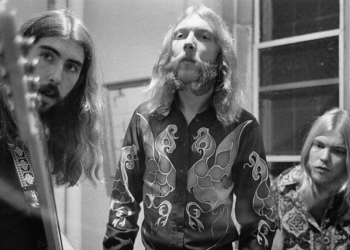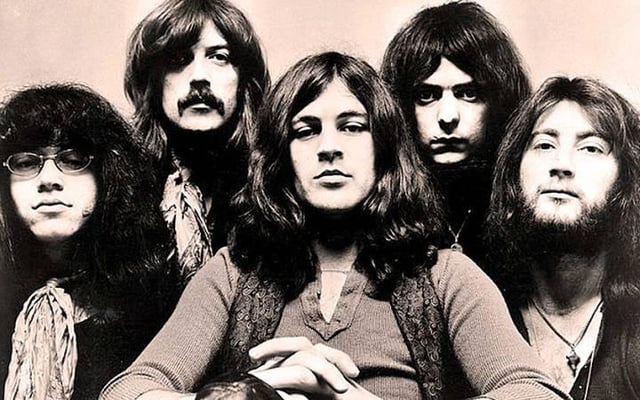
Few bands helped shape the sound of hard rock and heavy metal as powerfully as Deep Purple. Explosive guitar riffs, thunderous drumming, soaring vocals, and Jon Lord’s legendary organ work gave the group a sound that was both ferocious and sophisticated. Emerging during the late 1960s and reaching legendary status in the 1970s, Deep Purple fused blues, classical influences, psychedelic experimentation, and pure rock energy into songs that still shake arenas and airwaves decades later. Their music could shift from blazing speed to haunting melody in an instant, creating a catalog filled with unforgettable hooks and jaw dropping musicianship. Whether delivering epic hard rock anthems or extended instrumental showcases, the band always played with intensity and fearless creativity. Deep Purple’s greatest songs remain cornerstones of classic rock history, influencing generations of guitarists, singers, drummers, and heavy music fans around the world.
1. Smoke on the Water
Smoke on the Water is not just Deep Purple’s most famous song. It is one of the most recognizable rock recordings ever made. The riff is almost primal in its simplicity, yet it carries the weight of an entire era of hard rock. Ritchie Blackmore’s guitar line has become a rite of passage for generations of young players, but its power does not come from difficulty. It comes from authority. Every note lands with purpose, forming a musical statement so direct that it feels carved into stone. Ian Gillan’s vocal brings the story to life with dry wit and dramatic force, turning the real life fire at the Montreux Casino into rock mythology.
What makes Smoke on the Water endure is the way every member of Deep Purple contributes to its monumental feel. Jon Lord’s organ thickens the riff until it sounds almost orchestral, Roger Glover’s bass gives it a heavy foundation, and Ian Paice’s drumming drives the song with disciplined power. The track does not rush. It stomps forward with confidence, letting the riff dominate without ever becoming dull. Its subject matter, a recording session disrupted by chaos, adds to the song’s legend, but the music itself is the real reason it became immortal. Smoke on the Water remains the ultimate Deep Purple anthem because it captures the band’s essence: heaviness, precision, drama, and a riff that changed rock history.
2. Highway Star
Highway Star is Deep Purple at full throttle, a blistering hard rock masterpiece that helped define the sound of speed, power, and technical brilliance in 1970s rock. From the moment the rhythm section kicks in, the song feels like an engine pushed to its limit. Ian Gillan sings with wild intensity, transforming the automobile imagery into a celebration of motion, danger, and unstoppable confidence. His voice cuts through the arrangement like a siren, matching the furious momentum of the band behind him. This is not just a driving song. It is a musical drag race.
The instrumental performances on Highway Star are legendary. Ritchie Blackmore’s guitar solo is structured with classical precision and delivered with blazing fire, while Jon Lord’s organ solo is equally thrilling, adding a baroque intensity that sets Deep Purple apart from more straightforward hard rock bands. Roger Glover and Ian Paice create a relentless foundation that keeps the song racing without losing control. Every section is built for impact, from the urgent verses to the explosive instrumental passages. The song became a concert staple because it shows the band’s virtuosity in a form that is still immediate and exciting. Highway Star remains one of Deep Purple’s most popular songs because it captures the thrill of speed better than almost any rock track ever recorded. It is fast, fierce, disciplined, and completely electrifying.
3. Child in Time
Child in Time is one of Deep Purple’s most dramatic and emotionally overwhelming compositions, a song that moves from quiet tension to explosive release with breathtaking control. It begins with Jon Lord’s haunting organ figure, creating an atmosphere that feels solemn, mysterious, and almost sacred. Ian Gillan enters with a vocal that is restrained at first, but the song gradually reveals the full power of his range. His famous wordless screams are not merely displays of technique. They sound like anguish, warning, and spiritual alarm rising from deep inside the music.
The power of Child in Time lies in its sense of escalation. Deep Purple builds the track patiently, allowing each section to gather emotional weight before the band erupts into one of its most intense instrumental passages. Ritchie Blackmore’s guitar solo cuts with fire and precision, while Roger Glover and Ian Paice drive the heavier sections with muscular urgency. The song has often been interpreted as a response to war and violence, and its mood certainly carries a sense of moral dread. Yet it remains open enough to feel universal. It is about innocence, fear, consequence, and the terrible awareness of human destruction. Child in Time stands as one of the band’s greatest achievements because it proves that hard rock can be ambitious, emotionally serious, and almost operatic without losing raw power. Few songs in the genre build tension with such grandeur.
4. Black Night
Black Night is one of Deep Purple’s great early hard rock singles, a compact and irresistible track that helped establish the band’s heavier identity. The riff is lean, swaggering, and instantly memorable, showing Ritchie Blackmore’s gift for creating guitar lines that feel simple but carry enormous personality. Ian Gillan’s vocal has a bluesy bite that gives the song its tough edge, while the band swings with a looseness that makes the track feel alive. It is heavy, but not stiff. It rocks with a sense of groove that keeps it accessible and exciting.
Black Night became a major favorite because it channels Deep Purple’s power into a tight, radio ready form without sacrificing musicianship. Jon Lord’s organ adds grit and color, giving the riff extra thickness and helping create the band’s signature guitar and keyboard attack. Roger Glover’s bass locks into the groove with authority, while Ian Paice’s drumming gives the song a sharp rhythmic snap. The track has a blues rock foundation, but Deep Purple pushes it into something harder and more aggressive. Its charm lies in its directness. There is no long buildup or elaborate concept. The band simply finds a killer riff and rides it with absolute confidence. Black Night remains one of their most popular songs because it captures the moment when Deep Purple became one of the most exciting hard rock bands in the world.
5. Space Truckin’
Space Truckin’ is Deep Purple having cosmic fun at maximum volume, turning science fiction imagery into a roaring hard rock celebration. The song has one of the band’s most infectious grooves, built on a stomping rhythm that feels both heavy and playful. Ian Gillan attacks the vocal with theatrical energy, selling the absurdity of the lyrics through sheer conviction. The idea of hauling through the galaxy could have become novelty material in lesser hands, but Deep Purple makes it sound huge, wild, and irresistible. Their musicianship gives the song real power beneath the humor.
The appeal of Space Truckin’ comes from its mixture of heaviness and exuberance. Ritchie Blackmore’s guitar work is sharp and driving, Jon Lord’s organ adds thick waves of sound, and the rhythm section pushes the track forward with thunderous confidence. Ian Paice in particular gives the song a muscular swing that keeps it from becoming rigid. The chorus is one of the band’s most chant worthy moments, built for live performance and crowd participation. On stage, the song often expanded into massive jams, proving how flexible its simple framework could be in the hands of such skilled players. Space Truckin’ remains beloved because it shows Deep Purple’s lighter side without reducing their intensity. It is heavy, humorous, loud, and full of personality, a perfect example of the band’s ability to make hard rock feel both massive and fun.
6. Hush
Hush introduced many listeners to Deep Purple before the band fully became the hard rock powerhouse of the 1970s. Originally written by Joe South, the song was transformed by Deep Purple into a psychedelic rock hit with organ driven energy and a pounding groove. Rod Evans handles the vocal with a cool, slightly mysterious tone, while the band surrounds him with swirling keyboards, sharp guitar accents, and a rhythm that feels urgent and hypnotic. This version stands as an important early milestone because it showed Deep Purple’s ability to reinterpret outside material and make it unmistakably their own.
Hush is especially fascinating because it captures the band in transition. The heavy sound associated with their classic Mark Two lineup had not fully arrived, yet many of the ingredients were already present. Jon Lord’s organ dominates much of the arrangement, giving the track a dramatic edge that separates it from standard late 1960s pop rock. The rhythm section keeps the song moving with muscular energy, while the call and response vocal hook makes it instantly memorable. It has a garage rock bite, a psychedelic shimmer, and a hint of the heavier direction the group would soon explore. Hush remains one of Deep Purple’s most popular songs because it represents their first major breakthrough and still sounds exciting today. It is catchy, atmospheric, and historically essential within their catalog.
7. Burn
Burn marked a thrilling new chapter for Deep Purple, introducing David Coverdale and Glenn Hughes into the lineup while proving the band could still create hard rock of ferocious power. The song explodes from the start with one of Ritchie Blackmore’s most electrifying riffs, full of speed, tension, and classical inspired precision. Ian Paice’s drumming is absolutely explosive, pushing the track forward with relentless energy, while Jon Lord’s organ adds a fiery counterweight to the guitar. From the first seconds, the song sounds like a band determined to announce its rebirth with authority.
The vocal interplay on Burn gives the song a fresh identity within the Deep Purple catalog. David Coverdale brings a bluesy roar, while Glenn Hughes adds a higher, soulful edge that expands the band’s vocal palette. The result is dramatic and powerful, perfectly matching the apocalyptic feel of the lyrics. Instrumentally, the track is a showcase of Deep Purple’s technical brilliance. Blackmore’s soloing is sharp and commanding, Lord’s keyboard work is fiery, and the rhythm section never lets the intensity drop. Burn remains one of the band’s most popular songs because it captures transition as triumph. Rather than sounding like a group weakened by lineup changes, Deep Purple sounds renewed, aggressive, and hungry. It is one of the great opening tracks in hard rock history, packed with speed, drama, and unstoppable momentum.
8. Woman from Tokyo
Woman from Tokyo is one of Deep Purple’s most accessible and enduring songs, combining a catchy hard rock groove with a bright sense of melody and travel inspired imagery. Written after the band’s experiences in Japan, the track has a lighter, more radio friendly feel than some of their heavier epics, but it still carries the unmistakable Deep Purple sound. Ritchie Blackmore’s riff is crisp and confident, Jon Lord’s organ adds texture and depth, and Ian Gillan sings with a relaxed charisma that gives the song much of its charm.
Woman from Tokyo stands out because it shows the band’s ability to write a memorable rock song without sacrificing identity. The verses move with easy momentum, while the chorus opens into one of their most singable hooks. The middle section adds a dreamier atmosphere, reminding listeners that Deep Purple could shift mood and color even inside a relatively concise track. Roger Glover and Ian Paice provide the strong rhythmic foundation that lets the song breathe while still rocking with force. Its popularity has endured because it offers a different shade of the band’s personality. It is less ominous than Smoke on the Water, less frantic than Highway Star, and less monumental than Child in Time, but it is brilliantly crafted. Woman from Tokyo remains a classic because it captures Deep Purple’s melodic side with style, confidence, and effortless replay value.
9. Perfect Strangers
Perfect Strangers is one of Deep Purple’s greatest comeback songs, a brooding and majestic track that proved the classic lineup could still create music with mystery, weight, and authority. Released in the 1980s after the band’s reunion, the song does not try to imitate the speed of their early 1970s classics. Instead, it moves with a dark, deliberate power. Jon Lord’s keyboard atmosphere gives the song an almost ancient quality, while Ritchie Blackmore’s guitar lines add tension and drama. Ian Gillan’s vocal is commanding, filled with a sense of distance, memory, and unresolved fate.
The strength of Perfect Strangers is its mood. The song feels like a hard rock epic built from shadows and echoes rather than pure aggression. The rhythm section gives it a steady, ceremonial pulse, allowing the arrangement to unfold with patience. Blackmore’s playing is restrained but sharp, proving that intensity does not always require speed. Gillan’s lyrics add to the sense of mystery, suggesting reincarnation, lost connection, and the strange feeling of recognizing something beyond ordinary memory. The track became one of the band’s most beloved later songs because it sounded mature without losing power. Perfect Strangers remains a standout because it captures Deep Purple as seasoned masters of atmosphere, not merely veterans revisiting old glory. It is dark, elegant, heavy, and unforgettable, a rare reunion track that genuinely expanded the band’s legacy.
10. Knocking at Your Back Door
Knocking at Your Back Door opened Deep Purple’s reunion era with grandeur, confidence, and a sly sense of humor. The song begins with a dramatic keyboard introduction from Jon Lord, creating a sense of scale before the band moves into a heavy, polished groove. It immediately announced that Deep Purple were not returning as a nostalgia act. They still had power, personality, and the ability to craft songs that felt both classic and suited to the 1980s rock landscape. Ian Gillan’s vocal is playful and forceful, bringing theatrical flair to lyrics packed with innuendo and wit.
Knocking at Your Back Door works because it combines the band’s older strengths with a more modern production approach. Ritchie Blackmore’s guitar cuts through with precision, while Roger Glover and Ian Paice provide a rhythm section that is tight, heavy, and confident. Jon Lord’s organ remains essential, giving the song a sense of identity that separates Deep Purple from countless hard rock bands influenced by them. The arrangement moves through different moods, from its almost classical opening to its driving rock body, showing the group’s continued interest in drama and dynamics. The song became a fan favorite because it captures the excitement of the band’s classic lineup finding new life. Knocking at Your Back Door is bold, cheeky, musically rich, and full of the unmistakable Deep Purple chemistry that made their reunion feel genuinely important.

Samuel Moore is a frequent contributor to Singers Room. Since 2005, Singersroom has been the voice of R&B around the world. Connect with us via social media below.