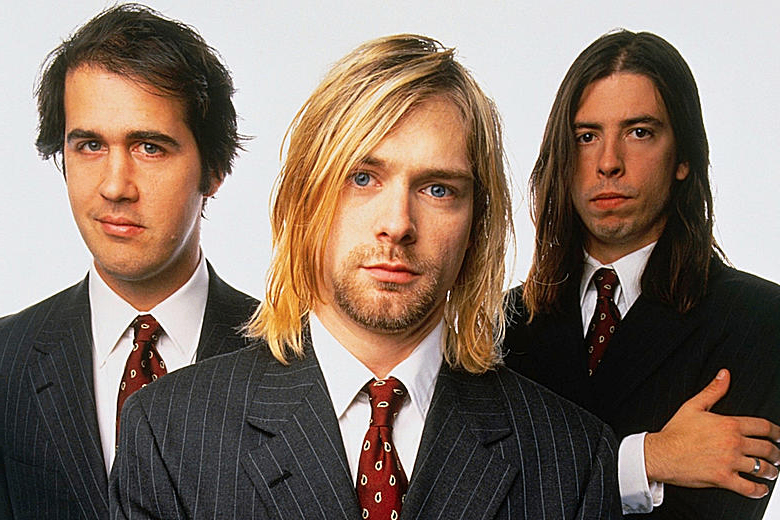
Few bands changed the direction of rock music as dramatically as Nirvana. Emerging from the grunge scene of the Pacific Northwest, the band exploded into global fame with a sound that blended raw punk energy, haunting melodies, emotional honesty, and explosive guitar driven intensity. Led by the unforgettable songwriting of Kurt Cobain, Nirvana gave voice to a generation that felt disconnected from polished pop culture and hungry for something real. Their music could shift from quiet vulnerability to chaotic power in seconds, creating songs that felt deeply personal while still sounding massive on rock radio. Even with a relatively short career, Nirvana built a catalog filled with tracks that continue to inspire musicians and resonate with listeners decades later. The songs on this list represent the defining classics that cemented Nirvana’s legacy as one of the most influential rock bands of all time.
1. Smells Like Teen Spirit
“Smells Like Teen Spirit” is the song that turned Nirvana from a rising alternative rock band into the defining voice of a cultural earthquake. Its opening guitar riff is one of the most recognizable in rock history, a jagged burst of distortion that still sounds like a door being kicked open. What makes the track so powerful is not just its volume, but its tension. The verses are murky, restrained, and almost hypnotic, while the chorus erupts with a force that feels chaotic and liberating at the same time. That quiet and loud dynamic became a blueprint for countless bands, but Nirvana made it feel spontaneous rather than calculated.
Kurt Cobain’s vocal performance is raw, sarcastic, wounded, and explosive, often sounding like he is fighting the song from the inside. The lyrics are famously fragmented, but that ambiguity helped the song speak for a generation that did not want clean slogans or easy answers. Dave Grohl’s drumming gives the track a massive physical impact, while Krist Novoselic’s bass anchors the storm with grimy momentum. “Smells Like Teen Spirit” became more than a hit. It became a cultural turning point, dragging underground disillusionment into the mainstream and changing rock music almost overnight.
2. Come As You Are
“Come As You Are” is one of Nirvana’s most haunting and accessible songs, built around a watery guitar riff that feels instantly familiar yet strangely unsettling. The track moves with a slow, hypnotic pull, creating a mood that is both inviting and suspicious. Unlike the explosive attack of “Smells Like Teen Spirit,” this song works through atmosphere. It drifts forward with a cold, almost dreamlike quality, while Kurt Cobain sings in a voice that sounds calm on the surface but full of buried unease.
The lyric carries contradictions that have become part of the song’s mystery. Phrases about friendship, memory, enemies, and identity circle around each other without settling into a simple meaning. That ambiguity gives “Come As You Are” its lasting fascination. It can feel welcoming, ironic, wounded, or threatening depending on how the listener hears it. The production captures Nirvana at their most polished without losing the band’s essential grit. Dave Grohl’s drums are steady and restrained, while Krist Novoselic’s bass deepens the song’s shadowy pulse.
“Come As You Are” remains one of Nirvana’s most popular songs because it shows the band’s melodic power beneath the distortion. It is eerie, catchy, and emotionally complex, proving that Nirvana could create a massive rock single without relying only on aggression. Its beauty lies in the way it never fully reveals itself.
3. Lithium
“Lithium” is one of Nirvana’s most emotionally complex songs, capturing the unstable swing between numb calm and explosive release. The track is built around contrast, one of the band’s greatest strengths. Its verses are controlled, almost strangely cheerful in their melodic shape, while the chorus bursts open with raw shouts and crashing instruments. That shift mirrors the song’s psychological atmosphere, where faith, loneliness, self deception, and emotional survival seem tangled together in a single nervous system.
Kurt Cobain’s vocal performance is gripping because it feels unpredictable. He sings with a dry, detached tone in one moment, then erupts into cathartic force in the next. The lyrics are filled with uneasy humor and spiritual tension, presenting a narrator who seems to be using belief, companionship, and denial as ways to keep from falling apart. Rather than explaining that instability, the music makes the listener feel it. Dave Grohl’s drums are essential to the song’s impact, moving from restraint to thunder with dramatic precision.
“Lithium” endures because it transforms inner conflict into a rock anthem. It is catchy enough to be sung by crowds, yet dark enough to remain disturbing. Nirvana’s genius often lived in that contradiction. The band could make alienation sound communal, turning private fracture into something thousands of people could shout together.
4. Heart Shaped Box
“Heart Shaped Box” is one of Nirvana’s most intense and visually disturbing songs, a track that combines beauty, discomfort, obsession, and decay into one unforgettable piece of alternative rock. The guitar tone is thick and bruised, moving through verses that feel heavy with dread before opening into a chorus that sounds wounded and enormous. This is Nirvana at their most gothic and surreal, using imagery that feels both personal and dreamlike without ever becoming easy to decode.
Kurt Cobain’s vocal performance is especially powerful here. He sings the verses with a tense, almost drained quality, then pushes his voice into a ragged cry during the chorus. The contrast makes the song feel like emotional pressure being released in violent waves. The lyrics are filled with strange bodily images, religious undertones, and feelings of entrapment, giving the song a claustrophobic emotional charge. The music video added to its mythic quality, presenting a bizarre and unforgettable visual world that matched the song’s unsettling atmosphere.
“Heart Shaped Box” remains popular because it captures Nirvana’s darker artistic vision at full strength. It is not just a grunge hit. It is a nightmare wrapped in melody, a song where ugliness and beauty feed each other. Few rock singles from the era sound as emotionally damaged, visually rich, and impossible to ignore.
5. In Bloom
“In Bloom” is one of Nirvana’s sharpest and most clever songs, combining huge melodic hooks with biting commentary on misunderstanding, fandom, and cultural absorption. Musically, the track is massive, with muscular drums, grinding guitars, and a chorus that feels tailor made for rock radio. Yet beneath that accessibility is a lyric that turns its gaze toward listeners who might love the sound without understanding the meaning. That tension gives the song a sly and almost self aware brilliance.
Kurt Cobain’s vocal delivery moves between weary observation and full throated release. The verses have a lumbering, heavy quality, while the chorus opens into one of Nirvana’s most memorable melodic explosions. Dave Grohl’s drumming is particularly important, giving the song a thick, pounding force that makes it feel larger than life. Krist Novoselic’s bass adds weight and movement, helping the track swing rather than simply crash.
“In Bloom” remains one of Nirvana’s most popular songs because it works on two levels at once. It is catchy enough for casual listeners to embrace immediately, but it also contains a critique of that very kind of surface level consumption. That irony became even sharper as Nirvana’s fame grew. The song proves how brilliantly the band could package discomfort inside a chorus so powerful that everyone wanted to sing along.
6. All Apologies
“All Apologies” is one of Nirvana’s most tender and sorrowful songs, a track that reveals the band’s ability to create beauty without smoothing away pain. The song moves with a circular, almost meditative guitar figure, giving it a sense of resignation and quiet searching. It does not attack like some of Nirvana’s heavier work. Instead, it lingers, unfolding with a fragile grace that makes the emotional weight feel even stronger. The song sounds like exhaustion, confession, and acceptance braided together.
Kurt Cobain’s vocal performance carries a haunting vulnerability. He sounds worn down but strangely peaceful, as though the song is less about solving anything than acknowledging what cannot be fixed. The lyrics are elliptical, filled with fragments of identity, apology, blame, and surrender. Their openness allows listeners to hear grief, irony, fatigue, or forgiveness depending on their own emotional state. The famous refrain has a mantra like quality, turning repetition into release.
“All Apologies” endures because it captures Nirvana’s quiet power. The band is often remembered for distortion and rage, but this song shows their gift for aching melody and emotional atmosphere. It is simple on the surface, yet it feels vast in implication. As one of Nirvana’s most beloved songs, it stands as a deeply human moment of weariness, longing, and unresolved grace.
7. About A Girl
“About A Girl” is one of Nirvana’s most important early songs because it revealed Kurt Cobain’s deep pop instincts long before the band became a global phenomenon. While much of Nirvana’s early work leaned into punk abrasion and sludgy heaviness, this track showed a clearer melodic sensibility inspired by classic songwriting. Its structure is direct, its chord movement is memorable, and its emotional tone is deceptively simple. Beneath the rough surface is a song that could almost belong to a different era, filtered through the grime and unease of late eighties underground rock.
Cobain’s vocal performance has a plainspoken honesty that gives the song its charm. He sounds young, conflicted, and emotionally exposed, singing about a relationship with a mixture of affection, frustration, and guilt. The track does not try to dramatize everything. Instead, it captures the awkward imbalance of dependence and dissatisfaction in a way that feels ordinary and truthful. The later acoustic performance on MTV helped many listeners recognize the song’s melodic strength, proving how well it worked even without heavy distortion.
“About A Girl” remains popular because it shows Nirvana before the mythology fully formed. It is raw but tuneful, modest but revealing. It offers an early glimpse of the songwriting gift that would later reshape rock music.
8. The Man Who Sold The World
“The Man Who Sold The World” became one of Nirvana’s most famous performances, even though the song was originally written by David Bowie. Nirvana’s MTV Unplugged version transformed it into something uniquely their own, replacing glam rock mystery with a haunted acoustic atmosphere. The performance is restrained, shadowy, and deeply memorable, showing a side of the band that did not depend on distortion to create intensity. Instead, the tension comes from tone, pacing, and emotional ambiguity.
Kurt Cobain sings the song with an eerie detachment that suits its strange narrative perfectly. His voice sounds tired and ghostlike, as if he is not simply interpreting the lyric but wandering through it. The guitar arrangement is spare but gripping, and the band’s understated playing gives the performance a chilling clarity. Rather than turning the song into a showcase of technical virtuosity, Nirvana makes it feel like a confession from a half remembered dream.
This version remains popular because it revealed Nirvana’s depth as interpreters. They could take another artist’s song and reshape its emotional center without disrespecting the original. Many younger listeners discovered the song through Nirvana first, which speaks to the power of the performance. It stands as one of the defining moments from their Unplugged set, a performance that captured the band’s fragility, taste, and haunting musical intelligence.
9. Where Did You Sleep Last Night
“Where Did You Sleep Last Night” is one of Nirvana’s most chilling performances, a traditional folk and blues song that the band turned into a devastating final statement during their MTV Unplugged appearance. Often associated with Lead Belly, the song carries a long history of darkness, betrayal, death, and emotional desolation. Nirvana’s version strips the music down to its bare emotional bones, allowing every phrase to feel exposed. There is no need for heavy guitars or studio effects. The performance is terrifying because it is so naked.
Kurt Cobain’s vocal is among the most unforgettable of his career. He begins with restraint, letting the song’s bleak story unfold slowly, but by the final verse his voice cracks open into a cry that feels almost unbearable. That climactic moment has become legendary because it sounds less like performance than possession. The room seems to hold its breath around him. The band plays with solemn discipline, giving Cobain the space to carry the emotional weight.
“Where Did You Sleep Last Night” remains popular because it shows Nirvana reaching beyond grunge into something older, deeper, and more haunted. It connects punk anguish to American folk tragedy, proving that pain can travel across generations and still arrive with shocking force. It is one of the most powerful live recordings in rock history.
10. Rape Me
“Rape Me” is one of Nirvana’s most confrontational songs, a deliberately disturbing piece of music that uses blunt language and abrasive repetition to provoke discomfort. The track has often been discussed because of its title and chorus, but reducing it to shock value misses its deeper purpose. Kurt Cobain intended the song as an anti assault statement and also as a broader expression of violation, exploitation, and resistance. It is not meant to be comfortable. It is meant to force attention onto subjects that polite culture often tries to avoid.
Musically, the song uses Nirvana’s familiar quiet and loud structure, beginning with a simple guitar figure before exploding into harsh distortion. Cobain’s vocal delivery is weary and defiant, carrying both vulnerability and rage. The band plays with controlled brutality, making the song feel both stark and punishing. Its simplicity is part of its force. There is no elaborate metaphor to soften the impact.
“Rape Me” remains one of Nirvana’s most discussed songs because it captures the band’s refusal to make rock music safe or easily digestible. It confronts listeners with discomfort while also revealing Cobain’s interest in power, abuse, media exploitation, and survival. As a popular Nirvana track, it stands as one of their most uncompromising statements, a song that still sparks debate because it was built to unsettle.

Samuel Moore is a frequent contributor to Singers Room. Since 2005, Singersroom has been the voice of R&B around the world. Connect with us via social media below.