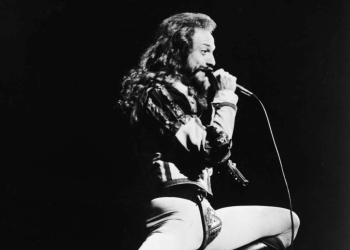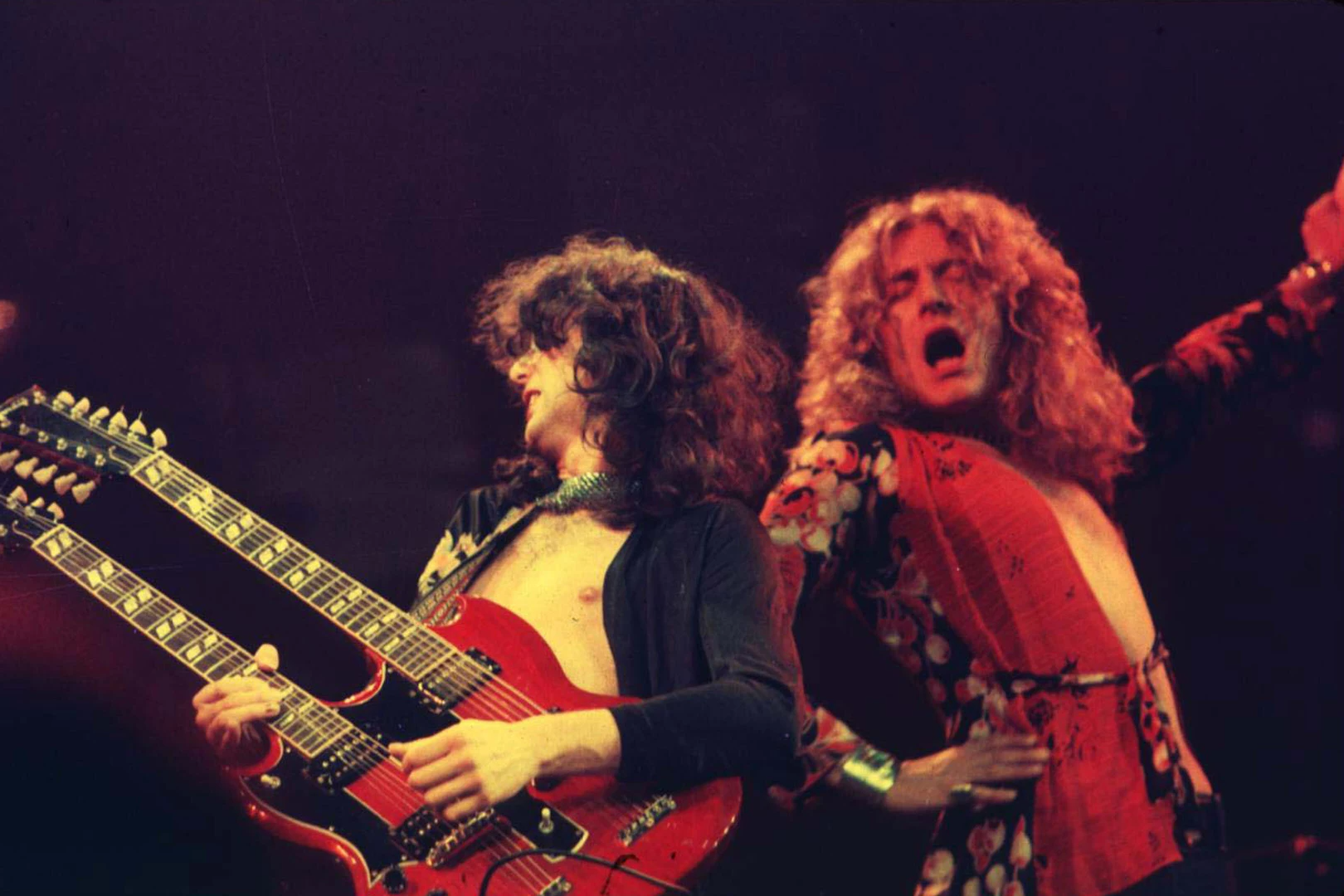
Thunderous riffs, mystical lyricism, and a sound that could shift from delicate acoustics to explosive power in a heartbeat—Led Zeppelin redefined what rock music could be. Blending blues roots with hard rock intensity and touches of folk and fantasy, their songs feel both raw and larger than life. Every track carries a sense of adventure, as if pushing beyond the limits of genre itself. This collection explores the defining songs that built their legendary status, capturing the moments where innovation, emotion, and sheer musical force came together to create some of the most enduring and influential rock recordings ever made.
1. Stairway to Heaven
Stairway to Heaven is the Led Zeppelin song that seems to exist in its own atmosphere, somewhere between folk reverie, spiritual riddle, and rock cathedral. It begins with that instantly recognizable acoustic guitar figure, delicate and almost medieval in mood, before gradually expanding into one of the most famous crescendos in rock history. The song does not hurry. It gathers. Each section feels like another chamber opening inside the same vast structure, moving from quiet contemplation to electric revelation.
Robert Plant’s vocal is crucial to the song’s mystique. He sings with restraint at first, letting the imagery feel dreamlike rather than literal, then rises with the band as the track builds toward its explosive final passage. Jimmy Page’s guitar solo remains one of rock’s defining statements, not because it is merely fast or flashy, but because it feels like the emotional release the whole song has been preparing for. Every note seems to climb toward the same impossible height.
John Paul Jones adds subtle harmonic color through recorder and keyboards, while John Bonham waits patiently before entering with dramatic weight. That patience is part of the song’s genius. When the drums finally arrive, the track changes shape completely. Stairway to Heaven remains popular because it offers the rare experience of a song becoming a journey. It is mysterious, monumental, and deeply embedded in the mythology of rock itself.
2. Whole Lotta Love
Whole Lotta Love is Led Zeppelin at their most primal, a song that turns blues desire into a massive electric ritual. The opening riff is one of Jimmy Page’s most famous creations, thick, swaggering, and instantly physical. It does not invite the listener politely. It kicks the door open. Robert Plant’s vocal matches it with raw sensuality, pushing the performance into territory that feels both playful and dangerous. His voice stretches, moans, and erupts as if the song itself is too charged to remain contained.
The track’s central achievement is its sense of scale. What could have been a straightforward hard blues workout becomes something stranger and more modern through the famous middle section, where echoes, percussion, guitar fragments, and vocal effects swirl into a psychedelic storm. Led Zeppelin make desire sound like a force of nature. The song breaks apart and then snaps back into the riff with renewed impact, proving how powerful tension can be when a band knows exactly when to release it.
John Bonham’s drumming is monumental, giving every accent weight, while John Paul Jones holds the bottom end with quiet authority. Page’s production gives the track depth and menace, making the studio feel like another instrument. Whole Lotta Love remains one of the band’s most popular songs because it captures their essential formula at maximum heat: blues roots, hard rock muscle, sonic experimentation, and overwhelming confidence.
3. Kashmir
Kashmir is one of Led Zeppelin’s grandest achievements, a song that feels less like conventional rock and more like a procession across an immense landscape. Built on a hypnotic guitar figure and an orchestral sense of repetition, it creates a feeling of endless movement without needing speed. Jimmy Page’s riff has a ceremonial quality, while John Bonham’s drums land with enormous force, grounding the track in physical power. John Paul Jones adds orchestral color that enlarges the song without making it feel overdecorated.
Robert Plant’s vocal gives Kashmir its mythic dimension. He sings as if describing a vision, not merely a location. The lyrics evoke travel, heat, distance, and spiritual searching, but the real story is in the atmosphere. The song sounds like a desert mirage built from drums, strings, guitar, and prophecy. It is heavy without relying on speed, mystical without becoming fragile, and repetitive without ever feeling static.
The brilliance of Kashmir lies in its tension between rock force and cinematic grandeur. The band does not chase a traditional chorus in the usual sense. Instead, the track works through accumulation, layering power until the listener feels surrounded by it. Every section seems to widen the horizon. It remains one of Led Zeppelin’s most beloved songs because it represents the band’s ambition at full scale. Few rock tracks have ever sounded this majestic, this strange, or this completely self possessed.
4. Black Dog
Black Dog is a masterclass in controlled chaos, a song that sounds loose and feral while being built with extraordinary precision. The opening call and response between Robert Plant’s vocal and Jimmy Page’s riff creates immediate tension. Plant sings like a blues shouter possessed by rock and roll electricity, then the band answers with a jagged riff that seems to twist around itself in unpredictable ways. The result is thrilling because it feels dangerous, even though the musicianship is razor sharp.
The rhythmic structure is one of the song’s great pleasures. The band moves through shifting accents that can feel almost disorienting, yet John Bonham anchors everything with massive authority. John Paul Jones contributes to the song’s complexity with a riff structure that refuses to sit neatly inside ordinary expectations. What makes Black Dog so exciting is the way Led Zeppelin turn rhythmic difficulty into pure swagger. The listener does not need to count it to feel it. The body understands the lurch, the snap, and the release.
Plant’s performance is exuberant and commanding, full of blues inflection but magnified through hard rock volume. Page’s guitar tone is thick, biting, and unforgettable. Every return of the riff feels like a beast circling back into view. Black Dog remains popular because it captures Led Zeppelin’s ability to sound both technically brilliant and wildly untamed. It is brainy rock disguised as animal instinct.
5. Immigrant Song
Immigrant Song is Led Zeppelin in battle cry mode, compact, fierce, and instantly unforgettable. The song opens with Robert Plant’s famous wail, a vocal sound so sharp and elemental that it seems to come from somewhere older than rock music. From that moment, the band charges forward with relentless momentum. The riff is simple in shape but enormous in effect, creating the feeling of a warship cutting through cold water. It is one of the band’s most direct songs, yet it carries a mythic intensity that makes it feel larger than its running time.
The Norse imagery gives the track its distinctive flavor, with references to distant lands, conquest, and saga like motion. But the song’s true power is not just lyrical. Led Zeppelin make mythology sound physical. John Bonham’s drumming is forceful and economical, driving the track like a military engine. John Paul Jones locks in tightly, giving the song a muscular foundation, while Jimmy Page’s guitar cuts with icy precision.
Plant’s vocal is astonishing because it balances theatricality with raw force. He does not simply sing about Viking imagery. He becomes the voice of the raid, the wind, the horizon, and the charge. Immigrant Song remains popular because it is so immediate. There is no long buildup, no sprawling improvisation, no wasted ornament. It arrives, strikes, and leaves a mark. Few rock songs have ever packed so much drama into such a tight frame.
6. Rock and Roll
Rock and Roll is Led Zeppelin’s roaring love letter to the music that shaped them, delivered with the force of a band fully aware of its own power. John Bonham’s opening drum pattern is one of the great entrances in rock history, instantly setting the song in motion with explosive confidence. From there, the band tears into a track that honors early rock and roll while amplifying it through the volume, virtuosity, and swagger of the seventies.
The song’s brilliance lies in its joyful directness. Led Zeppelin were capable of sprawling epics and mystical soundscapes, but here they strip the mission down to pulse, riff, voice, and release. Robert Plant sings with ecstatic urgency, sounding like a man rediscovering the source of his own musical fire. The song feels like memory turned electric. It celebrates the old thrill of rhythm and rebellion, but it is performed with the thunder of a band that had already transformed rock’s possibilities.
Jimmy Page’s guitar work is bright, driving, and sharp, while John Paul Jones keeps the arrangement grounded with impeccable feel. Bonham, as always, is more than a drummer. He is the engine room, the earthquake, and the swing beneath the weight. Rock and Roll remains popular because it is both tribute and declaration. It says that the old music still matters, but it also shows what happens when that spirit is pushed through Led Zeppelin’s massive sound.
7. Ramble On
Ramble On is one of Led Zeppelin’s most elegant blends of folk lyricism and hard rock force. The song begins with a gentle, almost wandering quality, as if the listener has joined a traveler mid journey. Jimmy Page’s acoustic textures create a warm and open atmosphere, while John Paul Jones adds melodic bass movement that gives the track a supple, rolling feel. Robert Plant sings with a searching tone, balancing romantic longing with a sense of mythic adventure.
What makes Ramble On so distinctive is the way it shifts from pastoral reflection into muscular release. The chorus expands with electric energy, but it never destroys the song’s wandering spirit. It feels like a road song written for both the real world and an imagined kingdom. Plant’s references to fantasy literature deepen the atmosphere, but the emotional center remains accessible: the need to move, seek, love, lose, and continue onward.
John Bonham’s restraint is especially important. Rather than dominating the early sections, he shapes the groove with subtlety, allowing the song to breathe before the heavier moments arrive. Page’s guitar work is tasteful and precise, showing that his power as a player was not limited to volume. Ramble On remains popular because it captures one of Led Zeppelin’s most appealing contrasts. It is delicate and forceful, earthly and mythic, intimate and expansive. It turns restlessness into poetry and gives motion a melody.
8. Good Times Bad Times
Good Times Bad Times is the opening statement that announced Led Zeppelin with startling confidence. As the first track on their debut album, it had the difficult task of introducing a band that sounded almost fully formed from the beginning. The song wastes no time establishing their identity. Jimmy Page’s guitar is sharp and commanding, John Paul Jones provides a tough melodic foundation, Robert Plant sings with youthful fire, and John Bonham delivers drumming that immediately changes the conversation.
Bonham’s bass drum work is one of the track’s defining features. His patterns sound impossibly powerful and fluid, giving the song a rhythmic sophistication that separates it from ordinary late sixties hard rock. The band sounds hungry, but already disciplined. That combination is rare. They are not simply making noise. They are building a new kind of heaviness from blues, rock, rhythm, and sheer ensemble chemistry.
The lyric reflects youthful disappointment and resilience, but the emotional force comes mostly from the performance. Plant’s voice has brightness and bite, carrying the melody with conviction. Page’s production gives the band space to sound huge without losing clarity. Every member is audible, and every member matters.
Good Times Bad Times remains popular because it captures the first flash of Led Zeppelin’s greatness. It is concise, muscular, and thrillingly assured. Many legendary bands take time to discover themselves. Led Zeppelin seemed to arrive already carrying thunder.
9. Dazed and Confused
Dazed and Confused is Led Zeppelin at their darkest and most hypnotic, a song that turns blues menace into a slow burning psychedelic ritual. The track moves with a heavy, stalking quality, built around a bass line that feels like footsteps in a dim hallway. Robert Plant’s vocal is haunted and accusatory, filled with desire, frustration, and unease. Rather than delivering a simple blues complaint, the band stretches the mood into something stranger and more theatrical.
Jimmy Page’s guitar work is central to the song’s atmosphere. His tone is sharp, eerie, and full of space, and his bowing technique adds a ghostly texture that became a major part of the song’s live mythology. The recording feels like a descent, not just a performance. Each section pulls the listener deeper into tension before the band erupts with controlled violence.
John Bonham’s drumming gives the track enormous weight, especially in the louder passages, while John Paul Jones keeps the entire structure grounded in that ominous low end. The dynamics are essential. Led Zeppelin understood that heaviness becomes more powerful when surrounded by silence, suspense, and restraint.
Dazed and Confused remains popular because it reveals the band’s ability to transform blues source material into something nearly cinematic. It is seductive, unsettling, and expansive, a showcase for their darker imagination and their talent for making danger sound musical.
10. Communication Breakdown
Communication Breakdown is one of Led Zeppelin’s fiercest early blasts, a compact explosion that helped define the speed, aggression, and sharp edged excitement of hard rock. The riff hits with immediate force, tight and urgent, leaving no room for hesitation. Jimmy Page’s guitar tone is raw and cutting, while John Bonham’s drums drive the song forward with relentless energy. It is short, direct, and built to strike fast.
Robert Plant’s vocal brings youthful panic and desire to the track. He sounds as if emotion has overloaded the wires, which perfectly suits the title. The song captures the feeling of frustration turning into pure electric motion. There is no elaborate story, no extended journey, no mystical framework. Instead, Led Zeppelin focus everything into velocity and impact.
John Paul Jones helps keep the performance tight, giving the song its muscular center while the guitar and vocal push toward the edge. The whole band sounds combustible. What makes the track especially important is how forward looking it feels. Its speed and attack would later echo through punk and heavy metal, even though it remains deeply rooted in blues based rock and roll energy.
Communication Breakdown remains popular because it shows Led Zeppelin at their most concise and urgent. It is not the band’s grandest song, but it is one of their most explosive. In just a few minutes, it proves that they could be as devastating in a sprint as they were in an epic.

Samuel Moore is a frequent contributor to Singers Room. Since 2005, Singersroom has been the voice of R&B around the world. Connect with us via social media below.