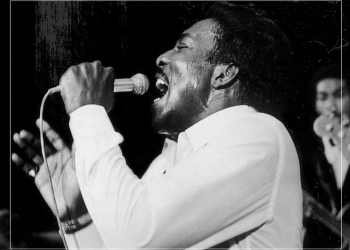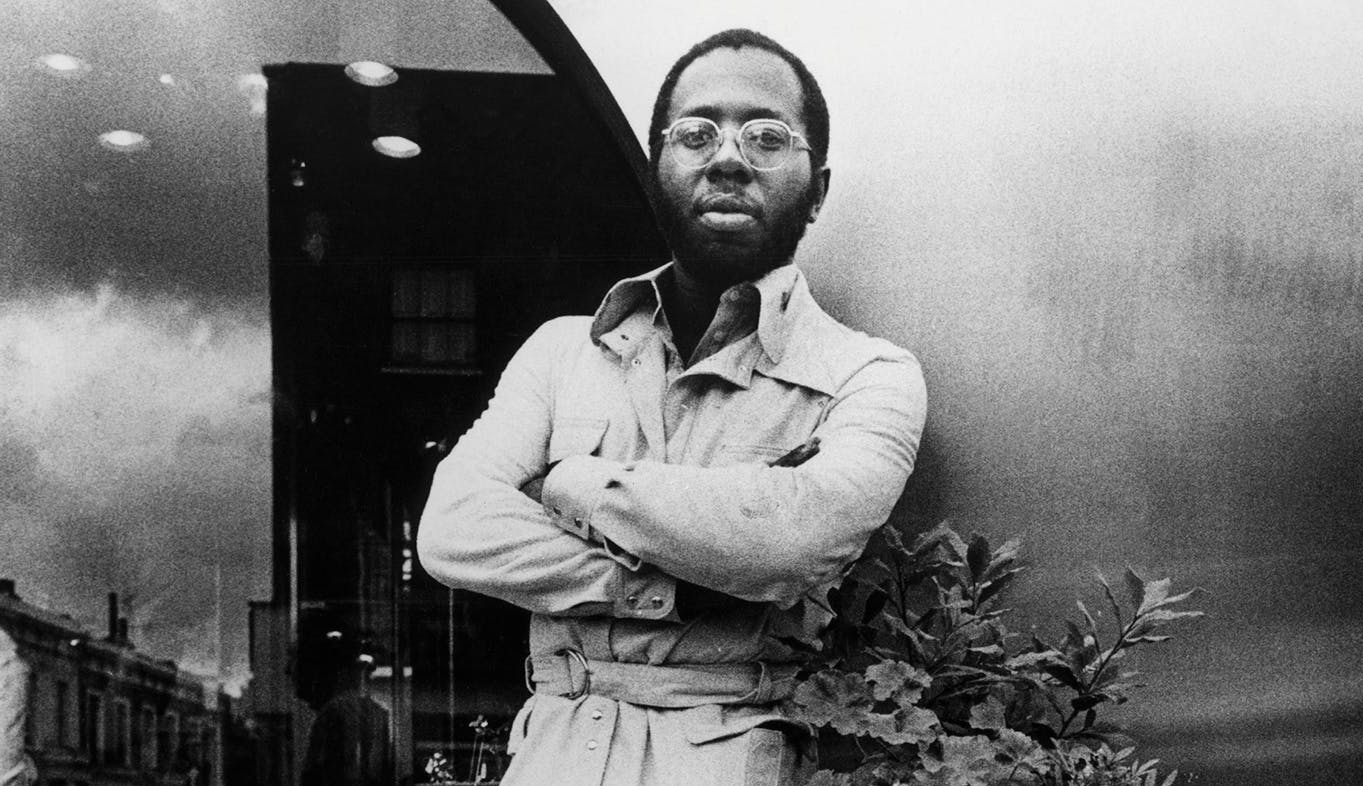
Smooth falsetto, socially conscious lyrics, and grooves that could glide as easily as they could strike—Curtis Mayfield brought a rare blend of elegance and urgency to soul music. Whether leading The Impressions or shaping his groundbreaking solo career, Mayfield infused every note with purpose, weaving messages of love, struggle, and empowerment into unforgettable melodies. His songs don’t just sound beautiful—they say something meaningful. This collection explores the tracks that defined his legacy, where silky arrangements meet powerful storytelling, and where soul music becomes both a reflection of its time and a voice that still resonates today.
1. Move On Up
Move On Up is Curtis Mayfield at his most radiant, a song that feels less like a recording and more like a sunrise with horns. From the first burst of brass and percussion, the track carries a sense of lift that is almost impossible to resist. Mayfield’s falsetto enters with calm assurance, never shouting over the music, yet somehow guiding the whole arrangement like a preacher, poet, and bandleader joined in one voice. The message is simple on the surface, but the emotional force behind it is immense: keep rising, keep believing, keep moving toward dignity even when the road is heavy.
What makes Move On Up so powerful is the way it turns optimism into motion. The rhythm does not merely accompany the words. It embodies them. The song climbs, pushes, glows, and refuses to stand still. Mayfield’s genius was his ability to make encouragement sound elegant rather than sentimental. He does not deny hardship. He sings through it, above it, and beyond it.
The arrangement is one of the great achievements of soul music. The horns are triumphant without becoming bombastic, the percussion drives with joyful urgency, and the groove seems to stretch toward endless possibility. Move On Up remains beloved because it speaks to personal ambition, social struggle, and spiritual endurance all at once. It is a song for anyone who has ever needed a reason to keep going.
2. Superfly
Superfly is one of Curtis Mayfield’s sharpest character studies, a song that wraps street mythology, survival, and moral ambiguity inside a groove of extraordinary cool. Written for the film of the same name, the track could have easily glamorized its central figure without question. Mayfield does something far more interesting. He understands the charisma of the hustler, the style, intelligence, danger, and confidence, but he also lets the listener hear the trap beneath the shine. The result is a song that feels seductive and critical at the same time.
The groove is sleek and controlled, built on bass, percussion, guitar, and orchestral touches that seem to move through city streets after midnight. Mayfield’s vocal is calm, airy, and observant. He does not roar over the story. He glides above it, seeing everything. That distance is part of the brilliance. His falsetto sounds almost angelic while describing a world shaped by pressure, risk, and compromised dreams.
As a piece of soundtrack writing, Superfly is masterful because it gives the film’s world a soul and conscience. It does not simply decorate the action. It interprets it. Mayfield turns the title character into a symbol of ambition under impossible circumstances. The song remains popular because it is stylish, funky, and morally complex. It lets listeners enjoy the groove while feeling the weight of the story behind it.
3. Freddie’s Dead
Freddie’s Dead is Curtis Mayfield’s gift for social storytelling at full strength. The song comes from the world of Super Fly, yet it stands completely on its own as a devastating portrait of a life swallowed by forces larger than one person. Freddie is not treated as a disposable character or a cautionary slogan. Mayfield gives him tragedy, context, and sorrow. The song mourns him while also asking what kind of world produces such endings.
The arrangement is deceptively smooth. The rhythm moves with a sly, almost elegant pulse, while strings and guitar color the track with unease. Mayfield’s vocal is gentle but cutting, like someone delivering bad news with compassion and anger carefully braided together. The power of Freddie’s Dead lies in its refusal to separate personal failure from social neglect. Freddie is responsible for choices, but he is also part of a larger landscape of desperation.
Mayfield’s phrasing gives the song its moral intelligence. He does not overstate the grief. He lets the groove carry the contradiction: the music feels good, but the story hurts. That tension is central to his genius. He could make a song dance while still forcing listeners to confront uncomfortable truths.
Freddie’s Dead remains one of Mayfield’s most popular and respected recordings because it turns soundtrack soul into social literature. It is funky, mournful, elegant, and deeply humane.
4. Pusherman
Pusherman is one of Curtis Mayfield’s most chilling and hypnotic recordings, a song that gives voice to temptation without ever fully surrendering to it. Set within the world of Super Fly, it presents the drug dealer not as a cartoon villain, but as a figure of seductive power, economic survival, and moral corrosion. Mayfield’s brilliance is in the complexity. The groove is irresistibly smooth, yet the atmosphere is uneasy. The music draws you in while the subject matter quietly darkens the room.
The bass line is low and purposeful, the percussion is crisp, and the guitar curls through the track like smoke. Mayfield’s falsetto floats above the arrangement with eerie calm. That contrast between beauty and danger is what makes Pusherman so unforgettable. He does not sing the role with crude menace. He makes the character sound persuasive, controlled, and almost graceful, which is far more unsettling.
As a piece of social observation, the song understands how vice can present itself as opportunity. It does not moralize from a distance. It enters the language of the street economy and reveals both its allure and its poison. Mayfield’s vocal restraint allows the listener to feel the tension without being told exactly how to respond.
Pusherman remains popular because it is musically elegant and thematically fearless. It captures a world where survival and destruction can wear the same suit, and it does so with one of the deepest grooves in seventies soul.
5. People Get Ready
People Get Ready is one of Curtis Mayfield’s most enduring spiritual and social statements, a song that carries the grace of gospel into the heart of popular music. Originally associated with The Impressions, it became inseparable from Mayfield’s identity as a writer of hope, movement, and moral clarity. The song’s central image of a train is beautifully simple, yet it opens into something vast. It suggests salvation, justice, community, and the promise of forward motion through suffering.
Mayfield’s writing is remarkable because it never feels heavy handed. The message is profound, but the melody is gentle. The song persuades through tenderness rather than force. Its sense of faith is not narrow or exclusionary. It feels generous, open, and deeply human. That is why it has spoken across generations, denominations, movements, and musical styles.
The performance has a quiet glow. The harmonies create a churchlike warmth, while the rhythm moves with patient dignity. There is no need for spectacle. The song trusts its own truth. Mayfield understood that the most powerful messages often arrive softly, allowing listeners to step into them rather than be pushed.
People Get Ready remains popular because it offers comfort without denying struggle. It is a song of preparation, not escape. It asks the listener to believe that change is coming, and to be ready in spirit, conscience, and heart when it arrives.
6. The Makings of You
The Makings of You is Curtis Mayfield at his most delicate, intimate, and quietly breathtaking. The song is a love meditation built from small images, soft colors, and a melody that seems to move with the gentleness of memory. Unlike his more socially charged work, this recording turns inward, exploring romance not through grand declarations but through details. Mayfield sings as though he is noticing beauty in real time, building affection from texture, scent, grace, and feeling.
The arrangement is exquisitely restrained. Strings, rhythm, and subtle instrumental touches create an atmosphere of tenderness without overwhelming the vocal. Mayfield’s falsetto is perfectly suited to this kind of material. His voice sounds almost weightless, yet every phrase carries emotional substance. He does not need to push. He lets the song hover.
What makes The Makings of You so special is its sense of reverence. It treats love as something composed of fine elements, not as a single dramatic event. The title itself suggests craft and creation, as though the beloved is made from the sweetest fragments of the world. Mayfield’s poetry is elegant, but never cold. It feels lived in, admired, and deeply sincere.
The song remains popular among soul devotees because it reveals the romantic side of Mayfield’s genius with unusual purity. It is not flashy, but it is unforgettable. The Makings of You proves that his quietest songs could be just as powerful as his boldest statements.
7. We Got to Have Peace
We Got to Have Peace is Curtis Mayfield’s idealism expressed with clarity, rhythm, and deep moral urgency. The song does not approach peace as a vague wish or decorative slogan. It treats peace as a necessity, something communities must claim if they are to survive and grow. Mayfield’s voice carries the message with graceful conviction. He sounds hopeful, but not naive. There is concern beneath the beauty, a recognition that the world is fragile and that harmony requires effort.
The groove is warm and fluid, allowing the message to move rather than sit still. Mayfield understood that socially conscious music did not have to sound severe to be serious. He could place a demand for peace inside a rhythm that invited people closer. That was one of his great artistic gifts. He made moral imagination feel musical, bodily, and communal.
The arrangement supports the lyric with brightness and momentum. The guitars shimmer, the percussion keeps things gently alive, and Mayfield’s falsetto glides with calm purpose. He does not shout the message. He repeats and shapes it until it begins to feel like common sense, like something the listener has always known but needed to hear again.
We Got to Have Peace remains popular because its message has never lost relevance. It is rooted in its era, yet it still speaks to any moment troubled by division, fear, and unrest. Mayfield offers not escapism, but a vision of human responsibility set to a beautiful soul groove.
8. Keep On Keeping On
Keep On Keeping On is Curtis Mayfield’s philosophy of endurance set to music. The title alone has become a kind of mantra, but the song gives that phrase depth, warmth, and purpose. Mayfield’s voice carries encouragement without false cheer. He understands that persistence is not always glamorous. Sometimes it is weary, quiet, and stubborn. That is what makes the track so moving. It does not pretend hardship disappears because someone sings about hope. It insists that hope matters precisely because hardship is real.
The arrangement moves with gentle insistence, creating a groove that feels like steady forward motion. Mayfield transforms resilience into rhythm. His falsetto does not dominate the music in a conventional powerhouse sense. Instead, it guides the listener, almost like a hand on the shoulder. There is compassion in the delivery, and that compassion gives the song its lasting emotional force.
What makes Keep On Keeping On especially powerful is the way it bridges personal and collective struggle. It can be heard as advice to one individual, a message to a community, or a broader statement about survival in unjust conditions. Mayfield’s writing often worked that way, expanding from intimate language into social meaning without strain.
The song remains beloved because it offers strength without hardness. It is soulful, patient, and wise. In Mayfield’s hands, endurance becomes not just an act of survival, but an act of dignity.
9. If There Is a Hell Below We Are All Going to Go
If There Is a Hell Below We Are All Going to Go is Curtis Mayfield at his most apocalyptic, confrontational, and sonically daring. The song erupts from a place of warning, anger, and spiritual alarm. It is not content to soothe. It wants to shake the listener awake. Mayfield’s opening atmosphere is unsettling, full of tension and dread, before the groove arrives with heavy force. This is soul music as prophecy, and it shows how fearless Mayfield could be when facing the violence and hypocrisy of his time.
The track is built around a dark, churning rhythm that feels almost volcanic. Guitars, percussion, bass, and orchestral textures collide in a way that creates pressure rather than comfort. Mayfield uses beauty not to soften the message, but to make the warning more haunting. His falsetto, usually associated with grace and lift, becomes something eerie here, floating above the chaos like a witness to collapse.
Lyrically, the song addresses social breakdown with unusual directness. Race, fear, moral failure, and collective responsibility all gather inside the performance. Mayfield does not place himself outside the crisis. The title includes everyone, which makes the warning even stronger. This is not accusation from a safe distance. It is a communal reckoning.
The song remains one of his most important works because it expanded what soul music could contain. It is political, psychedelic, funky, frightening, and magnificent. Mayfield turns unrest into sound with unforgettable force.
10. Future Shock
Future Shock captures Curtis Mayfield looking at modern life with a mixture of concern, rhythm, and visionary unease. The song belongs to the era when Mayfield was using soul and funk not only to entertain, but to diagnose the world around him. Its title suggests disorientation, the feeling of being pushed too quickly into social, technological, and moral change without enough wisdom to handle it. Mayfield turns that anxiety into a groove that is sharp, restless, and deeply compelling.
The music moves with a tense sophistication. The rhythm is funky, but there is nervous energy beneath it. Mayfield makes the future sound exciting and dangerous at the same time. His vocal remains smooth, almost serene, which creates a striking contrast with the unease of the subject. That contrast is one of his trademarks. He could sing troubling truths in a voice so beautiful that the listener leaned closer before realizing how serious the message was.
The arrangement is layered and purposeful, with guitars, bass, percussion, and orchestral touches forming a dense urban soundscape. Rather than presenting social commentary as a speech, Mayfield places it inside the body of the groove. The listener feels the pressure before fully analyzing it.
Future Shock remains popular among fans because it shows Mayfield’s imagination moving beyond immediate headlines into broader questions about where society is headed. It is thoughtful, funky, unsettling, and unmistakably his, a song that still feels alert to the anxieties of modern life.

Samuel Moore is a frequent contributor to Singers Room. Since 2005, Singersroom has been the voice of R&B around the world. Connect with us via social media below.