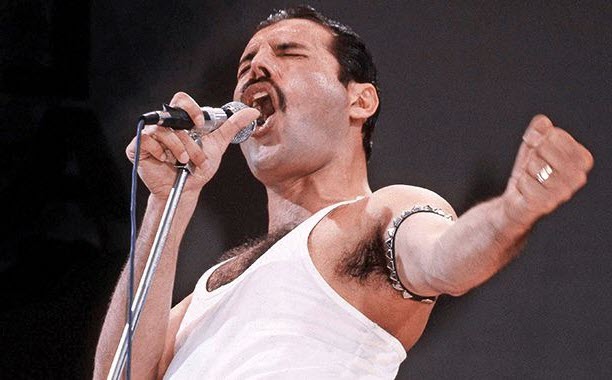
Freddie Mercury wasn’t just a singer—he was a phenomenon. With a voice that soared across octaves, a stage presence that electrified millions, and a creative genius that defied convention, Freddie redefined what it meant to be a rock star. As the frontman of Queen, he delivered some of the most iconic performances and recordings in music history, blending opera, rock, pop, and theatrical flair into a sound entirely his own. His songs weren’t just hits—they were anthems, bursting with emotion, power, and personality. In this article, we’re counting down the top 10 most popular Freddie Mercury songs of all time—the unforgettable tracks that showcase his extraordinary vocal range, his fearless artistry, and his lasting legacy. From stadium-shaking rock anthems to delicate, soul-stirring ballads, these songs continue to inspire, move, and unite fans across the globe. Whether he was commanding the stage at Live Aid or crafting magic in the studio, Freddie Mercury always gave us everything—and then some. So crank up the volume, warm up your vocal cords, and get ready to relive the brilliance of a true musical legend. These are the songs that made Freddie Mercury immortal. Let the celebration begin!
1. Don’t Stop Me Now (1979)
Bursting with joy and uncontainable energy, “Don’t Stop Me Now” debuted on Jazz in 1979 and has since become one of Queen’s most beloved songs. Written by Mercury during a particularly exuberant period of his life, the track is a celebration of freedom, pleasure, and living in the moment. With its infectious piano rhythm and Mercury’s ecstatic vocal delivery, the song radiates pure adrenaline. Though not a major hit upon release, it has grown into a cultural phenomenon—used in films, commercials, and public celebrations—thanks to its irresistible feel-good vibe.
2. Killer Queen (1974)
“Killer Queen,” Mercury’s first major songwriting success, introduced Queen to the mainstream when it was released in 1974 on Sheer Heart Attack. The track is a clever mix of glam rock, cabaret, and British wit, with Mercury’s lyrics painting a portrait of a mysterious, high-class call girl. Its intricate vocal harmonies, brisk piano lines, and sharp guitar solos made it an instant standout. Mercury’s theatrical flair shines throughout, capturing elegance and danger in equal measure. This song not only defined Queen’s early sound but also showcased Mercury’s growing prowess as a composer and lyrical storyteller.
3. The Show Must Go On (1991)
Released in 1991 on Innuendo, “The Show Must Go On” became Freddie Mercury’s final anthem of defiance. Though primarily written by Brian May, the song was inspired by Mercury’s unwavering determination to perform despite his deteriorating health due to AIDS. Mercury’s vocal performance is nothing short of heroic—brave, powerful, and heartbreaking. Every line is drenched in emotion, as he sings of perseverance in the face of death. It stands as one of the most moving swan songs in music history and a tribute to Mercury’s unmatched courage and showmanship.
4. Bohemian Rhapsody (1975)
Released in 1975 as part of A Night at the Opera, “Bohemian Rhapsody” is Freddie Mercury’s most ambitious and defining masterpiece. Seamlessly blending ballad, opera, and hard rock, the song defied every rule of radio at the time with its six-minute runtime and genre-bending structure. Mercury’s vision was fully realized with layered harmonies, dramatic storytelling, and haunting lyrics that remain enigmatic to this day. “Bohemian Rhapsody” wasn’t just a song—it was a theatrical experience, a sonic revolution that elevated Queen to rock royalty. To this day, it continues to top polls, break streaming records, and captivate new generations.
5. Under Pressure (1981)
In 1981, lightning struck when Queen teamed up with David Bowie for “Under Pressure,” a spontaneous collaboration that became one of rock’s most iconic moments. Built around a simple yet unforgettable bassline, the song’s power lies in its emotional urgency and vocal interplay between Mercury and Bowie. Their contrasting voices—Mercury’s soaring highs and Bowie’s grounded baritone—convey themes of stress, compassion, and the human condition. Released as a single and later included on Hot Space (1982), it remains a standout in both artists’ catalogs and a poignant reminder of their genius.
6. Crazy Little Thing Called Love (1979)
“Crazy Little Thing Called Love” is Mercury’s rockabilly homage to Elvis Presley, written in 1979 and released on The Game in 1980. Composed on guitar—an instrument Mercury rarely played—the song channels the spirit of 1950s rock ‘n’ roll with infectious charm and simplicity. Its clean rhythm, catchy hooks, and Mercury’s swaggering vocals led to Queen’s first U.S. number-one single. The track’s retro vibe stood out among the band’s more theatrical works, proving Mercury’s versatility and effortless ability to tap into multiple musical eras with authenticity and flair.
7. We Are the Champions (1977)
Released in 1977 alongside “We Will Rock You” on News of the World, “We Are the Champions” is Freddie Mercury’s triumphant ode to resilience and victory. The slow-burning ballad builds into a powerful crescendo, with Mercury delivering each line like an anthem for the underdog. Its universal message of overcoming adversity has made it a staple at sporting events and moments of triumph worldwide. The song’s sweeping melody and defiant lyrics cement Mercury’s ability to craft music that inspires and unites on a grand scale.
8. Somebody to Love (1976)
In 1976, Mercury took gospel and soul influences and transformed them into the soaring, heartfelt anthem “Somebody to Love.” Featured on A Day at the Races, this track showcases Mercury’s extraordinary vocal range and emotional depth. He channeled his love for Aretha Franklin into the song’s rich harmonies and spiritual yearning, supported by a choir-like wall of vocals created by the band themselves. The song’s raw plea for companionship, delivered with Mercury’s signature intensity, resonates deeply with listeners, making it one of Queen’s most cherished classics.
9. Love of My Life (1975)
Freddie Mercury showed his softer, more vulnerable side with “Love of My Life,” a tender ballad from A Night at the Opera released in 1975. Written for his longtime companion Mary Austin, the song features Mercury on piano and Brian May on harp and acoustic guitar. The live acoustic versions became a fan favorite during Queen’s tours, often sung back to Mercury by thousands of adoring voices. Its emotional sincerity and haunting melody have made it a timeless love song, highlighting Mercury’s ability to connect deeply with listeners through simplicity and heart.
10. Barcelona (1987)
“Barcelona” was a bold and visionary collaboration between Freddie Mercury and Spanish operatic soprano Montserrat Caballé, released in 1987. Fusing rock and opera in ways never attempted before, the song was Mercury’s ode to both Caballé’s artistry and the city itself. With its dramatic orchestration, sweeping vocals, and grand scale, “Barcelona” broke new ground in cross-genre experimentation. Mercury trained his voice to match operatic standards, and the result is a majestic, emotionally charged duet that became an anthem for the 1992 Barcelona Olympics. It remains one of Mercury’s most daring and unique solo achievements.

Samuel Moore is a frequent contributor to Singers Room. Since 2005, Singersroom has been the voice of R&B around the world. Connect with us via social media below.









