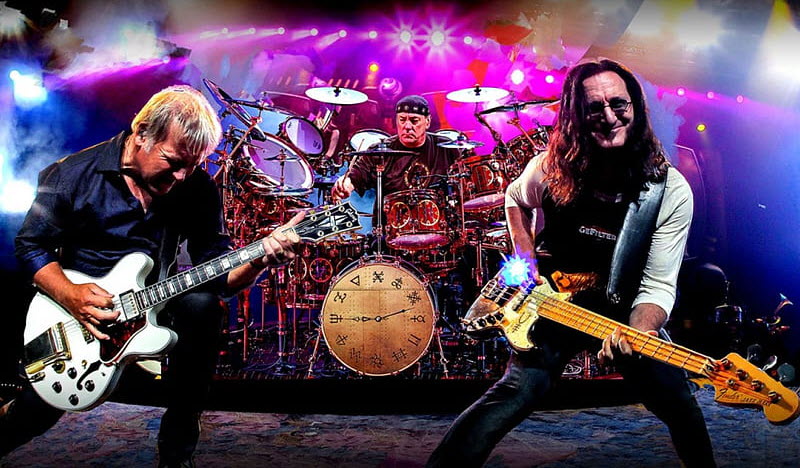
Few bands have left as powerful and enduring a mark on rock music as Rush. With their unmatched blend of technical prowess, lyrical depth, and fearless experimentation, this Canadian power trio redefined what a rock band could be. Over the course of four decades, Geddy Lee, Alex Lifeson, and Neil Peart created a body of work that challenged conventions and captivated millions of fans across the globe. Whether it was their early hard rock anthems, intricate progressive epics, or synth-laced explorations of the ’80s, Rush always marched to the beat of their own drum — quite literally.
In this countdown, we dive into the Top 10 Most Popular Rush Songs of All Time, celebrating the tracks that not only defined their career but also became staples of classic rock history. These aren’t just songs — they’re musical milestones that showcase Rush’s ability to blend mind-bending musicianship with thought-provoking themes. Whether you’re a lifelong fan or just taking your first steps into their discography, this list captures the essence of what makes Rush truly legendary. So crank up the volume, cue the odd time signatures, and get ready to revisit the sonic brilliance of one of rock’s greatest bands.
1. Tom Sawyer (1981)
“Tom Sawyer” isn’t just a song — it’s Rush’s definitive anthem. Released in 1981 on the landmark album Moving Pictures, the track represents the perfect blend of technical mastery and rock attitude. From the moment Geddy Lee’s swirling synthesizer intro kicks in, it’s clear you’re about to experience something unique. Neil Peart’s lyrics reimagine Mark Twain’s rebellious spirit for the modern age, presenting a fiercely independent outsider who refuses to conform. The power trio format is on full display: Lee’s snarling vocals and thunderous bass, Alex Lifeson’s razor-sharp riffs and textural flourishes, and Peart’s intricate, almost orchestral drumming. Together, they create a sonic journey that is at once cerebral and visceral. “Tom Sawyer” quickly became Rush’s signature track — the one that captured mainstream audiences without sacrificing their progressive roots. It’s more than a hit; it’s a mission statement. With its unforgettable chorus, shifting time signatures, and philosophical undertones, the song remains a touchstone not only for Rush fans but for anyone who appreciates rock music that dares to think deeply while rocking hard. Over 40 years later, “Tom Sawyer” still sounds fresh, fierce, and boldly original.
2. Limelight (1981)
“Limelight,” also from Moving Pictures, offers a deeply personal look into the complexities of fame — especially as experienced by lyricist and drummer Neil Peart. Released in 1981, the song explores the emotional toll that public recognition can take on someone who values privacy and introspection. Lifeson’s sparkling, almost melancholic guitar intro sets a reflective mood, leading into Geddy Lee’s passionate vocals, which carry the weight of Peart’s unease with celebrity life. The chorus — “Living in the limelight, the universal dream / For those who wish to seem” — captures the tension between public image and private self. Lifeson’s guitar solo here is one of his most expressive, not just technically brilliant but emotionally raw, adding depth to the song’s theme. What makes “Limelight” stand out is its ability to be both musically powerful and emotionally vulnerable. It’s Rush at their most accessible and human, turning internal conflict into anthemic art. Even decades after its release, “Limelight” continues to resonate with anyone who’s struggled to reconcile identity with expectation. It’s a timeless reflection on the price of visibility, made unforgettable through Rush’s masterful composition.
3. The Spirit of Radio (1980)
With “The Spirit of Radio,” released in 1980 as the opening track of Permanent Waves, Rush made a bold shift toward more concise and accessible songwriting while retaining their progressive essence. The song bursts to life with Alex Lifeson’s bright, staccato guitar riff — one of the most recognizable intros in rock history. The track quickly evolves into a genre-blending rollercoaster, incorporating elements of funk, rock, and even reggae, all underpinned by Geddy Lee’s energetic vocals and Neil Peart’s sharp, poetic lyrics. Lyrically, it’s a tribute to the golden age of FM radio, celebrating its ability to elevate and inspire — while also issuing a gentle critique of the industry’s drift toward commercialization. “The Spirit of Radio” manages to feel joyful and biting all at once, a celebration of music’s purity and the personal freedom it provides. It became one of Rush’s biggest hits and helped them reach a wider audience without compromising their artistic integrity. More than just a radio staple, it remains a rallying cry for authenticity in an industry too often driven by formula. It’s a celebration of music’s soul — dynamic, defiant, and endlessly replayable.
4. Closer to the Heart (1977)
“Closer to the Heart,” from 1977’s A Farewell to Kings, is one of Rush’s most enduring songs — and a perfect example of their ability to marry depth with simplicity. Clocking in at just under three minutes, it distills their progressive spirit into a compact, emotionally rich anthem. The track opens with delicate acoustic guitar, setting a gentle, introspective mood before building to a powerful electric crescendo. Geddy Lee’s vocals are tender yet commanding, guiding listeners through Neil Peart’s idealistic lyrics — co-written with poet Peter Talbot — which call for a more compassionate and creative world. The song’s message is timeless: real change comes not from power alone, but from empathy and vision. Alex Lifeson’s guitar solo is brief but piercing, capturing the song’s emotional arc with graceful precision. While Rush is often celebrated for their technical brilliance and lengthy epics, “Closer to the Heart” proves they could also write concise, radio-friendly tracks without losing their philosophical edge. It became one of their first true hits and remains a favorite among fans and newcomers alike. Poignant and sincere, it’s a song that speaks to the better angels of our nature.
5. Subdivisions (1982)
“Subdivisions,” released in 1982 on Signals, marks one of Rush’s most emotionally resonant and stylistically bold departures. Leaning heavily into synthesizer-driven textures, the track captures the alienation of suburban youth with unflinching honesty. Geddy Lee’s icy keyboard melodies immediately set a tone of introspection, while Neil Peart’s lyrics delve into the quiet despair of conformity, peer pressure, and feeling out of place in a cookie-cutter world. “Subdivisions — in the high school halls, in the shopping malls — conform or be cast out,” he writes, with heartbreaking clarity. Lifeson’s guitar takes a more atmospheric role, breaking through the synthscape with a searing solo that reflects the yearning for individuality. Lee’s vocals, tinged with urgency and sorrow, deliver the message with emotional weight. The song quickly struck a chord with listeners who felt like outsiders, turning personal struggle into universal commentary. “Subdivisions” didn’t just redefine Rush’s sound — it gave voice to a generation navigating identity in a world that valued sameness. It’s a beautifully constructed anthem of disillusionment, and a testament to Rush’s fearless evolution. Few songs capture the ache of adolescence and social expectation as poignantly.
6. YYZ (1981)
“YYZ,” Rush’s electrifying instrumental from 1981’s Moving Pictures, is nothing short of a technical tour de force. Named after the airport code for Toronto Pearson International, the song kicks off with a rhythm based on the Morse code for “YYZ,” instantly showcasing the band’s unique fusion of intellect and musical prowess. What follows is a whirlwind of complex time signatures, blistering solos, and interlocking grooves. Geddy Lee’s bass is ferocious — rhythmic and melodic all at once — driving the song with remarkable fluidity. Neil Peart’s drumming is jaw-dropping in its precision and creativity, while Alex Lifeson’s guitar adds both punch and nuance. Despite having no lyrics, “YYZ” tells a story through its shifting dynamics and tight interplay, captivating listeners purely on the strength of musicianship. It became an instant fan favorite and a highlight of the band’s live performances, often extended into solo showcases that left audiences breathless. “YYZ” is more than a musician’s showpiece — it’s proof that instrumental rock can be just as emotionally stirring and unforgettable as any vocal-driven song. It’s exhilarating, brainy, and a shining example of why Rush are in a league of their own.
7. 2112 (Overture / Temples of Syrinx) (1976)
“2112,” the opening suite of Rush’s groundbreaking 1976 album of the same name, is an epic in every sense of the word. The “Overture” and “Temples of Syrinx” segments, which form the explosive opening, introduced listeners to a dystopian future where individual creativity is suppressed by authoritarian rulers. Inspired by Ayn Rand’s Anthem, the story unfolds with theatrical flair and musical ferocity. Geddy Lee’s vocals are urgent and intense, voicing both the faceless Priests of the Temples and the young protagonist who dares to rediscover music. Alex Lifeson’s guitar alternates between symphonic grandeur and raw aggression, while Neil Peart’s drumming is at its most commanding. The suite not only cemented Rush’s reputation for ambitious storytelling but also marked a turning point in their career. After facing label pressure to go more commercial, the band doubled down on their artistic vision — and triumphed. “2112” became a rallying cry for artistic freedom, resonating deeply with fans who saw themselves in its themes of rebellion and self-expression. Bold, unrelenting, and unapologetically nerdy, “2112” is a defining moment in rock history that proved Rush would never play it safe.
8. Red Barchetta (1981)
“Red Barchetta,” featured on 1981’s Moving Pictures, is a cinematic triumph of sound and storytelling. Inspired by Richard Foster’s short story A Nice Morning Drive, the song paints a vivid picture of a dystopian future where driving is heavily regulated and vintage cars are outlawed. Against this backdrop, the narrator sneaks away to his uncle’s countryside hideout, takes a classic red sports car for a forbidden joyride, and finds fleeting freedom on the open road. Neil Peart’s lyrics read like a short film — evocative, exhilarating, and rich in detail. The music mirrors the narrative’s energy and pacing: from the gentle, pastoral guitar intro to the heart-racing midsection, Alex Lifeson’s playing is masterfully expressive. Geddy Lee’s bass line pulses like an engine in motion, and his vocals capture both the thrill and urgency of the chase. “Red Barchetta” is storytelling at its most dynamic, marrying science fiction themes with musical virtuosity. It’s a rush of adrenaline and imagination — a four-minute escape into a world where rebellion means hitting the gas and disappearing into the horizon. Among Rush’s most beloved songs, it showcases their rare gift for blending complexity with sheer exhilaration.
9. Fly by Night (1975)
“Fly by Night,” the title track of Rush’s 1975 sophomore album, marked a new beginning for the band — both musically and lyrically. It was the first record to feature Neil Peart, who not only revolutionized the group’s sound with his intricate drumming but also brought a new lyrical depth. “Fly by Night” captures the spirit of youthful independence and self-discovery. The lyrics, inspired by Peart’s own journey of leaving home to chase his dreams, strike a balance between confidence and vulnerability. Musically, the track is a burst of fresh energy — Alex Lifeson’s riffs are bright and biting, while Geddy Lee’s vocals are bold and full of momentum. It’s a straight-ahead rocker with a progressive twist, introducing fans to the band’s evolving sound. While it may lack the complexity of later tracks, “Fly by Night” remains a cornerstone of Rush’s early identity. It’s a coming-of-age anthem that celebrates the courage to chart one’s own course, even in the face of uncertainty. For longtime fans, it’s a nostalgic reminder of where Rush began to find their true voice — adventurous, ambitious, and ready to soar.
10. Freewill (1980)
“Freewill,” from 1980’s Permanent Waves, finds Rush at their philosophical best, blending bold ideas with blistering musical execution. The song is a defiant rejection of fatalism, championing the belief that every individual has the power — and responsibility — to shape their own destiny. Neil Peart’s lyrics are some of his most thought-provoking: “If you choose not to decide, you still have made a choice.” That line alone has fueled countless debates and reflections. Musically, “Freewill” is dazzling. Geddy Lee’s bass solo is jaw-dropping — fast, fluid, and technically brilliant. Lifeson’s guitar work is angular yet melodic, providing sharp contrast and color, while Peart’s drumming is a whirlwind of shifting rhythms and explosive fills. Despite its complexity, the song remains catchy and emotionally resonant, drawing listeners in with its infectious chorus and dynamic interplay. “Freewill” showcases everything that made Rush unique: lyrical depth, musical virtuosity, and the courage to challenge conventional thinking. It’s not just a song — it’s a statement of purpose, a rock song that dares you to question, to act, and to live deliberately. Few bands could blend philosophy and power chords so seamlessly — but for Rush, it’s second nature.

Samuel Moore is a frequent contributor to Singers Room. Since 2005, Singersroom has been the voice of R&B around the world. Connect with us via social media below.









