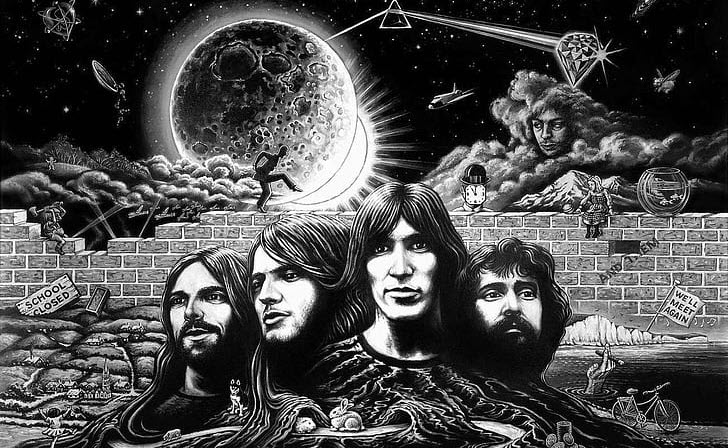
Step into the swirling vortex of kaleidoscopic soundscapes, mind-bending lyrics, and boundary-shattering creativity—welcome to the world of psychedelic rock. Born in the heart of the 1960s counterculture, this genre wasn’t just music—it was a movement. A rebellion against the ordinary, psychedelic rock tapped into altered states of consciousness, Eastern philosophies, and experimental studio wizardry to create sonic experiences unlike anything heard before. From soaring guitar solos that feel like out-of-body experiences to mystical lyrics that question reality itself, these songs defined an era and continue to inspire generations of artists and dreamers alike.
In this electrifying countdown, we’re diving deep into the Top 15 Most Popular Psychedelic Rock Songs of All Time—tracks that didn’t just ride the wave of the psychedelic revolution, but helped create it. Whether it’s the cosmic poetry of The Beatles, the guitar sorcery of Jimi Hendrix, or the existential explorations of Pink Floyd, each song on this list is a portal to another dimension. Get ready to turn up the volume, expand your mind, and take a trip through the most iconic, influential, and unforgettable moments in psychedelic rock history. This is more than a playlist—it’s a journey. Let the trip begin.
1. “Lucy in the Sky with Diamonds” – The Beatles (1967)
Released in 1967 as part of Sgt. Pepper’s Lonely Hearts Club Band, “Lucy in the Sky with Diamonds” stands as one of The Beatles’ most iconic forays into psychedelic rock. The inspiration came from a drawing John Lennon’s young son Julian made, featuring a classmate named Lucy floating among stars—though the title’s initials, LSD, led many to assume a drug connection, a claim the band continually denied. The song’s whimsical imagery—tangerine trees, marmalade skies, and a girl with kaleidoscope eyes—feels like stepping into a technicolor dream. Musically, it’s a masterclass in surrealism: George Harrison’s electric sitar adds an exotic edge, while Paul McCartney’s Lowrey organ gives the track its swirling, otherworldly texture. Lennon’s vocals float through verses like a lullaby, before giving way to a more grounded, rocking chorus. The shifting time signatures and fantastical storytelling mirror the era’s spirit of exploration, both artistic and mind-altering. “Lucy in the Sky with Diamonds” wasn’t just a pop song—it was a soundscape, a painting in audio form. It helped cement The Beatles’ legacy not just as chart-toppers, but as bold visionaries who reshaped the boundaries of modern music.
2. “Purple Haze” – The Jimi Hendrix Experience (1967)
When “Purple Haze” hit the airwaves in 1967, it was like a lightning bolt striking rock music. With its snarling, distorted guitar and mind-bending lyrics, Jimi Hendrix’s breakout single introduced a sound no one had quite heard before. The song opens with a tritone interval—a “devil’s note” in music theory—immediately setting an eerie, electric tone. Hendrix’s famous line, “’Scuse me while I kiss the sky,” became an anthem of psychedelia and rebellion. Though often associated with psychedelic drug use, Hendrix insisted the song came from a dream and was partly inspired by science fiction. Regardless of its origins, “Purple Haze” captured the chaotic energy and boundary-pushing ethos of the late ‘60s. His guitar tone, thick with fuzz and feedback, seemed to stretch beyond the capabilities of the instrument itself. Backed by Mitch Mitchell on drums and Noel Redding on bass, the trio created a dense, thunderous wall of sound that felt entirely new. At just under three minutes, “Purple Haze” not only redefined what a rock song could be—it marked the arrival of Hendrix as a genre-defying force of nature. This wasn’t just music; it was a revolution.
3. “White Rabbit” – Jefferson Airplane (1967)
Few songs encapsulate the psychedelic era as powerfully as Jefferson Airplane’s “White Rabbit.” Released in 1967 on their Surrealistic Pillow album, the track is a heady mix of surrealism, classical structure, and social commentary. Inspired by Alice’s Adventures in Wonderland, Grace Slick’s lyrics twist the children’s tale into a metaphor for the altered states of consciousness sweeping the counterculture. From “one pill makes you larger” to “feed your head,” the allusions to drug use are unmistakable—and daring for the time. Musically, the song is built on a bolero-style progression, starting quietly and rising steadily in volume and intensity. Slick’s commanding voice grows bolder with each line, culminating in a climactic call to awareness. The minor key adds a sense of urgency, as if the trip she’s describing might lead to revelation—or madness. Clocking in at under three minutes, “White Rabbit” feels like a short film, complete with suspense, symbolism, and a powerful payoff. More than just a product of its time, it’s a cultural flashpoint—a song that challenged norms, invited introspection, and demanded that listeners open their minds to something bigger, stranger, and altogether more illuminating.
4. “Time” – Pink Floyd (1973)
“Time,” from Pink Floyd’s landmark 1973 album The Dark Side of the Moon, is both a sonic marvel and a meditation on mortality. It begins not with music, but with a sudden explosion of clocks chiming—an unsettling reminder that time waits for no one. What follows is a sprawling, atmospheric journey that explores how easily life can slip away while we’re busy planning for it. Roger Waters’ lyrics are stark and poetic, warning of the regrets that come from realizing too late that we’ve been wasting our most precious resource. David Gilmour delivers one of his finest guitar solos here—searing, soulful, and tinged with melancholy. The song’s arrangement is a masterclass in dynamic contrast, moving from soft, introspective verses to powerful, soaring choruses. With its layered production, echoing vocals, and shifting time signatures, “Time” captures both the chaos and quiet despair of existential awareness. It’s not just a rock song—it’s a philosophical statement dressed in sonic brilliance. Long after the clocks fall silent, the song leaves you thinking: Are you spending your days with purpose, or just letting them pass you by?
5. “Tomorrow Never Knows” – The Beatles (1966)
When “Tomorrow Never Knows” closed out Revolver in 1966, it signaled a seismic shift in what rock music could be. This was The Beatles abandoning convention entirely, diving headfirst into studio experimentation and psychedelic philosophy. Built on a single C chord, the song features Ringo Starr’s hypnotic, tribal drum pattern and an array of tape loops that swirl like sonic ghosts. John Lennon’s vocals—run through a Leslie speaker to sound otherworldly—deliver lyrics inspired by The Psychedelic Experience, itself a reinterpretation of the Tibetan Book of the Dead. Rather than telling a story, the song is an invitation: to let go of ego, embrace the present, and experience reality without filters. Indian instruments, reversed guitar lines, and manipulated recordings create a disorienting, hallucinogenic soundscape. “Tomorrow Never Knows” was radically ahead of its time, foreshadowing electronic music, ambient textures, and sampling long before they became mainstream. It wasn’t just the weirdest Beatles song to date—it was a blueprint for the future. A true boundary-breaking piece of art, it proved that rock music could be not just entertaining, but transformative and transcendent.
6. “All Along the Watchtower” – The Jimi Hendrix Experience (1968)
Bob Dylan may have written “All Along the Watchtower,” but it was Jimi Hendrix who turned it into something truly immortal. Released in 1968 on Electric Ladyland, Hendrix’s version is darker, louder, and infinitely more electrifying than the original. From the very first notes, the song crackles with tension. His guitar lines slash through the air like lightning, layered over a rhythm section that feels urgent and apocalyptic. Mitch Mitchell’s drumming is sharp and dynamic, while Noel Redding’s bass drives the song forward with relentless momentum. Hendrix’s vocals are raw, urgent, and tinged with a sense of impending doom, perfectly matching the song’s cryptic, biblical imagery. Dylan himself was so impressed by Hendrix’s interpretation that he later adopted many of its elements into his own performances. It’s one of those rare covers that doesn’t just reimagine the original—it eclipses it. “All Along the Watchtower” became a defining moment in Hendrix’s career and a touchstone of psychedelic rock. In just under four minutes, he managed to capture a world on the edge of collapse—and made it sound like a revelation.
7. “See Emily Play” – Pink Floyd (1967)
“See Emily Play,” released in 1967, offers a snapshot of early Pink Floyd before their music took on a darker, more expansive tone. Written by the band’s original frontman Syd Barrett, the song is a whimsical slice of British psychedelia. With its echo-laden vocals, jangly guitars, and tape manipulation effects, it feels like a dream half-remembered from childhood. Barrett sings about Emily, a mysterious, possibly imaginary girl who plays in a secret garden of the mind. Whether Emily was real or a symbol for innocence and lost youth is unclear—but that ambiguity only adds to the track’s charm. There’s a childlike wonder here, but also a hint of sadness, perhaps a prelude to the mental health struggles that would later pull Barrett away from the band. Structurally, “See Emily Play” was adventurous for its time, with tempo shifts, stereo panning, and sudden bursts of instrumental chaos. It helped establish Pink Floyd as sonic innovators and remains a bittersweet gem in their catalog. A psychedelic pop song with heart and imagination, it’s a tribute to the strange brilliance of Syd Barrett and a window into a world that only he could see.
8. “Eight Miles High” – The Byrds (1966)
When The Byrds released “Eight Miles High” in 1966, they weren’t just making a song—they were charting a new course for rock music. It fused the jangle of folk-rock with the swirling chaos of free jazz and Indian classical music, particularly the influence of Ravi Shankar and John Coltrane. Roger McGuinn’s 12-string Rickenbacker guitar doesn’t just shimmer; it spirals, whirs, and lifts the song into the stratosphere. The lyrics, written during a turbulent trip to London, describe a sense of alienation and otherworldliness, a fitting metaphor for the band’s experience as American outsiders navigating a rapidly changing cultural landscape. The line “Rain grey town, known for its sound” refers to London, but the entire song floats above any fixed location—hence the “eight miles high.” Although many assumed the title was a drug reference (and radio bans followed), The Byrds insisted it was about altitude, not acid. Regardless, the track became a cornerstone of psychedelic rock, pushing sonic boundaries with its drone-like tones and abstract imagery. “Eight Miles High” wasn’t just ahead of its time—it helped invent the future. It’s still one of the most adventurous three minutes you’ll ever hear.
9. “In-A-Gadda-Da-Vida” – Iron Butterfly (1968)
At a massive 17 minutes long, Iron Butterfly’s “In-A-Gadda-Da-Vida” isn’t just a song—it’s a full-on psychedelic odyssey. Released in 1968, it became an unlikely anthem for a generation seeking escape through music, consciousness, and sound itself. The title, famously a slurred version of “In the Garden of Eden,” came about when vocalist Doug Ingle mumbled it during a boozy rehearsal—and the misheard version stuck. The song unfolds like a trance: built on a hypnotic organ riff, heavy guitar fuzz, and tribal, ritualistic drumming. Ron Bushy’s lengthy drum solo became the stuff of legend, often cited as a rite of passage for aspiring rock drummers. While critics have mocked the song’s excesses over the years, there’s no denying its impact. “In-A-Gadda-Da-Vida” took rock to places it had never been before—long, meditative, immersive. It became a staple on FM radio, the go-to track for late-night trips and extended headphone sessions. More than just a psychedelic jam, it helped pioneer the idea that rock songs didn’t have to stick to radio-friendly formats. With its sprawling structure and unfiltered experimentation, the song is a time capsule of late ’60s ambition and a monument to the era’s sonic explorations.
10. “The End” – The Doors (1967)
What began as a simple breakup song evolved into one of the most haunting, boundary-pushing tracks of the 1960s. “The End,” closing The Doors’ 1967 debut album, is a 12-minute descent into the shadows of the human psyche. Jim Morrison delivers his lyrics with a calm intensity that gradually boils into chaos, blending poetic storytelling with unsettling improvisation. The song’s structure is hypnotic—Ray Manzarek’s swirling organ and Robby Krieger’s sinuous guitar lines wrap around Morrison’s voice like a snake preparing to strike. The track slowly builds, stretching into a stream-of-consciousness performance that includes one of rock’s most controversial verses—Morrison’s infamous Oedipal cry. That moment, shocking then and still unsettling now, transformed “The End” from song into myth. It was later immortalized in the opening sequence of Apocalypse Now, cementing its association with darkness, war, and madness. But beyond its shock value, “The End” is a bold exploration of death, identity, and transcendence. It feels less like a song and more like a ritual, an exorcism of inner demons. With its fearless approach to taboo and its chilling atmosphere, “The End” proved that rock could be deeply poetic—and deeply disturbing.
11. “Are You Experienced?” – The Jimi Hendrix Experience (1967)
Closing out one of the most revolutionary debut albums in rock history, “Are You Experienced?” is Jimi Hendrix at his most enigmatic. Released in 1967, the track doesn’t dazzle with the guitar theatrics found in some of his other songs—instead, it hypnotizes. Built on a looped, backward guitar track and anchored by Mitch Mitchell’s thunderous drumming, the song sounds like it’s drifting in from another dimension. Hendrix’s vocals are cool and cryptic, asking a simple question that feels anything but: “Are you experienced?” It’s an invitation—not just to a new kind of music, but to a whole new way of thinking. The track feels like a spiritual initiation, urging the listener to let go of convention and embrace the unknown. It’s rich with psychedelic textures but also grounded in Hendrix’s deep understanding of blues and rhythm. The studio effects were groundbreaking, turning the tape machine itself into an instrument. As the final note of the album, it’s a perfect capstone—challenging, otherworldly, and unforgettable. “Are You Experienced?” wasn’t just a song title. It was a mission statement, and Hendrix made sure you felt every note of the message.
12. “Sunshine of Your Love” – Cream (1967)
Cream’s “Sunshine of Your Love” is a thunderous blend of blues muscle and psychedelic swirl, released in 1967 and quickly becoming one of the most recognizable riffs in rock history. Built around Jack Bruce’s deep, pulsing bassline—originally inspired by a late-night jam session after a Jimi Hendrix concert—the song rides a dark, seductive groove. Eric Clapton’s guitar tone is razor-sharp and smoky, slicing through the mix with bluesy licks and soaring solos. Ginger Baker’s tribal-style drumming adds a primal edge, grounding the track in a heavy, hypnotic rhythm. Lyrically, the song drips with sensuality, its lines basking in a mystical kind of love. Though it clocks in at under five minutes, it feels massive, thanks to the band’s improvisational chemistry and the track’s slow-burning intensity. “Sunshine of Your Love” helped lay the groundwork for hard rock and metal, proving that power didn’t have to come at the expense of soul. It’s as gritty as it is groovy, a perfect fusion of psychedelic experimentation and blues roots. Cream, a supergroup by definition, lived up to the hype with this track—and it remains one of their most enduring musical legacies.
13. “Strawberry Fields Forever” – The Beatles (1967)
“Strawberry Fields Forever” isn’t just a song—it’s an emotional puzzle box wrapped in layers of sound and memory. Released in 1967 as a double A-side with “Penny Lane,” this John Lennon-penned track is among The Beatles’ most groundbreaking and personal works. Inspired by a Salvation Army children’s home near Lennon’s childhood home in Liverpool, the lyrics reflect his longing for innocence, identity, and peace of mind. “Living is easy with eyes closed” hints at a deeper existential unease beneath the whimsical title. The production was famously complex—two different versions of the song, each in a different key and tempo, were spliced together using cutting-edge studio techniques. Mellotron flutes, cello swells, reverse tape effects, and disorienting rhythms all contribute to the dreamlike, almost hallucinogenic soundscape. Lennon’s voice drifts in and out of clarity, as if the listener is hearing his thoughts in real time. The result is a surreal but emotionally resonant masterpiece, one that broke away from pop conventions and redefined what music could express. “Strawberry Fields Forever” is more than a song—it’s a mood, a memory, a question with no clear answer.
14. “I Had Too Much to Dream (Last Night)” – The Electric Prunes (1966)
With its eerie opening and fuzz-drenched guitar, The Electric Prunes’ 1966 hit “I Had Too Much to Dream (Last Night)” helped usher in the American psychedelic rock era. From the first reversed guitar effect, the song plunges the listener into a world that feels just slightly off-kilter—like waking from a dream you can’t quite shake. The lyrics describe a haunting vision of a lost love that lingers after sleep, but the real magic lies in how the band turns that concept into a sound. Vibrato-heavy guitar, echoing vocals, and an ominous descending bassline all contribute to the sensation of disorientation. It’s not over-the-top or overly long—just under three minutes—but it packs in plenty of weirdness and raw energy. The song became a surprise hit, marking The Electric Prunes as pioneers in the emerging genre of garage-psych. Its surreal atmosphere and jangly edge made it a perfect companion to the more polished work coming out of the UK psychedelic scene. “I Had Too Much to Dream” feels like a transmission from another reality, one where dreams bleed into daylight and nothing is quite what it seems.
15. “Space Oddity” – David Bowie (1969)
Released just nine days before the Apollo 11 moon landing, David Bowie’s “Space Oddity” was perfectly timed—and yet totally unlike anything else in 1969. It introduced listeners to Major Tom, a fictional astronaut whose lonely journey through space became an enduring symbol of alienation and introspection. The track opens with gentle acoustic guitar and eerie Mellotron, slowly building toward a floating, weightless sound that mirrors Tom’s drift away from Earth. Bowie’s performance is haunting—equal parts awe and sorrow—as he sings of disconnection, control lost, and the vast unknown. While the world was celebrating the triumph of human achievement in space, Bowie’s song asked deeper questions: What happens when we leave everything behind? What if we don’t come back? The shifting time signatures and cinematic arrangement heighten the sense of uncertainty and grandeur. More than a novelty or a sci-fi vignette, “Space Oddity” captured the emotional undercurrents of the Space Age. It marked the birth of Bowie’s persona-driven art and set the tone for a career defined by reinvention, vision, and vulnerability. This wasn’t just the start of Major Tom’s journey—it was the launch of one of rock’s most singular voices.

Samuel Moore is a frequent contributor to Singers Room. Since 2005, Singersroom has been the voice of R&B around the world. Connect with us via social media below.









