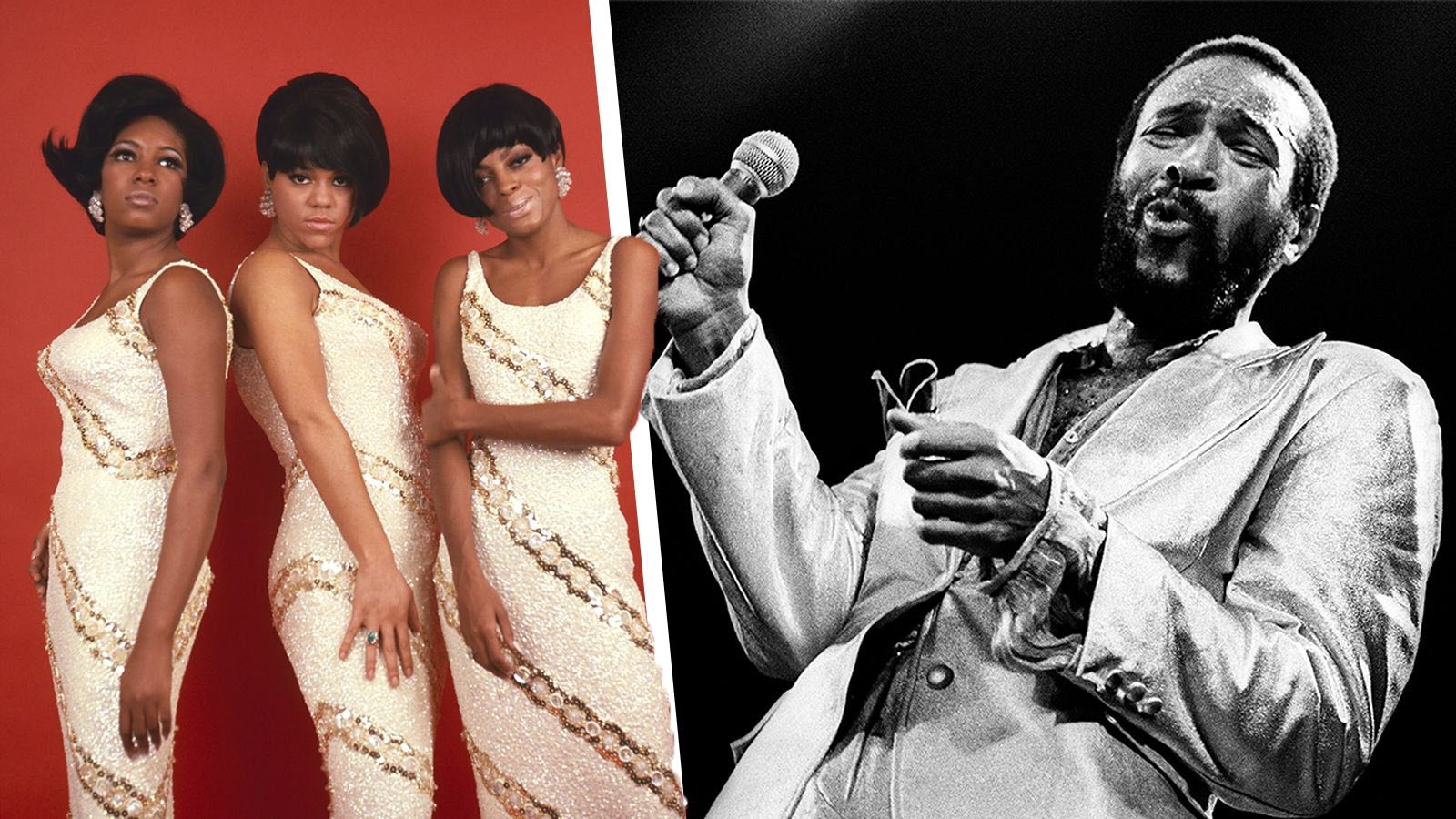
There’s a reason they called it “The Sound of Young America”—Motown wasn’t just a record label; it was a cultural revolution. Founded in Detroit in 1959 by Berry Gordy, Motown Records gave rise to a musical movement that broke racial barriers, launched global superstars, and defined the sound of an era. With a perfect blend of infectious melodies, heartfelt lyrics, and irresistible grooves, Motown captured the hopes, heartaches, and triumphs of a generation. From the smooth harmonies of The Temptations to the electrifying voice of Marvin Gaye, from the powerhouse energy of The Supremes to the precocious genius of a young Stevie Wonder, these songs weren’t just hits—they were anthems that shaped the soundtrack of the 1960s and ’70s. In this article, we’re counting down the top 15 most popular and enduring Motown songs of all time—tracks that not only topped charts but also changed lives and moved millions. Whether you’re a lifelong fan or just discovering the magic of Motown, this list is your ticket to a timeless musical journey where every note hits the soul. Get ready to dance, reflect, and fall in love all over again. Let the Motown magic begin!
1. “Bohemian Rhapsody” – Queen (1975)
“Bohemian Rhapsody” isn’t just a song—it’s an experience. When Queen released this six-minute epic in 1975, it defied every rule of commercial radio. With no chorus, abrupt stylistic shifts, and an operatic middle section, it was unlike anything that had come before. Freddie Mercury’s soaring vocals guide listeners through a sonic journey that begins as a melancholic piano ballad, transforms into a wild opera parody complete with mock-choral harmonies, and then explodes into hard rock before gently fading out. Brian May’s blistering guitar solo and the band’s intricate vocal layering added layers of theatricality and emotion that were unheard of in rock music at the time. Against all odds, the song became a massive hit, topping charts worldwide and eventually becoming Queen’s signature anthem. Its groundbreaking promotional video—which many consider the first true music video—helped launch the MTV era years before it existed. Over the decades, “Bohemian Rhapsody” has only grown in cultural significance, famously revived by Wayne’s World and covered by artists across genres. It remains a timeless masterpiece that refuses to be defined, a bold artistic statement that still feels fresh, daring, and utterly unique.
2. “Imagine” – John Lennon (1971)
Few songs have touched as many hearts or sparked as much contemplation as John Lennon’s “Imagine.” Released in 1971, the song is a powerful plea for peace wrapped in a delicate piano melody. It asks us to strip away the things that divide humanity—religion, borders, possessions—and imagine a world united in harmony. Lennon delivers these ideas with a calm, soothing voice that gently challenges listeners without preaching. Co-produced by Phil Spector and Yoko Ono, the song captures a post-1960s sense of both disillusionment and hope. Though often labeled idealistic, “Imagine” has become a universal anthem, embraced in times of tragedy and triumph alike. It’s been played at Olympic ceremonies, peace rallies, and memorials, embodying the dream of a better world. Critics have sometimes called out the contrast between the song’s message and Lennon’s own privileged lifestyle, but that hasn’t diminished its impact. What makes “Imagine” so enduring is its simplicity and sincerity—it cuts through noise and politics to speak to something deeply human. More than just a song, “Imagine” remains a timeless invitation to think differently, to hope boldly, and to believe that change begins in the mind.
3. “Hotel California” – Eagles (1976)
“Hotel California,” released by the Eagles in 1976, is a mesmerizing blend of rock mysticism and sharp social commentary. On the surface, it tells the tale of a traveler drawn into a luxurious but eerie hotel from which he can never escape. But beneath the surface lies a haunting metaphor—often interpreted as a critique of American excess, fame, or the music industry itself. Don Henley’s smoky vocals deliver each line with a mix of allure and unease, drawing the listener into this strange, seductive world. The dual guitar solo by Joe Walsh and Don Felder, especially during the extended outro, is nothing short of legendary—one of the most iconic in rock history. The song’s mysterious lyrics have sparked countless theories, adding to its allure over the decades. “Hotel California” topped the charts in 1977 and won a Grammy for Record of the Year, but its impact stretches far beyond accolades. It has become a cultural touchstone—a song that feels like both a dream and a warning. Whether you hear it as a story, a symbol, or simply a musical triumph, “Hotel California” is one of those rare tracks that only deepens with each listen.
4. “Smells Like Teen Spirit” – Nirvana (1991)
“Smells Like Teen Spirit” didn’t just put Nirvana on the map—it blew the map up entirely. When the song hit airwaves in 1991, it signaled a seismic shift in the music world. Grunge wasn’t just a genre—it was a rebellion, and this was its battle cry. With Kurt Cobain’s raw guitar riffs, Dave Grohl’s thunderous drumming, and Krist Novoselic’s gritty bass, the track oozed angst and authenticity. Cobain’s lyrics were cryptic, snarled rather than sung, but they captured the disaffected spirit of a generation fed up with polished pop and corporate culture. The quiet-loud dynamic, inspired by the Pixies, gave the song a jarring yet irresistible power. The now-iconic music video, set in a grungy high school gym, turned cheerleaders into anarchists and sealed the band’s status as anti-establishment heroes. Almost overnight, Nirvana became the reluctant voice of Generation X. “Smells Like Teen Spirit” didn’t just top charts—it changed them. It shattered the mainstream and made space for alternative music. Even today, it remains one of the most explosive, influential rock songs of all time—a timeless anthem for anyone who’s ever felt like an outsider.
5. “Like a Rolling Stone” – Bob Dylan (1965)
Bob Dylan’s “Like a Rolling Stone,” released in 1965, redefined the boundaries of popular music. At a time when radio hits were short and sweet, Dylan delivered a six-minute epic that bristled with poetic fury and raw emotion. The track opens with Al Kooper’s iconic organ riff—an improvisation that became legendary—and never lets go. Dylan spits out the lyrics with sneering intensity, chronicling the fall of a woman who once had everything but now finds herself cast adrift. But this isn’t just about one person—it’s a broader meditation on identity, disillusionment, and freedom. With Mike Bloomfield’s searing guitar and a sound that was more rock than folk, the song marked Dylan’s full embrace of electric music, a move that shocked his purist fans but revolutionized his career. “Like a Rolling Stone” wasn’t just rebellious in form and sound—it was rebellious in spirit. It invited listeners to confront the uncomfortable, to feel the sting of Dylan’s words, and to rethink what a song could accomplish. It remains one of the most influential tracks ever recorded, a bold declaration that pop music could be literary, angry, complex—and still wildly popular.
6. “Dancing in the Street” – Martha and the Vandellas (1964)
Few songs radiate as much joy and urgency as “Dancing in the Street,” released in 1964 by Martha and the Vandellas. On the surface, it’s a jubilant call to party—inviting people from every city to come together and move to the beat. But beneath its irresistible rhythm lies a deeper resonance. At the height of the Civil Rights Movement, many heard it as a coded call to unity and peaceful resistance. Martha Reeves delivers the vocals with electric energy, backed by punchy horns, a driving beat, and a propulsive arrangement that practically dares you to stay still. Written by Marvin Gaye, William “Mickey” Stevenson, and Ivy Jo Hunter, the song became an anthem for a generation ready to stand up, celebrate, and be counted. Its universal appeal helped it become a crossover hit, resonating across boundaries of race and class. “Dancing in the Street” became more than just a Motown classic—it became a soundtrack to change. Today, it still feels vibrant and alive, a reminder of music’s power to energize, unify, and inspire action, even when it’s wrapped in the pure joy of a dance beat.
7. “Stop! In the Name of Love” – The Supremes (1965)
“Stop! In the Name of Love” is pure Motown magic—a perfect fusion of catchy pop songwriting, powerful vocal delivery, and unmistakable style. Released in 1965, it became one of The Supremes’ signature hits and helped cement their place as the queens of Motown. Written by the powerhouse team Holland–Dozier–Holland, the song blends a dramatic plea for love with a danceable groove, all wrapped in a sleek, polished production. Diana Ross’s lead vocal is a masterclass in controlled emotion—vulnerable, pleading, yet undeniably strong. The harmonies from Mary Wilson and Florence Ballard are tight and elegant, enhancing the song’s emotional pull. And who could forget the iconic “stop” hand gesture that became a dance move all its own? The song reached No. 1 on the Billboard Hot 100 and became a defining track of the era. Beyond its chart success, “Stop! In the Name of Love” showcased the brilliance of Motown’s songwriting and production machine, and the star power of The Supremes. It’s a track that balances heartache with empowerment and continues to resonate with every new generation discovering the joy of Motown.
8. “I Want You Back” – The Jackson 5 (1969)
“I Want You Back” burst onto the music scene in 1969 like a supernova, introducing the world to The Jackson 5—and a young Michael Jackson who, at just 11 years old, sang with soul well beyond his years. The song is a whirlwind of energy from the very first piano glissando, combining funk, pop, and soul into an unstoppable force. Crafted by Motown’s hitmaking team The Corporation, the track is a showcase of irresistible hooks, funky basslines, and horn stabs that practically jump out of the speakers. Michael’s voice is the heart of the song—pleading, passionate, and full of youthful heartbreak as he begs for a second chance at love. Despite its emotional desperation, the song overflows with joy and rhythm, making it impossible not to dance. It soared to No. 1 on the Billboard Hot 100 and marked the beginning of an astonishing career for both Michael and the group. Over 50 years later, “I Want You Back” still sounds fresh—an evergreen pop classic that captures the exuberance of young love and the unmatched spark of Motown at its best. It’s more than just a debut—it’s a declaration of greatness.
9. “Reach Out I’ll Be There” – Four Tops (1966)
“Reach Out I’ll Be There,” released by the Four Tops in 1966, is a soul anthem of monumental emotional force. From the very first beat, the song bursts forth with urgency—a galloping rhythm, staccato flute, and swelling orchestration that grab your attention and refuse to let go. Then comes Levi Stubbs’ voice: not just singing, but crying out with fierce devotion. His impassioned delivery gives the song its heart, offering solace, strength, and support in every trembling phrase. Written and produced by the legendary Holland–Dozier–Holland trio, the track was carefully designed to blend rock energy with gospel power, resulting in a musical experience that feels both cinematic and spiritual. Its message is simple but profound: no matter how lost or broken you feel, someone will be there to pull you through. It hit No. 1 on the Billboard Hot 100 and quickly became one of Motown’s most defining tracks. Over the years, it has remained a beacon of emotional rescue and musical brilliance. Whether you hear it in a moment of heartache or triumph, “Reach Out I’ll Be There” reminds you that sometimes, a song can feel like a lifeline.
10. “Signed, Sealed, Delivered I’m Yours” – Stevie Wonder (1970)
When Stevie Wonder released “Signed, Sealed, Delivered I’m Yours” in 1970, he wasn’t just sending a love letter—he was announcing his artistic independence. At only 20 years old, Wonder took control of the studio and produced the song himself, marking a major turning point in his career and in Motown’s evolution. The track explodes to life with sharp horn stabs, funky guitar riffs, and an energy that grabs you from the first note. Wonder’s voice dances across the rhythm—playful, passionate, and completely magnetic—as he sings about redemption and return with irresistible charm. The lyrics, co-written with his mother Lula Mae Hardaway, are heartfelt and catchy, offering up equal parts vulnerability and swagger. Peaking at No. 3 on the Billboard Hot 100, it quickly became one of Wonder’s most beloved songs, a soul-pop classic that’s stood the test of time. It’s a favorite at weddings, parties, and political events—anywhere joy and celebration are in the air. More than just a hit, “Signed, Sealed, Delivered” signaled the dawn of Stevie Wonder’s golden era, where he would reshape soul, funk, and pop with unmatched creativity and heart.
11. “You Can’t Hurry Love” – The Supremes (1966)
“You Can’t Hurry Love” is the musical equivalent of motherly advice wrapped in a pop-soul package. Released in 1966, this radiant hit from The Supremes quickly became one of Motown’s most enduring anthems. Beneath its bubbly rhythm and playful energy lies a wise message: love can’t be rushed—it arrives when the time is right. Diana Ross delivers the lyrics with sweetness and conviction, her voice gliding effortlessly over a bouncy bassline and crisp, syncopated beat. Backed by Florence Ballard and Mary Wilson’s seamless harmonies, the trio created a sound both comforting and dynamic. Written by the powerhouse team Holland–Dozier–Holland, the song was inspired by the gospel tune “(You Can’t Hurry God) He’s Right On Time,” giving it a spiritual depth beneath the glossy pop veneer. It soared to No. 1 on the Billboard Hot 100 and has since become a staple of The Supremes’ legacy. The song’s universal message and timeless charm have inspired countless covers, most famously by Phil Collins. But the original remains untouchable—a joyful reminder that the best things in life, including love, are worth waiting for.
12. “Let’s Get It On” – Marvin Gaye (1973)
With “Let’s Get It On,” Marvin Gaye redefined the soul ballad and gave the world one of the most sensual songs ever recorded. Released in 1973, the track was a bold departure from Gaye’s politically charged What’s Going On, turning inward to explore love, desire, and emotional vulnerability. From the first slow strum of the guitar and Gaye’s whispered invitation, the mood is set: intimate, seductive, and deeply human. His vocals, rich with nuance and passion, move seamlessly from soft coos to soaring falsetto, drawing listeners into a romantic trance. Co-written with Ed Townsend, the lyrics are honest, tender, and unapologetically direct—a celebration of physical and emotional connection. The lush production, filled with warm basslines, smooth strings, and a steady groove, gives the song a hypnotic pull. It quickly climbed to No. 1 on the Billboard Hot 100 and became an anthem for a more open, liberated era of love and expression. “Let’s Get It On” wasn’t just a hit—it was a cultural turning point, proving that soul music could be deeply personal and openly sensual. Marvin Gaye didn’t just perform romance—he embodied it.
13. “Papa Was a Rollin’ Stone” – The Temptations (1972)
Dark, sprawling, and unapologetically raw, “Papa Was a Rollin’ Stone” is a soul epic that pushed The Temptations—and Motown—into bold new territory. Released in 1972, the song unfolds like a slow-burning drama, stretching nearly 12 minutes in its original form. It opens with an eerie, atmospheric instrumental—wah-wah guitars, haunting strings, and a pulsating bassline that sets a moody, cinematic tone. The lyrics tell the story of an absent father and the questions left behind, delivered with aching precision by lead singer Dennis Edwards. Every line stings with unresolved emotion and quiet resentment. Produced by Norman Whitfield, the track represented a radical evolution for the group, moving away from love songs and into gritty social commentary. It won three Grammy Awards and became a landmark of 1970s soul and funk. The Temptations had always been smooth, but here they were something more—storytellers unafraid to confront pain and truth. “Papa Was a Rollin’ Stone” is a masterclass in restraint and atmosphere, a track that simmers with intensity and leaves an indelible mark. It’s not just a song—it’s a story you feel deep in your bones.
14. “Ain’t Too Proud to Beg” – The Temptations (1966)
When The Temptations released “Ain’t Too Proud to Beg” in 1966, they gave voice to a level of romantic desperation rarely heard with such conviction. The track bursts with energy from the very start—tight drums, bright horns, and a propulsive groove courtesy of Motown’s legendary house band, The Funk Brothers. But it’s David Ruffin’s gritty, emotional vocal that steals the spotlight. He doesn’t just sing—he pleads, pushing his voice to the edge to convince a lover not to walk away. That raw honesty, wrapped in a danceable rhythm, is what gives the song its enduring power. Written by Norman Whitfield and Edward Holland Jr., “Ain’t Too Proud to Beg” became an instant hit, climbing to No. 13 on the Billboard Hot 100 and becoming a fan favorite. It balances vulnerability with swagger, showcasing The Temptations’ ability to bring real emotional depth to pop-friendly soul. Whether played at a party or in a moment of heartbreak, it still hits with the same intensity today. It’s a song that reminds us sometimes love isn’t about pride—it’s about laying your heart bare and hoping someone listens.
15. “Baby Love” – The Supremes (1964)
“Baby Love” is Motown pop at its most charming and infectious. Released in 1964, the track marked a major milestone for The Supremes, giving them their second consecutive No. 1 hit and helping to launch the group into superstardom. Written and produced by the legendary Holland–Dozier–Holland trio, the song is a masterclass in melodic simplicity and emotional clarity. Diana Ross’s breathy, pleading vocal conveys the sweetness and heartache of young love, while Florence Ballard and Mary Wilson’s harmonies offer a lush, supportive backdrop. The instrumentation—complete with tambourines, handclaps, and a rolling piano rhythm—makes the song feel light as air but grounded in emotional truth. With lyrics about longing and lost affection, “Baby Love” is both innocent and aching, capturing the universal feeling of wanting someone back. It topped the Billboard Hot 100 for four weeks and even became a hit in the UK, signaling Motown’s growing global influence. Nearly 60 years later, it still shines with effortless charm. “Baby Love” isn’t just a pop song—it’s a time capsule of a moment when The Supremes were rewriting the rules of popular music, one irresistible hit at a time.

Samuel Moore is a frequent contributor to Singers Room. Since 2005, Singersroom has been the voice of R&B around the world. Connect with us via social media below.









