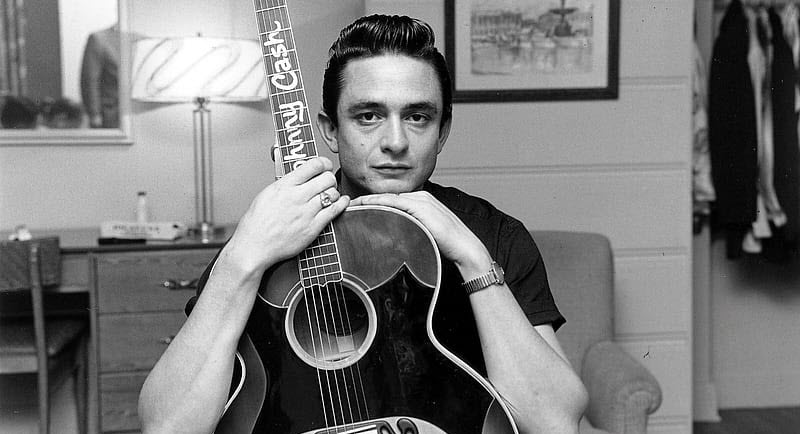
Few artists have left as deep and lasting a mark on music—and culture—as Johnny Cash. With his thunderous voice, rebellious spirit, and unmatched storytelling, Cash transcended genres and generations, becoming a symbol of raw authenticity. From the dusty roads of Arkansas to the stages of Folsom Prison and beyond, his songs echo with grit, faith, sorrow, and redemption. Whether he was singing about love, sin, salvation, or the stark realities of life, the Man in Black had a way of making every word feel like gospel.
This list of the Top 10 Most Popular Johnny Cash Songs of All Time celebrates the tracks that defined his legendary career. These aren’t just hits—they’re cultural landmarks. Each song showcases a different side of Cash: the outlaw, the lover, the fighter, the prophet, and the man searching for meaning in a broken world. From early Sun Records classics to late-life masterpieces, these songs continue to resonate with fans old and new.
So put on your black coat, tune that guitar, and take a journey through the music that made Johnny Cash a true American icon. These are the songs that turned a man into a legend—and a voice into a legacy.
1. “I Walk the Line” (1956)
“I Walk the Line,” released in 1956, wasn’t just Johnny Cash’s first No. 1 hit—it was a defining moment that helped shape the future of country music. Built on a steady, train-like rhythm and the now-iconic “boom-chicka-boom” guitar pattern, the song showcases Cash’s resonant baritone in a strikingly intimate performance. The lyrics are a pledge of loyalty and restraint, a promise to remain faithful while navigating the temptations of fame and life on the road. Inspired by his devotion to his first wife, Vivian, the song blends heartfelt honesty with clever musical innovation. Cash used a unique trick—wrapping a dollar bill or wax paper around his guitar strings—to create the muted, percussive sound that gave the track its edge. Unusually, the key changes with every verse, a bold move that keeps the song emotionally dynamic and musically intriguing. Recorded at Sun Records, “I Walk the Line” wasn’t just a commercial success—it was a personal mission statement from an artist carving his identity in stone. More than a love song, it’s a meditation on integrity and discipline, marking the beginning of Cash’s lifelong journey as both a romantic and a rebel with a purpose.
2. “Ring of Fire” (1963)
When “Ring of Fire” hit the airwaves in 1963, it lit up the country music world with its bold, unmistakable sound. Written by June Carter and Merle Kilgore, the song had already been recorded by Anita Carter, but it was Johnny Cash’s explosive rendition—with its mariachi-style horns and galloping rhythm—that turned it into a career-defining classic. The lyrics use the fiery metaphor of falling into love as being consumed by a “burning ring,” a powerful image that resonated deeply with Cash, who was romantically entangled with June at the time. His deep, commanding voice poured both passion and turmoil into every line, making the performance feel as combustible as the relationship that inspired it. “Ring of Fire” climbed to No. 1 on the country charts and stayed there for an impressive seven weeks. Beyond its commercial success, the song signified a personal turning point for Cash—it was both a declaration of love and a glimpse into the emotional chaos of his life. With its unorthodox instrumentation and emotional honesty, “Ring of Fire” stands as one of the most daring and unforgettable tracks in country music history.
3. “Folsom Prison Blues” (1955)
“Folsom Prison Blues,” released in 1955, quickly became a cornerstone of Johnny Cash’s outlaw legend. Inspired by the film Inside the Walls of Folsom Prison and influenced by a Gordon Jenkins track, Cash crafted a stark, evocative narrative about crime, remorse, and incarceration. With its unforgettable line—“I shot a man in Reno just to watch him die”—he announced himself as a fearless storyteller willing to explore the darkest corners of human nature. The song’s chugging rhythm mimics a train, symbolizing both the passage of time and the unreachable promise of freedom. Recorded at Sun Records, it introduced Cash’s unique blend of rockabilly grit and country heart. The song’s legacy was cemented in 1968 when Cash performed it live at Folsom Prison, bringing raw, electric energy to an audience of inmates who understood its message all too well. That performance reinvigorated his career and reminded the world of music’s power to connect across even the bleakest divides. More than just a hit, “Folsom Prison Blues” is an enduring anthem of empathy for the marginalized and a bold embrace of the shadows within us all.
4. “Hurt” (2002)
Johnny Cash’s 2002 cover of Nine Inch Nails’ “Hurt” is widely considered one of the most haunting and emotionally raw reinterpretations in modern music. Though written by Trent Reznor as a dark meditation on addiction and self-destruction, Cash’s version recasts the song through the lens of age, mortality, and a lifetime of regret. Recorded near the end of his life, his voice is fragile yet resolute, each lyric delivered like a final confession. The stark arrangement—just acoustic guitar, piano, and his weathered vocals—creates an atmosphere of stark vulnerability. The accompanying music video, which intercuts shots of a younger Cash with images of decay and ruin at his shuttered “House of Cash” museum, transforms the song into a visual elegy. Even Reznor admitted that after hearing Cash’s version, it no longer felt like his own. “Hurt” reintroduced Cash to a new generation, not as the defiant rebel, but as a man reflecting on a life filled with beauty and pain. It’s more than a cover—it’s a farewell letter, etched with honesty and grace, that still resonates as one of the most powerful swan songs ever recorded.
5. “Man in Black” (1971)
“Man in Black,” released in 1971, is one of Johnny Cash’s most personal and socially conscious songs—a direct statement of purpose wrapped in a simple melody. In it, Cash explains why he always wore black: not for style or image, but as a symbol of solidarity with the poor, the prisoners, the downtrodden, and those ignored by society. Written during a time of intense political and cultural upheaval, the song reads like a moral declaration, aimed at shaking the conscience of the nation. Rather than distancing himself from the world’s troubles, Cash steps into them, using his platform to amplify the voices of the unheard. With lyrics that call out injustice and challenge apathy, “Man in Black” strips away any illusion that Cash was merely playing a role—this was his truth. His delivery is calm but resolute, his conviction unmistakable. The song endures not just for its message, but for the way it captures the essence of an artist who never shied away from uncomfortable truths. “Man in Black” remains a testament to Cash’s empathy, activism, and unwavering belief in using music as a tool for change.
6. “A Boy Named Sue” (1969)
“A Boy Named Sue” stands out in Johnny Cash’s catalog as one of his most humorous and unforgettable performances. Released in 1969 and written by Shel Silverstein, the song tells the tongue-in-cheek yet surprisingly poignant story of a man who grows up tough because of the name his father gave him—Sue. Recorded live at San Quentin State Prison, the performance crackles with energy. The inmates laugh, cheer, and roar at every twist in the tale, giving the song an electric immediacy. Cash delivers the lyrics like a grizzled storyteller around a campfire, his voice bouncing between gruff humor and raw emotion. Beyond its comedy, the song explores themes of identity, masculinity, and the complex relationships between fathers and sons. It became a major hit, reaching No. 2 on the Billboard Hot 100 and earning Cash a Grammy. More than a novelty, “A Boy Named Sue” proves Cash’s storytelling genius and his ability to connect with audiences through character, conflict, and catharsis—all while keeping them laughing. It’s a reminder that beneath the brooding image was an entertainer who knew how to captivate and surprise.
7. “Sunday Mornin’ Comin’ Down” (1970)
“Sunday Mornin’ Comin’ Down,” written by Kris Kristofferson and released by Johnny Cash in 1970, is a sobering meditation on loneliness, addiction, and the ache of disconnection. Cash’s version became a No. 1 country hit and was awarded Song of the Year by the Country Music Association, thanks in large part to his subdued, emotionally charged delivery. The song paints a painfully vivid picture: a man waking up on a Sunday, alone, hungover, and grappling with the emptiness of his routine. From the taste of a beer for breakfast to the distant sound of church bells, every detail cuts with quiet precision. Cash doesn’t over-sing—he lets the stark imagery do the work, giving the song a sense of lived-in truth. What makes it so powerful is its unflinching honesty; it’s not just about a hangover, but about what happens when a person is left alone with their thoughts and regrets. “Sunday Mornin’ Comin’ Down” isn’t just a song—it’s a window into the soul of someone searching for meaning in the quiet aftermath of chaos.
8. “Jackson” (1967)
“Jackson,” released in 1967 as a duet between Johnny Cash and June Carter, is a spirited clash of wit, love, and playful antagonism. With its twangy tempo and call-and-response structure, the song feels like a theatrical showdown between two people who love each other too much to play nice. Written by Billy Edd Wheeler and Jerry Leiber, “Jackson” tells the story of a couple whose relationship has hit a rut, prompting dreams of excitement and reinvention in a city full of promises. Cash and Carter’s real-life chemistry bubbles through every verse—they don’t just sing the lyrics, they live them. Their vocal exchange is flirty, biting, and full of charm, giving the song a sense of joyful spontaneity. The track became a hit on both the country and pop charts and earned the duo a Grammy. “Jackson” revealed another side of Cash—the entertainer with a sense of humor and a soft spot for duets filled with spark. It’s a fun, infectious reminder that love isn’t always tidy, but it sure can be entertaining.
9. “The Man Comes Around” (2002)
“The Man Comes Around,” released in 2002 on American IV: The Man Comes Around, stands as one of Johnny Cash’s final and most profound compositions. Drawing heavily from the Book of Revelation, the song is steeped in biblical imagery and end-times prophecy. With a stripped-down arrangement and Cash’s weathered voice front and center, the track feels like a sermon from the edge of eternity. The lyrics speak of judgment and redemption, angels and reckoning, delivered with a solemnity that only someone nearing the end of life could authentically convey. Its haunting refrain—“And I heard, as it were, the noise of thunder”—signals not just the apocalypse, but a deep spiritual reckoning. As the opening track of his final studio album, “The Man Comes Around” sets the tone for a collection preoccupied with mortality and grace. Cash wasn’t merely singing about the end—he was preparing for it, facing it head-on with wisdom and courage. It’s a powerful reminder of his enduring voice, both literal and symbolic, and of his lifelong ability to speak directly to the soul.
10. “Get Rhythm” (1956)
“Get Rhythm,” first released in 1956 as the B-side to “I Walk the Line,” is a feel-good anthem that highlights Johnny Cash’s ability to uplift and energize. The song centers on a young shoeshine boy who, despite his hard work and lowly job, maintains a cheerful attitude by getting lost in the rhythm of his day. Cash’s driving guitar and upbeat tempo mirror the boy’s sunny resilience, making the track a slice of pure rockabilly joy. Though it began as a B-side, “Get Rhythm” gained popularity over time, eventually becoming a hit in its own right when it was re-released in 1969. The message is simple yet enduring: when life wears you down, find your groove and dance through the struggle. It’s a celebration of the human spirit, served up with a toe-tapping beat and an infectious smile. “Get Rhythm” is a reminder that Johnny Cash wasn’t just a preacher of hard truths and heartache—he also understood the healing power of happiness, and how music could make even the toughest days feel lighter.

Samuel Moore is a frequent contributor to Singers Room. Since 2005, Singersroom has been the voice of R&B around the world. Connect with us via social media below.









