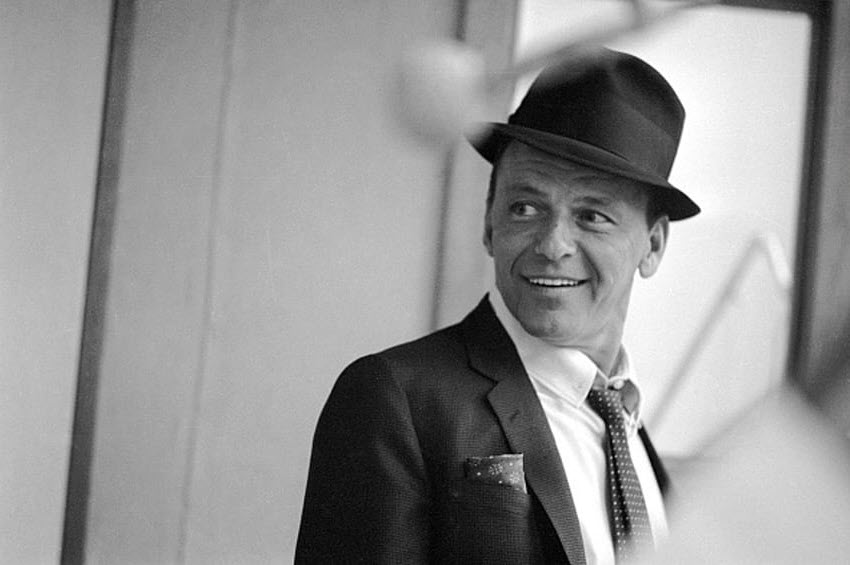
Few voices have defined an era quite like Frank Sinatra’s. From smoky lounges to grand concert halls, “Ol’ Blue Eyes” captivated the world with his smooth phrasing, magnetic presence, and timeless charm. More than just a singer, Sinatra was a cultural icon—a symbol of class, confidence, and cool. His music transcended generations, blending jazz, swing, and pop into an unmistakable sound that still echoes across radios and playlists today. Whether crooning about heartbreak or belting out anthems of triumph, Sinatra made every lyric feel lived-in and every performance unforgettable.
In this article, we’re diving into the top 10 most popular Frank Sinatra songs of all time—the tracks that defined his legendary career and continue to resonate with new audiences. These are the songs that turned moments into memories, that made the world slow down, sway, and sometimes even sing along. From soaring ballads to swinging showstoppers, each tune on this list is a masterclass in vocal artistry and emotional storytelling. So pour yourself a drink, cue up the classics, and discover (or rediscover) the magic of the man who did it his way. Let’s raise the curtain on the greatest hits of the Chairman of the Board.
1. My Way (1969)
Frank Sinatra’s “My Way” isn’t just a song—it’s a life story wrapped in melody. Released in 1969, this sweeping ballad of self-determination and reflection became one of the most iconic anthems of the 20th century. The lyrics were crafted by Paul Anka, who adapted them from the French song “Comme d’habitude.” Though Sinatra initially had reservations about the track, feeling it was perhaps too self-indulgent, he ultimately made it his own with a vocal performance that drips with both quiet confidence and hard-earned defiance. When he sings, “Regrets, I’ve had a few,” it’s more than a lyric—it’s a knowing nod from a man who’s faced both triumph and hardship with equal parts grit and grace. The arrangement builds like a farewell speech, rising to a majestic crescendo that still stirs audiences decades later. “My Way” quickly became a cultural touchstone, played at weddings, funerals, retirements, and anywhere people reflect on the paths they’ve taken. Even Sinatra, who grew weary of its ubiquity, admitted its lasting power. In the end, “My Way” is more than just a song—it’s a declaration of individuality and dignity, perfectly suited to the legend who gave it voice.
2. New York, New York (1980)
When Frank Sinatra sang “Start spreading the news,” the world listened. Though “Theme from New York, New York” was originally written for Martin Scorsese’s 1977 film and performed by Liza Minnelli, it was Sinatra’s 1980 rendition that turned it into an immortal anthem. With a brassy, high-kicking arrangement and an unshakable swagger, Sinatra captured the essence of the city that never sleeps. His booming voice strides through every line with conviction, transforming the lyrics into a universal mantra for ambition: “If I can make it there, I’ll make it anywhere.” It wasn’t just a tribute to the Big Apple—it was a celebration of resilience, hustle, and hope. This late-career hit became one of Sinatra’s most recognizable songs, often closing out his concerts and serving as the unofficial soundtrack for the city itself. It’s heard at Yankees games, on New Year’s Eve in Times Square, and in the hearts of dreamers who arrive in New York chasing something bigger. Sinatra didn’t just perform “New York, New York”—he embodied it. With this song, he didn’t just pay homage to a place; he became inseparable from it, the voice of a city and an attitude that never gives up.
3. Strangers in the Night (1966)
“Strangers in the Night” was the comeback hit that reintroduced Frank Sinatra to a new generation of listeners in 1966. Originally composed by Bert Kaempfert, the song found its emotional core in Sinatra’s velvety delivery, which turned a fleeting glance into a full-blown romance. The track’s lush orchestration and sweeping strings paint a picture of serendipity and spontaneous love. Sinatra’s phrasing is elegant and understated, giving the impression of a story unfolding in real-time. By the end, he slips into a spontaneous “doo-be-doo-be-doo” scat—a quirky yet charming touch that would become part of his signature style. Despite his later dismissive remarks about the song—he famously called it “a piece of crap”—“Strangers in the Night” resonated deeply with audiences. It soared to the top of the Billboard charts and won Sinatra the Grammy for Record of the Year. Whether he liked it or not, the song’s romantic mood and cinematic charm helped solidify his place in pop history during an era when rock and roll was dominating the airwaves. It’s a timeless reminder that sometimes the most unexpected encounters can lead to the most lasting connections.
4. Fly Me to the Moon (1964)
Frank Sinatra’s 1964 version of “Fly Me to the Moon” didn’t just update a classic—it launched it into the stratosphere. Originally written by Bart Howard in 1954 as a gentle love song, it took on new life when Sinatra teamed up with the Count Basie Orchestra and legendary arranger Quincy Jones. Their jazz-infused version swung with effortless cool and energy, transforming the ballad into an upbeat anthem of cosmic romance. Sinatra’s delivery is crisp, confident, and laced with charm, riding over a tight rhythm section and bright horns that make the song sparkle. It became an instant classic, perfectly capturing the space-age optimism of the 1960s. So fitting was the vibe that NASA chose to play the track during the Apollo missions, making it the first music ever played on the Moon. Suddenly, a song about love became linked with one of humankind’s greatest achievements. “Fly Me to the Moon” remains one of Sinatra’s most beloved recordings—timeless, romantic, and undeniably stylish. It’s not just a love song; it’s a declaration of hope, possibility, and the belief that the sky is never the limit when love is involved.
5. I’ve Got You Under My Skin (1956)
Sinatra’s 1956 rendition of “I’ve Got You Under My Skin” isn’t just a cover—it’s a masterclass in vocal phrasing and orchestral finesse. Originally written by Cole Porter, the song found its definitive version on Sinatra’s Songs for Swingin’ Lovers! album. The magic lies in the collaboration between Sinatra and arranger Nelson Riddle. It starts off with a silky smooth entrance—calm, controlled, full of intrigue. But as the song progresses, tension builds until it bursts into a powerful trombone solo, courtesy of Milt Bernhart, that still gives listeners chills. The arrangement mirrors the song’s emotional intensity—an irresistible obsession that starts subtly but soon overwhelms. Sinatra navigates the emotional terrain with pinpoint precision, sounding both suave and smitten, vulnerable yet in control. He brings out the contradictions in the lyrics: love as both pleasure and torment. His phrasing, impeccable timing, and magnetic presence make it feel as though he’s singing directly to you. “I’ve Got You Under My Skin” remains one of Sinatra’s crowning achievements—a timeless interpretation that continues to define excellence in vocal jazz. It’s seductive, sophisticated, and utterly unforgettable.
6. The Way You Look Tonight (1964)
Frank Sinatra’s 1964 version of “The Way You Look Tonight” is a tender, elegant tribute to love in its most timeless form. Originally composed by Jerome Kern and Dorothy Fields for the 1936 film Swing Time, the song already held a special place in the American songbook. But when Sinatra recorded it for his album Sinatra Sings Days of Wine and Roses, Moon River, and Other Academy Award Winners, he brought to it a seasoned warmth that made it feel brand new. His voice glides effortlessly over a lush, romantic arrangement, capturing the magic of a single, beautiful moment frozen in time. There’s no grand theatrics here—just a quiet sincerity that makes every line feel deeply personal. The song radiates nostalgic affection, like an old photograph or a fond memory. Sinatra doesn’t oversell the emotion; he lets it breathe, allowing listeners to project their own feelings and memories onto it. Whether played at weddings, anniversaries, or quiet evenings at home, “The Way You Look Tonight” endures because of its simplicity and emotional honesty. In Sinatra’s hands, it becomes more than just a love song—it’s a whispered vow that beauty, once seen, is never forgotten.
7. Come Fly With Me (1958)
“Come Fly With Me” is the perfect takeoff point for one of Frank Sinatra’s most iconic albums—and one of the most joyful songs in his catalog. Released in 1958 as the title track of Come Fly With Me, this breezy, globe-trotting tune was tailor-made for Sinatra by songwriting duo Sammy Cahn and Jimmy Van Heusen. It’s an irresistible invitation to escape the ordinary and embrace the adventure of love. With a wink in his voice and swing in his step, Sinatra becomes a suave travel guide, whisking you away to exotic destinations—Bombay, Acapulco Bay, and beyond—without ever leaving your living room. The big-band arrangement, powered by Billy May’s bold orchestration, is bursting with optimism and mid-century cool. More than just a catchy travelogue, the song plays as a metaphor for romantic spontaneity and shared dreams. It’s no wonder it became a staple of Sinatra’s live shows and a favorite among fans. “Come Fly With Me” captures the spirit of an era when air travel was glamorous, love was grand, and anything felt possible. With Sinatra at the helm, it’s a first-class ticket to a better mood and a brighter day.
8. That’s Life (1966)
Raw, unfiltered, and roaring with resilience, “That’s Life” captures Frank Sinatra at his most defiant. Released in 1966, the song marked a gritty turn for Sinatra, reflecting a man who had been through the ups and downs and wasn’t afraid to tell the tale. Originally recorded by Marion Montgomery in 1963, it didn’t fully come alive until Sinatra gave it his powerhouse treatment. His delivery—gravelly, forceful, and full of conviction—transforms it into an anthem of survival. Backed by gospel-flavored backing vocals and a brassy, punchy arrangement, Sinatra lays out life’s rollercoaster ride: “I’ve been a puppet, a pauper, a pirate, a poet…” It’s a declaration that no matter how many times you fall, you get up and try again. The song’s emotional edge reflects the aging crooner’s deeper perspective on fame, fortune, and failure. “That’s Life” isn’t polished or pristine—it’s bruised, bold, and beautifully human. In a catalog known for its elegance and charm, this track stands out as pure grit. Sinatra doesn’t sugarcoat the truth—he belts it out with a smirk and a shrug. It’s more than a song; it’s a streetwise philosophy, and Frank delivers it like only he could.
9. The Lady Is a Tramp (1957)
When Frank Sinatra took on “The Lady Is a Tramp” in 1957, he didn’t just sing it—he gave it a swagger and personality that turned the Broadway show tune into a jazz standard with bite. Originally written by Rodgers and Hart for the 1937 musical Babes in Arms, the song was meant as a satirical take on high-society norms. Sinatra, however, flips the script, transforming the titular “tramp” into a woman worth celebrating. In his version, she’s not an outcast—she’s a rebel, someone who refuses to play by society’s rules. His delivery is playful, knowing, and full of charm, perfectly matched by Nelson Riddle’s swinging arrangement. Each lyric drips with flirtation and admiration: she doesn’t go to Harlem in ermine and pearls—and that’s exactly why he loves her. Sinatra’s version elevates the song from clever musical number to a cheeky tribute to authenticity. It’s a wink to anyone who’s ever felt proud to go their own way. “The Lady Is a Tramp” became one of Sinatra’s signature tunes, not just because it swings so hard, but because he sings it like he means every word. It’s cool, confident, and utterly irresistible.
10. Summer Wind (1966)
“Summer Wind” is Frank Sinatra at his most reflective—a gently swaying ballad that captures the fleeting beauty of love and time. Released in 1966 on the Strangers in the Night album, the song was originally a German tune called “Der Sommerwind,” adapted into English by the great Johnny Mercer. Sinatra’s version, buoyed by an easygoing arrangement and warm orchestration, turns it into a sun-drenched memory you can almost feel on your skin. His vocals are soft and contemplative, like a breeze drifting through an open window. The lyrics speak of a romance that came and went with the season, leaving behind only wistful longing. Sinatra doesn’t overplay the emotion—instead, he lets it simmer, letting listeners sit with the melancholy. “Summer Wind” isn’t grand or showy; it’s intimate, conversational, and beautifully understated. It became a favorite late-career track for Sinatra, who often returned to it in live performances. Its lasting appeal lies in how effortlessly it evokes nostalgia—not just for a lost love, but for a time when everything felt possible. With “Summer Wind,” Sinatra delivers a gentle reminder: some of life’s sweetest moments are the ones that slip away too soon.

Samuel Moore is a frequent contributor to Singers Room. Since 2005, Singersroom has been the voice of R&B around the world. Connect with us via social media below.









