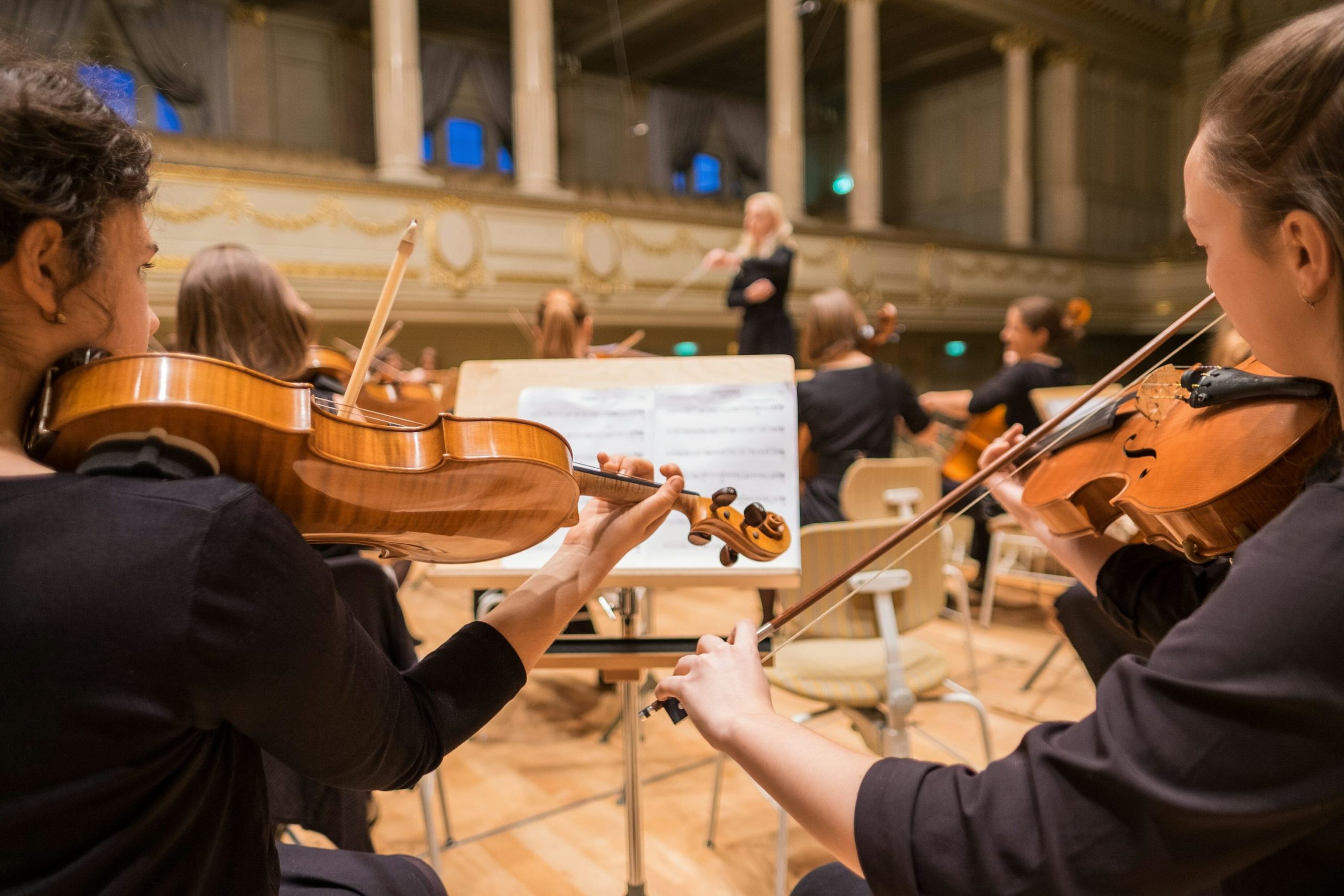
From the echoing halls of ancient cathedrals to the sweeping scores of modern cinema, classical music has carved its mark deep into the soul of human history. These masterworks aren’t just relics of the past—they’re living, breathing works of art that continue to stir hearts, inspire minds, and ignite imaginations. Whether you’re a seasoned aficionado or a curious newcomer, the pieces on this list represent the very best classical music has to offer: bold symphonies that shook the foundations of tradition, hauntingly beautiful melodies that whisper through time, and explosive compositions that capture the full spectrum of human emotion.
This isn’t just about music—it’s about genius, revolution, and the eternal power of sound. We’re diving into the top 15 most popular classical pieces of all time, each one a cornerstone of the genre, celebrated not just for technical brilliance but for their ability to move audiences generation after generation. From Beethoven’s thunderous symphonies to the delicate poetry of Chopin, these compositions have defined centuries and continue to captivate the world today. So turn up the volume, clear your mind, and get ready to experience the sound of immortality. Let the symphony begin.
1. Beethoven – Symphony No. 9 in D minor, Op. 125 “Choral” (1824)
Beethoven’s Symphony No. 9, completed in 1824, is a triumphant monument to the power of the human spirit. Astonishingly, Beethoven was completely deaf when he wrote this revolutionary work. What sets the Ninth apart is its bold inclusion of vocal soloists and a full chorus in the final movement—a first for a major symphony. That grand finale, based on Friedrich Schiller’s “Ode to Joy,” has become a universal anthem of hope, unity, and brotherhood. From the brooding intensity of its opening to the euphoric crescendo of its closing chorus, the symphony is a sweeping emotional journey. Each movement builds with dramatic precision and lyrical power, drawing listeners into its grandeur. The Ninth is more than a musical composition—it’s a philosophical statement, a call for peace and solidarity that transcends language, time, and geography. Whether performed in grand concert halls or celebrated in political and cultural movements, Beethoven’s Ninth continues to resonate deeply with audiences around the world. It remains one of the most iconic, daring, and inspiring achievements in classical music history.
2. Mozart – Serenade No. 13 in G Major, K. 525 “Eine kleine Nachtmusik” (1787)
Few pieces in classical music are as instantly recognizable as Mozart’s Eine kleine Nachtmusik, or “A Little Night Music.” Composed in 1787, this serenade captures the composer at his most graceful, charming, and melodically gifted. Despite its modest title, the piece radiates brilliance from the very first notes of its sparkling Allegro movement. This four-movement work exemplifies the Classical style’s ideals of balance, elegance, and clarity. It’s a seamless blend of light-hearted joy and technical mastery, with each section flowing effortlessly into the next. Originally intended as background entertainment for evening gatherings, Eine kleine Nachtmusik has far outgrown that role—it’s now a beloved concert staple and a shining example of Mozart’s genius. The piece’s enduring appeal lies in its universal accessibility: it’s both refined and welcoming, playful yet profound. Over two centuries later, it continues to enchant audiences of all ages, proving that even a “little” night music can leave an outsized legacy.
3. Bach – Toccata and Fugue in D minor, BWV 565 (c. 1704)
J.S. Bach’s Toccata and Fugue in D minor is one of the most dramatic and instantly recognizable pieces ever written for organ. Likely composed around 1704, the piece begins with a thunderous toccata—a bold, free-flowing display of virtuosity that grabs the listener by the collar and doesn’t let go. Its gothic, almost supernatural quality has made it a favorite in horror films and dramatic soundtracks. But beyond the popular associations lies a work of astounding musical craftsmanship. The fugue that follows is a tightly woven marvel of counterpoint, showcasing Bach’s genius for structure and invention. Each line of melody interlocks with mathematical precision, yet the result is anything but cold—it’s emotionally rich and rhythmically compelling. Whether echoing through the vaulted ceilings of a cathedral or reverberating in pop culture, this piece remains a testament to the organ’s grandeur and Bach’s unparalleled genius. It’s not just music—it’s a sonic cathedral, towering and timeless.
4. Vivaldi – The Four Seasons (1725)
Antonio Vivaldi’s The Four Seasons, composed in 1725, is one of the earliest and most vivid examples of program music—instrumental music that tells a story. This set of four violin concertos, each representing a season of the year, is paired with descriptive sonnets, likely written by Vivaldi himself. What makes the work extraordinary is its use of musical imagery: you can hear birds chirping in spring, violent storms breaking in summer, the dance of harvest in autumn, and the biting chill of winter winds. Each concerto is a dramatic, colorful portrait brought to life through dazzling violin passages and vibrant orchestration. Technically challenging yet emotionally expressive, The Four Seasons is a showcase for soloists and a joy for audiences. Over the centuries, its popularity has never waned. It continues to be performed, reinterpreted, and even reimagined across genres, from classical concert stages to electronic remixes. Vivaldi’s masterwork is not just a depiction of nature—it’s a celebration of life’s cycles and sensations in musical form.
5. Beethoven – Symphony No. 5 in C minor, Op. 67 (1808)
Few musical openings are as famous as the four thunderous notes that begin Beethoven’s Symphony No. 5—da-da-da-DUM! Composed in 1808, this symphony takes a simple rhythmic idea and transforms it into a gripping narrative of struggle, perseverance, and triumph. Often interpreted as “fate knocking at the door,” those first notes set the tone for a work of profound emotional depth and architectural brilliance. Across four movements, Beethoven builds and releases tension with relentless energy, pushing Classical-era conventions to their limits. By the time the final movement bursts into a radiant C major, it feels like a hard-won victory over darkness. The Fifth isn’t just music—it’s drama, destiny, and defiance, all wrapped in orchestral power. It’s been used in wartime broadcasts, movies, and political movements, becoming a universal symbol of resilience. More than two centuries later, Beethoven’s Fifth still stirs the soul, challenging listeners to confront their own battles and celebrate their victories, however small.
6. Tchaikovsky – Swan Lake (1877)
Tchaikovsky’s Swan Lake, which premiered in 1877, is one of the most iconic ballets of all time. It was the Russian composer’s first ballet score, and though it initially received mixed reviews, it eventually became a cornerstone of classical dance. The story is a romantic tragedy centered on Odette, a princess turned into a swan by an evil sorcerer’s curse. The music, lush with emotion and drama, captures every nuance of the narrative—from the delicate grace of the swans to the menace of the villain Rothbart. Tchaikovsky’s gift for melody and orchestration is on full display, blending sweeping waltzes, haunting leitmotifs, and tender solos. The main theme, with its melancholic beauty, has become emblematic of ballet itself. Swan Lake revolutionized the genre by treating the ballet score as a symphonic work, not just accompaniment. Its emotional intensity and rich textures continue to captivate dancers and audiences alike. Today, it’s performed by nearly every major ballet company and remains a shining example of Romantic expression in music.
7. Chopin – Nocturne in E-flat Major, Op. 9 No. 2 (1832)
Frédéric Chopin’s Nocturne in E-flat Major, Op. 9 No. 2, composed in 1832, is a sublime jewel of the solo piano repertoire. This nocturne unfolds like a gentle dream, with a lyrical melody that floats effortlessly above a tender, lilting accompaniment. It’s a piece that invites introspection, capturing the quiet poetry of night with subtle grace. Though technically approachable, it demands emotional depth and interpretive sensitivity from the performer. Chopin’s use of rubato—stretching and pulling the tempo—gives the piece its expressive soul, allowing pianists to infuse each phrase with personal feeling. The embellishments shimmer like moonlight on water, delicate yet purposeful. Over the years, this nocturne has become one of Chopin’s most beloved works, admired for its combination of simplicity, elegance, and emotional resonance. It has graced countless films, recitals, and hearts. In just a few minutes, Chopin creates a world of intimate beauty that lingers long after the final note fades.
8. Handel – Messiah (1742)
Handel’s Messiah, first performed in 1742, is one of the most enduring and beloved works in Western music. Written in just over three weeks, this English-language oratorio sets sacred texts to music with unmatched vitality and reverence. Rather than telling a linear story, Messiah presents a meditation on the life of Christ—from prophecy and birth to resurrection and redemption. Its most famous moment, the “Hallelujah” chorus, is so powerful that audiences have traditionally stood during performances since King George II reportedly did so at its premiere. The work balances grandeur with intimacy, using solo arias, choral passages, and orchestral interludes to create a tapestry of spiritual emotion. Handel’s music brings the text to life with vivid contrasts and memorable melodies that speak directly to the heart. Messiah has become a cherished holiday tradition, often performed at Christmas and Easter, and remains a cornerstone of choral repertoire. Its message of hope and redemption, paired with its musical brilliance, ensures that Messiah will continue to inspire for generations to come.
9. Pachelbel – Canon in D Major (c. 1680)
Johann Pachelbel’s Canon in D is one of the most instantly recognizable pieces of classical music, often associated with weddings, celebrations, and peaceful reflection. Yet this now-beloved work spent centuries in obscurity before its revival in the 20th century. Composed around 1680, it’s built on a simple but elegant foundation: a repeated bass line, or ground bass, over which a trio of violins weave increasingly elaborate variations. The structure is mathematically precise, but its emotional effect is warmly human. The canon’s gently unfolding harmonies create a feeling of serene inevitability, like the quiet passing of time. Its soothing, almost meditative quality has made it a favorite not only in classical circles but also in modern culture, where its chord progression has inspired countless pop songs. Despite its simplicity, or perhaps because of it, Canon in D taps into something universal—a calm, graceful order that resonates across eras and genres. It’s a musical embodiment of elegance and restraint, and its enduring popularity shows that beauty doesn’t always need complexity to be profound.
10. Ravel – Boléro (1928)
Maurice Ravel’s Boléro, first performed in 1928, is one of the most audaciously unique compositions in classical music. Built on a single rhythmic pattern carried by a snare drum and an unchanging two-part melody, Boléro is a masterclass in orchestration and tension. Over the course of fifteen mesmerizing minutes, Ravel repeats the melody again and again, each time assigning it to a new instrument or group of instruments. With each repetition, the texture grows richer and more vibrant, swelling to a thunderous climax before abruptly ending. Though Ravel modestly described it as an experiment in orchestral color, Boléro has since become his most famous piece. It’s hypnotic, sensual, and relentless—a slow-motion crescendo that builds not through harmonic change but through sheer sonic layering. Its rhythmic pulse creates a trance-like state, while the constantly shifting instrumentation keeps listeners entranced. Whether you find it mesmerizing or maddening, Boléro is unforgettable. It defies tradition, challenges expectation, and proves that repetition, when handled by a master, can be anything but monotonous. It’s not just a piece—it’s a slow-burning explosion.
11. Saint-Saëns – The Carnival of the Animals: “The Swan” (1886)
Among the whimsical animal portraits in Camille Saint-Saëns’ The Carnival of the Animals, none has soared higher in popularity or beauty than “The Swan.” Composed in 1886, this movement features a graceful, lyrical melody carried by the cello, floating atop gentle, rippling arpeggios on the piano. It’s a striking contrast to the rest of the suite’s humorous, satirical character—“The Swan” is pure elegance, serene and contemplative. It captures the majestic glide of a swan across calm water, exuding both fragility and poise. Though Saint-Saëns originally intended the full suite to be a private joke among friends, fearing it might damage his reputation as a serious composer, he allowed “The Swan” to be published and performed during his lifetime. Since then, it has become one of his most enduring works, often performed as a standalone piece. Its beauty has inspired countless interpretations in ballet, most notably Anna Pavlova’s iconic solo, The Dying Swan. With its exquisite simplicity and emotional depth, “The Swan” continues to resonate as a symbol of grace and melancholy.
12. Debussy – Clair de Lune (1905)
Claude Debussy’s Clair de Lune—French for “Moonlight”—is one of the most beloved and evocative piano pieces ever written. Composed as part of his Suite bergamasque, it was begun around 1890 and published in 1905 after significant revision. The piece gently shimmers with Impressionistic nuance, though Debussy himself resisted that label. Instead of grand statements, Clair de Lune offers subtle emotion and tonal color. Its flowing lines and soft, floating harmonies evoke the quiet glow of a moonlit evening, conjuring images of still water, drifting clouds, or solitary walks beneath the stars. The music’s strength lies not in volume or complexity, but in its tenderness and restraint. Pianists must balance technical control with emotional transparency, shaping each phrase like a whispered thought. It has been featured in countless films, TV shows, and personal playlists—proof of its enduring appeal. Clair de Lune doesn’t demand attention; it quietly captures the imagination. It’s a timeless meditation on light, love, and longing, wrapped in some of the most delicate music ever committed to paper.
13. Elgar – Pomp and Circumstance March No. 1 (1901)
Edward Elgar’s Pomp and Circumstance March No. 1 is more than a march—it’s a ceremonial anthem of pride, dignity, and celebration. Premiered in 1901, it quickly became a symbol of national grandeur in Britain, thanks largely to its rousing central trio section. With lyrics later added by A.C. Benson and transformed into “Land of Hope and Glory,” the piece became forever linked to British patriotism and imperial pageantry. But its influence didn’t stop there. In the United States, the trio melody became an unofficial graduation anthem, played at commencements across the country. The march’s noble opening and soaring middle section perfectly balance bombast with emotional warmth. Elgar’s orchestration gives it both grandeur and depth, earning praise from audiences and critics alike. The work is part of a larger set of marches, but this first installment stands apart as a cultural icon. Whether echoing through royal ceremonies or academic halls, Pomp and Circumstance carries a message of achievement, optimism, and ceremonial pride. It remains one of Elgar’s most enduring contributions to the musical world.
14. Mussorgsky – Pictures at an Exhibition (1874)
Modest Mussorgsky’s Pictures at an Exhibition, composed in 1874, is a uniquely imaginative suite originally written for solo piano. It was inspired by a posthumous art exhibit of his friend Viktor Hartmann’s paintings, and each movement represents a different artwork brought to life in sound. The piece is tied together by the recurring “Promenade” theme, which depicts the viewer walking between the paintings. The result is a vivid journey through moods, scenes, and characters—from the grotesque “Gnomus” and mysterious “Catacombs” to the triumphant “Great Gate of Kiev.” Mussorgsky’s original piano version is raw, bold, and filled with folk influences, reflecting his desire to write authentically Russian music. The work reached even greater fame thanks to Maurice Ravel’s brilliant orchestration, which added color, texture, and explosive power. Today, Pictures at an Exhibition is a favorite of both pianists and orchestras alike. It’s a rare piece that bridges visual art and music, transforming still images into a dynamic sonic experience. It remains a testament to Mussorgsky’s creativity and his deep emotional connection to his friend’s legacy.
15. Wagner – Ride of the Valkyries (1870)
Few pieces in classical music ignite the imagination like Richard Wagner’s Ride of the Valkyries. Composed as part of his monumental Ring Cycle and featured in Die Walküre, which premiered in 1870, this thrilling orchestral passage depicts the arrival of the Valkyries—mythical warrior maidens who carry fallen heroes to Valhalla. From its iconic galloping rhythms to its soaring brass fanfares, the music brims with unstoppable momentum and operatic fire. Wagner’s genius lies in how he builds layers of harmony and motif into a musical storm that is both awe-inspiring and terrifying. Though originally written for opera, the Ride has taken on a life of its own outside the theater. It’s been famously used in films, from Apocalypse Now to cartoons, cementing its status in pop culture. But even stripped of context, the music alone delivers an intense, visceral experience. It’s a symbol of Wagner’s sweeping ambition and his ability to craft sound worlds that overwhelm the senses. Whether encountered in an opera house or a movie scene, the Ride of the Valkyries never fails to thrill.

Samuel Moore is a frequent contributor to Singers Room. Since 2005, Singersroom has been the voice of R&B around the world. Connect with us via social media below.









